
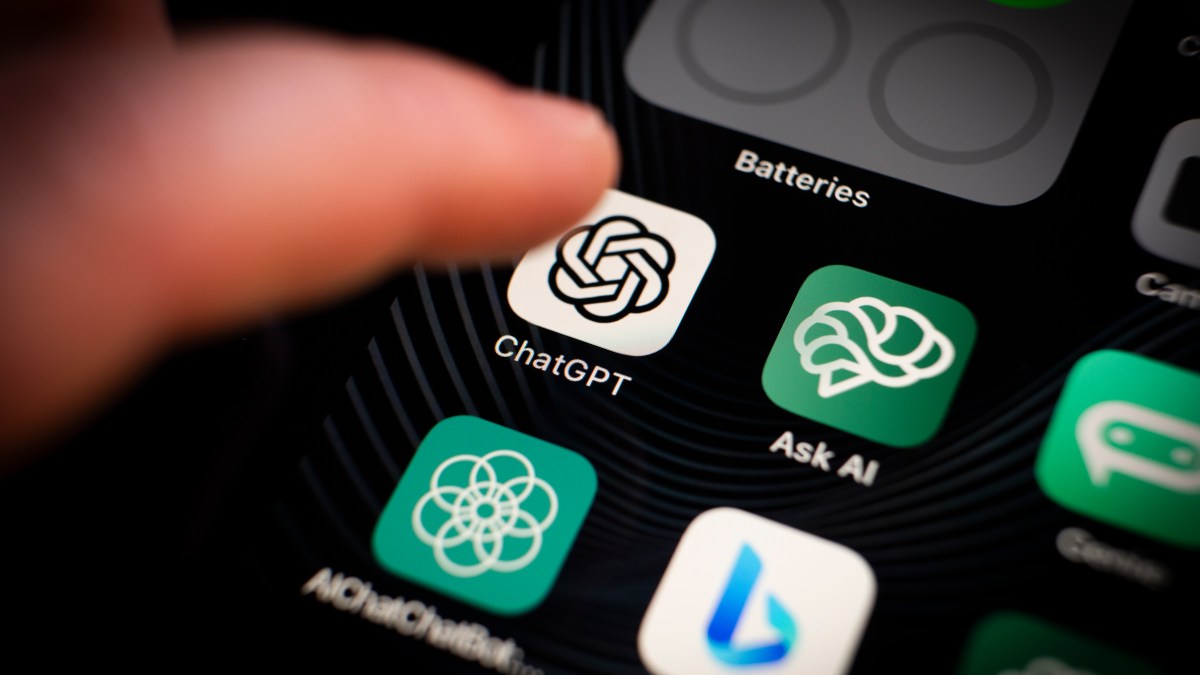
ChatGPT mainly relies on The Guardian for news, a study has found.
The popular artificial intelligence tool cites the left-leaning newspaper more than any other source and neglects the BBC entirely, according to analysis by the Institute for Public Policy Research (IPPR).
The think tank found that ChatGPT referenced The Guardian in 58 per cent of responses while its other top sources included Reuters, the Independent and the Financial Times.
The Daily Telegraph was cited in 4 per cent of answers, GB News in 3 per cent and The Sun in 1 per cent. The Daily Mail was not used at all.

The IPPR has said that chatbots used by millions of people risk “drawing on a narrow and inconsistent range of sources”.
ChatGPT’s rivals showed similar signs of bias. Google’s Gemini also linked to The Guardian in 53 per cent of its responses and never cited the BBC, despite surveys showing the corporation remained the country’s most trusted news source.
However, Google’s AI Overviews, a separate tool built into its search engine, used the BBC as a source in 52.5 per cent of its answers, while Perplexity, another AI chatbot, cited the public broadcaster in 36 per cent.
The think tank said that The Guardian was frequently referenced by ChatGPT as it had signed a strategic partnership with the chatbot’s owner, OpenAI, that licenses its stories to the AI company.
VUK VALCIC/LIGHTTROCKET/GETTY IMAGES
The institute ranked The Times as ChatGPT’s sixth most cited source, behind Sky News. In May 2024, News Corporation, which owns The Times and The Sunday Times, signed a multi-year licensing agreement with OpenAI, allowing ChatGPT to display its news content in response to user questions.
The BBC threatened legal action in June against Perplexity for using its content without permission. As a result, ChatGPT has avoided using the broadcaster but the IPPR said that this had come at a cost to the public as “the UK’s most popular and trusted news outlet is absent from the country’s most widely used AI tool”.
The think tank recommended that AI tools introduce “nutrition labels” for news so that users could see where answers came from and how they were shaped.
• AI for beginners — what you really need to know to keep up
Roa Powell, a senior research fellow at IPPR, said: “AI tools are rapidly becoming the front door to news, but right now that door is being controlled by a handful of tech companies with little transparency or accountability. When the UK’s most trusted news source can disappear entirely from AI answers, it’s a warning sign.
“If AI companies are going to profit from journalism and shape what the public sees, they must be required to pay fairly for the news they use and operate under clear rules that protect plurality, trust and the long-term future of independent journalism.”
Owen Meredith, chief executive of News Media Association, argued that “weakening UK copyright law would deprive publishers of reward and payment for the trusted journalism that enables AI to be accurate and up to date”.
Meredith added that the Competition and Markets Authority “must also intervene swiftly to stop Google using its dominant position to force publishers to fuel its AI chatbots for free. Fair payment from the market leader is critical to a functioning licensing market and to preventing big tech incumbents from monopolising AI.”