
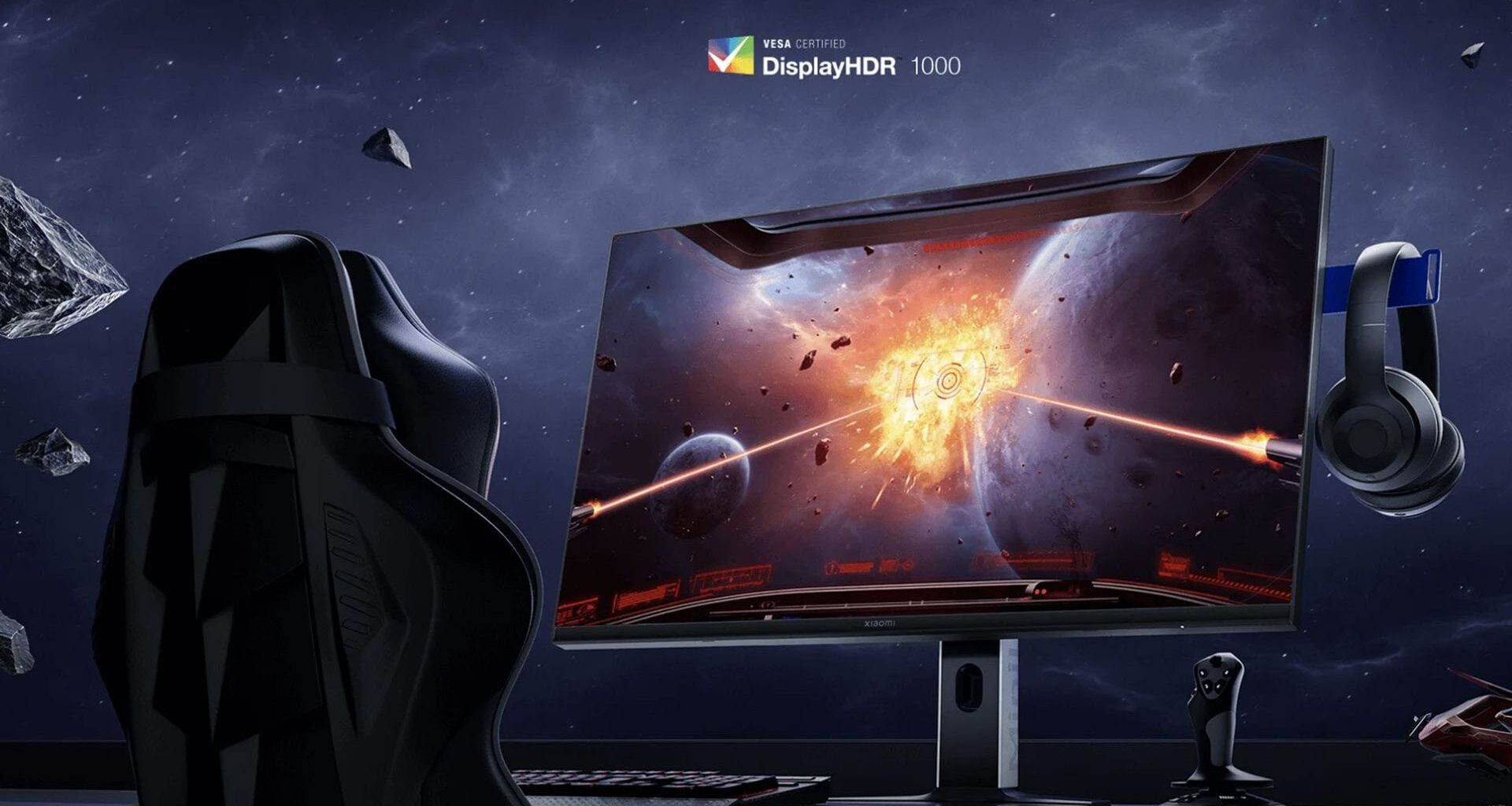

Xiaomi has quietly updated its popular G Pro series of monitors for 2026 and launched the “27Qi” model first in Australia. We’re getting the same 2K 1440p resolution this time, but the real standout is the massive jump to 1,152 local dimming zones, nearly doubling the count typically seen in this price bracket.
At 499 AUD, which translates to roughly $347 USD or ₹31,000, this monitor is aggressively priced in the budget Mini-LED category. From the looks of it, Xiaomi may be going directly against much bigger brands.
Read more – PlayStation 6 leak: PS6 handheld specs and PS Portal OLED hints at possible Sony strategy
What’s been upgraded within the Xiaomi G Pro 27QI?
G-Pro series Mini-LED monitor (Image via Xiaomi)
From a PC builder’s perspective, the sheer value that Xiaomi’s 27-inch IPS monitors offered has now been massively upgraded. Thanks to Mini LED technology, peak brightness can now reach up to 2,000 nits.
Not only that, but the monitor also supports HDR1000, indicating that this was not just a minor update, such as a simple panel change, but a significant overhaul that could potentially disrupt the entire display market. Below is a breakdown of the specs:
FeatureG Pro 27Qi (2026) SpecsPanel27″ Fast IPS (2560 x 1440)Refresh Rate180Hz (1ms GTG)Dimming Zones1152 Mini LED ZonesBrightness2000 nits (Peak)Color Coverage99% DCI-P3, 100% sRGBConnectivity2x DisplayPort 1.4, 2x HDMI 2.0, 1x Audio
Will HDMI 2.0 be a real limitation?
From the looks of it, a monitor launching in 2026 with HDMI 2.0 might raise eyebrows. While this can technically be a limitation for 4K displays, this trade-off is rather strategic in the budget segment. This is because HDMI 2.0 usually caps out at 144 Hz at 1440p without resorting to DSC (Display Stream Compression).
Gamers, who will be the primary users in most cases, are likely to aim for the advertised 180 Hz. To achieve this, they will need to rely on the provided DisplayPort 1.4 ports, which effectively resolve the refresh rate limitation. For console owners, the situation is manageable. Since the PS5 and Xbox Series X are generally capped at 120Hz for supported titles, they fit comfortably within HDMI 2.0’s bandwidth limits at 1440p.
You won’t essentially be “missing out” on the 180Hz headroom. However, if you are a PS5 user, you might face restrictions with VRR (Variable Refresh Rate), which typically relies on the full HDMI 2.1 handshake on Sony’s platform. Xbox users, however, should be able to utilize FreeSync over the older connection without issues.
Read more – Asus ROG Strix G16 vs Asus TUF Gaming F16: Which is the better gaming laptop?
Pricing and availability
Currently, you can purchase the monitor on Xiaomi’s Australian store for a launch price of AUD 499, though it will eventually return to its standard MSRP of AUD 699. As for the rest of us? While the monitor has officially appeared on Xiaomi’s global portal, which confirms a wider rollout is coming, we are still waiting for concrete launch dates for the US, India, and Europe.
Read more – Lenovo IdeaPad Slim 3 Ryzen 7 vs. HP Victus Ryzen 7: Which is the better laptop?
Why did you not like this content?
Cancel
Submit
Was this article helpful?

Thank You for feedback
Edited by Abu Amjad Khan