
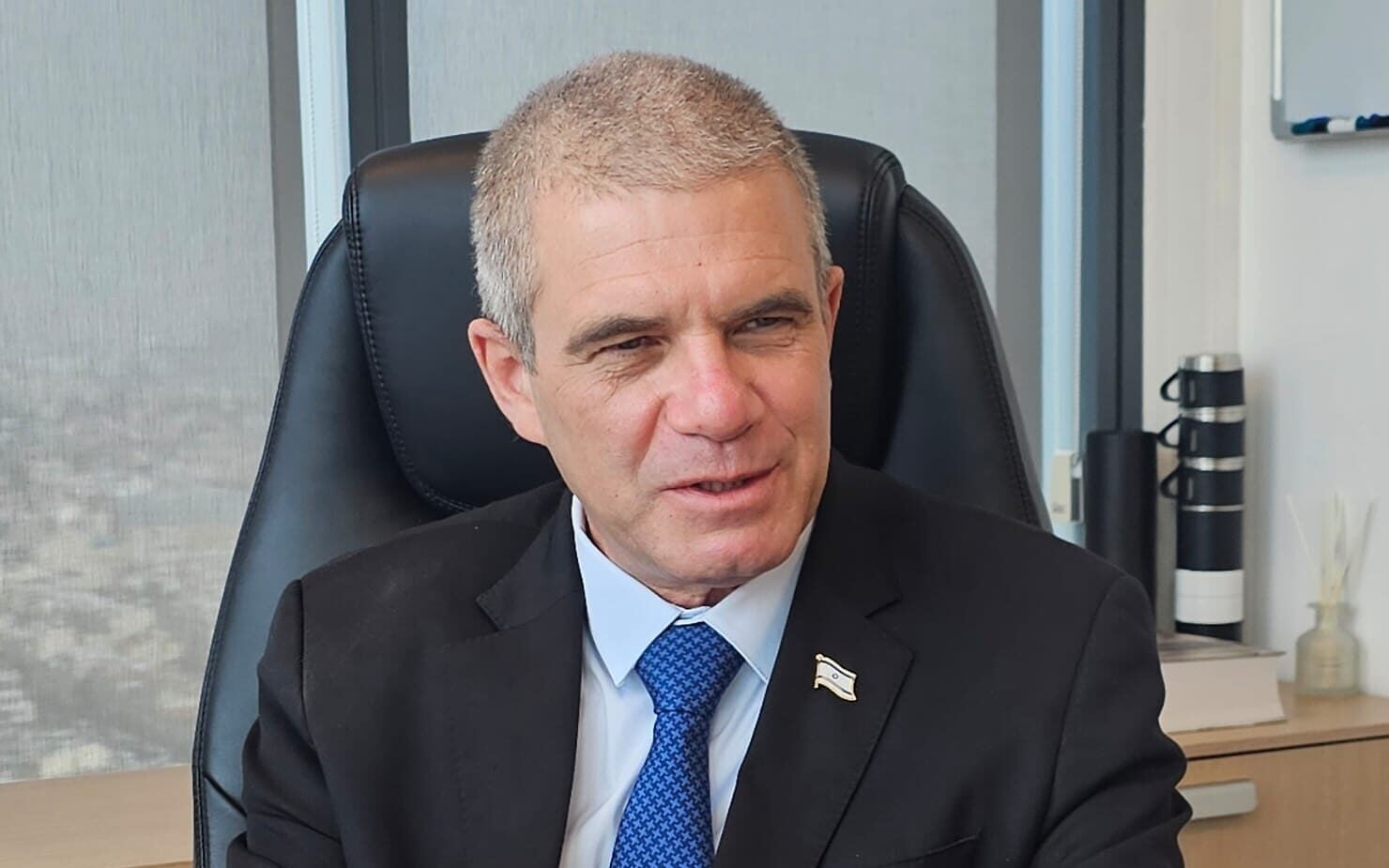
Gal Hirsch isn’t celebrating.
Speaking to The Times of Israel days after the last slain hostage from the October 7, 2023, Hamas attacks — police officer Ran Gvili — was finally laid to rest in Israel, Prime Minister Benjamin Netanyahu’s point man on hostages seemed lighter, looser and somewhat liberated from the weight he has carried on his shoulders since he was appointed to the position on October 8, 2023.
But Hirsch still seemed haunted by the 38 hostages taken alive and killed inside Gaza as he and his team searched for ways to get them back.
At least some of the blame for the lengthy duration of the efforts, he indicated in the wide-ranging interview, lay with the previous US president Joe Biden’s administration and pressure from other Western allies that convinced Hamas leader Yahya Sinwar that he could stretch out hostage negotiations for years.
“The night I heard about the embargo [on some US supplied munitions] I had a call with a very senior American while driving in the middle of the night. It was a very tough call,” he recalled from the hostage negotiators headquarters in Bnei Brak. “I told him, bluntly — I don’t usually speak this way — what are you doing? You have American hostages there. Israeli-American citizens. Do you understand you’re screwing up the negotiations? You’re giving Sinwar exactly what he wants.”
Get The Times of Israel’s Daily Edition
by email and never miss our top stories
By signing up, you agree to the terms
Hirsch also expressed shock over some aspects of the public pressure campaign inside Israel for a deal, characterizing protests as a result of Hamas’s “very effective propaganda,” which he said was amplified at the rallies.
“Hamas acted to create a rift in Israeli society through very effective propaganda — and by creating the reverse picture — although they were stalling and not wanting to progress in negotiations and torpedoing deals, they pinned responsibility on us, that we were torpedoing negotiations and deals,” he said.
Pressure on Israel from the Joe Biden administration and other Western allies convinced Hamas leader Yahya Sinwar that he could stretch hostage negotiations for years, government hostage pointman Gal Hirsch told The Times of Israel.
He also lamented some aspects of the weekly hostages protests in Tel Aviv, saying they “amplified” Hamas propaganda in a way that “shocked” him.
The charge, which was included in interviews with Hirsch published by other Israeli outlets over the weekend, sparked a firestorm of criticism from families of former hostages, including Einav Zangauker, the firebrand mother of released hostage Matan Zangauker.
“Lucky that President Trump thought differently, and thanks to him and thanks to our wonderful people who went out to fight for our values and didn’t give up, Matan is here at home,” she wrote on X Saturday. “Netanyahu’s floor rag continues the campaign of lies and rewriting history.”
Related: ‘Shame on you’: Former hostage, families hit back at government’s captives point man
Yet as Hirsch described his two-plus years leading the hostage effort, his efforts to connect to the families of the hostages stood out. He made a point of mentioning family members — not only parents, but also siblings and children — by name, pulling them easily from memory.
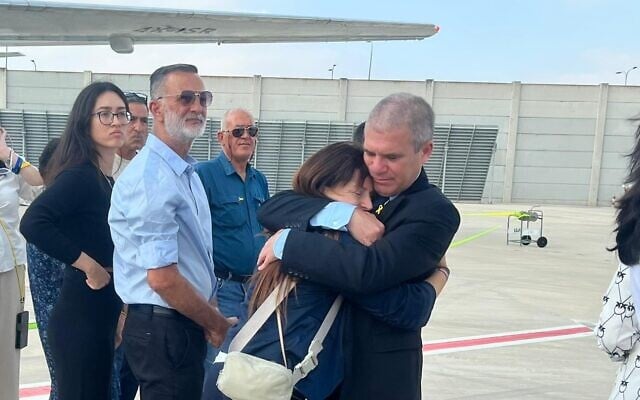
Government hostage point man Gal Hirsch embraces families of hostages before flying to the US, July 24, 2024 (Lazar Berman/Times of Israel)
The hostage issue touches all Israelis, but it seems to hit a particular nerve with the grizzled paratrooper. While Hirsch was 91st Division commander in 2006, Hezbollah killed and abducted two reservists from his sector, sparking the Second Lebanon War. He resigned from the IDF under criticism from a commission of inquiry, but many senior officers came to his defense, leading to his return to active duty in 2012.
In 2016, the Netanyahu ally was nominated to be police commissioner; the bid was eventually dropped over graft suspicions, though the cases were later closed.
Hirsch was a businessman, university lecturer, and family man before the October 7 Hamas-led attack. He put that life on hold to accept the mission of leading Israel’s efforts to locate and bring back its hostages, well before Israel even knew how many people Hamas was holding.
After the initial shock of Israel’s ground operation in Gaza in October 2023, Hamas was desperate for a hostage release-for-ceasefire deal, said Hirsch, resulting in the short November ceasefire in which 81 Israelis and 24 foreigners were freed.
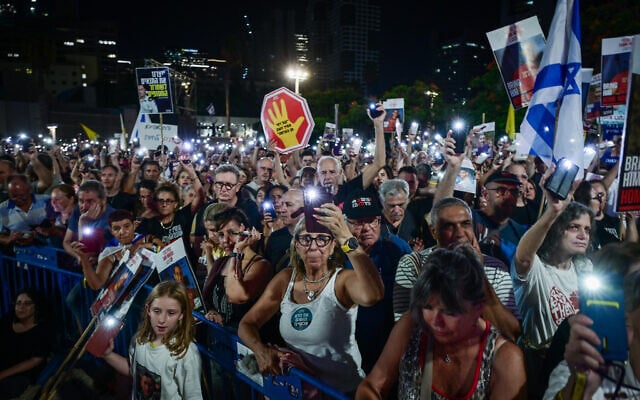
Protesters for the release of hostages held in Gaza, at Hostage Square in Tel Aviv, August 26, 2025. (Avshalom Sassoni/Flash90)
However, talks failed to progress over the subsequent year, despite efforts by Hirsch’s team with the help of the US, Qatar and Egypt. Hirsch firmly rejected assertions made by former IDF negotiating team member Oren Setter that Israel missed opportunities for hostage deals in March and July 2024.
He stressed repeatedly that Sinwar was the main roadblock in reaching a deal. That began to change, argued Hirsch, when Israel assassinated Hezbollah leader Hassan Nasrallah in September 2024 and defeated the Shiite group in Lebanon, then killed Sinwar the next month in Rafah.
He also argued that the failed September 2025 strike on Hamas leaders in Qatar ended up pushing Hamas toward a deal: “It’s clear to all of us that the fact Hamas understood it wasn’t immune anywhere, and the mediators understood Israel’s long arm reached everywhere, had a clear effect on achieving the deal and the return of all.”
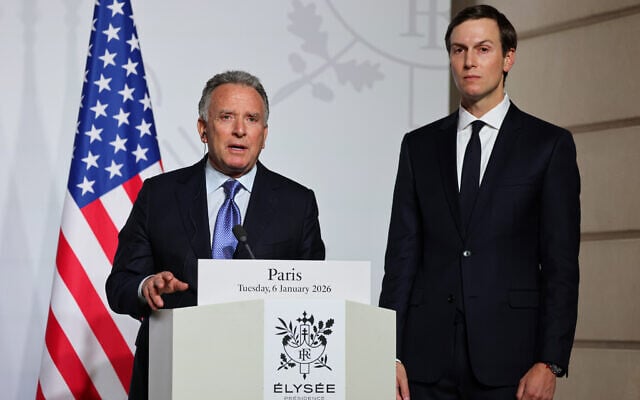
US Special Envoy Steve Witkoff delivers a speech as Jared Kushner looks on upon the signing of the declaration on deploying post-ceasefire force in Ukraine, at the Elysee Palace in Paris, January 6, 2026. (Ludovic Marin, Pool photo via AP)
Hirsch praised the work of US envoys Steve Witkoff and Jared Kushner, calling them “very effective.”
The reservist general said that Hamas has no choice now other than giving up its arms, and that “it understands Israel’s resolve.”
Though Gvili’s return marked the first time since 2014 that no Israeli hostages were being held inside Gaza, Hirsch said his mission of recovering captives is not over yet, while declining to say more.
The following interview has been translated, and lightly edited for brevity and clarity.
The Times of Israel: Before October 7, what was your approach to previous hostage deals like the ones that freed Gilad Shalit and Elhanan Tannenbaum? How do you approach the question of future cost versus saving the lives of one or two people?
Gal Hirsch: My position before the war — and it sharpened even more over the past two and a half years — is that in the hostage realm, three parallel actions must occur. The first is prevention, ensuring a hostage event doesn’t happen, that there won’t be an abduction, and making sure Israelis don’t enter places they’re forbidden to enter through public information and law enforcement.
The second is deterrence — clarifying the cost of kidnapping and that we won’t compromise on it, and that abductions will carry a different scale and kind of price.
The third is crisis management of a kidnapping.
If it already happened, I separate between my stance as an Israeli citizen and as a senior officer — a public figure — and the practical aspects of negotiation. I have always seen the fact that Israel is willing to pay heavy prices for our people as saying something about Israeli society and the State of Israel: that every Israeli is precious beyond measure.
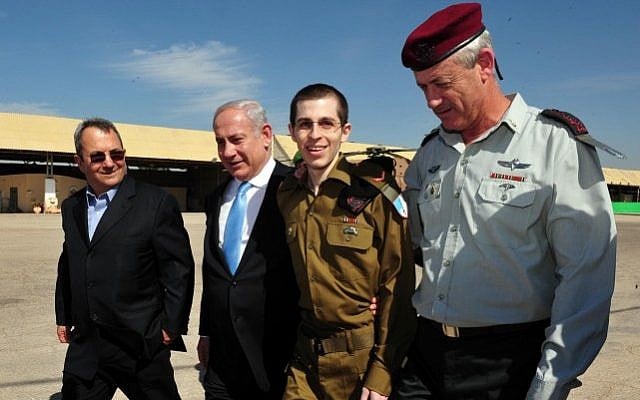
Released Israeli soldier Gilad Shalit (second right), walks with Prime Minister Benjamin Netanyahu (second left), then-defense minister Ehud Barak (left), and ex-chief of staff Lt. Gen. Benny Gantz (right), at the Tel Nof air base in southern Israel, October 18, 2011. (Ariel Hermoni/Defense Ministry/Flash90)
Even though we know we’re taking massive risks.
Hirsch: Absolutely. I made it clear over the years — by the way, to the hostage families who sat here with me, to returning captives, and of course to decision-makers — I told them, listen, I’m aware that people walking here on the street below, under my headquarters — some of them are dead men walking. Meaning, we’re releasing murderers, significant percentages of whom return to murder, and we simply have to — if we failed and our people were abducted — we must improve our prevention and deterrence, but we still have to rescue people.
I’m aware that people walking here on the street below, under my headquarters — some of them are dead men walking
Because what bonds Israeli society — the glue, the cohesion — is the fact that all the individuals, comprising over 10 million people, each one knows that Israel will fight for him. It will go to Entebbe; it will go to Burgas. If there’s an earthquake it will go to Kathmandu to extract Israelis; it will go to Antalya to pull Shiran Franco from the rubble. Israel will go anywhere to get Israelis out. It’s the only country in the world that acts like this, willing to pay heavy prices and risk people to bring people home. That glue is a guarantee of Israel’s strength in the years ahead.

Demonstrators march with members of the Goldin family, whose son Hadar was killed during the 2014 war in the Gaza Strip, to demand the return of his remains and the return of other Israelis held in Gaza back to Israel, in Kfar Saba on August 3, 2022. (JACK GUEZ / AFP)
But it didn’t work in the decade before October 7. In 2014 we had four captives in Gaza. The country didn’t rise up. The Goldin family marched to the Gaza border, a few hundred people joined; it wasn’t a big deal.
The results speak for themselves. Four hostages — Hadar Goldin and Oron Shaul, Hisham Al-Sayed, and Avera Mengistu — were there for over a decade. That’s a failure. We can’t call it anything else. It’s a failure. And the fact that Gilad Shalit was abducted — the abduction itself is a failure. And the fact he was returned after more than five years is a failure. That is not a satisfactory outcome from my point of view.
The way we were able to get the four hostages who were there before October 7 was only through the moves we took after October 7.
And by the way, I called those families to me in the first days of my tenure and told them: Look, I still don’t know how many hostages I have in the Gaza Strip—because I didn’t. I knew I had about 3,200 missing on day one, and many hostages— I didn’t know how many. But I called those families and said, I want you to know that as far as I’m concerned, I’m responsible for them and I will bring them back.
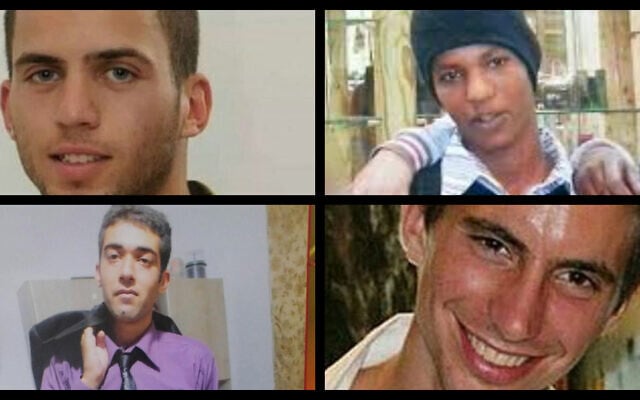
Israelis held in Gaza in a 2021 combination picture: Clockwise from top left: Oron Shaul, Avera Mengistu, Hadar Goldin and Hisham al-Sayed. (Flash90/ Courtesy)
It’s not that now I’m only dealing with the newly kidnapped. I called the Goldin family — Simcha and Leah. I called Avera Mengistu’s mother Agurnesh, and spoke with the Shaul family — with Zehava and brothers Ofek and Aviram—and told them, I will bring your loved ones home. I don’t know how long it will take. I want you to know that as far as I’m concerned, they’re now within the Gaza hostages mission.
What was the prime minister’s state when you met with him about your role? Was there panic, did he take command?
Hirsch: Three things I can say. He was very focused on my mission, he clarified what he wanted from me. We spoke, he received updates, and I saw a calmness, an aggregation of a lot of information and a situational picture — like the eye of the hurricane, quiet in the heart of the storm.
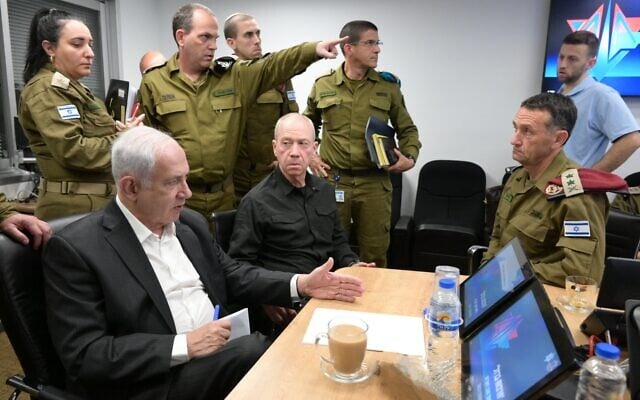
Prime Minister Benjamin Netanyahu (L) meets with Defense Minister Yoav Gallant (C) and military chiefs at IDF headquarters in Tel Aviv for a security assessment on October 8, 2023. (GPO)
I saw, and this impressed me, that on the day I arrived — it’s already October 8 — he was already starting to execute tasks for “the day after,” meaning he was already checking how to organize Gaza for the day after Hamas is destroyed. There was a wait. I go in to see him, and after me another figure comes in and already receives tasks on the day-after issue. That’s October 8, 2023.
How long did it take you to assemble the list of how many hostages we had?
Hirsch: On my first day in the job — there were about 3,200 missing.
Later, after several weeks, we settled on around 400 hostages and missing. There was constant pressure on me to say how many hostages Israel had. I refused to give that figure because I knew we had some missing whose whereabouts were unknown. I clarified to all the parties I coordinated that we would not state as a country how many hostages we had until we knew about the missing — because for anyone I would call “missing,” Hamas would say: correct, missing, look for them on your side — and they would make them disappear. So I waited until I had certainty.
The number reached 257 at the start of December, including the four who were already there before. The number I stated officially for the first time in early December — 257 hostages — was a mistake. I was wrong, because I didn’t yet know that we would find Dolev Yehoud, of blessed memory, and Elyakim Libman — we ended up finding them in Israel. Once they were located, we knew the number was 255.
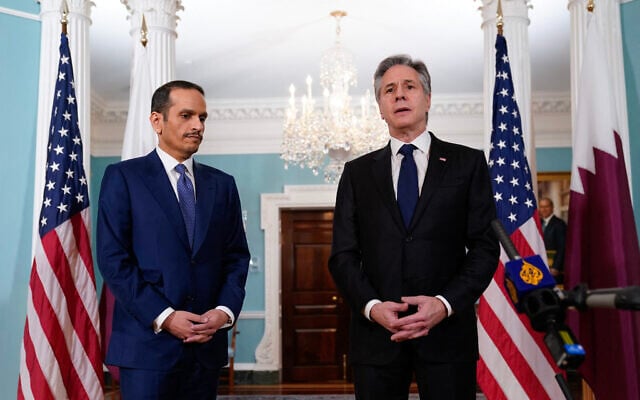
US Secretary of State Antony Blinken (right) and Qatari Prime Minister and Minister of Foreign Affairs Sheikh Mohammed bin Abdulrahman bin Jassim al-Thani speak to the press in the Treaty Room of the State Department in Washington, DC, on March 5, 2024. (Photo by Drew ANGERER / AFP)
Bringing in Egypt as mediator is understandable. Did you have concerns or objections about bringing in Qatar, which became the main mediator most of the time?
Hirsch: Right as I entered the role, the Americans contacted me and passed along communication channels to the Qatari prime minister.
They demanded Qatar be included?
Hirsch: They simply told me the Qataris were interested in mediating and helping return the hostages, and gave me his phone number.
The Qatari prime minister passed me his point man — his chief negotiator — and I spoke with him, he spoke with me, there were exchanges.
I asked how I could even know he could deliver. He said, okay general, tell me what you need. I said, show me reliable proof. He asked, what is reliable proof?
I said, I want you to get a hostage out — show me you can do that. Then I’ll see how it happens — how it’s coordinated with you, on the ground, how I receive them — show me. He said okay.
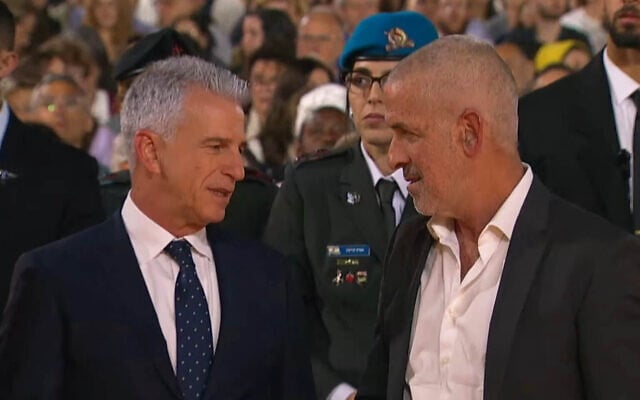
Mossad chief David Barnea (left) talks with Shin Bet chief Ronen Bar at the Yad Vashem Holocaust Memorial Museum in Jerusalem on the eve of Holocaust Remembrance Day, April 23, 2025. (Yad Vashem / Screenshot)
After those talks, it was clear that just as the Shin Bet had a comparative advantage with the Egyptians, the Mossad had a comparative advantage with the Qataris. So after I set up this track, [Mossad chief David Barnea] worked with the Qataris, [Shin Bet chief] Ronen Bar worked with the Egyptians, Nitzan [Alon] worked on intelligence, and we began working on a trial run [for a release].
When I saw the plan for the trial was coming together, [Defense Minister Yoav Gallant] okayed it and agreed to carry it out the trial. I ran to the prime minister and got approval to carry out the pilot.
After we finished coordinating within our foursome, [Barnea], Ronen, Nitzan, and me — I went down to the Gaza border area and tried [the plan]. The first night didn’t work. All the coordination failed to bring us the hostages.
This was before the ground operation, because at that stage we insisted on “hostages before maneuver” — to exhaust the chance to get hostages out and understand where they were and focus on locations.
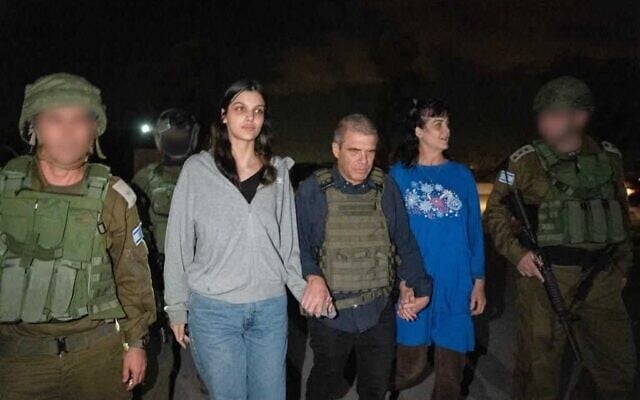
Natalie Raanan, 3rd left, Judith Raanan, right, are seen upon arrival in Israel after being released from Hamas captivity as government hostage envoy Gal Hirsch, center, holds their hands, October 20, 2023. (Courtesy)
The first night didn’t succeed, the second did. I received — through the Kerem Shalom area — Judith and Natalie Raanan.
The Sayeret Matkal [commando unit] linked up with a Red Cross jeep carrying them, guided it, etcetera.
I got into the vehicle and said, Hello, my name is Gal — I’m happy to see you. I went with them to a secure compound because it was an active combat environment, then moved them to medical checks and debriefs, then to the Hatzor base.
A few days later, we got out — via Egypt — Yocheved Lifshitz and Nurit Cooper.
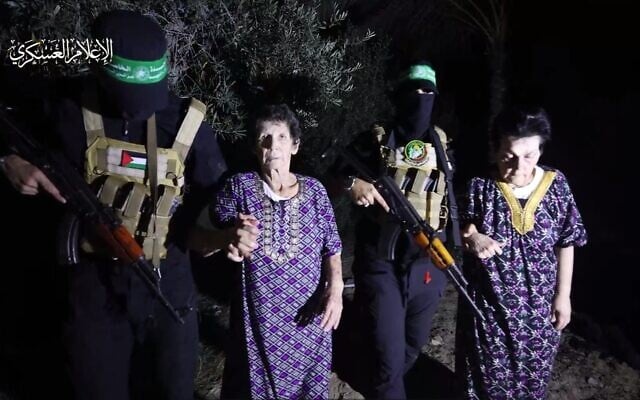
A still from a video released by Hamas’s armed wing showing hostages Yocheved Lifshitz, left, and Nurit Cooper before their release from captivity, October 23, 2023. (screen capture)
Those were the first four female hostages released in October, and on October 26 the IDF ground maneuver started. Six divisions began operating on the ground.
This caused great anxiety among families, everyone ran to me — “how are you maneuvering over our loved ones and risking their lives?”
At the end of that month, on the very last day of October, a rescue operation brought back Ori Megidish — a special Shin Bet operation.
Why weren’t there, in the first days, while they were being moved around, operations on the ground to find and rescue hostages?
Hirsch: There were various operations, but our intelligence picture wasn’t sufficient yet. We learned over that period; an intelligence picture began forming.
Remember our state after the October 7 attack — in the first days there were still terrorists inside our territory, initial IDF operations, strikes in the Gaza Strip. To conduct actual hostage rescues of that kind, you need to build an intelligence picture. It took time.
Let’s talk about the first ceasefire in November 2023. How did it come together? Was it due to military pressure on Hamas — they wanted some breathing space?
Hirsch: Hamas was in shock that the IDF began a substantial ground invasion. They thought it would be like Operation Protective Edge with limited operations.
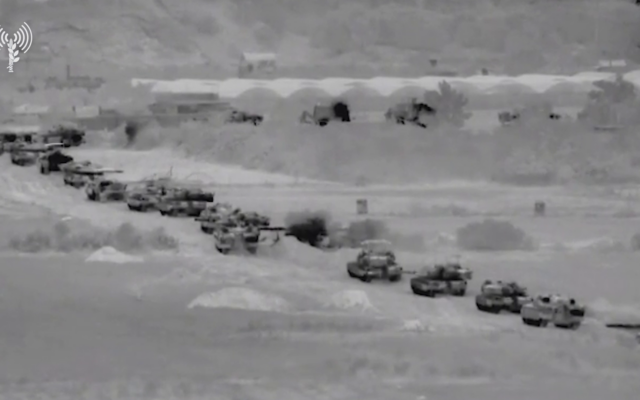
A still from video released by the IDF shows Israeli tanks rolling into Gaza on October 28, 2023. (Screen capture: IDF)
But once a combined incursion of six divisions across almost the entire Gaza Strip happened, Hamas was in shock and was almost willing to pay any price to stop us — to blunt the force of the maneuver, to see where the IDF had reached, to reorganize, recover, move commanders, move hostages. Hence their willingness for a ceasefire and to return hostages.
All the stories I heard later — that they wanted to get rid of a burden or shed kids and women — those are lies.
We presented a list of 97 — women and children and all the foreign nationals — but that’s not what happened in practice. The agreement in the negotiations was that 50 would be released, and the prime minister insisted to Biden that he was willing to grant more ceasefire days for another 10 each day. That’s how we reached 81 released Israelis — 80 women and children and one man — and 24 foreign hostages, so in effect 105 were released in the November deal, five women were released or rescued in October. By the end of November, 110 hostages were home.

Ron Krivoi embraces his parents at Sheba Medical enter in Ramat Gan after he was released as a hostage by the Gaza-ruling Hamas terror group, November 26, 2023. (Courtesy)
Why didn’t it continue? Ten hostages for each day of a ceasefire is excellent.
Hamas stopped it. Hamas told us it couldn’t return the remaining 17 women and two children. They said they didn’t have them. We knew they were lying and that they did have them.
There were tough discussions on how to proceed, because [proceeding without the 17 hostages], letting them disappear them, created a big dilemma [for us], and the deal fell apart.
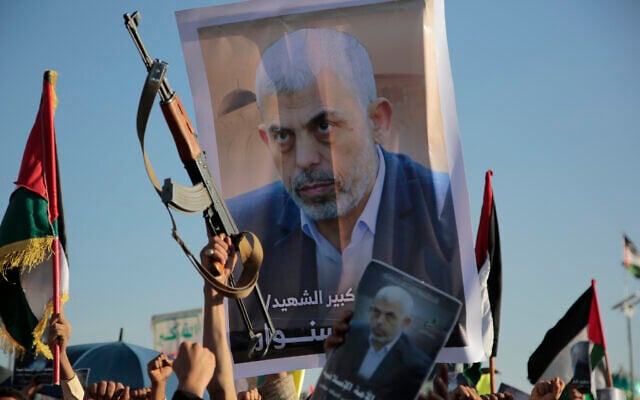
Houthi supporters raise a poster of Hamas leader Yahya Sinwar, who killed by Israeli troops in Gaza, during an anti-Israel rally in Sanaa, Yemen, October 18, 2024. (AP Photo/ Osamah Abdulrahman)
We could not allow that, given intelligence that they wanted to drag negotiations out for 10 years. That was Sinwar’s mindset until he was eliminated.
All the stories that we didn’t want to advance a deal — those are fairy tales and lies
Therefore, all the stories that we didn’t want to advance a deal — those are fairy tales and lies. The side that constantly canceled and delayed a deal within a 10-year negotiation strategy was Hamas.
The change came when he was eliminated and Nasrallah was eliminated; the Iranian axis suffered; the Syrian army was destroyed; the Houthis were hit hard; the Iranians got the hint; in the West Bank we carried out effective actions; and we were in a deep maneuver inside Gaza.
At that stage, we began to understand Hamas was shifting toward a deal because it understood it had nothing to build on. Until then, Hamas’s strategy was to exploit the political fallout of October 7 to derive political gains.
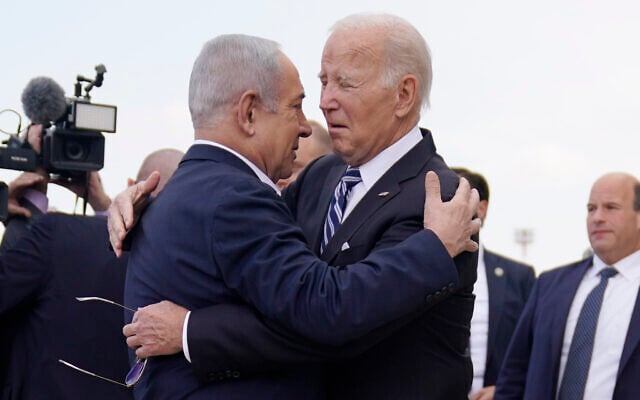
Then-US President Joe Biden, right, hugs Prime Minister Benjamin Netanyahu after arriving at Ben Gurion International Airport near Tel Aviv, October 18, 2023. (AP Photo/Evan Vucci)
Unfortunately, it exploited the daylight between us and the US, the UN’s activity against us, Security Council moves against us, European states’ activity against us, the embargo against us. From his perspective, Sinwar said, we can continue.
Moreover, they were trying to reignite the Middle East, generate another offensive on Israel from [the West Bank], drag in Iran, Hezbollah, the Houthis — to create a second pincer. All this while we were being criticized here that we were torpedoing deals. We understood Hamas was trying to disappear hostages and hold them long-term. So of course we couldn’t agree to something like, “We don’t have them — move on.”
On December 5 you have the Shejaiya incident, the killing of three hostages by Israeli forces. Can you talk a bit about it?
Hirsch: It’s awful.
It reached me from the field, in fragmented reports one after another. First — there’s some incident with hostages in the northern Strip — okay, give me details. Then — it’s possible that in some operation a hostage was killed. I asked, who?
Then — a hostage’s body was recovered. Then, two. Then, three. I asked, how?
I didn’t understand what happened, because it was during the ground push. Then it became clear — each time I reported to the prime minister — we tried to form a picture, and we understood they were killed by friendly fire. First that they were killed, and that it was our fire. It was a terrible sense of breakdown — an immense tragedy.
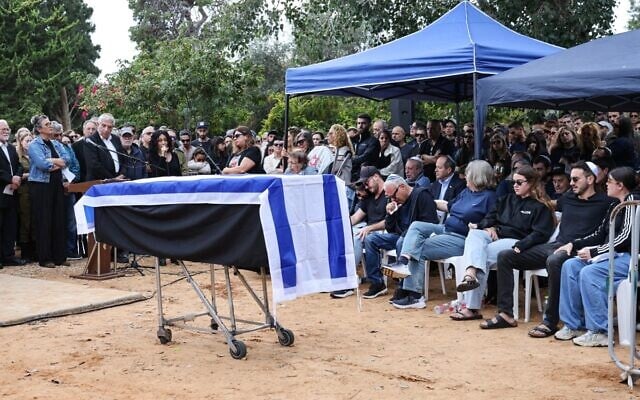
Relatives and friends mourn as they gather for the funeral of Alon Shamriz, an Israeli hostage who was mistakenly killed by the IDF in Gaza, in Kibbutz Shefayim on December 17, 2023. (Oren ZIV / AFP)
You spoke with the three families?
Hirsch: Of course. Look, when I took on the hostage mission, I took it upon myself to be “the state” in front of the many Israeli citizens for whom the state failed —and they’re right. The state failed to protect their loved ones, no doubt about it. I took it on myself to be the state constantly before them.
I was the point man, so to speak, and I had to explain to hostage families what happened, why, what the government’s policy is, what’s happening in the negotiations, what I’m doing, what my colleagues in the Mossad, Shin Bet, IDF, NSC are doing, what’s happening in the cabinet, what the government is doing.
I had to constantly be the interface — to the public, to hostage families, to international media, to many diplomatic actors. Don’t forget 28 countries were involved — because the hostages weren’t only from Israel. Some were dual nationals, some foreign workers, some students. I had to work here — in this living room and elsewhere in the area under fire, running to shelters, countless meetings with ambassadors, diplomats, special envoys from different states, different families; calls to Thailand, the Philippines, countless places.
As Israel returned to all-out war, tensions grew with the Biden administration in early 2024 around plans to invade Rafah in the south of the Strip.
Hirsch: I went to the Munich Security Conference in February 2024. I said there, on camera, that we’re entering Rafah, because it’s Hamas’s last redoubt that hadn’t been attacked, because we had many hostages there, and because we had to apply pressure.
[After we opened up the Netzarim Corridor to movement by Gazans between the north and south of the Strip without getting hostages in return, I told Netanyahu] “Fine, but let’s create an alternative bargaining chip.”
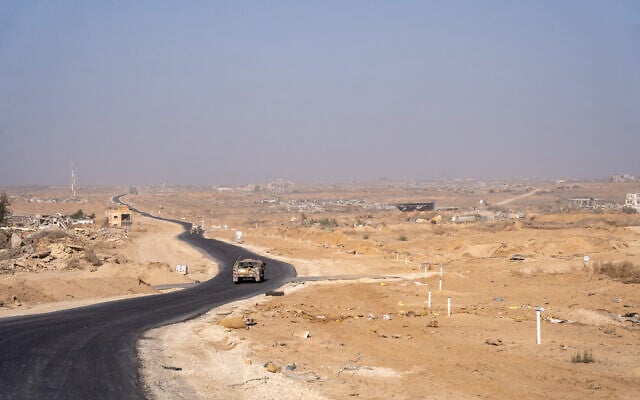
A view of the Netzarim Corridor in the central Gaza Strip, December 26, 2024. (Emanuel Fabian/Times of Israel)
For me it was clear we needed to move toward Rafah to apply pressure there, to have another bargaining chip given the concession in the north. In February I’m already saying this on camera. I know the prime minister understands we need to enter Rafah — he insists on it, he’s working on it — but we had heavy pressure with the Biden administration. When did we enter Rafah?
In May.
Hirsch: May 7. Not all of Rafah — May 7 we took the Rafah Crossing. It took us another week or two to enter the city and control the area and close the Philadelphi Corridor [along the Egyptian border]. For me it’s a pressure move. I understand that without effective military pressure, hostages will not return. No other way will work.
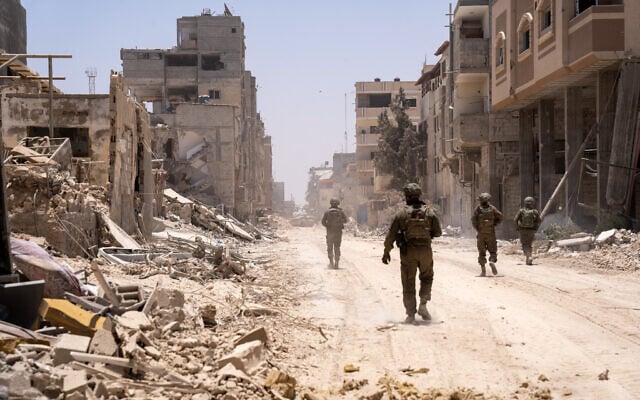
Troops of the IDF’s Givati Brigade operate in the Yabna camp of southern Gaza’s Rafah, June 18, 2024. (Emanuel Fabian/Times of Israel)
Did you see any impact of the rift widening between Biden and Netanyahu on the negotiations?
Hirsch: The night I heard about the embargo [on some US supplied munitions] — or “don’t you dare enter Rafah” — I had a call with a very senior American while driving in the middle of the night from Jerusalem down here [to Bnei Brak]. It was a very tough call.
Do you understand you’re screwing up the negotiations? You’re giving Sinwar exactly what he wants
I told him, bluntly — I don’t usually speak this way — what are you doing? You have American hostages there. Israeli-American citizens. Do you understand you’re screwing up the negotiations? You’re giving Sinwar exactly what he wants.
From [Sinwar’s] perspective any daylight advances his political strategy from the October 7 attack to generate political gains — you are doing that now.
Very tough conversations, with American and other global actors, Europeans and others.
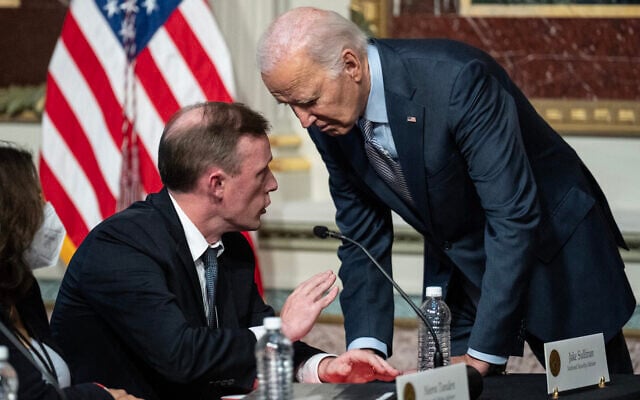
US President Joe Biden (right) confers with his National Security Advisor Jake Sullivan during a roundtable with Jewish community leaders at the Eisenhower Executive Office Building, October 11, 2023 in Washington. (Drew Angerer/Getty Images/AFP)
I know the Hamas strategy is 10 years of negotiations. I know the strategy is to create a second front and produce another war. I know the desire is to bring Iran and Hezbollah into the war, and the Houthis.
I know that in order to shut down this option for Sinwar, the world needed to stand with us like it did in the first month of the war. Unfortunately in December 2023 everything flipped on us and the daylight widened.
Sinwar says, “Excellent.”
[Hamas political chief Ismail] Haniyeh goes to visit Iran before he was eliminated, and says that Israel isn’t meeting any of its aims, and its best friends don’t agree with it and act against it.
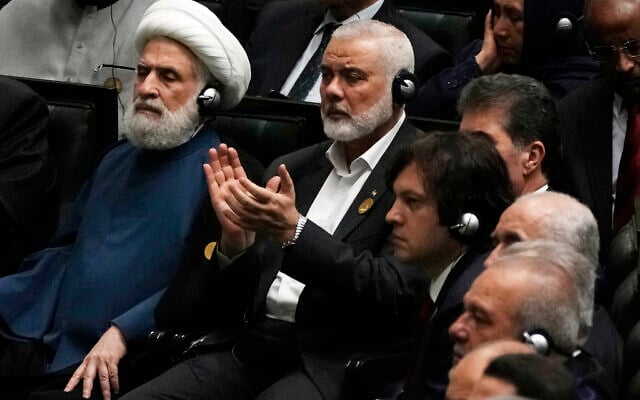
Hamas chief Ismail Haniyeh claps during the swearing-in ceremony of newly-elected Iranian President Masoud Pezeshkian, not in picture, in Tehran, Iran, July 30, 2024. On the left is top Hezbollah official, Sheikh Naim Qassem. (AP/Vahid Salemi)
That gives Hamas a lot of tailwind and the understanding there’s no need to hurry negotiations — no need to hurry returning hostages.
Do you think the protests inside of Israel also gave Hamas hope?
Hirsch: Without a doubt, Hamas acted to create a rift in Israeli society through very effective propaganda. And by creating the reverse picture — although they were stalling and not wanting to progress in negotiations and torpedoing deals, they pinned responsibility on us, that we were torpedoing negotiations and deals.
It was very effective propaganda that called the Israeli public to demonstrations. Every Saturday afternoon, [Hamas released] a video of a hostage calling for protests, to take to the streets. One hostage even called for a general strike by the Histadrut [labor union]. [In the videos, hostages made calls] for those released to go on TV to explain [their plight] to the public.
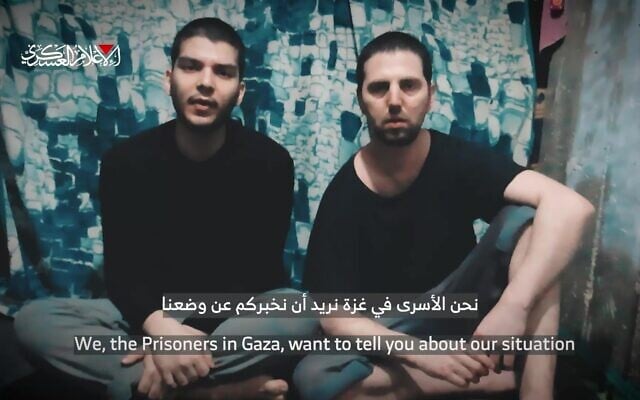
Hostages Yosef-Haim Ohana (left) and Elkana Bohbot seen in a Hamas propaganda video released on March 24, 2025. (Screenshot)
The way Hamas messages were received here in Israel and amplified was shocking.
How did the May 2025 Biden ceasefire proposal come about and why didn’t it succeed?
Hirsch: On April 26, I also remove my objection to opening the Netzarim Corridor, and we present an offer to the other side.
On May 6 at 8 p.m., we get a response via the Egyptians from Hamas that they don’t even have the number of living hostages we want in the humanitarian deal, and they’ll make it up with bodies.
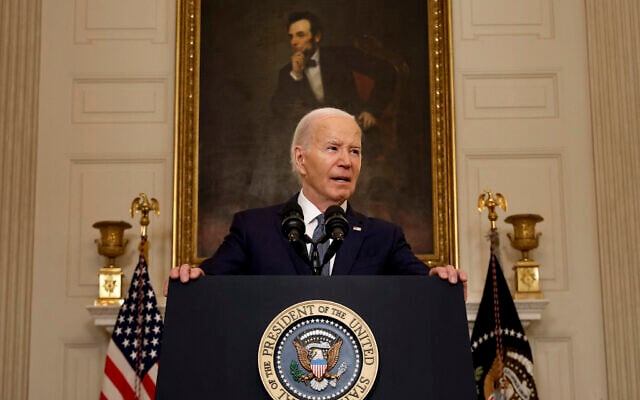
US President Joe Biden announces a proposed truce-hostage deal between Israel and Hamas in Gaza at the White House’s State Dining Room in Washington, DC, May 31, 2024. (Chip Somodevilla/Getty Images/AFP)
We send them back their own proposal of May 6 with slight improvements — to see if Hamas even wants a deal. Then it’s translated into the May 27 proposal, which is translated into Biden’s statement, and goes through the Security Council.
When does Hamas respond? Only on June 11, Shavuot eve. What do they respond with? Over 20 amendments to their own proposal.
We say — no more movement, we’re not budging. Then they come back only on July 3 with some proposal and continue trying to advance negotiations. Hamas played nonstop to run down the clock until Sinwar was eliminated and the Iranian axis was hit.
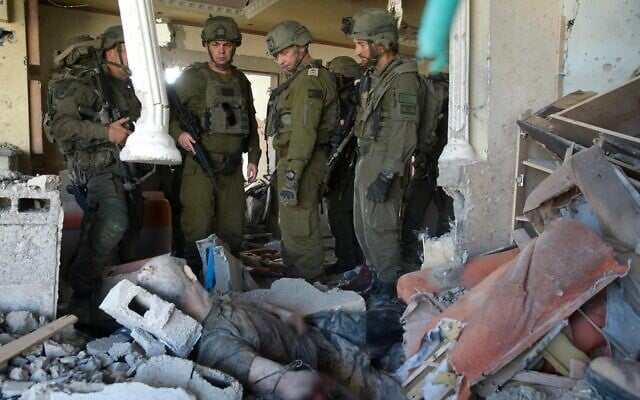
L-R: Former Operations Directorate chief Maj. Gen. Oded Basiuk, former Southern Command chief Maj. Gen. Yaron Finkelman, and Gaza Division chief Brig. Gen. Barak Hiram stand over the body of Hamas leader Yahya Sinwar in southern Gaza’s Rafah on October 17, 2024. The image was published by the army on October 16, 2025. (Israel Defense Forces)
In September, I place on the table the framework that happened a year later — demilitarization in exchange for reconstruction, return of all hostages in exchange for Palestinian prisoners, safe passage for Sinwar and his people, dismantling Hamas’s weapons, ending the war.
All that I present already in September 2024. Once [Sinwar] is eliminated, things begin to move toward an agreement.
In September, after all our actions against the axis and after Nasrallah is eliminated, we’re in advanced negotiations with Hamas — September, October, November, December — advanced negotiations to reach the January 2025 deal.
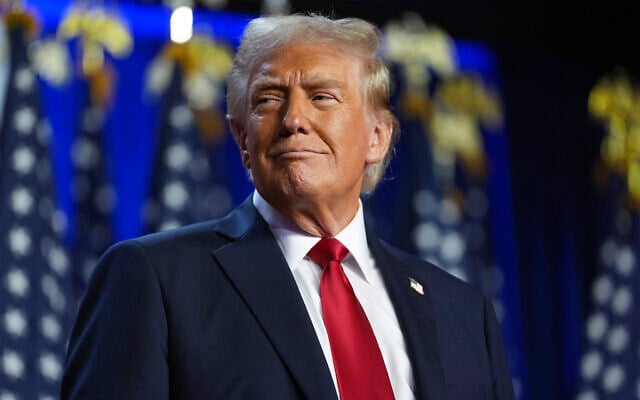
US President-elect Donald Trump arrives at an election night watch party at the Palm Beach Convention Center, in West Palm Beach, Florida, November 6, 2024. (Evan Vucci/AP)
The two administrations — the [Donald] Trump one elected in November and the Biden administration — reach an understanding around the Logan Act that they can operate with us so as not to halt negotiations, and we reach the January deal.
Call Israel’s military actions aggressive if you wish — still, you couldn’t bring everyone back without both military and diplomatic maneuvers. The diplomatic had to be with a body like a Trump administration insisting on no daylight, making it clear to the Turks there’s nowhere for Hamas to run, to the Qataris there’s nowhere to run, and with the support of all Arab states and many Muslim countries, pushing Hamas into a corner.
While the IDF and Shin Bet apply heavy military pressure, and there is a whole diplomatic process, it brings us to Sharm el-Sheikh.
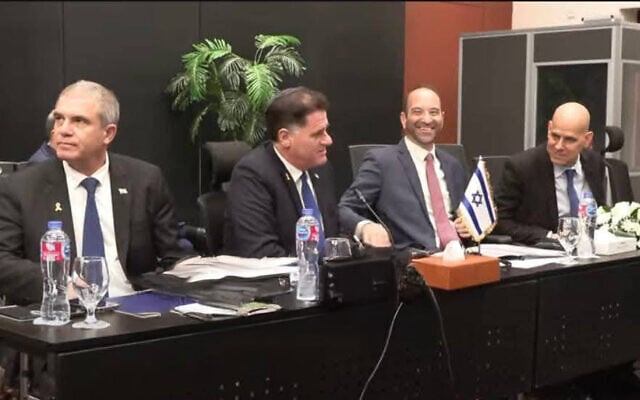
The Israeli delegation to Sharm el-Sheikh for the negotiations on the first phase of US President Donald Trump’s 20-point plan to end the war in Gaza. The delegation includes hostage envoy Gal Hirsch (left), Minister of Strategic Affairs Ron Dermer (second-left) and Maj. Gen. (res.) Nitzan Alon (right). 8 October 2025 (Telegram / used in accordance with clause 27a of the copyright law)
There’s criticism from former negotiator Oren Setter that there were two windows to free hostages, in March and July 2024, that the prime minister missed. How do you respond?
Hirsch: I don’t accept it. I know all the data and what stood before us. I think given the data and various developments, it was not possible to reach a deal then. Certainly until Sinwar’s elimination there was no chance of a deal.
After that we were already moving toward the January 2025 deal and meanwhile we were already working on the deal for everyone, but in two stages.

British Prime Minister Keir Starmer, left, and French President Emmanuel Macron hold a joint press conference in London, July 10, 2025. (Leon Neal/Pool Photo via AP)
But then we were unable to conduct effective negotiations. I sat three weeks in Doha in July 2025, then French President Emmanuel Macron begins his [Palestinian statehood recognition] campaign with all his initiatives, and everything gets screwed up.
Hamas feels it’s on the path to winning and rejects a deal. We leave and keep trying from Israel, then understand it won’t work.
We must apply the combined [military-diplomatic] operation, entering Gaza City and running the diplomatic move with the Americans up until October, when we travel to Sharm el-Sheikh [for the ceasefire deal].
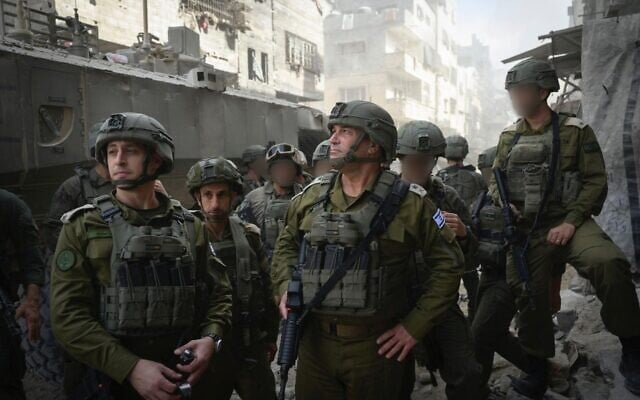
IDF Chief of Staff Lt. Gen. Eyal Zamir (center) is seen in Gaza City on September 30, 2025. (Israel Defense Forces)
There are allegations that because there were people around Netanyahu who were influenced by Qatar this affected decision-making and pressured or harmed relations with Egypt.
Hirsch: As hostage coordinator, I deal with the hostage domain.
I’m not familiar with these things, not with such details, and I can’t address them.
After seeing all the Hamas ceremonies in January during the second ceasefire around the returns — including the Bibas family — did you consider stopping the whole thing?
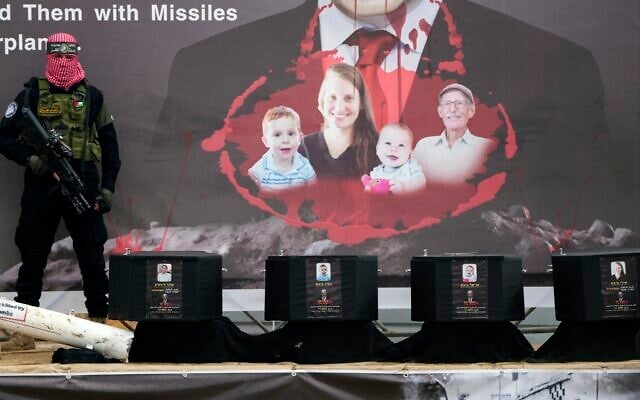
Coffins said to contain the bodies of slain Israeli hostages Shiri Bibas, her two children Ariel and Kfir, and Oded Lifshitz, are displayed on a stage with a propaganda message before being handed over to the Red Cross by Hamas and Islamic Jihad terrorists in Khan Younis, Gaza Strip, Feb. 20, 2025. (AP Photo/Abdel Kareem Hana)
Hirsch: From the first time, we insisted constantly and maintained very firm contacts with the mediators to stop those ceremonies and to not allow them. Hamas continued doing them throughout the January–March deal.
We inserted into the agreement — in the negotiations that didn’t materialize and later in the Sharm el-Sheikh agreement — clarifications. No ceremonies, nothing.
I remind you that for the bodies of fallen soldiers obtained in the January deal, there were no ceremonies. It happened at night, via the Egyptians. We applied sanctions and halted many processes so all those ceremonies would stop.
It was part of their practical propaganda, which unfortunately had more than a little success in Israel.
Who made decisions in Hamas after a year without a leader?
Hirsch: They appointed a committee of five people, and decisions were made within those five. They didn’t name a leader, though it was clear Khalil al-Hayya was leading on some issues and Muhammad Darwish on others. But it was a five-man committee trying to deal with the shock of Sinwar’s and Nasrallah’s eliminations and events in the region. That’s how it was managed, and negotiations with the mediators were conducted with them.
Regarding the Doha strike in September, what was your recommendation when asked whether it would affect negotiations?
Hirsch: Issues of striking Hamas leadership in various places worldwide — including in Qatar — came up and were examined over time. I can’t go into the considerations and what happened.
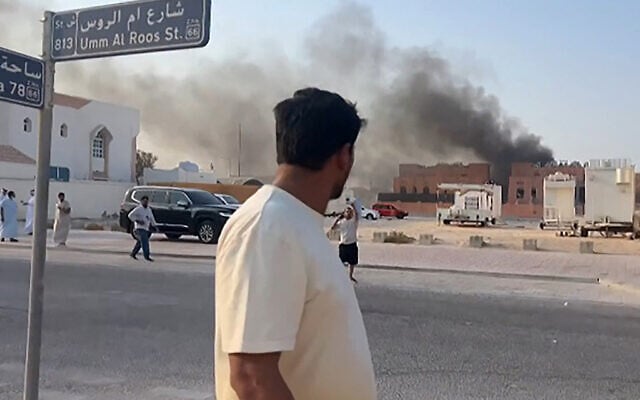
This frame grab taken from an AFPTV footage shows smoke billowing after an Israeli strike in Doha’s capital Qatar on September 9, 2025. (Photo by Jacqueline PENNEY / AFPTV / AFP)
In hindsight, it’s clear to all of us that the fact Hamas understood it wasn’t immune anywhere, and the mediators understood Israel’s long arm reached everywhere, had a clear effect on achieving the deal and the return of all.
Were there Gazans who responded to financial rewards to return hostages?
Hirsch: There were many approaches after those offers. All were checked by the Shin Bet. That track ultimately didn’t bear fruit — we had no success in bringing a hostage in exchange for benefits, money — like a family bringing us a hostage. That track didn’t succeed.
There’s a lot of criticism that the Red Cross didn’t do enough — didn’t reach the hostages. There was also a decision here not to allow them to see Palestinian prisoners, creating room for counter-accusations. Do you think we should have allowed them to visit Palestinian prisoners here? And did they do the best they could given the circumstances?
Hirsch: First, I should say that with Julien Lerisson, the ICRC head of mission, and his people, there was very effective operational cooperation during the release deals and during searches for bodies of the fallen, implementing the agreement.
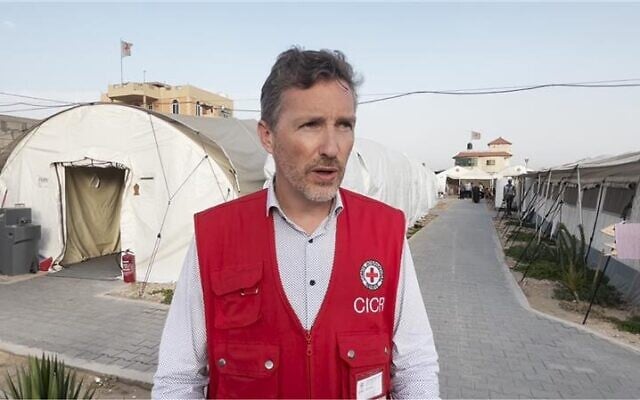
Head of the International Committee of the Red Cross in Israel Julien Lerisson. (courtesy ICRC)
Certainly we had many expectations from the Red Cross to also get medicines in and to reach the hostages and pressure Hamas. I understand the Red Cross’s claims they were denied access, but I think the Red Cross also needed to make public the fact that Hamas denied access and didn’t allow them to perform their role, and not create a kind of symmetry as if we and they are the same. Hamas is a terrorist organization; it initiated the war; it abducted our people; it abused hostages — women, children, elderly, young, civilians and soldiers.
I think the Red Cross should have had a firm statement on this. But I must also say I greatly appreciate many actions the Red Cross personnel and leadership did here during the release deals and during the searches for hostages.
There has been criticism of White House negotiator Steve Witkoff from anonymous Israeli officials. He also stated that he had a personal connection with Khalil al-Hayya over the loss of his son. What you say about his performance as special envoy?
Hirsch: I greatly value him and Jared Kushner. I had many interactions with Steve. I appreciate his action, energy, drive, and creativity — that’s what I can say. I don’t know who brought you that criticism, but as far as we’re concerned he was a very effective envoy — he and Jared — very effective envoys who did very important and successful work.
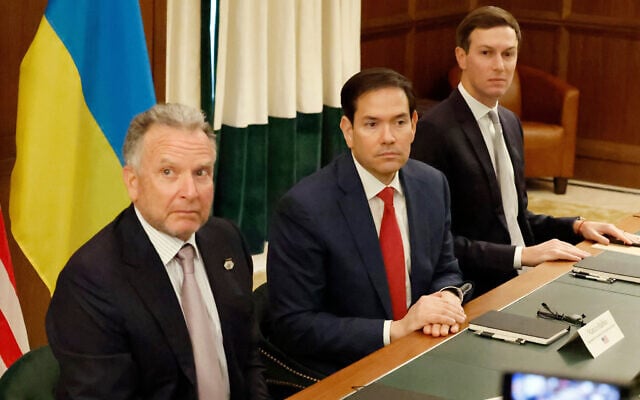
US Special envoy Steve Witkoff (left) US Secretary of State Marco Rubio, (center) and Jared Kushner attend a meeting with Ukrainian officials, November 30, 2025, in Hallandale Beach, Florida. (AP/Terry Renna, File)
Let’s talk about the recovery of Ran Gvili’s body. You said there were people in Islamic Jihad who knew where he was. Did the information come from them or other sources?
Hirsch: We had missing pieces in the puzzle about Ran Gvili the whole time.
From the war’s start we searched for details on every hostage. There was a case manager for each hostage and a team per hostage — dead or alive. On Ran, we had constant missing pieces in the puzzle and couldn’t solve them. We took very vigorous actions in recent weeks — operational and intelligence. I was in Egypt several times.
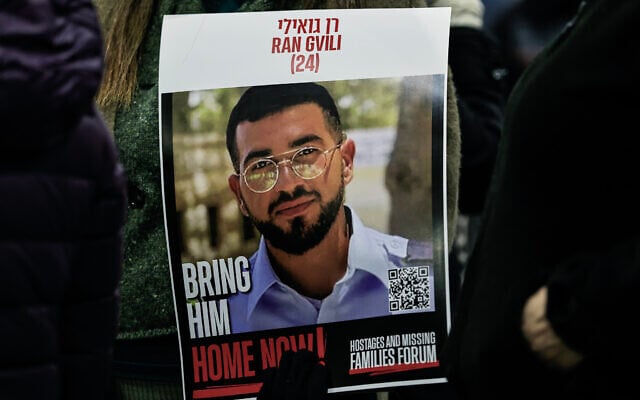
A poster of Master Sgt. Ran Gvili is seen at a rally calling for Hamas to return his remains from Gaza, in the southern Israeli community of Meitar, December 13, 2025. (Tsafrir Abayov/Flash90)
Ultimately, we narrowed it to four possibilities regarding Gvili.
One — he was buried in an underground complex in Shejaiya. We knew he’d reached there, but we didn’t know if he was taken underground and buried.
Two — he was buried in another cemetery in northern Gaza.
Three — he reached Shifa Hospital and from there was taken to temporary burial elsewhere.
Four — Hamas and Islamic Jihad were searching in the Zeitoun area. We didn’t understand what they were doing there because nothing fit Zeitoun. We thought, maybe we’re missing something. There’s a hole in our intelligence and they know something we don’t. We didn’t understand the fourth option. We conducted several actions — my contacts with the mediators and other people.
Finally, once we understood it was the Shifa option — over 150 unidentified “martyr” bodies from October 7–8 were sent to temporary burial in al-Batsh cemetery. We began focusing on al-Batsh — where the Shifa bodies were buried — and started focusing on that cemetery.
Weeks back, planning began for an operation at al-Batsh, because al-Batsh is inside the Yellow Line [that the IDF withdrew to] by about 200–300 meters. So planning began for a division-sized operation, with Southern Command in charge.
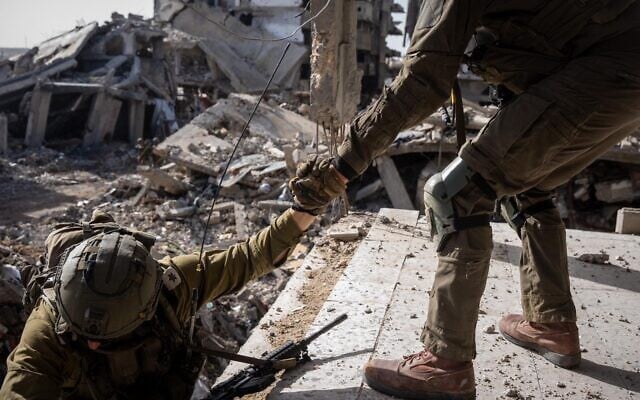
IDF troops operate at a cemetery in Gaza City during a search for the body of Master Sgt. Ran Gvili, in a handout photo issued on January 26, 2026. (Israel Defense Forces)
In parallel, special forces entered the Shejaiya underground complex and worked for weeks searching, it’s a very large underground complex. In parallel, we conducted intel and other actions at the second cemetery, not al-Batsh.
In parallel, we monitored all actions in Zeitoun, coordinated between the Red Cross, us, and Hamas via mediators on their searches there. Everything happened in parallel.
I should say that about two weeks earlier, it wasn’t clear we’d have to carry out the al-Batsh operation. We waited for more information about the rows of graves there, to focus efforts, as it was clear there were hundreds of bodies, and also waited for a political window since it was coordinated with the Americans.
It was discussed with the CMCC, with CENTCOM, and in parallel we continued intel efforts. About three days before the Friday on which we began the operation— after a successful Shin Bet operation — we understood we couldn’t abandon the underground searches, but there was a better chance his body had reached al-Batsh. We received approval to begin on Friday, and on Monday we found him. After extracting over 700 bodies from the ground and examining about 250, we reached him.

Pallbearers from the Israeli Police carry the casket of Israeli hostage Ran Gvili, whose remains were finally brought back to Israel on January 26, during his funeral in the southern town of Meitar on January 28, 2026. (Photo by Chaim Goldberg / POOL / AFP)
Do you think Hamas will really give up its weapons? Will we need to return to fighting?
Hirsch: What choice do they have? If they don’t give up their weapons, their weapons will be taken from them.
Without another military operation?
Hirsch: Hamas is now in the hardest situation it’s ever been in. It understands Israel’s resolve. It’s under massive pressure with US involvement and American-led Arab and Muslim actors. It’s in a very tough spot and understands we won’t relent.
They understand we won’t let go. If it doesn’t happen via an agreement, we’ll do it ourselves. This was stated by President Trump and Netanyahu, and we mean it. Therefore, I think they’ll have no choice.
Last question: Your future. Are you staying in this role? Entering politics? What’s next for you?
Hirsch: I have no political plans. Israel still has several different missions I need to handle. As you know, over the past two-plus years, I extracted Israelis from Iraq, Syria, Lebanon, Jordan, Venezuela — and I have missions.
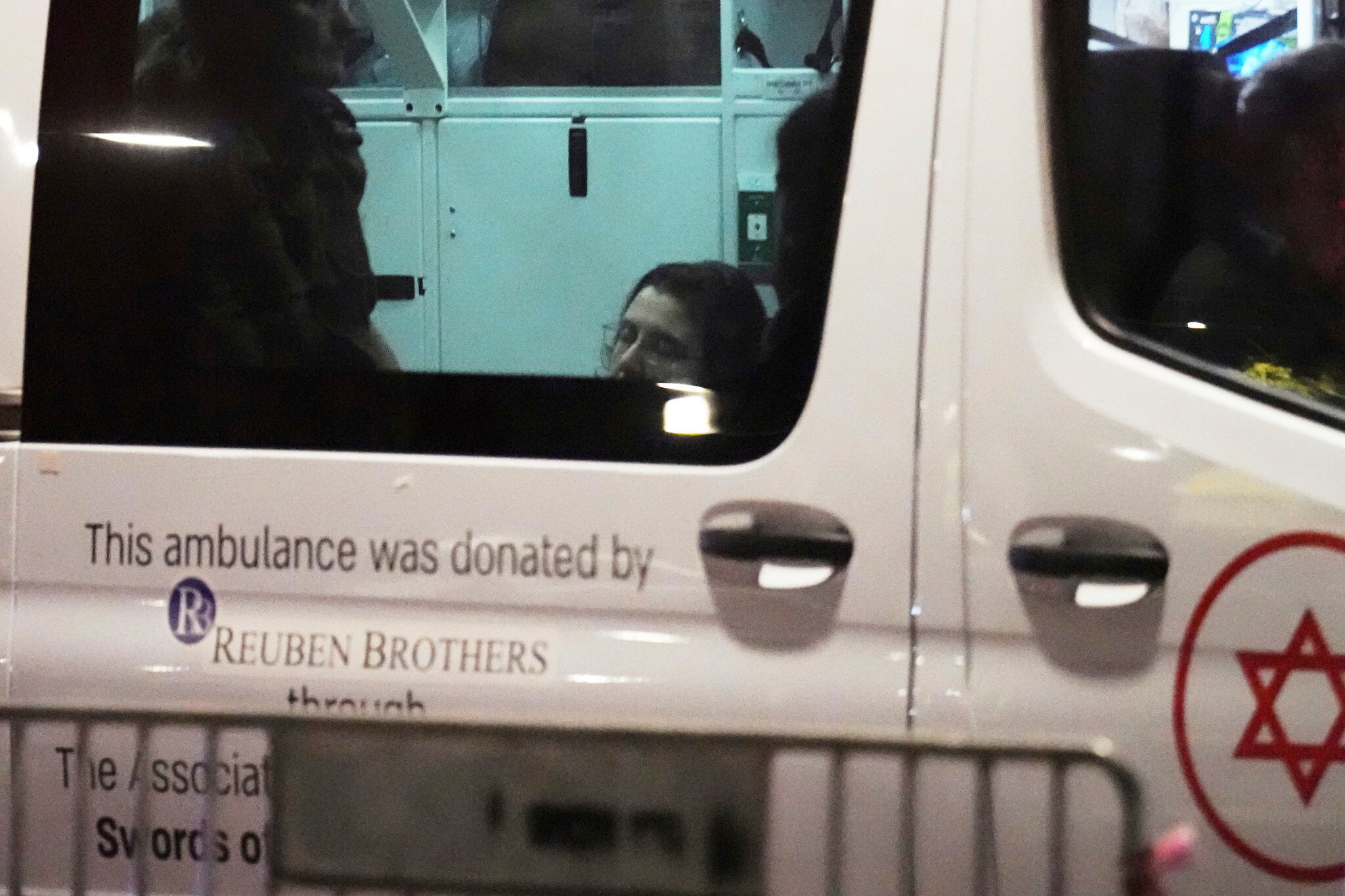
Elizabeth Tsurkov, an Israeli-Russian student who was freed after over two years of captivity by an Iraqi militia, is seen in an ambulance upon her arrival at Sheba Hospital in Ramat Gan, Israel. September 10, 2025. (AP/Ariel Schalit)
How many?
Hirsch: There are things the public isn’t aware of and we won’t go into. I still need to complete various missions in the national hostage domain.
What’s after? I hope one day I can return to my previous life. I once had four startups, lectured at university, served continually in reserves, was a family man. Over the past two and a half years, all my previous life was canceled. I need to complete various missions — and then we’ll see.