
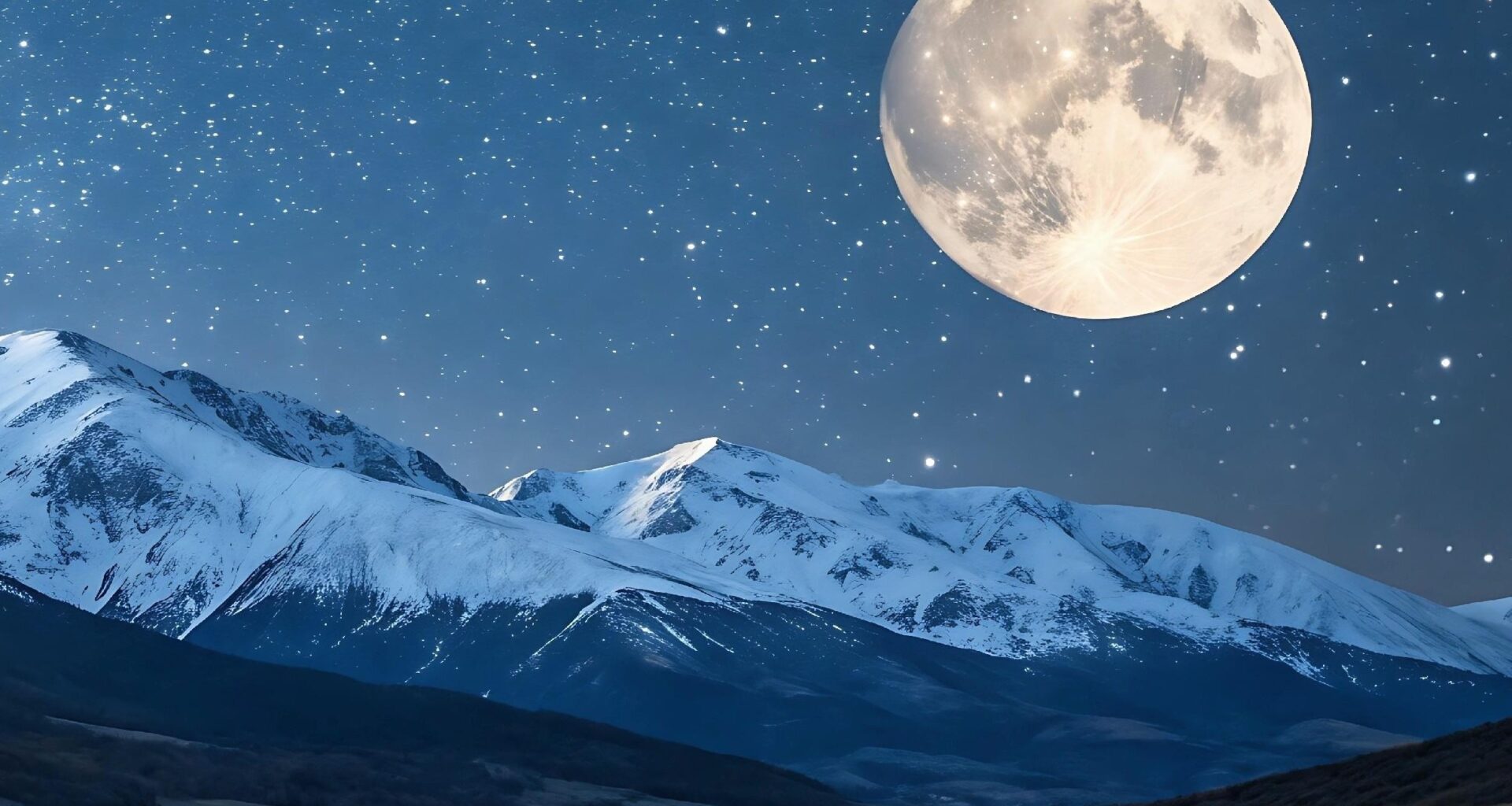
Have you ever looked at the winter sky and felt the Moon pulling your attention without trying too hard? February often feels cold and slow, yet the full Moon during this month brings a strong presence that feels impossible to ignore.
In 2026, this full Moon arrives right at the beginning of February and carries a name shaped by snow and survival. People call this Moon the Snow Moon, and its story blends nature, history, and simple skywatching.
Why people call it the Snow Moon

The name Snow Moon comes from how February usually looks and feels.
Many years ago, Native American tribes, Colonial American settlers, and European communities watched the Moon closely to track time. Each full Moon received a name that matched the conditions of that month.
February often brought deep snowfall across large areas of North America. Snow covered the ground, blocked paths, and made daily work harder.
Cold weather also reduced access to food. Because snow defined this part of the year, people began calling the February full Moon the Snow Moon.
Other names also appeared in different cultures, such as Hungry Moon or Storm Moon, which described the same harsh season.
When the Snow Moon appears in 2026
The Snow Moon reaches full phase on Sunday, February 1, 2026.
Peak illumination happens at 5:09 p.m. Eastern Standard Time. This moment marks the point when sunlight fully lights the Moon’s surface facing Earth.
The Moon does not stop looking full after that exact time. It appears full for almost two nights. Clear views remain possible on February 1 and February 2.
This gives enough time to enjoy the Moon without careful planning.
What causes a full Moon
A full Moon forms when the Moon moves to the opposite side of Earth from the Sun.
Earth stands between the Sun and the Moon during this phase. Sunlight then spreads across the Moon’s entire visible surface.
This pattern repeats every 29.5 days and forms the lunar cycle. During a full Moon, the Moon rises near sunset and stays visible for most of the night. It sets close to sunrise, which allows long hours of viewing.
How to see the Snow Moon clearly
The best time to see the Snow Moon is shortly after sunset on February 1. The Moon rises in the eastern sky during this time. It often looks larger near the horizon because of the Moon illusion.
Clear skies improve the view, but city lights do not hide the Moon. Its brightness cuts through light pollution easily.
No special equipment is required for viewing. Binoculars or a small telescope can reveal craters and dark volcanic plains on the Moon’s surface.
Where the Snow Moon appears
During February 2026, the Snow Moon appears against a background of stars known as winter constellations.
From many places on Earth, the Moon seems to pass near the constellation Cancer as it moves across the night sky. This position changes slightly each night as the Moon continues its orbit.
A group of stars called the Beehive Cluster lies close to this area of the sky. However, the strong brightness of the full Moon often washes out these faint stars, making them difficult to see without special equipment.
The Moon follows a path called the ecliptic, which is the same general path the Sun and planets appear to travel. Watching the Moon shift along this path over several nights helps show how the Moon moves around Earth.
How the Snow Moon affects Earth
The Snow Moon affects ocean tides. During a full Moon, the Sun and Moon align in a way that strengthens gravity. This alignment creates spring tides, which bring higher high tides and lower low tides than usual.
Many stories link full Moons to strange events or behavior. Science does not support these claims. The Snow Moon does not change human actions or cause extreme weather.
Its importance comes from marking time and showing how Earth responds to forces from space.
Why the Snow Moon matters
The Snow Moon matters reflects how closely people once depended on nature to understand time and seasons.
During the coldest part of winter, this full Moon helped communities track months, plan survival, and stay hopeful as winter slowly moved forward.
Even today, the Snow Moon offers a moment to pause and notice natural rhythms that continue without change.
—–
Like what you read? Subscribe to our newsletter for engaging articles, exclusive content, and the latest updates.
Check us out on EarthSnap, a free app brought to you by Eric Ralls and Earth.com.
—–