
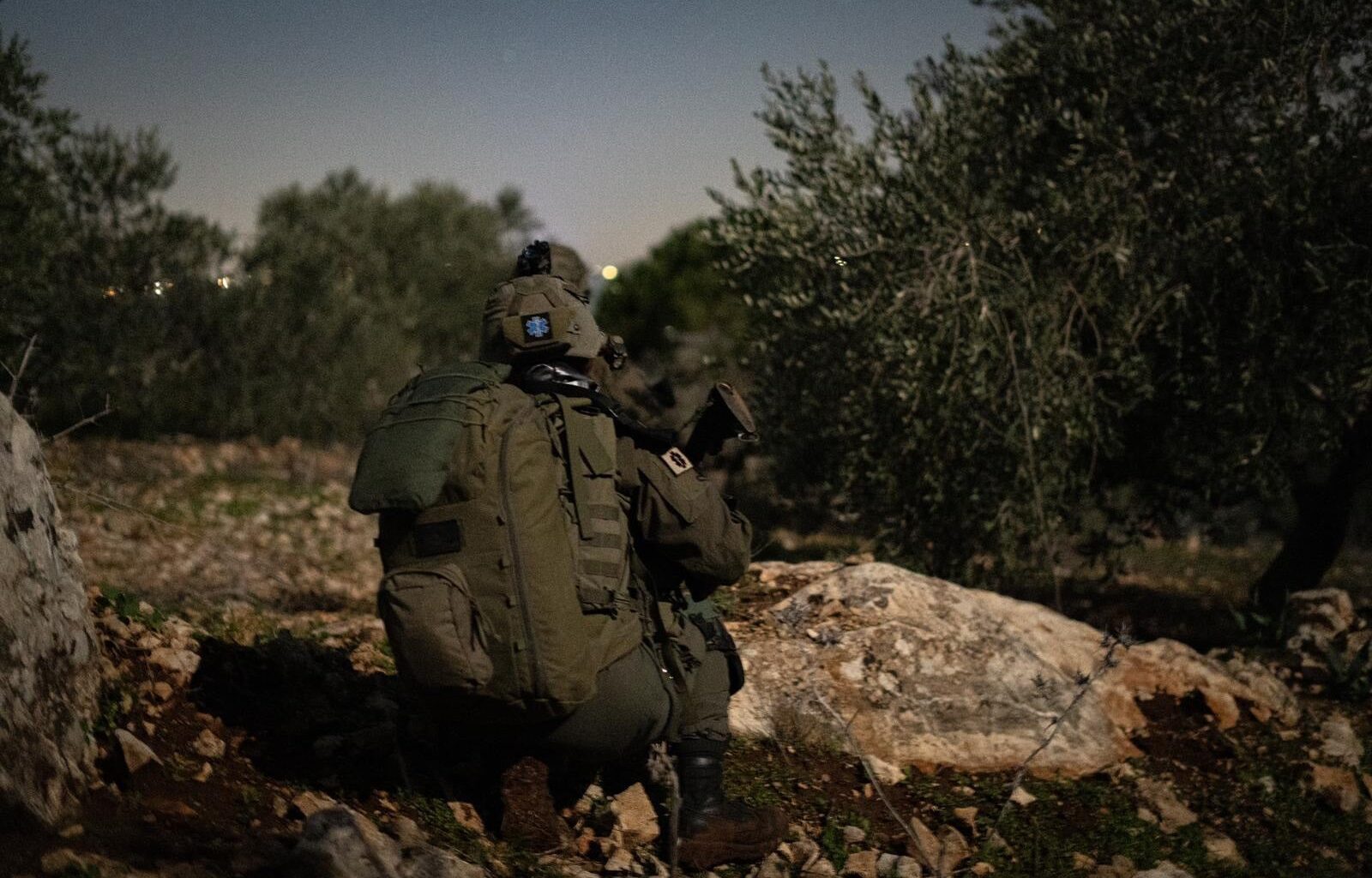
An airstrike in the southern Lebanese town of Doueir on Sunday afternoon killed a Hezbollah engineering commander, the Israel Defense Forces said.
The strike killed Ali Dawoud Amees, whom the military identified as a “division head in Hezbollah’s engineering department.”
“The terrorist was involved in efforts to rehabilitate military infrastructure of the Hezbollah terror organization in the Doueir area in southern Lebanon and advanced terror plans against IDF troops,” the military said in a statement, adding that his actions “constituted a violation of the understandings between Israel and Lebanon.”
The strike was one of a few by the IDF in Lebanon on Sunday. The military has maintained a troop presence in Lebanon since a November 2024 ceasefire between Israel and Hezbollah, and regularly targets Hezbollah efforts to rearm or rebuild.
Lebanon’s health ministry said one person was killed and six others wounded, including two children aged under 18, in an Israeli strike in Ebba, near Doueir, apparently referring to the IDF strike on the terror group operative.
Get The Times of Israel’s Daily Edition
by email and never miss our top stories
By signing up, you agree to the terms
The state-run National News Agency (NNA) said the strike targeted a vehicle whose driver was killed, reporting that a boy was among the wounded when his family’s car passed at the time of the raid and crashed.
צה”ל חיסל אחראי במחלקת ההנדסה של ארגון הטרור חיזבאללה שפעל לשיקום תשתיות בדרום לבנון
צה”ל תקף מוקדם יותר היום וחיסל את המחבל עלי דאווד עמיצ’ ששימש כראש ענף במחלקת ההנדסה של ארגון הטרור חיזבאללה.
המחבל עסק בניסיון שיקום תשתיות צבאיות של ארגון הטרור חיזבאללה במרחב א-דויר שבדרום… pic.twitter.com/7GDb1E21r3
— צבא ההגנה לישראל (@idfonline) February 1, 2026
The IDF also said on Sunday that it carried out an airstrike targeting a Hezbollah operative in the southern Lebanon town of Harouf, but did not provide further details.
And the military said that in the morning, it struck heavy machinery being used by Hezbollah in southern Lebanon. The engineering vehicles were targeted in the village of Mazraat Aboudiyeh, south of Sidon.
“The vehicles were struck while being used by Hezbollah terrorists to reestablish terror infrastructure sites in the area,” the military said.
The Lebanese health ministry, meanwhile, said a strike on Qanarit in the Sidon district wounded one person. State-run media said the strike targeted a bulldozer “while it was working to remove rubble” from the site of a previous Israeli attack.
In addition, the IDF said on Sunday that troops of the 769th “Hiram” Regional Brigade operated in several Lebanese border villages, and destroyed an anti-tank missile storage facility, a weapons depot, a building used by Hezbollah to launch anti-tank missiles at Israel during the war, and other infrastructure.
Israel’s military has previously targeted bulldozers, excavators and prefabricated houses in south Lebanon, while Lebanese officials have accused Israel of seeking to prevent reconstruction work in the heavily damaged south.
Hezbollah sites in southern Lebanon are demolished by the IDF, in a video issued by the military on February 1, 2026. (Israel Defense Forces)
Also Sunday, the NNA said the Israeli military dropped flyers aiming to intimidate residents in south Lebanon’s Bint Jbeil near the border.
It published a photograph of one of the alleged leaflets, which bore a warning to residents that Hezbollah operatives were using a hospital in the town.
Bint Jbeil’s Salah Ghandour hospital is run by the Hezbollah-affiliated Islamic Health Committee.
The Lebanese health ministry in a statement condemned “in the strongest terms the threats against southern hospitals, and considers them a serious attack and a flagrant violation of international laws and conventions.”
The Hezbollah-affiliated hospital said in a statement that the leaflets contained “a clear threat to the hospital on flimsy pretexts with no basis in truth,” and rejected what it said were attempts to tarnish the facility’s image.
The hospital’s grounds and its vicinity were struck in 2024 during the conflict between Israel and Hezbollah.
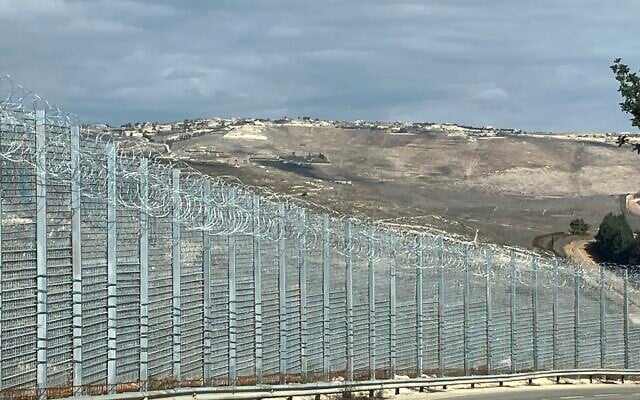
Part of the new fence that runs along the border with Lebanon, with Bint Jbeil, a Hezbollah stronghold, on the hill, on November 26, 2025. (Diana Bletter/ Times of Israel)
The 2024 ceasefire came after two months of open conflict in Lebanon, including an IDF ground operation in the country’s south in a bid to enable the safe return of some 60,000 residents of northern Israel displaced by the terror group’s near-daily attacks.
The rocket attacks began on October 8, 2023 — a day after fellow Iran-backed terror group Hamas invaded southern Israel, sparking the war in Gaza.
Since the ceasefire, the IDF says it has killed over 400 Hezbollah operatives and members of allied terror groups in strikes, hit hundreds of Hezbollah sites, and conducted over 1,200 raids and other small operations in southern Lebanon.
Weakened by the war and still facing regular Israeli strikes, Hezbollah is under internal and international pressure to hand over its weapons, with the Lebanese army having drawn up a plan to disarm it.
The Lebanese army said last month that it had finished disarming the terror group in the country’s south, between the Israeli border and the Litani River. Israel was skeptical of the claim, saying Hezbollah was continuing efforts to rearm.
Is accurate Israel coverage important to you?
If so, we have a request.
Every day during the past two years of war and rising global anti-Zionism and antisemitism, our journalists kept you abreast of the most important developments that merit your attention. Millions of people rely on ToI for fact-based coverage of Israel and the Jewish world.
We care about Israel – and we know you do too. So we have an ask for this new year of 2026: express your values by joining The Times of Israel Community, an exclusive group for readers like you who appreciate and financially support our work.
Already a member? Sign in to stop seeing this
You appreciate our journalism

You clearly find our careful reporting valuable, in a time when facts are often distorted and news coverage often lacks context.
Your support is essential to continue our work. We want to continue delivering the professional journalism you value, even as the demands on our newsroom have grown dramatically since October 7.
So today, please consider joining our reader support group, The Times of Israel Community. For as little as $6 a month you’ll become our partners while enjoying The Times of Israel AD-FREE, as well as accessing exclusive content available only to Times of Israel Community members.
Thank you,
David Horovitz, Founding Editor of The Times of Israel