
In the world of paleontology, the biggest bones usually grab the loudest headlines. But a tiny set of fossils unearthed in northern Spain is proving that the smallest players often hide the biggest secrets.
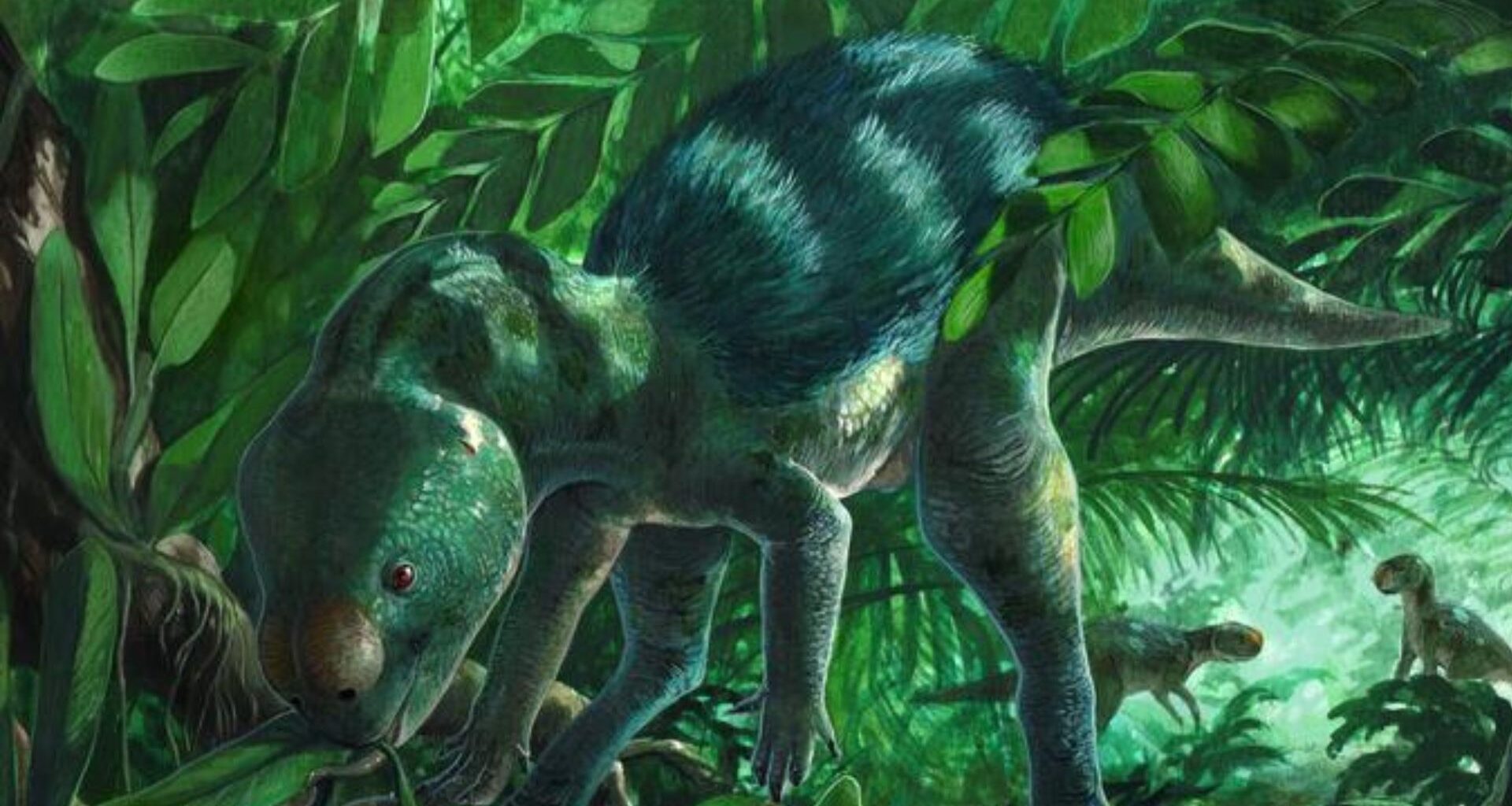
An international team of paleontologists has unearthed fossilised remains of a tiny new dinosaur named Foskeia pelendonum.
The find includes at least five individuals, notably characterized by their minute, lightweight body frames.
The new species has shattered the stereotype that miniature means simple, emerging as a tiny yet highly evolved key to a 70-million-year-old mystery.
“From the beginning, we knew these bones were exceptional because of their minute size. It is equally impressive how the study of this animal overturns global ideas on ornithopod dinosaur evolution,” said Fidel Torcida Fernández-Baldor of the Dinosaur Museum of Salas de los Infantes, who first discovered the fossils.
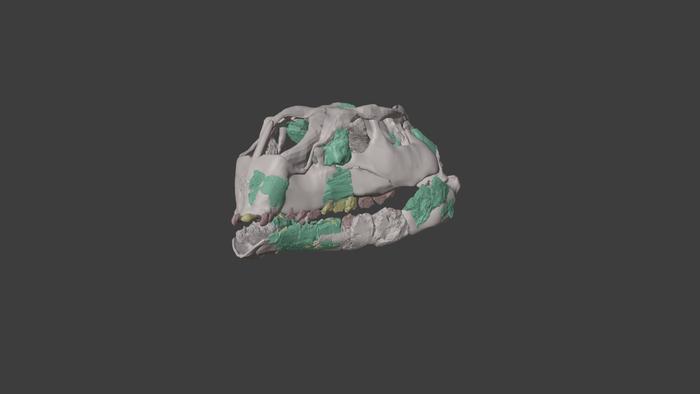 Reconstruction of the skull. Credit: Dieudonné et al. 2026
Small-bodied dinosaur
Experts note that its weird and hyper-derived skull proves it is a unique biological creature rather than a miniature version of famous relatives like Iguanodon.
“Foskeia helps fill a 70-million-year gap, a small key that unlocks a vast missing chapter,” said Thierry Tortosa from the Sainte Victoire Natural Reserve.
Microscopic analysis of the fossils confirms that Foskeia was not a juvenile of a larger species, but a fully grown, sexually mature adult.
Dr. Koen Stein’s histological research reveals a surprisingly active biology, with a high metabolic rate similar to that of modern birds or small mammals.
Confirming sexual maturity is vital for taxonomic accuracy. It ensures that the observed traits are fixed adult characteristics rather than temporary features that would have changed as the animal grew up.
Small but resilient, Foskeia used its specialized teeth and high-speed agility to thrive in the shadows of dense prehistoric forests.
Evidence suggests the animal shifted its physical posture as it grew, a rare trait that allowed it to remain agile throughout its life.
The species proves that evolutionary experimentation occurred at small scales just as frequently as it did with giants.
“These fossils prove that evolution experimented just as radically at small body sizes as at large ones. The future of dinosaur research will depend on paying attention to the humble, the fragmentary, the small,” noted Dieudonné.
Tree of life
The unique anatomy of Foskeia has fundamentally altered the dinosaur family tree.
New analysis places this tiny Spanish dinosaur as a sister species to the famous, much larger Australian Muttaburrasaurus.
This connection suggests a far more complex global migration pattern than previously thought.
Furthermore, the data have revived the “Phytodinosauria” hypothesis: the theory that diverse plant-eating dinosaurs actually form a single, natural group.
Foskeia is the missing link that proves plant-eating dinosaurs from different parts of the world were much more closely related than we thought.
The name Foskeia pelendonum serves as a linguistic map of the dinosaur’s physical nature and its geographic origins.
Derived from ancient Greek, the genus name combines fos (“light”), referencing its exceptionally small and lightweight adult frame, with skei (from boskein, meaning “foraging”).
Its species name honors the Pelendones, a Celtiberian tribe that once inhabited the Spanish regions of Soria, Burgos, and La Rioja, where the fossils were discovered.
The findings were published in the journal Papers in Palaeontology.