
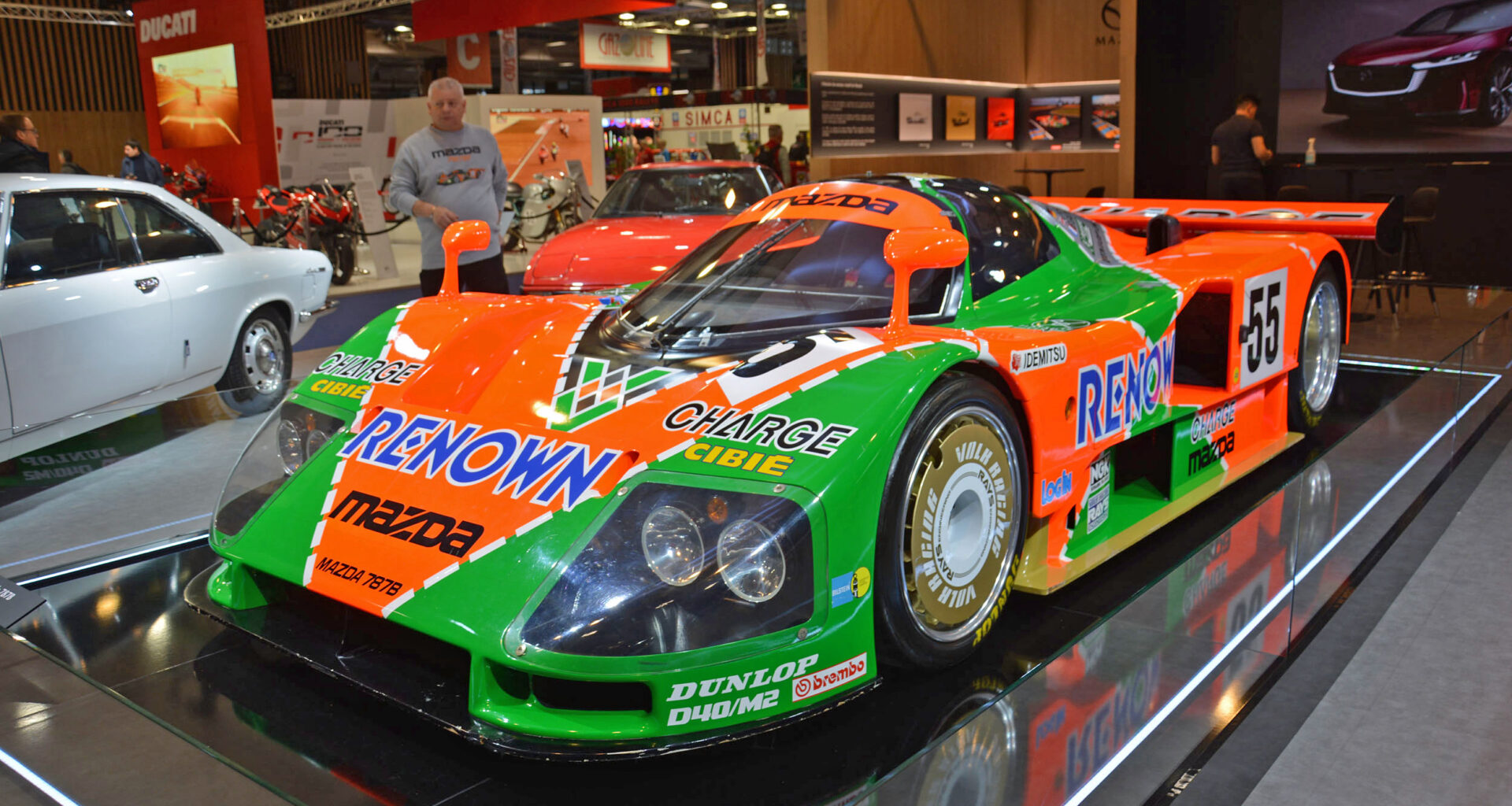
Mazda took the racing world by surprise when it won the 1991 edition of the 24 Hours of Le Mans. The victory was significant for two reasons: It marked the first time a Japanese company took first place in the famous event, and the 787B was the first Le Mans winner powered by a rotary engine. Toyota has won the race several times since, but the 787B remains the only Le Mans winner not powered by a piston engine.
This year, the Mazda stand at Retromobile celebrated the 35th anniversary of its victory. The brand brought out several emblematic rotary-powered sports cars, including the 787B, a Cosmo Sport, and an early RX-7.
1969 Mazda Cosmo Sport 110S
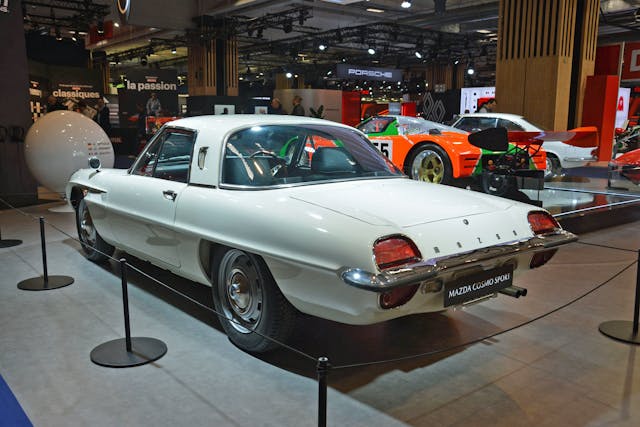
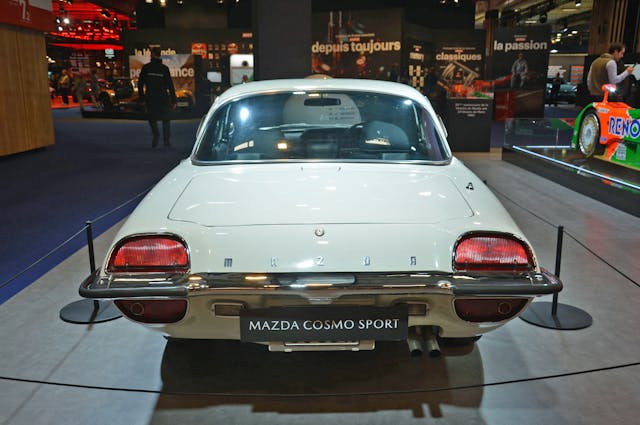
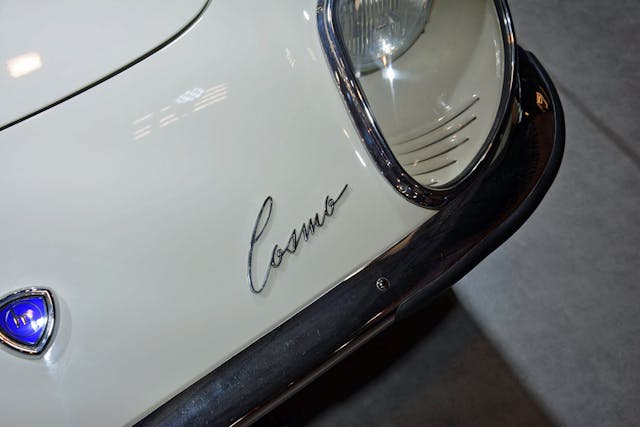
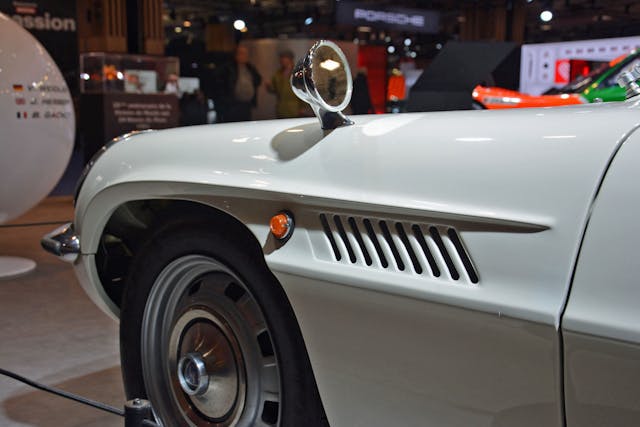
Released in Japan in 1967, the Cosmo Sport is the coupe that every rotary-powered Mazda sports car traces its roots to. It’s widely celebrated as the company’s first series-produced car with a Wankel engine, and as the first series-produced car with a twin-rotor engine. NSU beat Mazda to the punch with the tiny Spider, which went on sale in 1963 with a rear-mounted, single-rotor engine rated at 50 horsepower.
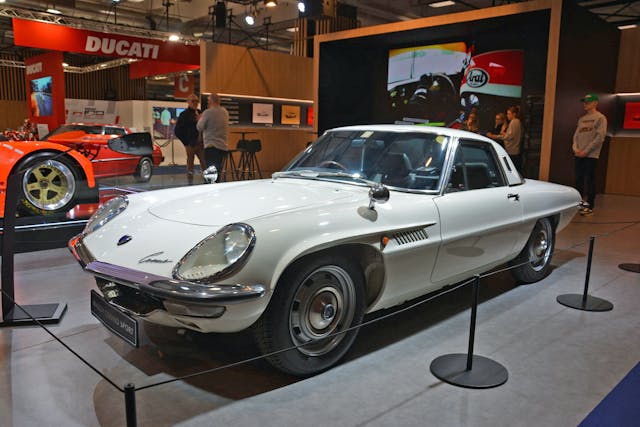
Mazda’s take on the concept of a Wankel-powered sports car was arguably far more exciting than NSU’s. The Cosmo initially used a 110-horsepower twin-rotor engine, which unlocked a 115-mph top speed. It was pegged at the top of the Mazda range, and it lived up to this positioning with sleek, futuristic styling.
Will the lineage continue? Your guess is as good as ours. Mazda has hinted at a new, rotary-powered sports car numerous times over the past couple of years, but the RX-8‘s successor still hasn’t landed.
1969 Mazda Luce R130
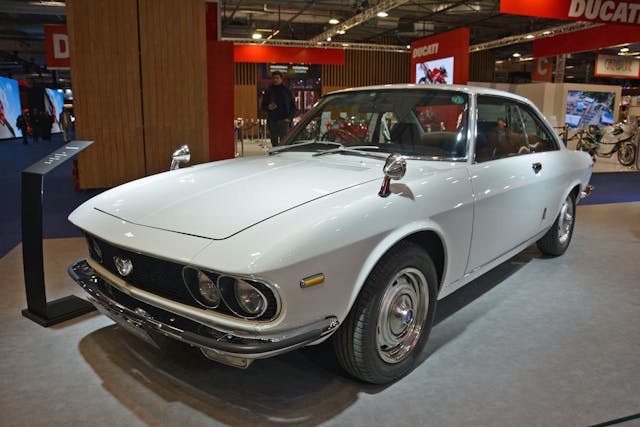
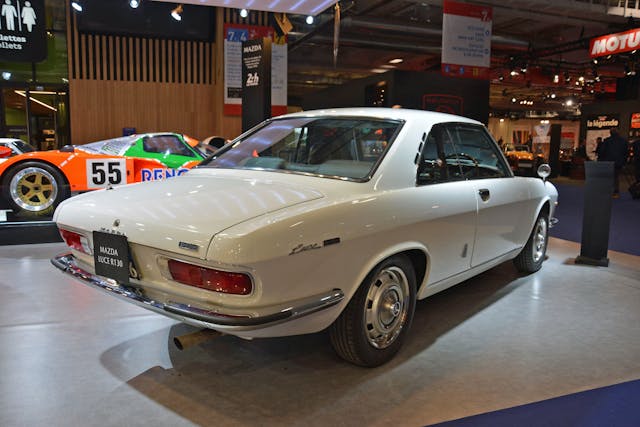
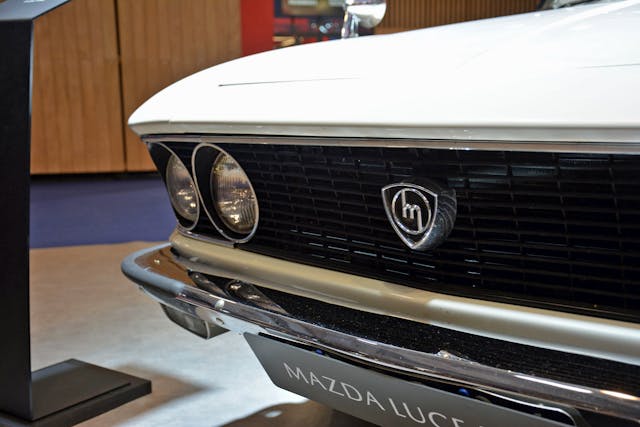
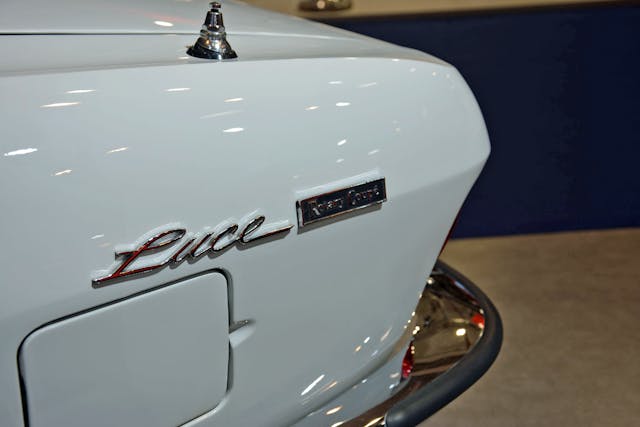
Elegant and well-proportioned, the original Luce went on sale in Japan in 1966 as Mazda’s range-topping model. It was initially only available as a sedan with a four-cylinder engine and rear-wheel drive, so it was pretty conventional by most means of measurement. However, the coupe launched in 1969 was anything but conventional: It received a 1.3-liter twin-rotor engine that sent 128 horsepower to the front wheels. In hindsight, the Luce R130 was a rolling laboratory of technology that Mazda used throughout the 1970s.
You’re not wrong if you’re thinking “that looks Italian.” Giorgetto Giugiaro designed the Luce R130 while working for Bertone. He also drew cars for Fiat, Simca, Suzuki, Maserati, and Isuzu during the 1960s.
1979 Mazda RX-7
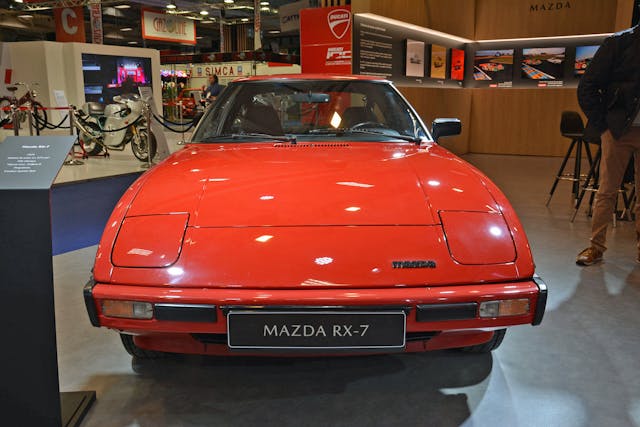
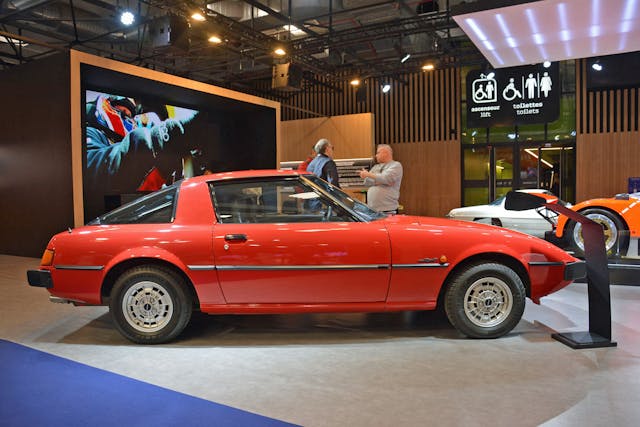
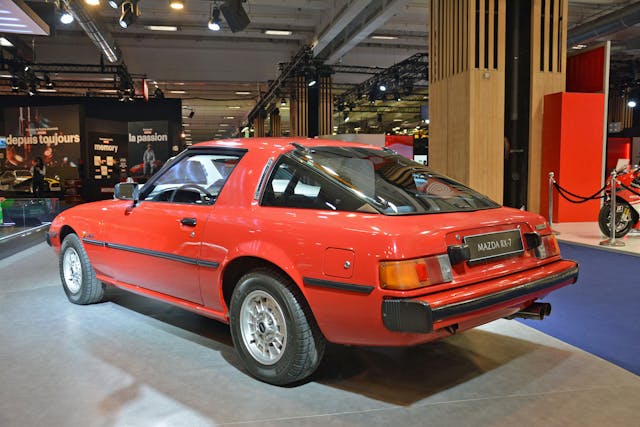
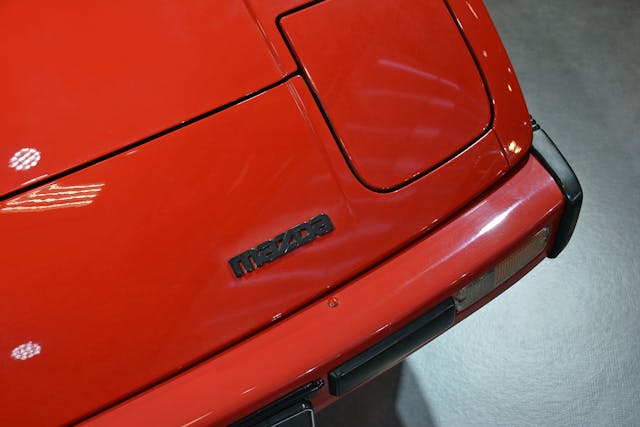
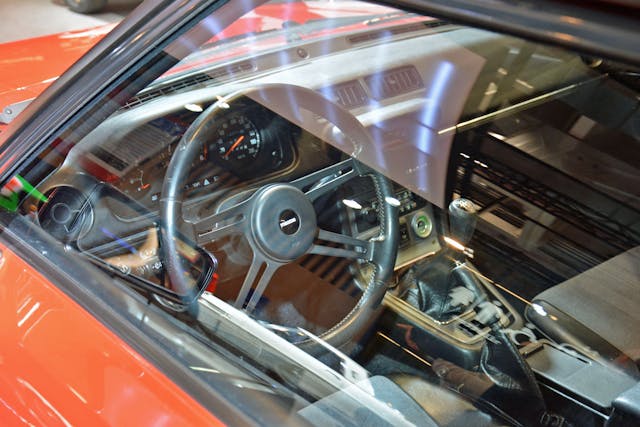
Released in 1978, the first-generation RX-7 stands proud as one of Mazda’s best-known sports cars. Its wedge-shaped silhouette, which was vaguely reminiscent of the Porsche 924, earned it the nickname “Poor Man’s Porsche” on the American market. Summing up the original RX-7 as a dollar-store alternative to the 924 would be cruelly unfair, however: It was quick, it handled well thanks to a near-50:50 weight distribution, and it was well built. Its engine also benefited from improvements such as better apex seals.
Early cars, like the one shown here, used a carbureted twin-rotor engine called 12A and are rated at 105 horsepower. Later models received visual updates and a more powerful 13B engine with electronic fuel injection, and Mazda built a handful of turbo cars for the Japanese market. Production ended in 1985.
1991 Mazda 787B
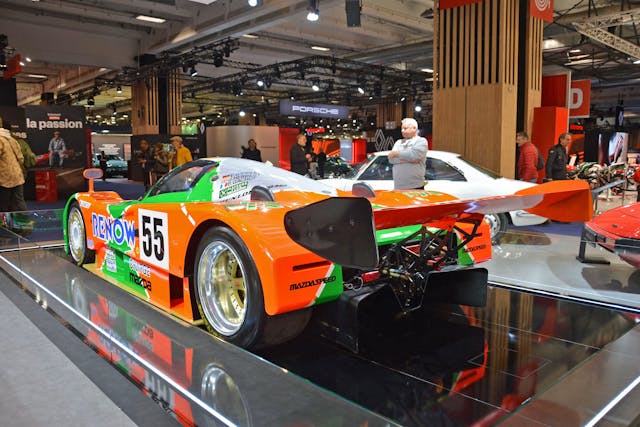
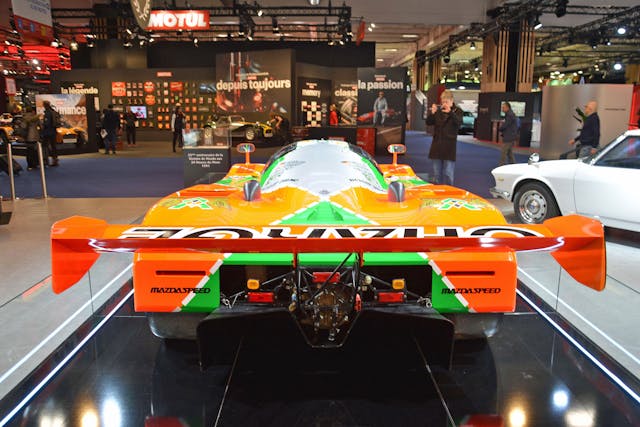
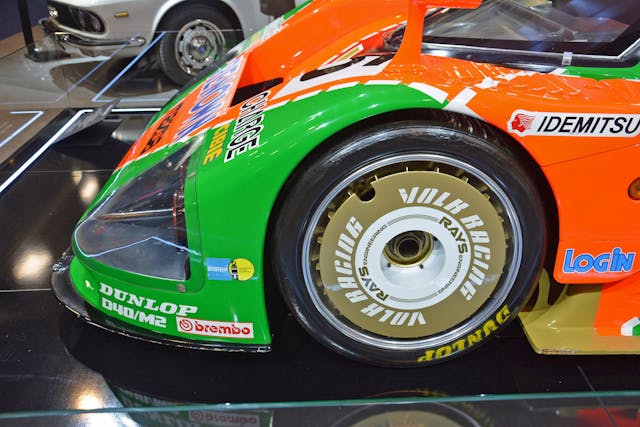
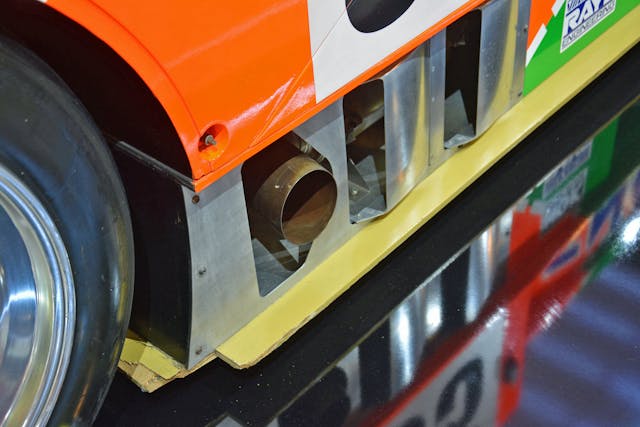
While the 787B won Le Mans in 1991, the car pictured here didn’t actually race. It’s one of the reserve cars that Mazda built in case one of the cars it entered in the race crashed, which explains why it’s in like-new condition. It looks just like the winning car, down to the distinctive orange and green livery and the huge rear wing, and it’s powered by a four-rotor, 2.6-liter Wankel engine that makes about 700 horsepower at 9000 rpm. Mazda quotes a zero-to-62-mph time of 2.5 seconds and a top speed of nearly 220 mph.
If you’re wondering, the Le Mans-winning car is stored in the Mazda museum in Hiroshima, Japan.