
Numbers tell the story of Israel’s ongoing “collective punishment” of Palestinians, despite Monday’s (2 February) opening of a Gaza crossing point, as the EU warns sanctions remain on the table.
Israel opened the Rafah crossing point from Gaza to Egypt for six hours per day from Monday, allowing out 50 patients a day, accompanied by two relatives each in what it called a “pilot scheme”.
A further 50 people will be let in from Egypt, but only if they used to live in Gaza.
Two of those due to leave on Monday were a two-year-old girl with shrapnel wounds to her intestines and a 12-year-old boy blinded by an explosion, according to Al Jazeera.
They will have to walk or be carried between concrete and barbed-wire fences along a 2.5km-long track designated by the Israeli military and to be screened and ID-ed by Israeli authorities, as well as Palestinian and Egyptian officials, and some 20 staff from an EU police mission called Eubam Rafah, before getting out to waiting ambulances.
But there are some 20,000 Palestinians, including 4,000 children, on a list of urgent cases needing medical care abroad, the Gaza health ministry has said, including 440 people in “life-threatening” condition and thousands of cancer patients.
And it would take between 130 and 400 days for them all to get to an Egyptian hospital at this rate, according to estimates by the AP news agency, while some 1,200 have already died while awaiting evacuation.
At the same time, Israel has blocked Médecins Sans Frontières (Doctors Without Borders/MSF) as well as 36 other aid groups from working in Gaza, after fully destroying 22 out of its 36 hospitals in the war.
Lifeline or ‘illegal collective punishment’?
For her part, EU foreign affairs chief Kaja Kallas called the Rafah opening “a concrete and positive step in the peace plan” and a “lifeline” on Monday.
British foreign minister Yvette Cooper “welcomed” the move, adding “much more still needs to be done”.
But Kenneth Roth, a US activist who used to head the Human Rights Watch group, said the Rafah arrangements amounted to ongoing “illegal collective punishment”.
The Spanish foreign ministry said the MSF ban violated “basic moral principles” and reminded Israel to honour “international obligations to reduce suffering”.
The wounded aside, Israel is also continuing to kill Palestinians at a rate that drew international rebukes, despite a US-brokered ‘ceasefire’ on 10 October last year.
The Israeli navy killed a three-year-old boy on Monday when they machine-gunned a tent camp along the coast, where more than two million people now lived due to the Israeli infantry’s control of more than 53 percent of Gaza territory.
Israeli strikes also killed two other Palestinians on Monday, Al Jazeera reported, after killing 30 people over the weekend, to bring the post-ceasefire death toll to some 530 people, including more than 100 children.
“We condemn the repeated violations of the ceasefire in Gaza, where hundreds of Palestinians were killed and injured by Israeli strikes over the weekend,” said EU crisis-management commissioner Hadja Lahbib.
The foreign ministries of Egypt, Indonesia, Jordan, Pakistan, Qatar, Saudi Arabia, Turkey, and the UAE said they “strongly condemn Israel’s repeated violations of the ceasefire” on Sunday.
Meanwhile, the Israeli army admitted, last week, according to Israeli daily Haaretz, that it killed 71,000 people in the war, after repeatedly denying the Gaza health ministry’s figures for the past two and a half years.
That number doesn’t include uncounted bodies still buried under rubble or indirect deaths, for instance from malnutrition, contagious disease, and untreated medical conditions.
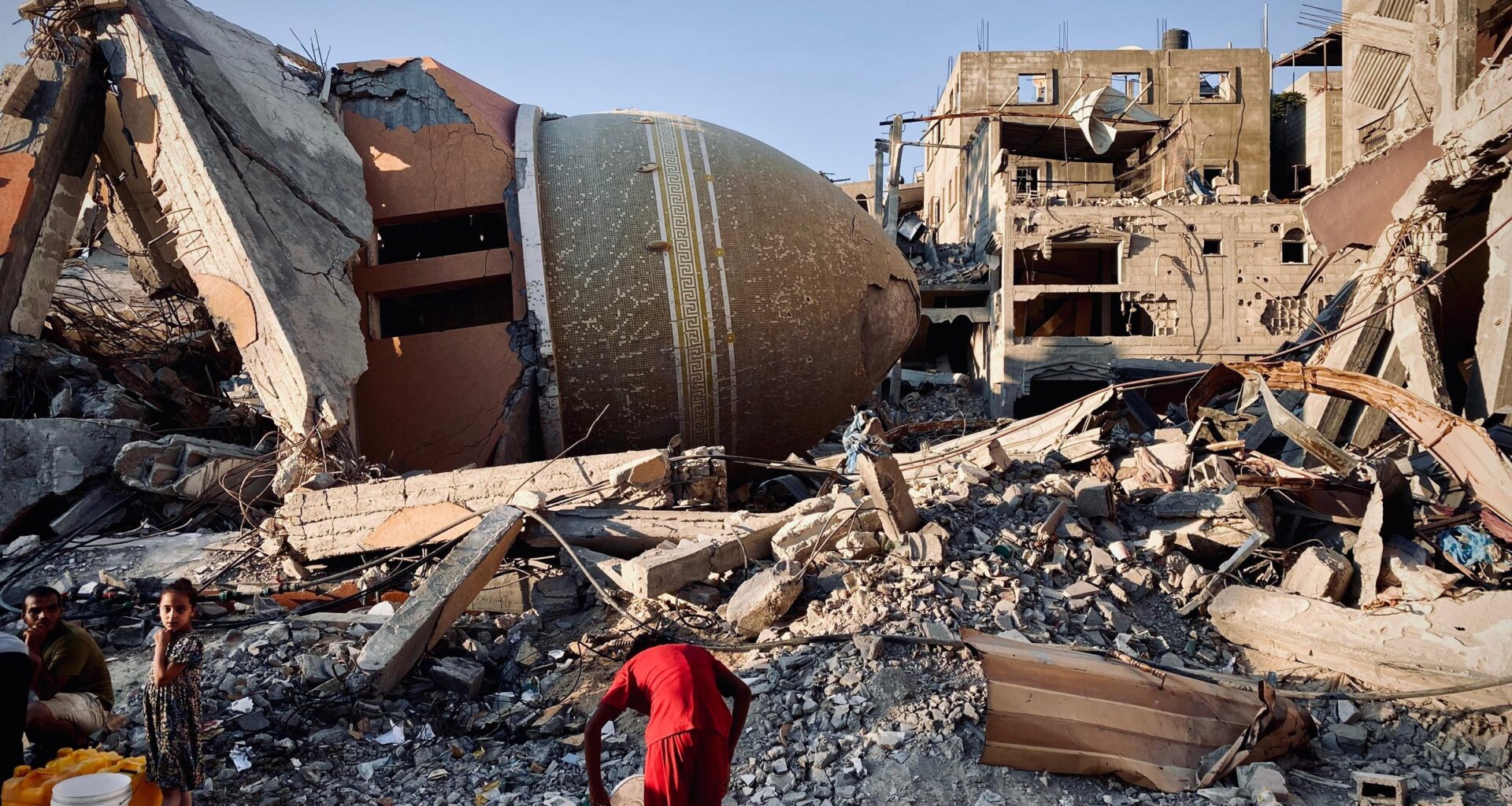
Rafah itself, which was once a city home to 250,000 people, is now fully destroyed, along with 90 percent of all of Gaza’s structures.
Reconstruction hinges on US president Donald Trump’s new Board of Peace, plans for an International Stabilisation Force, and the building of a “New Gaza” of gleaming tower blocks.
But Trump’s board has been boycotted by most EU leaders due to his invitation of indicted war-criminals to join, while few experts believe the force or tower blocks will come to be.
Leave Gaza — but allowed back in?
And those leaving Gaza via Rafah have no formal guarantee of being allowed back in, with an EU Commission spokesman on Monday in Brussels addressing fears of ethnic cleansing by saying the EU “rejects demographic or territorial changes” in the Strip.
Gaza aside, the UN noted on 27 January that Israeli violence displaced 37,000 Palestinians in the occupied West Bank in 2025 — the ninth consecutive year in a row to break previous records for the number of attacks by Israeli settlers.
Israel advanced plans for 47,000 new housing units for settlers in the region, in an 81 percent increase over 2024, including 3,400 in a zone called E1, which will cut the West Bank in two when they are built.
The EU Commission, last September, proposed the bloc’s first-ever trade and diplomatic sanctions against Israel, before putting them on hold when large-scale fighting ended.
EU diplomats told EUobserver that commission president Ursula von der Leyen has not formally retracted these, even though she has the unilateral power to do so.
“They’re still technically on the table — or on the shelf,” one diplomat said.
A commission spokesman said on Monday “we are following developments on the ground in great attention in light of the measures [sanctions] on the table”.
More EU pressure needed
But a group of 403 former EU diplomats, politicians, and officials said in a joint letter on Sunday this was not good enough.
The EU should launch “a critical, time limited, dialogue with Israel on the application of the relevant [human rights] provisions of the EU-Israel Association Agreement”, which governs relations.
“In the absence of constructive responses and actions on these concerns, [the EU should] adopt measures aimed at stopping Israeli excesses and unremitting violations of international law, including suspending the agreement,” they added.
One outstanding EU demand was for Israel to give international media access to Gaza.
But 28 months after the war broke out in October 2023, they are still being kept out, and they will not be let in via Rafah either.
To date, the only EU sanction imposed for what a panel of UN experts have called “genocide” in Gaza was to freeze some €14m of bilateral payments for cultural projects in Israel last September.
The EU Commission did not reply when asked by EUobserever if the bilateral payments remained on hold or if von der Leyen had now lifted the ban.