
It happened over lunch.
We were sitting at a restaurant, rabbis from Israel and North America, talking quietly, circling the same question:
How are our communities responding to this war?
In Israel, the pain is immediate—raw, unavoidable.
In North America, it is real too, but filtered through distance, politics, and fear.
We were part of a mifgash—an intentional encounter—between my Hartman Rabbinic Leadership Cohort and Harabbanut Yisraeli, the Shalom Hartman Institute’s Israeli rabbinic training program.
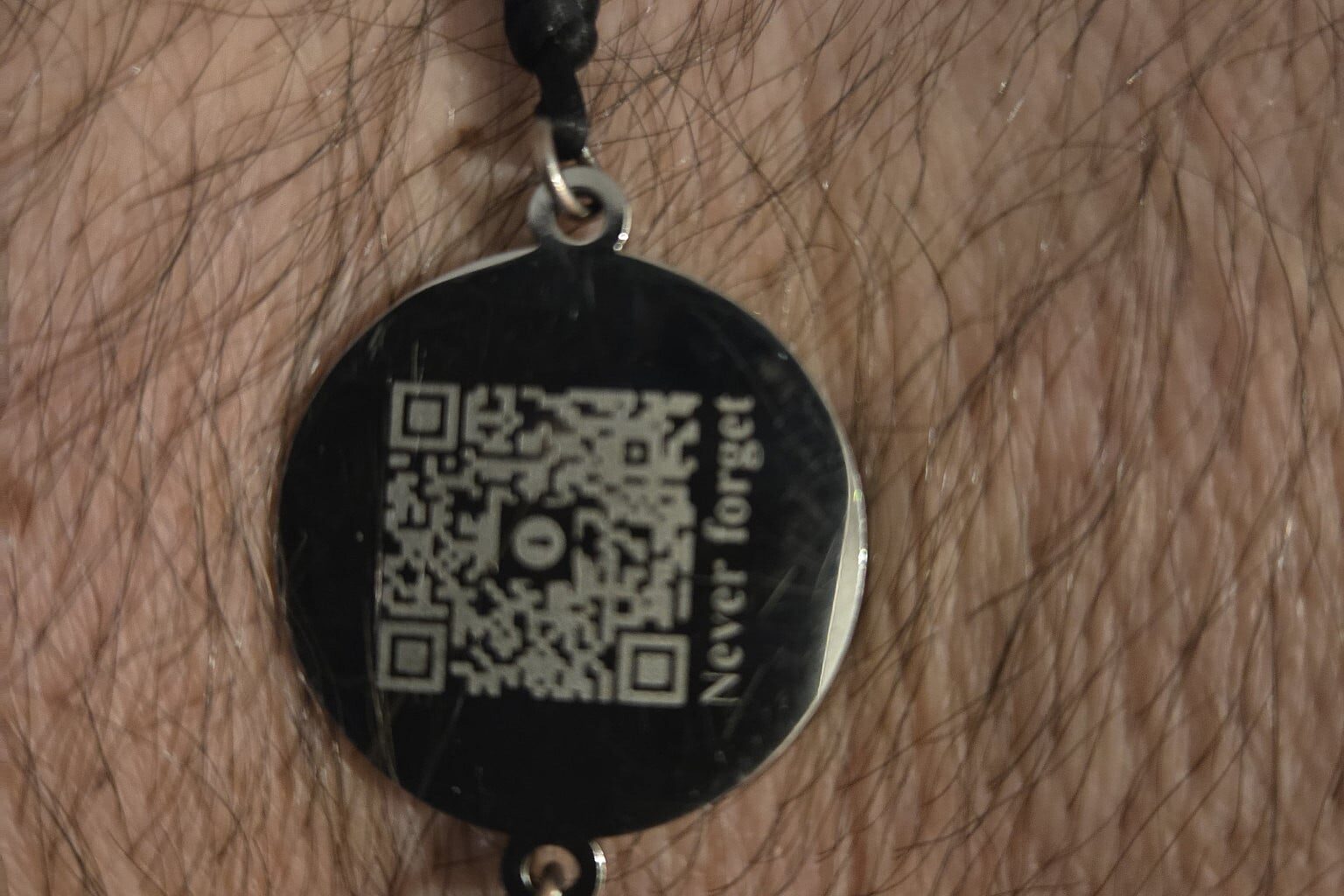
At some point, one of the Israeli participants shared his bracelet.
He placed it in my hand.
On it was a QR code.
“Scan it,” he said.
It opened a site: remember.bio/he — a digital memorial bearing the names of every Israeli who has fallen since October 7: the civilians murdered that day, and the soldiers who have died since. Thousands of names. Each one a universe. Each one a life cut short.
He told me he wears it every day. Then he said, almost casually, “You should have it.”
I put it on.
I’m wearing it now.
It’s heavy.
Not jewelry-heavy.
Memory-heavy.
It feels less like an accessory and more like sackcloth.
And suddenly, our learning that day felt painfully alive.
Two Responses to Catastrophe
We had been learning a moment from the Book of Esther. The story we usually associate with costumes and joy begins in terror: a royal decree ordering the destruction of the Jewish people.
When Mordechai learns of it, his response is raw and public:
“Mordechai tore his clothes, put on sackcloth and ashes, and went out into the city, crying loudly and bitterly.” (Esther 4:1)
He does not hide his grief. He wears it.
When Queen Esther hears of this, she is shaken. At first, she tries to send him clothes—to cover his sackcloth. Mordechai refuses them.
Then Esther decides she will go to the king, an act that could cost her life. And when she does, the text says:
“Esther clothed herself in royalty and stood in the inner court of the king.” (Esther 5:1)
She does not enter in mourning garments.
She does not wear ashes.
She dresses as a queen.
Two people.
One catastrophe.
Two responses.
Mordechai grieves.
Esther transforms.
From Sackcloth to Courage
The Hasidic master Rabbi Shlomo of Radomsk, in his Tiferet Shlomo, notices this tension. Are these opposing paths? He answers, no—they are stages of the same journey.
First comes Mordechai—naming the pain, refusing to normalize it.
Then comes Esther—finding the courage to step back into life, into responsibility, into shaping the future.
Redemption, he teaches, does not come when pain disappears. It comes when simchah—life, meaning, moral vitality—can re-enter the heart.
Not joy as denial.
Joy as choosing life again.
The Bracelet as Mordechai’s Garment
The bracelet I was given is a modern Mordechai garment.
It reminds me of the post-Holocaust custom of pairing B’nai Mitzvah students with children who were murdered and never reached the age of thirteen. The living child would say Kaddish for the dead one.
Never Forget.
Never Again.
Memory as presence.
Grief as responsibility.
But those rituals were never meant to be the end of Jewish response—only the beginning.
Choosing Who We Will Be
After the Holocaust, Jews responded in different ways. As Yossi Klein Halevi has written, three broad paths emerged: the Haredi world withdrew; Zionism re-entered history as a sovereign people; North American Jewry embraced opportunity and belonging. Each response was shaped by trauma. Each was an attempt to survive.
Now, after October 7 and the war that followed—after the hostages, the funerals, the unbearable waiting—Israel stands at another crossroads.
As the last hostage, Ran Gvili, has now come home for burial, and as the war in Gaza appears to be nearing its end, a deeper question emerges:
What kind of people will we be after this?
Choosing Life Again: What Might an Esther Response Look Like?
Trauma closes the future.
Esther opens it.
She does not deny what has happened. She carries it with her as she steps forward. But she refuses to let terror be the final word.
An Esther response begins when a wounded person dares to re-enter life.
We are already seeing it.
Babies are born and named for those who were lost. New life carrying old memory forward.
Communities are beginning to gather not only to mourn, but to sing again. To study. To build. To argue. To dream.
Israelis and diaspora Jews are choosing connection over retreat, even when we struggle to understand one another.
Not joy as celebration.
Not joy as forgetting.
But joy as moral courage.
Joy as choosing life again.
The Courage to Rise
The Torah commands: “You shall choose life.” (Deuteronomy 30:19)
Not once.
But again.
And again.
We will wear the bracelets.
We will speak the names.
We will remember.
But Jewish history teaches that a people cannot live forever in sackcloth.
Mordechai teaches us to cry.
Esther teaches us to rise.
And redemption begins when we choose not only to survive—
but to live.
That choice now stands before us.