
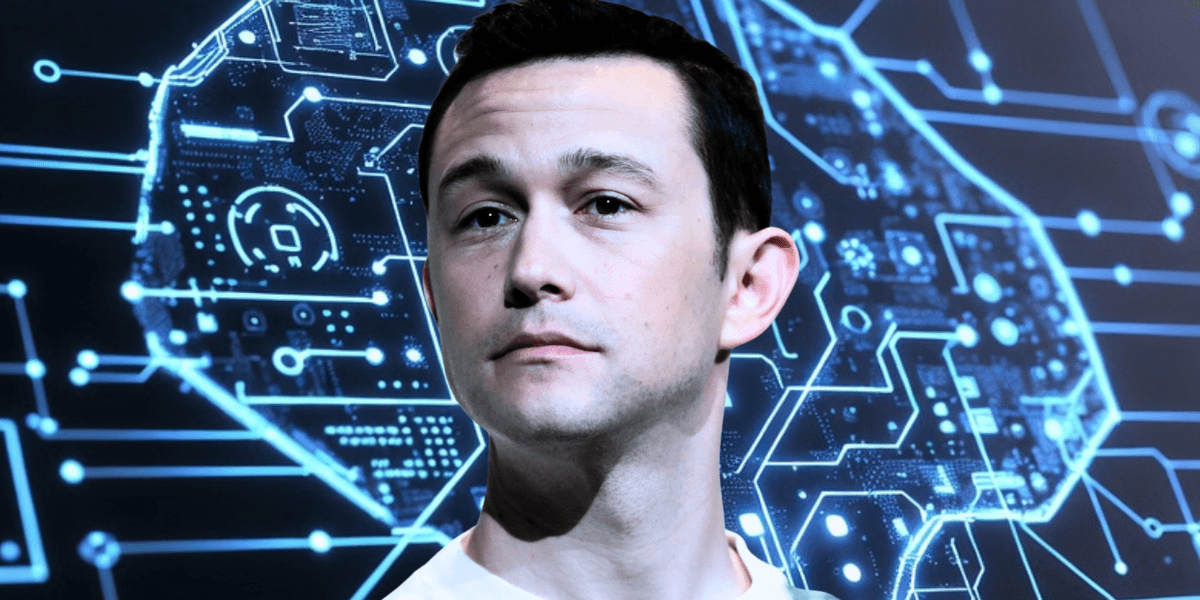
At Sundance last week, Joseph Gordon-Levitt discussed one of the biggest problems facing indie filmmakers who want to use AI tools.
The people whose work trains these models aren’t getting paid. And he wants to find a solution.
Gordon-Levitt connected the issue back to social media’s business model, which AI companies have adopted wholesale.
“They’re running the same business models, the same exact business models,” he said. “Hook you, keep you, serve you ads.”
The actor and director, who founded the company Hit Record in 2010, watched social media transform from something he and other filmmakers were excited about, something he believed would democratize creativity, into what he now sees as a warning about AI’s trajectory.
Check out the video below from his conversation at Sundance, in which Gordon-Levitt talks about starting his production company and what has changed since then (and what conversations need to be had about AI).
– YouTube www.youtube.com
The Problem
As he discusses here, one big issue is that AI and LLM models don’t work without human input. They digest all the human-made movies, books, and songs they can and put that data into a whirling pool of information to pull from.
“These AI products, they’re called artificial intelligence,” Gordon-Levitt said. “There’s a great thinker named Divya Siddarth who says, let’s not call it that. Let’s call it collective intelligence, because, really, they don’t artificially generate anything.”
The models break down pre-existing information into data, estimate the statistical probabilities of those bits, and then generate outputs, he said. And right now, tech companies take most of that original information without permission or payment. AI is being trained on data from everywhere, including the conversations that we have with it.
But all that value flows to roughly four or five companies. For indie filmmakers considering these tools, this creates a problem beyond that they aren’t getting paid to train models. Making indie films is already hard enough—feeling a squeeze this way is just icing on the cake.
Gordon-Levitt acknowledged why independent creators would want access to AI.
“I completely get why an independent filmmaker would want to use these tools,” he said. “My 10-year-old and his buddy or two 10-year-olds in Nigeria or Mumbai or wherever else who don’t have access to the kinds of film industry that we have access to who want to use these tools to make beautiful things.”
He’s speaking specifically to people working in indie spaces who might not have the budgets to make something on the level of the next Marvel movie, or anything like it.
His Proposed Solution
His solution centers on ongoing payment, not one-time buyouts. The approach already exists in simpler forms, he said.
“We already do it on YouTube, for example,” Gordon-Levitt said. “They split their ad revenue in half, and they pay all their creators.”
The framework he described would work pretty simply. When a model generates an output, it calculates which inputs were used. It ranks their importance. Then it pays people accordingly.
“They, right now, haven’t yet built the technology necessary to track the inputs of these AI models to the outputs,” he said. “But that technology needs to be built, and then policies need to be put into place.”
In June last year, Disney and Universal sued Midjourney for copyright infringement. But then Disney turned around and made a deal with OpenAI, allowing its characters to be used on Sora. The difference, of course, was the licensing.
What Filmmakers Can Do
Last year, over 400 Hollywood creatives signed a letter opposing AI copyright exemptions. Filmmakers can continue to advocate for themselves and make their opinions known.
Gordon-Levitt, for example, is a member of the Creators Coalition on AI, which is working to define ethical use standards. While his conversation on AI was pretty brief and broad, and he didn’t lay out any specific actions, joining the organization could be a good place to start having the conversations and talking about regulations.
Filmmakers interested in joining or supporting such advocacy efforts can begin by visiting the Creators Coalition website and joining as a signatory.
“This is not a dividing line between the tech industry and the entertainment industry, nor a line between labor and corporations,” the group wrote upon their launch. “Instead, we are drawing a line between those who want to do this fast, and those who want to do this right.”
You can also turn toward your unions. SAG-AFTRA, WGA, and the DGA are already working to establish guidelines requiring consent, compensation, and transparency for AI-generated digital replicas.
Consider disclosing AI use in your projects, or the lack thereof (much like Vince Gilligan and the Pluribus team did). Netflix’s guidelines require that AI tools used on their productions don’t train on production data and that outputs don’t replicate copyrighted material—a useful standard to apply when evaluating tools yourself.
Before using any AI tool, do your best to understand its training data sources and terms of service. Most of the big companies don’t disclose their training data. But some companies are trying to build ethically trained alternatives using licensed content. We’ve written about Marey before, a paid video generation tool by Moonvalley. It has ties to AI film studio Asteria Film Co. and is trained on licensed data. These kinds of tools can cost more upfront, but support a more sustainable model.
Keep a human in the loop of every step in the creative process. Don’t let a machine do all the work for you.
If you choose to use AI tools trained on unlicensed work, recognize you’re participating in a system that currently extracts value from other creators without compensation. And be prepared for any blowback that might cause.
Summing It All Up
This conversation is good because it’s happening early. Unlike social media, where problems became clear only after years of damage, filmmakers are trying to confront AI’s issues now.
“Back when we didn’t see the downsides of social media coming, it was years and years and years before we started having these conversations,” Gordon-Levitt said. “We’re a lot earlier on the uptake this time.”
For creators weighing whether to use AI tools, it’s about what system you’re supporting and whether that system will sustain independent filmmaking long-term.
We’ve covered the ethical questions around AI extensively, along with how studios are setting guidelines.
Gordon-Levitt’s compensation model would call for substantial work to implement. But without it, the current path leads to the same place social media did—concentration of wealth and power with a handful of companies, while the people creating the actual value get nothing.