
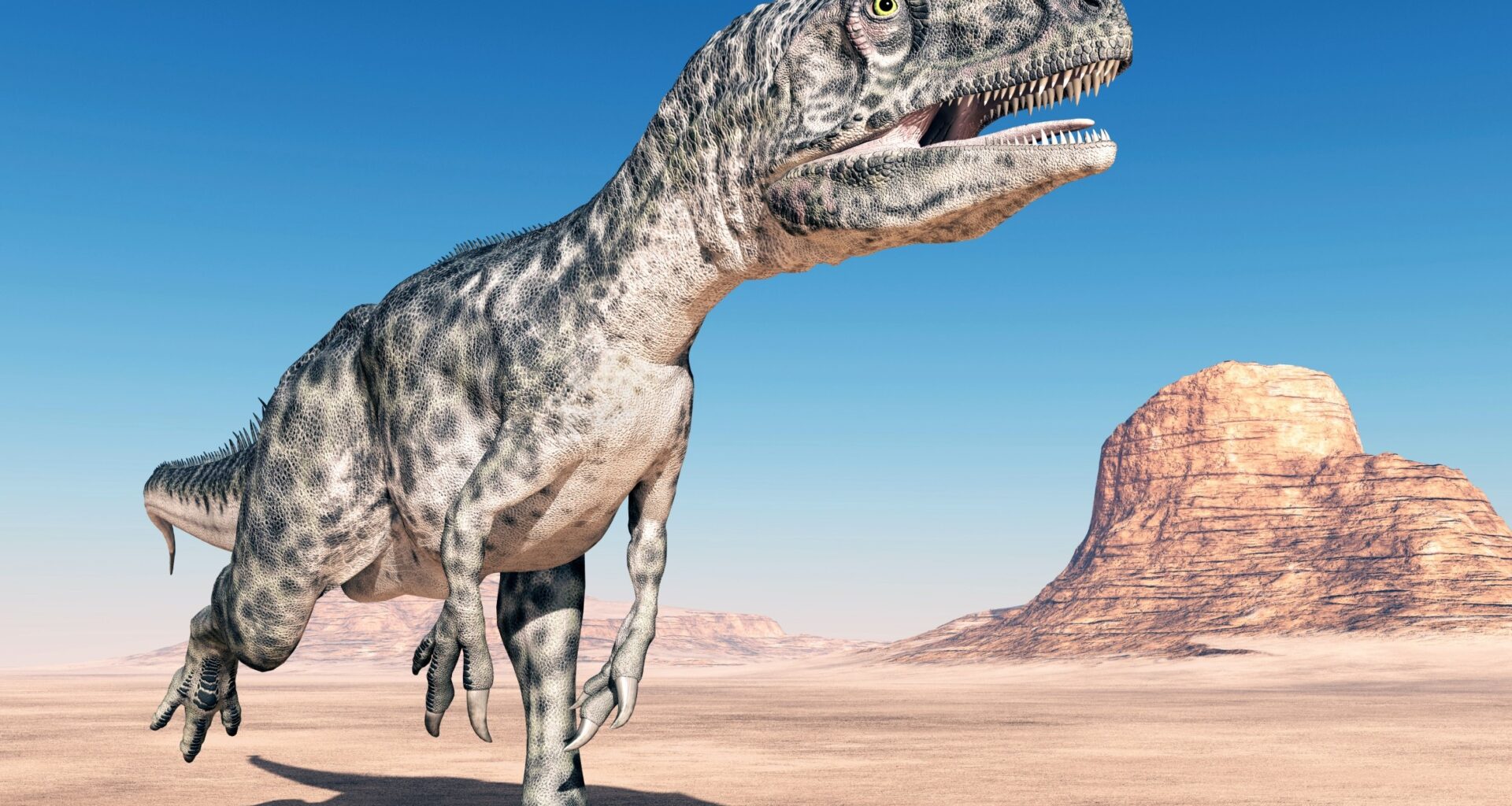
Dinosaurs often get framed as giants locked in endless battles. Huge teeth, huge tails and huge drama. But the real story of survival in the Late Jurassic was quieter and far more lopsided. It involved babies. Lots of them. And not many lived very long.
Around 150 million years ago, North America looked nothing like it does today. Wide floodplains stretched across what is now the western United States, rivers shifted and forests came and went.

Dinosaurs ruled every level of this landscape. Some browsed on plants all day. Others hunted. And many of the hunters depended on the smallest members of the biggest species to stay alive.
This is the world uncovered by a new study that pieced together who ate whom in one ancient ecosystem.
The results flip a familiar idea on its head. The largest animals on land did not just dominate their world as adults. As babies, they quietly fed it.
Small bodies in a giant world
Sauropods like Brachiosaurus and Diplodocus were the long-necked, long-tailed plant-eaters that grew into the biggest animals to ever walk on land. As adults, they were walking mountains. But they did not start out that way.
Sauropods began life inside eggs about a foot wide. When they hatched, they were tiny compared to their parents and the predators around them.
Unlike many modern mammals, baby sauropods did not get much help. Evidence suggests they were left on their own from the start.
That made them easy targets. Young sauropods could not fight back. They could not outrun most meat-eaters. And they were everywhere.
A crowded mix of life and death
The study was led by Dr. Cassius Morrison at UCL Earth Sciences and appeared in the New Mexico Museum of Natural History and Science Bulletin.
The team focused on fossils from the Morrison Formation, a well-known stretch of rock that has produced some of the most important dinosaur discoveries in the world.
Much of the research came from one place in Colorado, the Dry Mesa Dinosaur Quarry. Over as long as 10,000 years, this site recorded a crowded mix of life and death.
Fossils from at least six sauropod species turned up there, along with meat-eaters, smaller animals, and plants.
This concentration allowed scientists to do something rare. Instead of looking at species one by one, they could map out an entire food web. That means tracking every likely feeding relationship in the ecosystem, from plants to herbivores to carnivores.
Baby dinosaur diets
To build this food web, the team pulled together several lines of evidence. They looked at dinosaur size, examined tooth wear, and analyzed isotopes locked inside fossil remains.
In some cases, the researchers even studied fossilized stomach contents that preserved a dinosaur’s last meal.
With the help of software normally used to study modern ecosystems, they created the most detailed dinosaur food web of its kind.
One pattern stood out fast. Sauropods connected to far more plants and animals than other plant eaters.
Ornithischians like Stegosaurus were plant eaters too, but they were tougher prey. Armor and spiked tails made them risky meals. Young sauropods had no such protection.
“Adult sauropods such as the Diplodocus and Brachiosaurus were longer than a blue whale. When they walked the Earth would shake,” said Dr. Morrison. “Their eggs, though, were just a foot wide and once hatched their offspring would take many years to grow.”
“Size alone would make it difficult for sauropods to look after their eggs without destroying them, and evidence suggests that, much like baby turtles today, young sauropods were not looked after by their parents.”
Baby dinosaurs were an easy meal
For meat-eaters like Allosaurus and Torvosaurus, this steady supply of small, defenseless prey mattered. Hunting large, armed dinosaurs was dangerous. Injuries could be fatal. Easy meals changed the math.
The study suggests that having so many young sauropods around may have allowed predators to survive injuries that would otherwise kill them. A wounded hunter could still eat without taking big risks.
“The apex predators of the Late Jurassic, such as the Allosaurus or the Torvosaurus, may have had an easier time acquiring food compared to the T. Rex millions of years later,” said William Hart from Hofstra University, a co-author of the study.
“Some Allosaurus fossils show signs of quite horrific injuries – for instance caused by the spiked tail of a Stegosaurus – that had healed and some which hadn’t. But an abundance of easy prey in the form of young sauropods may have allowed injured allosaurs to survive.”
Baby dinosaurs shaped evolution
This research does more than describe a harsh moment in dinosaur history. It helps scientists compare how ecosystems changed over long stretches of time.
When sauropods became less common tens of millions of years later, predators were forced to adapt.
That change may help explain why dinosaurs like Tyrannosaurus rex developed stronger bites, better eyesight, and larger bodies to hunt tougher prey.
By rebuilding entire food webs, scientists can see how shifts at one level affect everything else. In the Late Jurassic, baby sauropods were not only victims. They were the fuel that kept the whole system going.
Big dinosaurs made the headlines, while their babies kept everyone else alive.
—–
Like what you read? Subscribe to our newsletter for engaging articles, exclusive content, and the latest updates.
Check us out on EarthSnap, a free app brought to you by Eric Ralls and Earth.com.
—–