
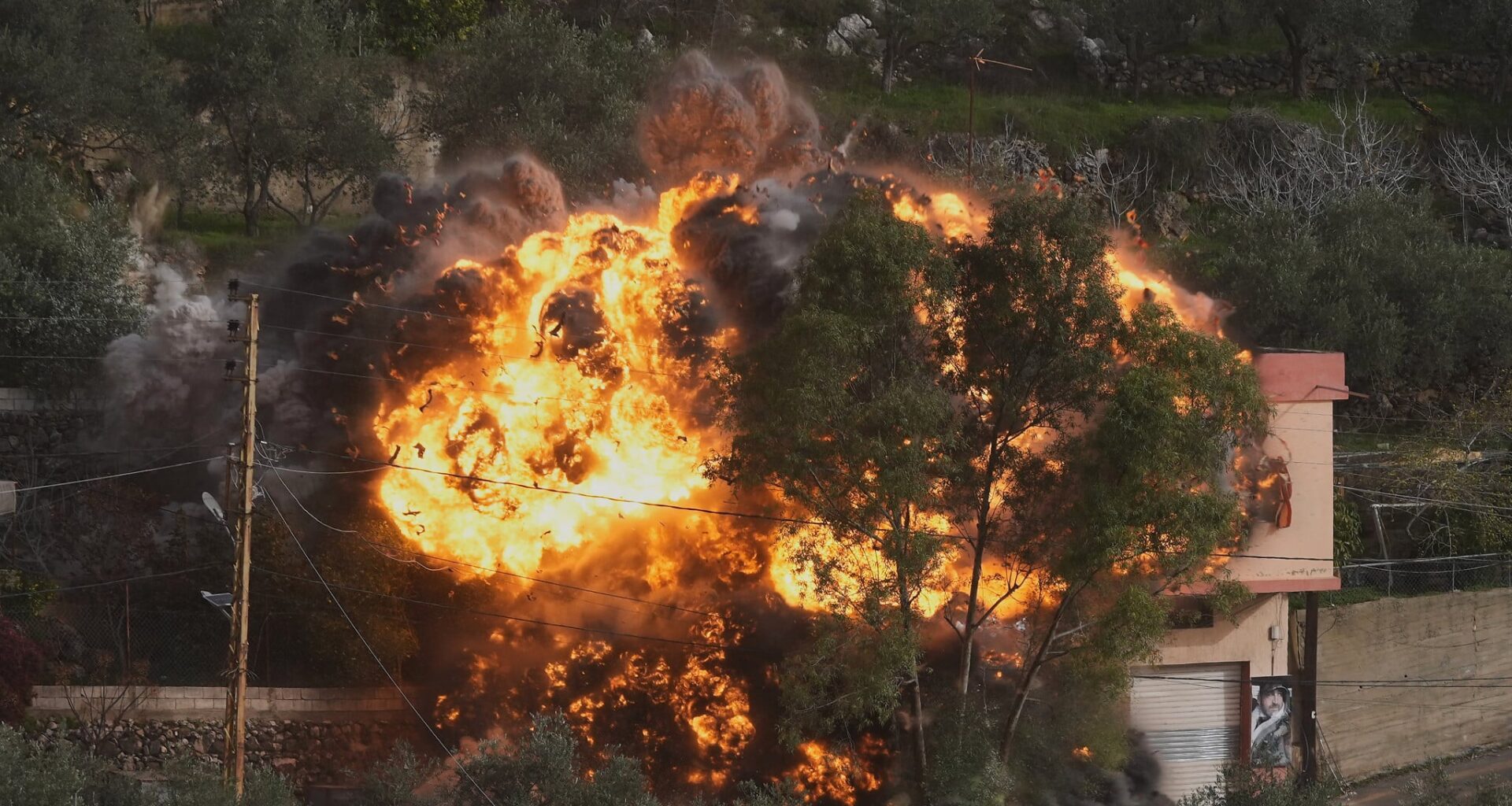
An airstrike in the southern Lebanon town of Harouf on Sunday killed a senior Hezbollah air defense operative, the Israel Defense Forces announced on Monday, adding that a separate strike that morning had killed a different member of the terror group.
The later strike killed Ali al-Hadi Mustafa al-Haqqani, whom the military identified as a “senior operative” in Hezbollah’s air defense unit.
“In recent months, al-Haqqani had been involved in attempts to rehabilitate military infrastructure belonging to Hezbollah’s air defense array,” the military said.
The other operative was killed in a strike earlier on Ansariyeh. He was not identified by name by the IDF, although it said he too was involved in efforts to restore the terror group’s infrastructure.
“The terrorists’ activities constituted a violation of the understandings between Israel and Lebanon,” the military said.
Get The Times of Israel’s Daily Edition
by email and never miss our top stories
By signing up, you agree to the terms
The IDF has launched strikes against what it says are Hezbollah efforts to rearm or rebuild in southern Lebanon on a near-daily basis since November 2024, when a ceasefire between Israel and Lebanon brought an end to all-out war with the Iran-backed terror group.
On Monday afternoon, the military issued evacuation warnings for several buildings in Kfar Tebnit and Ain Qana, before launching a wave of strikes in the two southern Lebanon towns.
Israeli airstrikes target Hezbollah weapon depots in southern Lebanon, February 2, 2026. (Israel Defense Forces)
The strikes, it said after, targeted Hezbollah weapons depots “located in the heart of a civilian population.”
It said this was “another example of the cynical use by the Hezbollah terror organizations of Lebanese civilians as human shields,” and warned again that such activities were “a violation of the understandings between Israel and Lebanon and a threat to the State of Israel.”
There were no immediate reports of any injuries or deaths in the airstrikes.
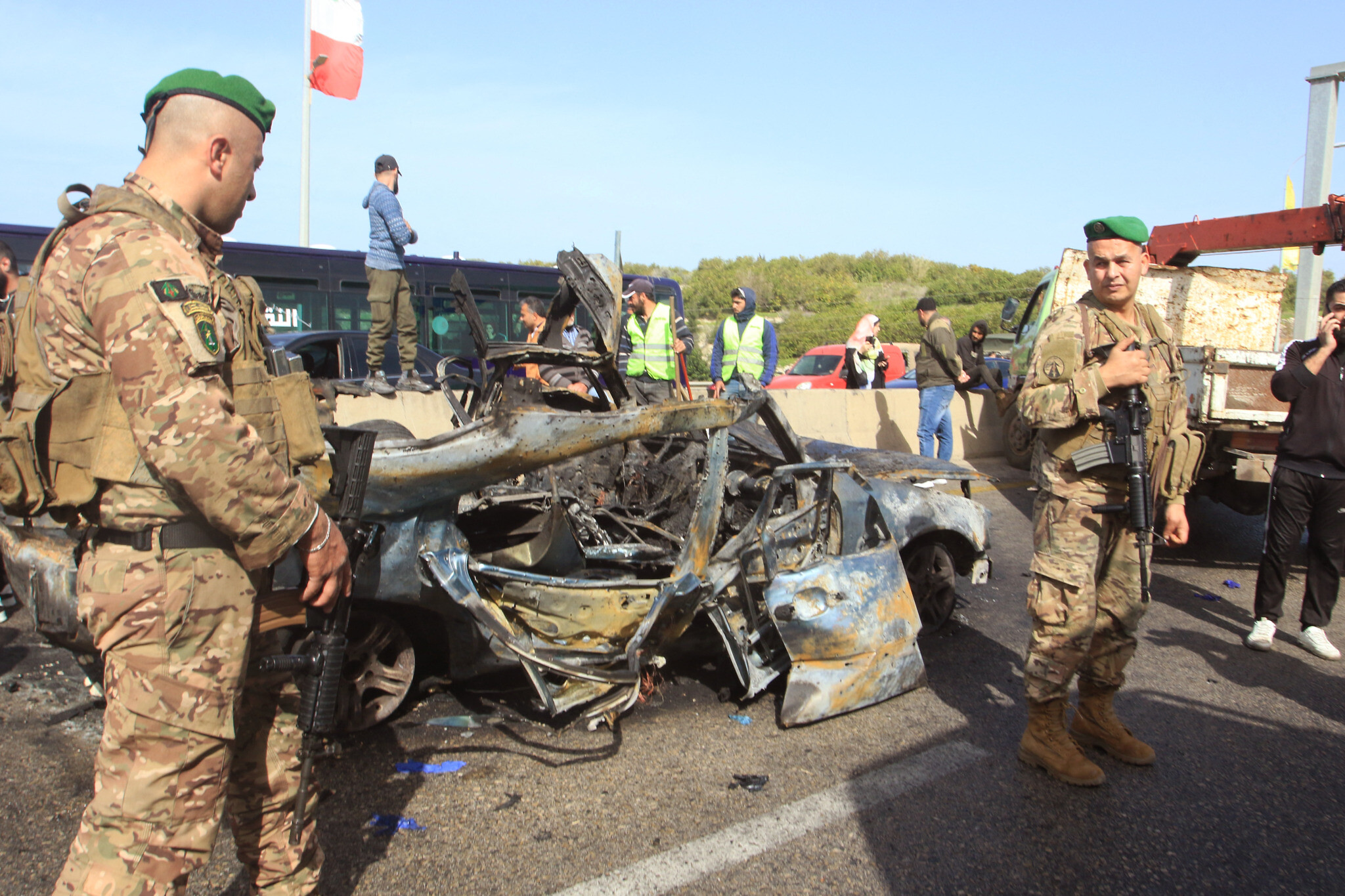
Lebanese army soldiers secure the site of a drone attack that Israel said targeted a Hezbollah operative on the road of the southern Lebanese village of Ansariyeh on February 2, 2026 (Mahmoud Zayyat/AFP)
Separately on Monday, the United Nations Interim Force in Lebanon accused the Israeli military of dropping an “unknown chemical substance” over areas near the Blue Line on Sunday, delaying the observers’ activities for nine hours.
UNIFIL said it was told by the IDF that it would be “carrying out an aerial activity dropping what they said was a non-toxic chemical substance over areas near the Blue Line.”
“The IDF said that peacekeepers should stay away and remain under cover, forcing them to cancel over a dozen activities,” the observer force said.
“Peacekeepers could not perform normal operations near the Blue Line along about a third of its length and were only able to resume normal activities after over nine hours,” UNFIL said, adding that its observers also supported the Lebanese army in “collecting samples to be tested for toxicity.”
Lebanon’s agriculture ministry was expected to return the results of the testing within 48 hours, according to the state-run National News Agency.
“This activity was unacceptable and contrary to resolution 1701,” it charged. “The IDF’s deliberate and planned actions not only limited peacekeepers’ ability to undertake their mandated activities, but also potentially put their health and that of civilians at risk.”
“It also raised concerns about the effects of this unknown chemical on local agricultural lands, and how this might impact the return of civilians to their homes and livelihoods in the long-term,” UNIFIL added.
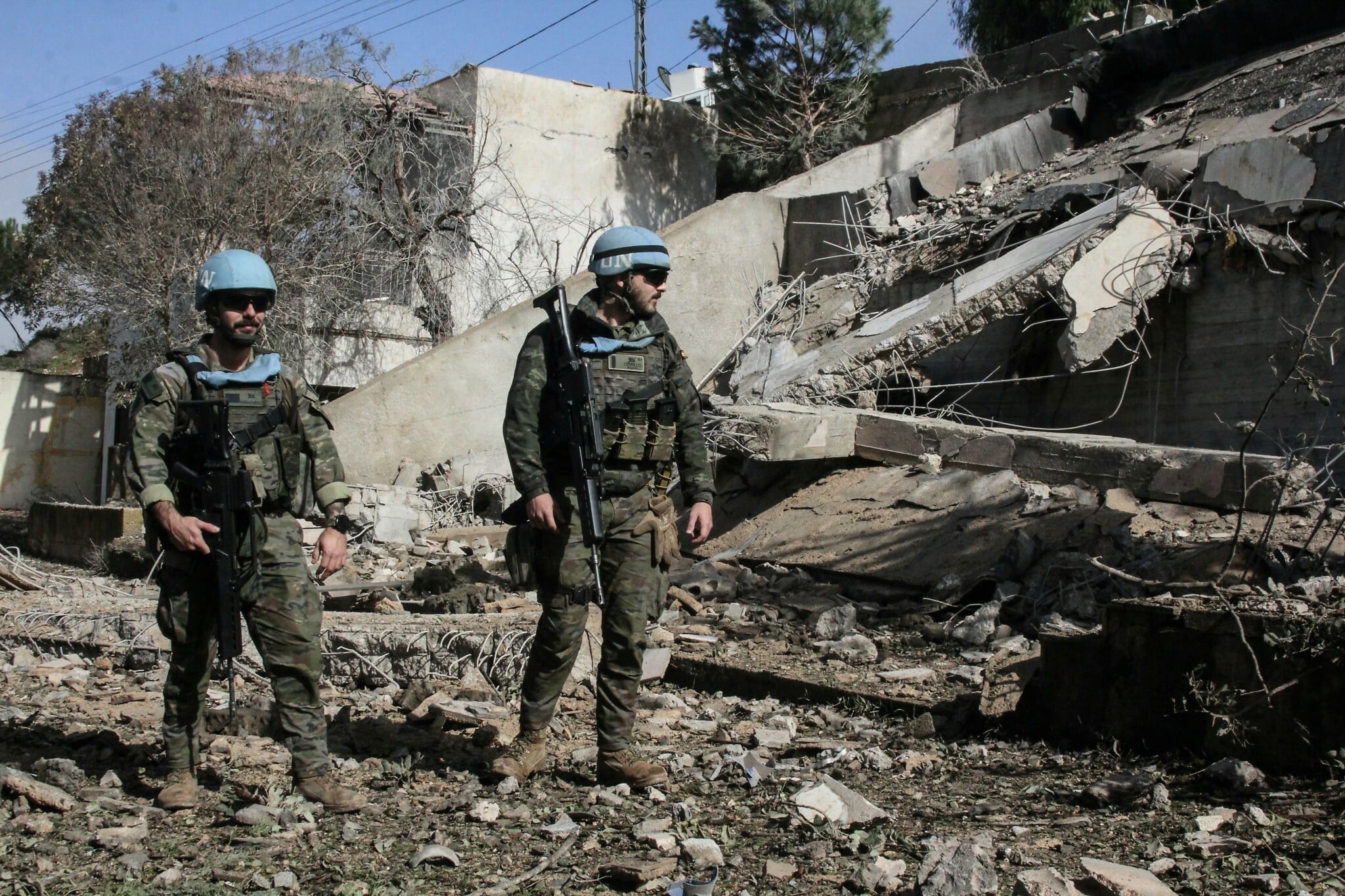
UNIFIL forces inspect the aftermath of IDF strikes in the outskirts of the town of al-Khiam, southern Lebanon on January 31, 2026. (Rabih DAHER / AFP)
There was no immediate comment from the IDF on the incident, the latest in a long list of complaints lodged in recent months by the UN body against the Israeli military, which has maintained troops in five sensitive locations in Lebanon even after the remainder of Israeli forces withdrew in line with the terms of the November 2024 ceasefire.
The ceasefire came after two months of open conflict in Lebanon, including an IDF ground operation in the country’s south in a bid to enable the safe return of some 60,000 residents of northern Israel displaced by the terror group’s near-daily attacks.
The rocket attacks began on October 8, 2023 — a day after fellow Iran-backed terror group Hamas invaded southern Israel, sparking a two-year war in Gaza.
Since the ceasefire, the IDF says it has killed over 400 Hezbollah operatives and members of allied terror groups in strikes, hit hundreds of Hezbollah sites, and conducted over 1,200 raids and other small operations in southern Lebanon.
Weakened by the war and still facing regular Israeli strikes, Hezbollah is under internal and international pressure to hand over its weapons, with the Lebanese army having drawn up a plan to disarm it.
The Lebanese army said last month that it had finished disarming the terror group in the country’s south, between the Israeli border and the Litani River. Israel was skeptical of the claim, saying Hezbollah was continuing efforts to rearm.
Agencies and Times of Israel staff contributed to this report.
Is accurate Israel coverage important to you?
If so, we have a request.
Every day during the past two years of war and rising global anti-Zionism and antisemitism, our journalists kept you abreast of the most important developments that merit your attention. Millions of people rely on ToI for fact-based coverage of Israel and the Jewish world.
We care about Israel – and we know you do too. So we have an ask for this new year of 2026: express your values by joining The Times of Israel Community, an exclusive group for readers like you who appreciate and financially support our work.
Already a member? Sign in to stop seeing this
You appreciate our journalism

You clearly find our careful reporting valuable, in a time when facts are often distorted and news coverage often lacks context.
Your support is essential to continue our work. We want to continue delivering the professional journalism you value, even as the demands on our newsroom have grown dramatically since October 7.
So today, please consider joining our reader support group, The Times of Israel Community. For as little as $6 a month you’ll become our partners while enjoying The Times of Israel AD-FREE, as well as accessing exclusive content available only to Times of Israel Community members.
Thank you,
David Horovitz, Founding Editor of The Times of Israel