
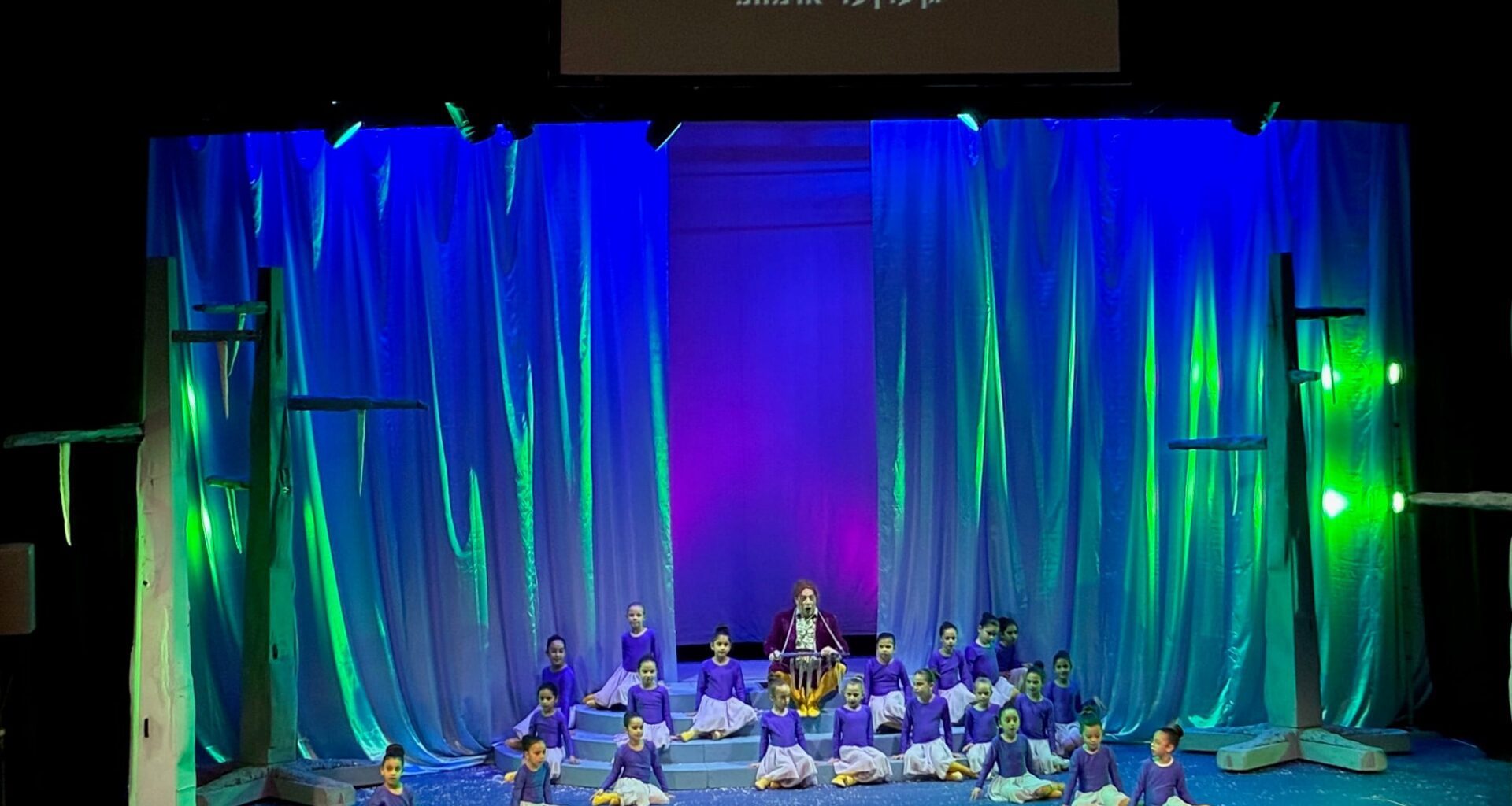
As part of the service year in the south, we, the volunteers, receive many announcements about cultural activities in the area. One of them was about Mozart’s opera The Magic Flute in the main auditorium of Ofakim, a town about five kilometers from Patish, the moshav where many of the volunteers live.
It turned out that this production was part of the Israeli Opera’s outreach program, which works with peripheral communities throughout Israel. This initiative, under the auspices of the Ministry of Culture, has been going on for more than twenty years.
I have attended many productions of The Magic Flute, but this one was the most touching. It felt especially symbolic that the performance took place on Tu Bishvat, a holiday celebrating nature and growth. Many children and community members from Ofakim and the surrounding area took part in all aspects of the performance. On my way into the hall, next to a tent that served as a makeshift dressing room filled with children, I met a young student of mine from the second grade at the elementary school where I teach. She was a sweet little bird, dancing along with other children her age.
The hall was packed with parents, teachers, community members, and local dignitaries, as well as representatives of the Israeli Opera and contributors from MetroWest, New Jersey, which has adopted Ofakim. The opera was sung in Hebrew, which made it easier to understand, though it made the plot even more absurd than usual.
What I especially loved was the way the director, Abigail Sandler, gave so many children the opportunity to perform on stage in a real opera, wearing costumes made especially for them. We were told that the community members who participated had traveled to the opera house in Tel Aviv, where their costumes were fitted.
It was an unforgettable evening for the children and their parents. The excitement and energy were noticeable. Some parents sat with their phones, videotaping the entire performance, which lasted almost two hours.
In the orchestra pit, young local musicians sat alongside professional players, and the conductor did an excellent job integrating them.
This kind of event has far-reaching effects beyond what we might initially imagine. Especially on Tu Bishvat, we can imagine that small children in the audience who came with their parents to watch an older sibling sing, play, or dance will be inspired to grow up with an interest in the arts and in music.
There were many people coming in and out of the hall, perhaps to help the children, and I hope that the commotion did not disturb those on stage or in the orchestra pit. We probably need many more events like this, so that audiences will learn to sit quietly, and just enjoy themselves.
I hold a PhD in English Literature from the Hebrew University in Jerusalem, specializing in writing about issues related to women, literature, culture, and society. Having lived in the US for 15 years (between 1979-1994), I bring a diverse perspective to my work.
As a widow, in March 2016, I initiated a support and growth-oriented Facebook group for widows named “Widows Move On.” The group has now grown to over 2000 members, providing a valuable space for mutual support and understanding.