
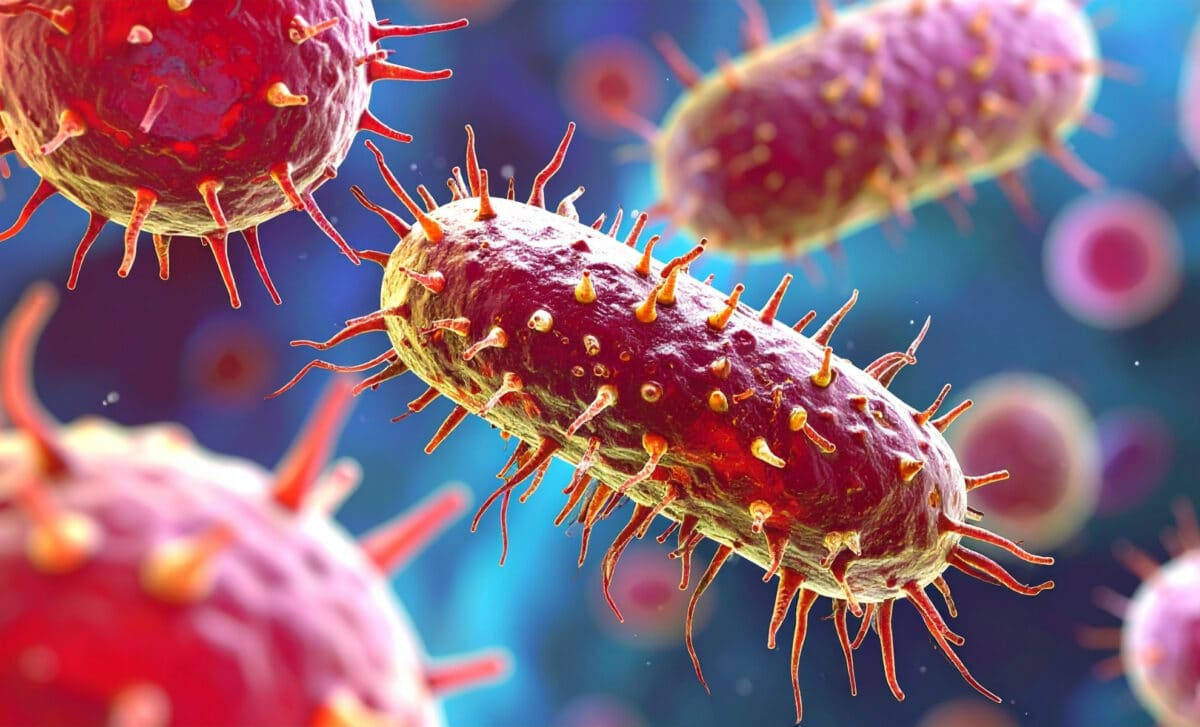
Scientists have observed a rare evolutionary twist aboard the International Space Station (ISS): viruses called bacteriophages adapted in microgravity, sharpening their skills to infect antibiotic-resistant bacteria. These space-altered phages may one day become allies in the fight against dangerous superbugs on Earth.
The experiment, led by researchers from the University of Wisconsin-Madison, tracked how a strain of Escherichia coli (E. coli) interacted with a T7 bacteriophage both on Earth and in space. The findings, published in PLOS One, revealed that although the outcomes were similar, phages still infected their bacterial hosts, the evolutionary paths diverged significantly depending on the environment.
Antimicrobial resistance (AMR) has become a growing public health concern globally. As traditional antibiotics lose their effectiveness, researchers are turning to alternatives, including bacteriophages, viruses that specifically target and infect bacteria. These organisms aren’t technically alive, but they vastly outnumber all living things on Earth and play a major role in shaping bacterial evolution. With the ISS providing a controlled microgravity environment, scientists are using space as a testing ground to explore how these microscopic battles unfold, and potentially discover new tools for medical science.
Different Battlegrounds, Same Outcome
On both Earth and the ISS, E. coli bacteria and T7 bacteriophages engaged in a natural “arms race”, a back-and-forth of genetic adaptations as each tried to outmaneuver the other. According to the researchers, this ancient struggle between bacteria and phages typically unfolds on Earth’s surface, but now, thanks to the unique setting of space, scientists can observe how altered conditions change the game.
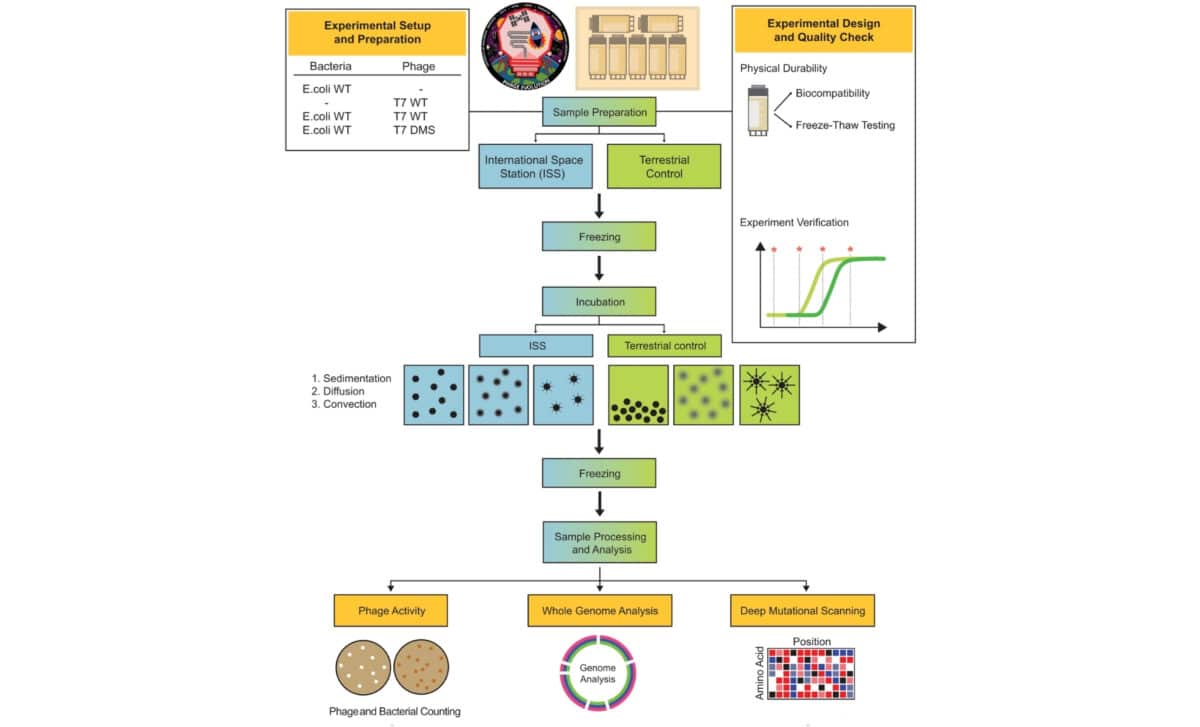 Experimental design to evaluate microgravity interactions on the ISS – © PLOS One
In microgravity, the infection process was notably slower. The phages took longer to bind and penetrate their bacterial targets, a delay not seen in terrestrial samples. Despite this, the viruses evolved new mutations that enhanced their ability to attach to receptors on the bacterial cell surface.
Meanwhile, the bacteria didn’t stand still: they developed specific mutations that offered protection against phages under space conditions. “Space fundamentally changes how phages and bacteria interact,” the study authors noted. “Infection is slowed, and both organisms evolve along a different trajectory than they do on Earth.”
Microgravity Accelerates Unique Mutations
To understand these shifts, the team used whole-genome sequencing and deep mutational scanning to track genetic changes in real time. The results showed clear evidence of distinct evolutionary pressures in space. The phages, while slower in attack, acquired advantageous mutations, particularly in the receptor-binding protein, a key component that determines how effectively a virus can latch onto a host cell.
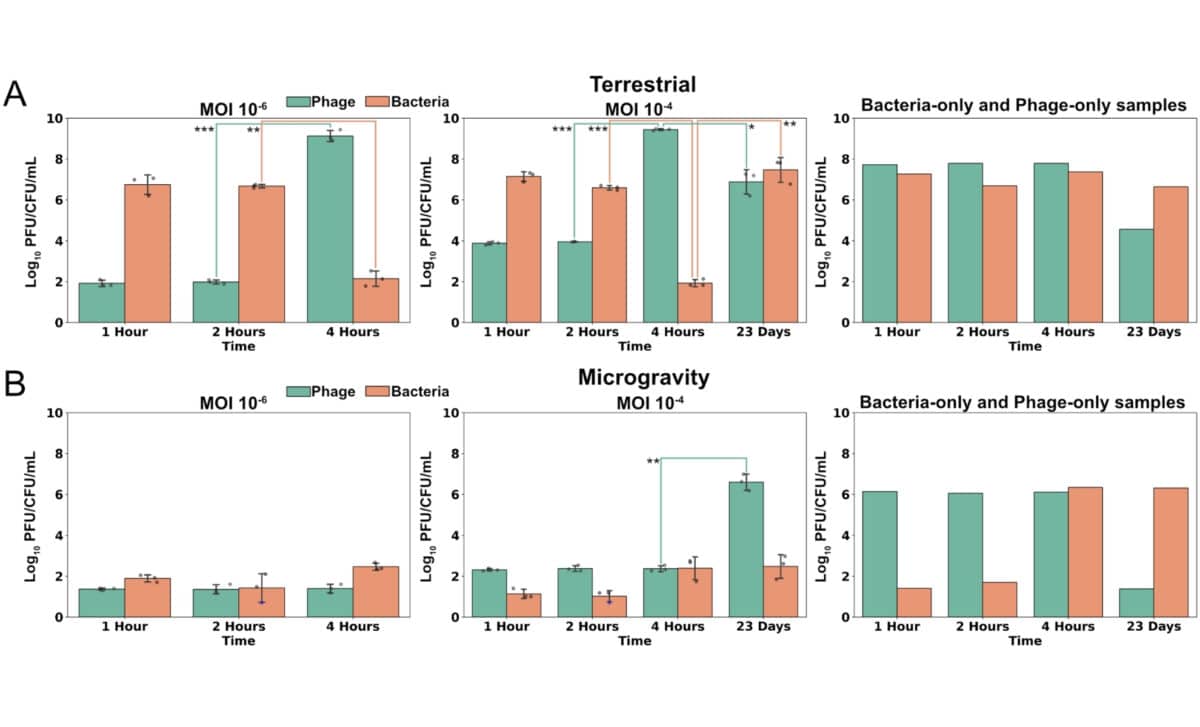 Bacteriophage T7 growth is inhibited by microgravity – © PLOS One
The implications are significant. According to the study, these receptor changes later proved effective against E. coli strains that cause urinary tract infections, suggesting that phages adapted in space could have real-world applications back on Earth. This idea builds on prior experiments involving mutation studies in space, such as when the International Atomic Energy Agency sent seeds to the ISS in 2022 to accelerate beneficial genetic variations for agriculture.
Phages as Future Frontline Defense
Bacteriophages have long been proposed as a potential answer to antimicrobial resistance, but their interaction with bacteria in varied environments remains under-explored. The new findings from this ISS-based study could help fill that gap. As stated by the researchers, “Phages act as major drivers of bacterial diversity and evolutionary change in their bacterial prey.” While extensive research has focused on Earth-bound phage-bacteria dynamics, this study highlights the importance of testing those interactions in other environments.
According to Popular Mechanics, the unique properties of microgravity, alongside constant exposure to cosmic radiation, make orbiting labs powerful tools for studying biological processes that are difficult to replicate on Earth. These insights could eventually be applied to engineer more potent phages, offering an alternative line of defense against the most dangerous drug-resistant pathogens threatening human health today.