

In 2008 the housing market crashed and the U.S. experienced a severe economic recession – and dragged most of the world down with us. The crash resulted from building a large part of our economy on an irrational and unsustainable business model. Looking back, it’s easy to see how subprime mortgages, mortgage-backed securities and collateralized debt obligations were destined to fail. When the crash happened, over 2.6 million jobs were lost and over 1 trillion dollars of wealth disappeared almost overnight. Several notable companies, including Lehman Brothers, went under. This was the largest market correction since the Great Depression.
To put things into perspective, health care in this country is more than three times the size of the housing market and employs more than 10 times the number of people. If health care ever goes through a correction and crash like the housing market did, the recession of 2008 will look like a minor hiccup by comparison.
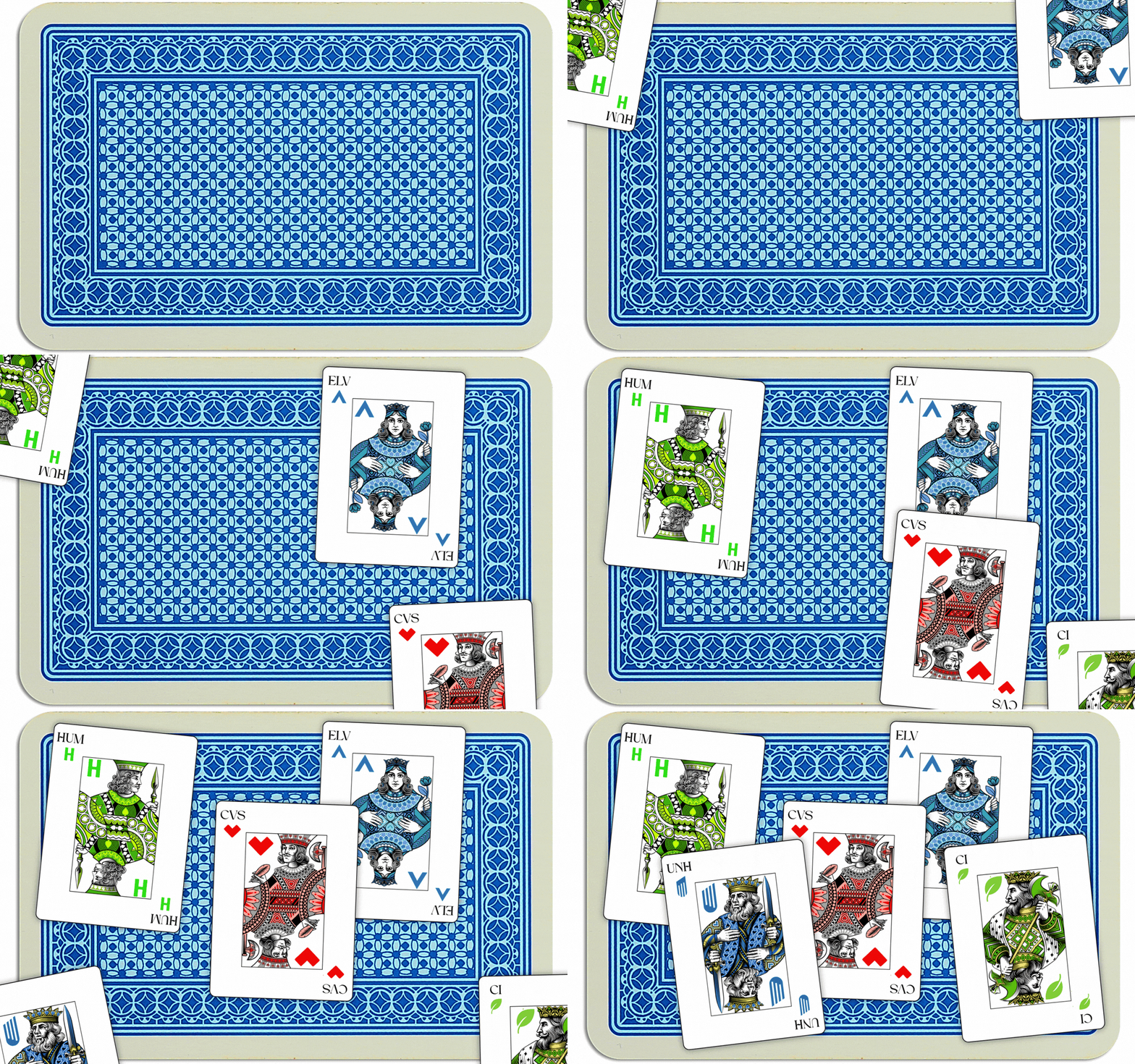
Last week we may have seen the precursor to a similar crash in the health insurance market. Last Tuesday, there was an $80 billion dollar sell off that gutted several large health insurance companies. UnitedHealth led the way loosing 20% of their value in a single day. Elevance and CVS/Aetna each lost about 14%. Humana, Cigna and others also had a bad day on the Street. This sell off in some ways is a mirror of the 2008 housing crash. Twenty years ago, the mortgage financial markets were built like a house of cards, and the eventual collapse should have been predicted. Health insurance is a similar house of cards that is destined to either fail or experience a major correction.
Health insurance in this country is built on a flawed business model, and the cracks are starting to show. The first problem is the disconnect between the purchaser and the consumer. In most markets the purchaser is also the consumer. Not so with health insurance. Here the purchaser (the government or the employer) is disconnected from the consumer (the patient). That creates a fundamental economic problem. The purchaser’s incentive is to spend as little money as possible where the consumer has the incentive to overspend or over utilize because they are insulated from the cost. Think about it this way: You’re out to dinner with a client and the business is picking up the tab. Since you don’t have to pay for dinner the wine is going to flow and everyone is having desert. Now imagine you are the business owner, and while you don’t get to enjoy dinner, you are going to have to pay for it. In that case, you’re more likely to put some restrictions on the night’s festivities.
Health insurance also violates another basic principle of economics. In most industries the supplier of the product wants you to buy and use their product. Apple wants you to buy more phones and computers. Ford wants you to buy more trucks and McDonald’s is proud of how many hamburgers they’ve sold. Health insurance companies are the opposite. UnitedHealth and Cigna don’t want you to use their product. Every time you use the product, consume health care, they lose money rather than make it.
This unique combination of factors is the root problem with the for-profit health insurance industry. Companies like UnitedHealth and Cigna make money by denying care and refusing to or reducing pay for care that is provided. The fact that this upsets the consumer really doesn’t bother them because reducing cost makes the purchaser happy and the purchaser is their real customer, not the consumer.
Thanks for reading HEALTH CARE un-covered! This post is public so feel free to share it.
If that weren’t enough, we have a third variable that compounds this problem. Another idiosyncrasy about health care is that 5% of the consumers account for 50% of all the cost. On the other end of the scale, the bottom 50% of people account for less than 3% of the total cost. That means denying care only impacts 5% of your consumers, which makes them easier to ignore.
So, you have been named the new CEO of UnitedHealth, and you have this wonderful idea. Put policies in place to deny, delay or refuse to pay for care. These policies are going to upset 5% of your membership. The members impacted by these policies are expensive members with chronic diseases like MS, cardiac disease or cancer. Let’s say that half of those members get so upset that they leave UnitedHealth and join one of your competitors. That means you take a 2.5% reduction to your revenue but a 25% reduction to your medical expense. Profits go up and life is good. Well, unless you are one of those patients that didn’t get the medication or treatment that you needed that is.
Your competitors see that you are doing this and that they’re now getting all the expensive members, so they make the logical business move and match your policies. One of them decides that it’s not enough just to match your policies, they should get even more aggressive in the delay-and-deny game. Before you know it, you have a payer race to the bottom leaving suffering patients in the wake of their quest for more profits.
This business model has been very successful. In 2024 the largest for-profit insurance companies made over $70 billion. That was an increase of $500 million from the previous year. However, like the home mortgage market of twenty years ago, these profits are built on a business model that looks very much like a big house of cards.
Last week that house of cards started to fall and who knows where it will end.