
KRISTIANTO PURNOMO/AFP via Getty Images
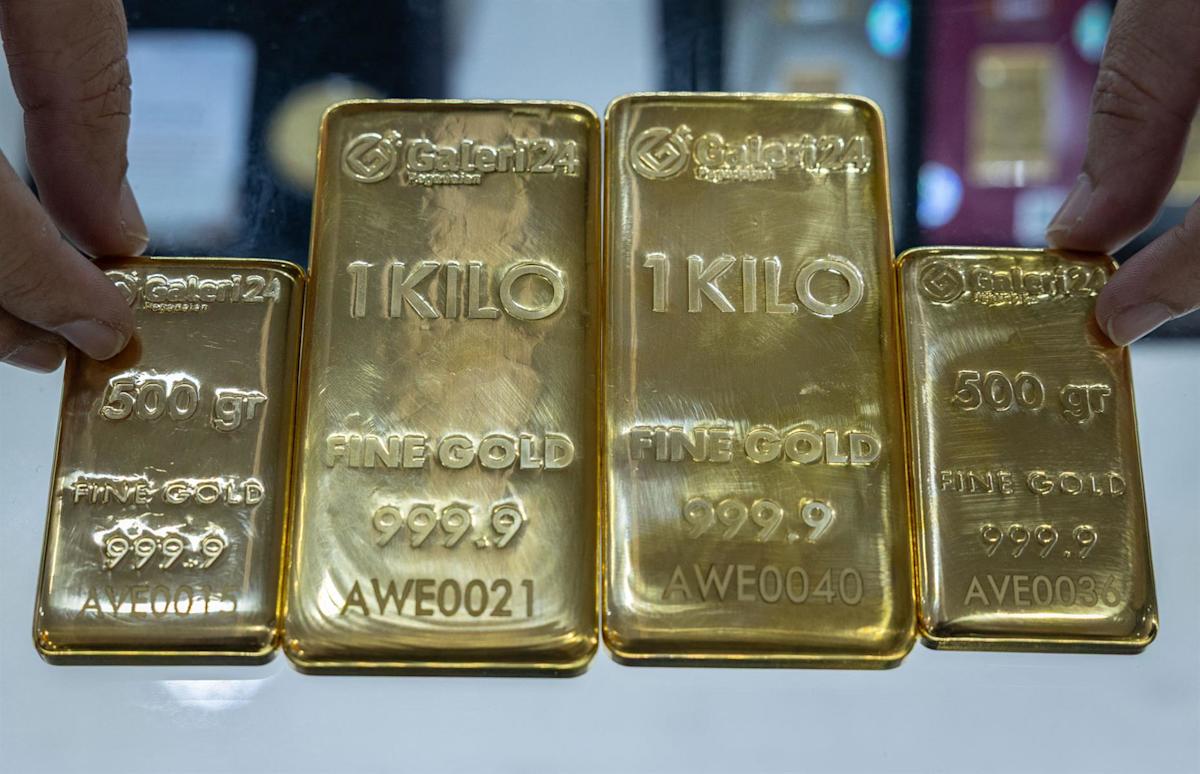
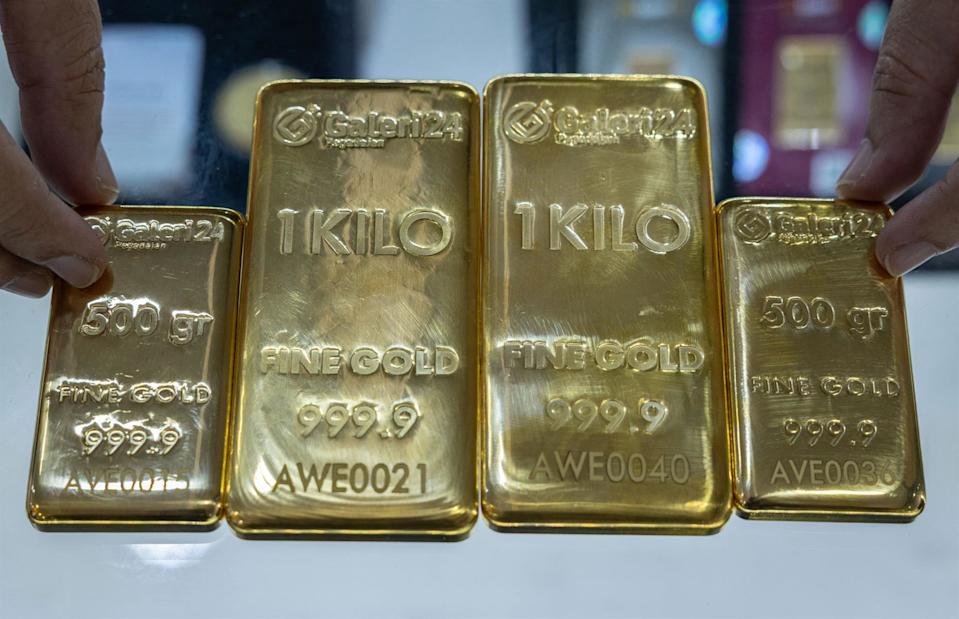
Gold surged to never-before-seen highs in January, breaking past the magic $5,000 (£3,646) per ounce figure for the first time. While prices have since faced a sharp pullback from their peak, the coveted metal remains at the centre of a global financial storm driven by a slew of factors including war, political instability and a massive re-evaluation of the US dollar.
With buyers from central banks to crypto firms racing to secure physical bullion, read on to discover why gold has been shining brighter than ever.
All dollar figures in US dollars

Mark Wiener/Alamy
The gold rally has been historic by almost every measure. Total global demand in 2025 exceeded 5,000 tonnes for the first time ever, an “unprecedented value” of $555 billion (£405.4bn) and a 45% jump from the previous year, according to the World Gold Council.
January marked the metal’s strongest monthly rally in decades. Adjusted for inflation, gold broke through a record last set in 1980, peaking at a staggering $5,595.44 (£4,086.65) per ounce at the end of the month, before falling back by around 10%. Nonetheless, the price remains exceedingly high and almost double what it was this time last year.
YURIY DYACHYSHYN/AFP via Getty Images
Gold thrives when the world feels unstable and, right now, instability is everywhere. The ongoing war in Ukraine, tensions in the Middle East, friction between major powers and political turmoil in Washington have made investors nervous about conventional assets.
When stocks and bonds feel risky, money often flows into gold because it isn’t tied to the success of a company or the promises of a government. That safe-haven status has made bullion the go-to hedge during this latest wave of global anxiety.
Alessandro RAMPAZZO/AFP via Getty Images
President Trump’s aggressive America First trade stance has transformed gold into a vital geopolitical escape hatch. Beyond stoking inflation fears and slowing global growth, his unpredictable, sweeping tariff threats and manufactured crises such as the Greenland dispute have raised concerns that the US dollar itself has become a political risk for foreign governments.
This apparent weaponisation of the currency has triggered a historic pivot, as central banks and investors look to reduce exposure to US assets and build up holdings of neutral, physical bullion.
IDREES MOHAMMED/AFP via Getty Images
As trade tensions and political risks have grown, confidence in the US dollar has wobbled. That weakness has helped lift gold, which typically moves in the opposite direction to the greenback.
Story Continues
For foreign buyers, a softer dollar makes bullion cheaper, while for investors it reinforces gold’s role as a hedge against currency risk. The result is a feedback loop: doubts about the dollar push gold higher, and gold’s rise signals deepening unease.
Longfin Media/Shutterstock
Central bank buying has been a major factor behind gold’s rise, driven by two very different motives. For countries with strained ties to Washington, gold offers protection against one specific risk: the ability of the US and its allies to freeze or block access to US dollar reserves held in the international banking system. Holding physical bullion reduces that vulnerability.
Meanwhile, other nations are buying for more traditional reasons, such as diversification and currency credibility. Poland, for example, has boosted gold reserves to strengthen confidence in the zloty amid regional instability.
Westlight/Shutterstock
The latest leg of the gold rally has been driven less by central banks and more by investors. Fears that lower interest rates and heavy government spending will erode the value of cash and bonds have pushed money into gold as a hedge.
Record inflows into gold-backed exchange traded funds (ETFs), along with strong demand for bars and coins, have helped propel prices higher even as official purchases have slowed. The result is a market increasingly shaped by investor momentum as much as by long-term reserve buying.
T. Schneider/Shutterstock
On top of the fierce demand from central banks and traditional corporate investors, a powerful new wave of buyers has emerged from the cryptocurrency world. Tether, the largest among them, now holds the world’s largest known reserves of bullion outside of banks and actual countries.
The company and its peers are using gold to diversify the dollars flowing through their stablecoin businesses and to back gold-linked digital tokens. By holding physical metal, they aim to anchor digital products to an asset seen as tangible, neutral and outside the traditional banking system.
LILLIAN SUWANRUMPHA/AFP via Getty Images
Everyday investors have also been piling into gold, enticed by headlines announcing the new price records. Buyers have been scrambling to stock up via ETFs, online platforms and traditional purchases of jewellery, coins and bullion. This wave of retail buying has created a momentum effect, where rising prices attract even more participants.
Fear of missing out has become a potent force, with many smaller investors only too eager to jump on the bandwagon. This behaviour can amplify price swings, pushing gold higher in the short term. But it can also increase the risk of dramatic pullbacks when sentiment shifts.
KRISTIANTO PURNOMO/AFP via Getty Images
Part of gold’s enduring appeal lies in its limited supply. Unlike paper currencies, it cannot be conjured up at will by governments or central banks. New production depends on mining, which is costly, slow and constrained by geology. Major new discoveries are rare, and bringing a mine into operation can take years.
This built-in scarcity makes gold especially attractive during periods of heavy government borrowing and rapid money creation. Investors often view bullion as something tangible and finite in an increasingly digital and debt-driven financial world.
Jemal Countess/Getty Images
Soaring public debt levels in major economies have heightened concerns about long-term financial stability. Excessive borrowing can eventually lead to inflation, higher taxes or weaker currencies, which threaten the real value of savings.
For some investors, gold offers a way to step outside those risks. As governments continue to run large deficits, the metal’s reputation as protection against policy missteps has helped sustain strong demand.
sasirin pamai/Shutterstock
After storming past record levels, gold has recently pulled back as political and economic fears briefly eased. Reports that President Trump has settled on the market-friendly Kevin Warsh as Federal Reserve chair reassured investors that aggressive interest rate cuts and surging inflation may be less likely.
That helped pep up the US dollar, triggering the pullback. Even so, the price of gold remains extremely high, reflecting these uncertain times we are living through.
Now discover why Greenland’s so valuable and what it’s potentially worth