
Washington has accepted Tehran’s request to relocate planned nuclear talks, with negotiations now expected to take place in Oman on Friday (6 Februrary), Axios reported.
The talks had been scheduled for Friday in Istanbul, but Tehran pushed for both a change in venue and a narrower agenda, sources told Reuters.
Axios reported that the Trump administration accepted the request, with Oman selected as the new location for the discussions.
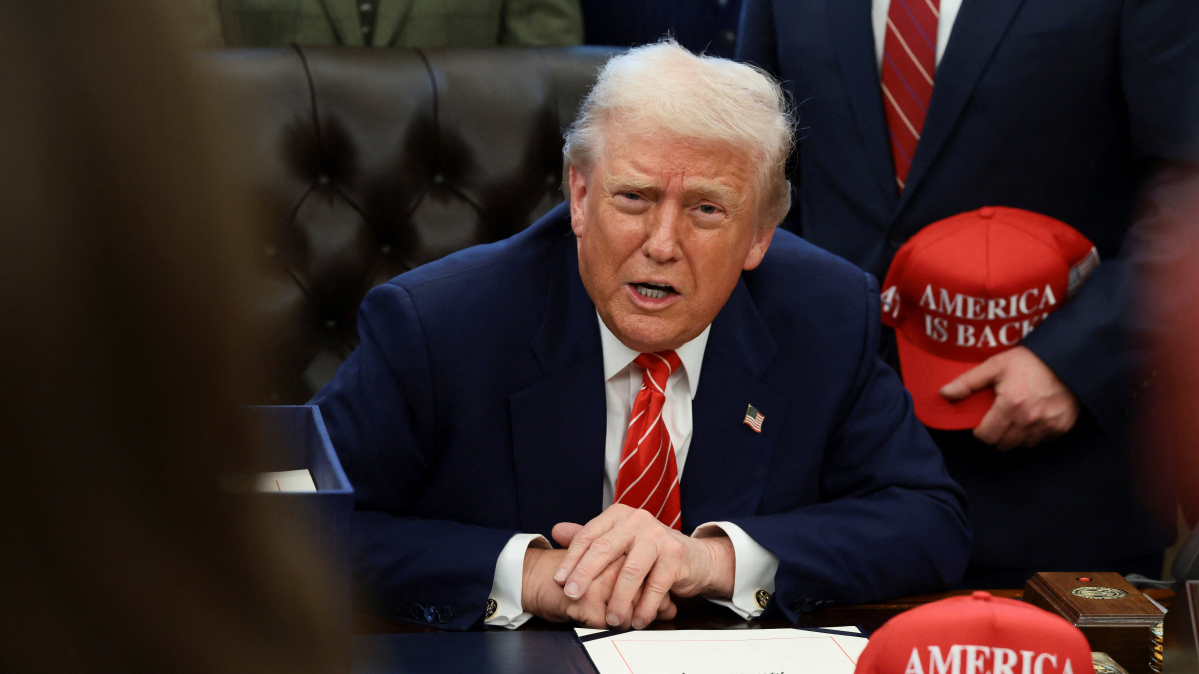
U.S. President Donald Trump said on Tuesday (3 February) that Washington is “negotiating with Iran right now,” after Tehran demanded the talks be moved from Türkiye to Oman and narrowed to focus solely on Iran’s nuclear programme.
Trump offered no further details but suggested Iran was seeking to avoid renewed military confrontation.
“They had a chance to do something a while ago, and it didn’t work out,” Trump said, referring to a previous U.S. operation.
“I don’t think they want that happening again, but they would like to negotiate,” Trump said.
His remarks came after a U.S. fighter jet shot down an Iranian drone in the Arabian Sea after it approached the USS Abraham Lincoln aircraft carrier.
A regional diplomat familiar with Iran’s position said Tehran wants to change both the format and scope of the talks, limiting discussions to the nuclear file. The United States wants to broaden negotiations to include Iran’s ballistic missile programme and its support for regional proxy groups.
However, a Reuters source said Tehran now wants only bilateral talks with the United States, rejecting participation by other regional countries previously expected to attend, including Pakistan, Saudi Arabia, Qatar, Egypt and the United Arab Emirates.
Military incidents add to pressure
Diplomatic efforts have unfolded against the backdrop of heightened military activity. On Tuesday (3 February), authorities say a U.S. F-35 fighter jet shot down an Iranian Shahed-139 drone after it approached the USS Abraham Lincoln aircraft carrier in the Arabian Sea.
The U.S. military said the drone was flying “with unclear intent” and was intercepted in self-defence. No U.S. personnel were harmed.
Iran’s Tasnim news agency said contact had been lost with a drone in international waters but did not specify the cause.
In a separate incident in the Strait of Hormuz, U.S. Central Command said Iran’s Islamic Revolutionary Guard Corps (IRGC) harassed a U.S.-flagged tanker, with two IRGC boats and an Iranian drone approaching at high speed and threatening to board the vessel.
The tanker avoided interception by accelerating and continuing its voyage.
Talks still planned
Despite the rising military tensions, Iran said preparations for talks with the United States were continuing. Iranian Foreign Ministry spokesman Esmaeil Baghaei said on Tuesday (3 February) that negotiations were planned for the “next few days,” with the venue to be announced once finalised, according to IRNA.
Baghaei said consultations were under way to determine the location of the talks, adding that both Türkiye, Oman and other regional states had expressed readiness to host the negotiations.
“In principle, the location and date of the negotiations are not a complicated issue and should not be a tool for media games,” he said, thanking friendly countries for helping facilitate the diplomatic process.
Regional concerns and diplomatic push
The U.S. naval buildup follows Iran’s violent crackdown on anti-government protests last month. Regional officials say the primary goal of the current diplomatic effort is to avoid escalation and prevent conflict.
Iranian officials are increasingly concerned that a U.S. strike could destabilise the country further by driving public anger back onto the streets, according to several current and former Iranian officials.
Gulf Arab states have warned they could be drawn into any conflict, fearing Iran may target U.S. bases on their territory if tensions escalate. The United Arab Emirates has publicly urged negotiations, saying the region cannot afford another war.
Preparations for talks
Iranian officials say sanctions relief must be part of any agreement, while U.S. demands reportedly include zero uranium enrichment, limits on ballistic missiles and restrictions on Iran’s regional networks.
Tehran has rejected those conditions but has indicated limited flexibility, including the possible transfer of enriched uranium under a controlled arrangement.
Tags
