
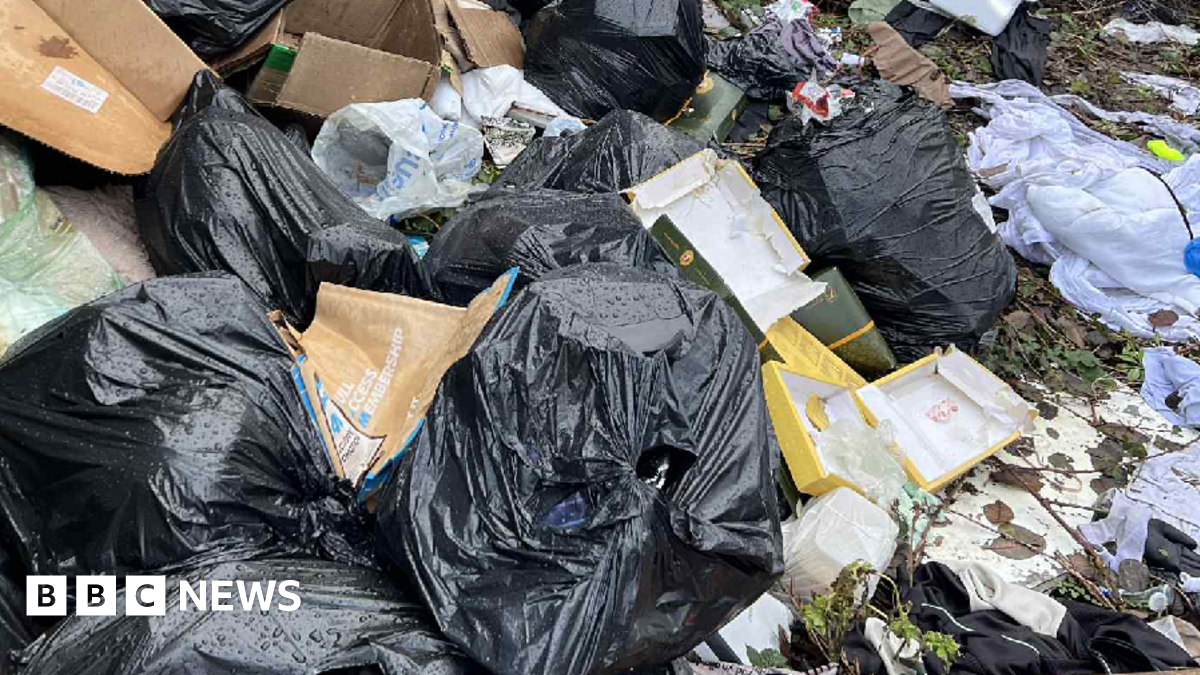
Councils are the primary enforcement bodies for most fly-tipping offences, while Natural Resources Wales investigates larger scale cases and incidents on the land it manages.
Fly tipping Action Wales, a national partnership programme coordinated by Natural Resources Wales and funded by Welsh government, said fly-tipping “harms our environment, endangers wildlife, disrupts local communities and is expensive to clean up”.
“In response to concerns raised by councils about growing levels of black bag dumping, Fly tipping Action Wales is working closely with local authorities on a national awareness campaign for the spring,” the spokesperson said.
“The campaign will focus on raising awareness that leaving bags of waste next to public litter bins is still fly tipping, and will promote simple steps people can take to manage household waste responsibly.”
The Welsh Local Government Association said councils were tackling illegal fly-tipping “while managing significant financial pressures”.
“In the longer term, councils are clear that the cost of dealing with waste and litter needs to be shared more fairly, with producers taking greater responsibility through measures such as extended producer responsibility,” a spokesperson said.
The Welsh government said: “As our recycling rates increase, less materials will need to be collected as black bin waste.
“Fly-tipping is a crime and is never justified under any circumstances.
“We will continue to target those who choose to break the law and pollute our environment.”