
Falls remain one of the most serious threats to older adults, often resulting in long recovery periods, reduced independence, and, in many cases, the inability to reach help quickly. Germany-based healthtech company Gardia is tackling this challenge head-on with a mobile emergency system designed specifically for older adults.
Now, the company has secured €8.5 million in Series A funding led by Peak, with participation from amberra, butterfly & elephant, existing investors, and several business angels, including BONVENTURE, DvH Ventures, and Beurer.
The funding will accelerate Gardia’s expansion across the DACH region and into international markets, while also deepening its B2B presence in healthcare and care services.
Founders with a personal mission
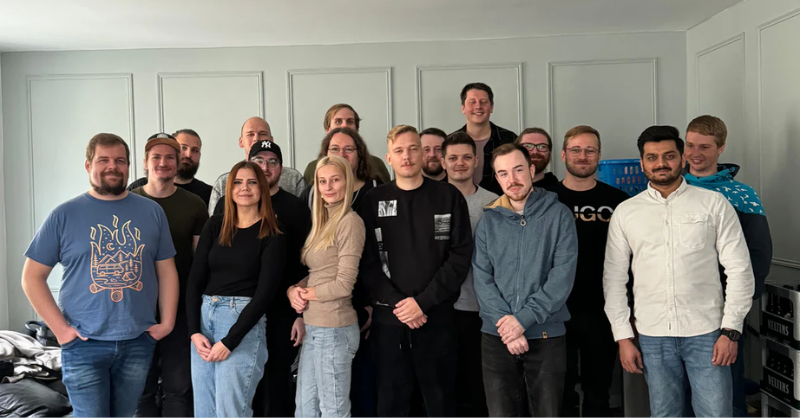
Gardia operates under the umbrella of microsynetics GmbH, founded in 2019 by Marlon Besuch and Michael Hummels. Based in Soest, North Rhine-Westphalia, the company now employs over 30 people and continues to develop the next generation of its emergency response technology.
Marlon Besuch is the co-founder and CEO of Gardia. He brings more than ten years of experience at the intersection of health technology and electronics, and previously served as Head of Finance and Purchasing in the electronics industry. At Gardia, he combines operational and commercial leadership with a clear focus on building a product that is both reliable in critical moments and easy for seniors to use.
Michael Hummels is the co-founder and CTO of Gardia. He leads technical development and is responsible for the company’s AI and embedded systems architecture. With more than 10 years of experience in embedded systems, artificial intelligence, and R&D leadership, particularly in health and power electronics, he oversees the development of Gardia’s AI-based fall detection solution and the underlying platform that powers it.
A wristband built for real-world emergencies
Gardia has created a discreet wristband that automatically detects falls and works both indoors and outdoors, without requiring a smartphone. The company develops all hardware, software, and detection intelligence internally, ensuring seamless integration and reliability.
This focus on autonomy has helped Gardia reach a five-figure active user base across the DACH region. The system is fully reimbursable by German health insurance, removing cost barriers and contributing to strong user retention.
Discussing the thought behind this product, the company revealed, “Gardia addresses the problem that many seniors are unable to call for help after a fall, particularly when they live alone. Existing emergency systems often fail because they are not worn consistently, are limited to the home, depend on smartphones, or are not designed around the physical and cognitive needs of older users.”
They went on to state, “The primary motivation for founding Gardia was personal experience with severe fall incidents within the founders’ own families, which revealed how dangerous delayed assistance after a fall can be.”
Closing the care gap as Europe ages
Europe’s demographic shift has intensified the need for independent safety solutions. The company stated, “The scale of the problem is driven by profound demographic change. In the European Union, around 97 million people are currently aged 65 or older, a number expected to exceed 110 million by the mid-2030s. In Germany, 96% of seniors live in private households, reflecting a strong preference to age at home despite a growing shortage of professional care workers.”
“At the same time, falls represent a major and often underestimated risk. In Germany alone, approximately 5.7 million people over the age of 65 experience a fall each year. Many of these incidents leave those affected unable to call for help, and delayed assistance significantly increases the risk of severe injury and long-term care dependency. As healthcare costs continue to rise, ensuring reliable safety solutions for seniors living independently has become a critical necessity for healthcare systems.”
Gardia’s mobile emergency system steps into this widening care gap, offering a lifeline for seniors who want autonomy without sacrificing safety.
What makes Gardia different from others?
Gardia competes primarily with smartwatch-based solutions, including general consumer wearables, as well as with traditional home emergency call systems designed for in-home use.
Describing its tech, “Gardia has developed a purpose-built emergency wristband for seniors that works both indoors and outdoors and does not require a smartphone. Hardware, software, and the AI-based fall detection system are developed entirely in-house, allowing the technology to be tailored specifically to senior movement patterns and real-life use cases. The solution combines GPS, cellular, WLAN, and BT for precise localisation and automatically connects users to a 24/7 emergency response centre operated by Bosch. The product is designed to be non-stigmatising, simple to use, reliable in real-life conditions and is equipped with a battery lifetime of up to 21 days, which increases the likelihood that seniors wear it consistently.”
Fuelled by strategic partnerships
A key component of Gardia’s service is its partnership with Bosch, which provides a dedicated 24/7 emergency response handled by trained specialists. Each case follows predefined escalation procedures to ensure accuracy and speed during crises.
Through its collaboration with Beurer, an established global leader in health-focused consumer products, Gardia is now accessible through a wide retail network spanning more than 100 countries. This increases visibility for families seeking reliable safety tools for ageing relatives.
What about diversity?
Regarding diversity statistics, the company stated, ”We are an innovative healthtech ‘hardware & software’ startup founded by two entrepreneurs committed to improving the lives of seniors. Our highly technical and interdisciplinary team includes 36 experts in research, hardware & software engineering, data science, sustainability, and management, with around 20% of our team hailing from countries beyond Germany, underscoring our international expertise and inclusive culture.”
“Our hiring strategy prioritises diversity, with a focus on increasing the representation of women and individuals from diverse backgrounds. This approach not only supports our commitment to gender parity and inclusiveness but also drives innovation and problem-solving by bringing multiple perspectives into our team.”