
Hi everyone! This is Cheng Ting-Fang, your #techAsia host for this week, coming to you from Taipei. As the Spring Festival and the start of the Year of the Horse on the lunar calendar approaches, many chip suppliers across Taiwan are hosting their year-end gatherings. At these gatherings, I have had the chance to meet some industry executives and what struck me most was the shift in mood compared with early 2025. Their faces seemed softer and less tense, with more smiles and less uncertainty.
Most of them are focused on AI-related development or are benefiting from the spillover effects of AI-driven demand, which is fuelling a global memory chip crunch and lifting companies across the entire semiconductor ecosystem, both large and small.
For example, DK Tsai, chair of Powertech Technology, one of the world’s leading chip packaging service providers, had not appeared in public for nearly a year.
The first half of 2025 was marked by severe turbulence due to an economic slowdown and US President Donald Trump’s “reciprocal” tariffs, but Powertech, which serves clients such as Micron, Kioxia, Broadcom and MediaTek, saw its business largely recover in the second half, driven by AI computing demand for its memory packaging and other related chips.
The company said it has now entered “expansion” mode and is far more confident in attracting customers for its advanced chip packaging technologies, which it is pitching as a rival to those of TSMC. Powertech plans to double capital spending this year, and Tsai indicated he doesn’t expect the market to cool anytime soon.
“I see AI computing as still being in its early days,” the chair said at the company’s party. “When you look at those robots, their movements are still very slow, which shows there’s plenty of room for improvement before they become truly agile. That also means the computing power isn’t yet fast enough to complete those missions.”
Winbond president Pei-Ming Chen also appeared at ease, noting that all of the company’s capacity for 2026 has already been sold, and that most of its 2027 capacity is nearly fully booked as well. Winbond produces speciality DRam and flash memory for a wide range of electronics makers.
“It’s interesting that this time I have been able to get to know my customers’ customers and even my customers’ customers’ customers, who have come directly to us,” Chen said as he described the industry’s frenzied efforts to secure enough memory supplies.
Chih-Yuan Lu, president of Macronix International, another key speciality memory maker, said his company is urgently buying chipmaking tools to increase capacity “as soon as possible”. Macronix, which counts Nintendo, SpaceX and a wide range of industrial and automotive players as its clients, is aiming to fill the gap left by major global rivals Samsung, SK Hynix and Micron focusing their own capacity on serving large AI tech giants. Macronix had reported losses for nearly two years due to a market downturn, but the situation has improved since the last quarter of 2025.
“We are buying machines at an accelerated pace, and we aim to install and put them into operation as soon as they arrive,” Lu said. “We don’t see the memory crunch easing anytime soon. Only if global AI investment were to stop could the supply constraints be resolved.”
Golden memories
Optimism about AI demand and supply shortfalls of memory are creating a golden opportunity for China’s emerging memory chip producers to expand their market share, Nikkei Asia’s Cheng Ting-Fang and Lauly Li report.
CXMT, China’s top DRam producer, is expanding production capacity in Shanghai, while YMTC, the country’s leading NAND flash memory maker, is building a new plant in Wuhan. These expansions, their most aggressive yet, are aimed at meeting surging domestic demand and gaining ground in the global tech supply chain. The severe undersupply already disrupted many consumer electronics and computer makers’ plans for 2026.
Another Nikkei Asia scoop reveals how supply constraints have pushed top global PC makers HP, Dell, Asus and Acer to consider sourcing DRam from CXMT for the first time. If this happens and the price of memory chips continues to surge, it could give the Chinese chip player a chance to move into the global tech supply chain as soon as this year.
The waiting game
Nvidia’s sales of H200 AI chips to China are still awaiting final approval from Washington nearly two months after Donald Trump greenlit exports, as the US government conducts a national security review before granting licenses to Chinese customers, write the Financial Times’ Michael Acton, Demetri Sevastopulo and Zijing Wu.
Chinese customers are not placing H200 chip orders with Nvidia until it becomes clear whether they will be able to secure the licenses or what conditions will be attached, people familiar with the discussions told the FT.
In December, chief executive Jensen Huang brokered a breakthrough deal with the US president that raised hopes Nvidia could soon return to a market that Huang has said could be worth $50bn a year.
Nvidia had directed its supply chain to increase production of H200 chips in expectation of “very high” demand from customers in China.
But the implementation of that deal has become bogged down. Some suppliers have since paused production of key H200 components as Washington and Beijing take their time to approve sales.
When Trump agreed to allow Nvidia to export H200 chips to China, he told his administration to conduct a national security review to ensure that appropriate conditions were attached to export licenses.
In January, the commerce department issued a regulation that loosened restrictions on the export of the H200 to China but required the US departments of State, Defense and Energy to review any licenses.
Nvidia, AMD and the state department declined to comment.
Still spending
Far from hitting the brakes, the richest tech titans in the US and China are accelerating their spending for 2026 as they race to build AI computing capacity, Nikkei Asia’s Yifan Yu and Cissy Zhou write.
Facebook parent Meta has announced plans to nearly double capital spending to boost its AI computing capabilities, while Tesla has outlined a similar push to develop advanced robotics amid its shift away from automaking. Other tech leaders, including Microsoft and Alphabet, are also signalling increased investment heading into 2026.
This investment rush is not limited to the US, as China’s ByteDance and Alibaba are also in expansion mode.
And while it remains unclear how quickly these massive investments will generate returns, chipmakers and component suppliers supporting AI infrastructure are emerging as the first wave of winners from the AI spending boom.
Even Apple
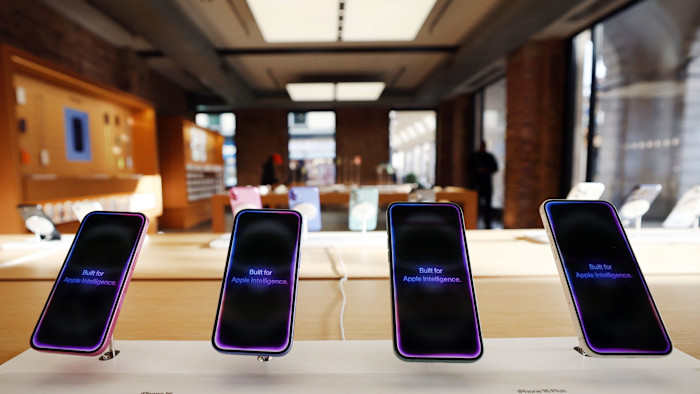
Apple is encountering more competition in sourcing high-quality components, Cheng Ting-Fang and Lauly Li report. The US tech giant has decided to prioritise production and shipment of its three most premium iPhones — its first-ever foldable-screen model and two others with high-end cameras and screens — for its flagship launch in the second half of 2026.
The move is partially due to a change in marketing strategy and partly because of the global memory chip crunch, sources said. Apple currently plans to push back the release of its standard iPhone model, which would normally go on sale in September, to the first half of 2027.
Apple is looking to optimise resources and maximise revenue and profits as the prices of materials and components continue to rise, a sign that not even a company with such massive influence and purchasing power is immune from the latest AI-driven supply disruption.
Suggested Reads
TSMC to make advanced chips for AI at 2nd Japan plant (Nikkei Asia)
China’s genius plan to win the AI race is already paying off (FT)
Japan chipmaker Rapidus tops $1bn in private investment as IBM aims to join (Nikkei Asia)
South-east Asia IPOs rebound in second half, raising $4.5bn
SoftBank close to agreeing additional $30bn investment in OpenAI (FT)
Nintendo shrugs off higher chip costs, sticks to profit forecast (Nikkei Asia)
Ford held talks with China’s Xiaomi over EV partnership (FT)
AI effect starts to flip ‘Korea discount’ on stocks into a premium (Nikkei Asia)
Why Chinese electronics makers are betting on a TV revival (FT)
Top chipmakers warn AI-driven supply squeeze will worsen (FT)
#techAsia is co-ordinated by Nikkei Asia’s Katherine Creel in Tokyo, with assistance from the FT tech desk in London.
Sign up here at Nikkei Asia to receive #techAsia each week. The editorial team can be reached at techasia@nex.nikkei.co.jp