
A team of researchers in China has developed a key component for a compact microwave beam-firing weapon that could take satellites down from the ground.
The team, from the Northwest Institute of Nuclear Technology in Xian, Shaanxi province, developed a system capable of delivering a remarkable 20 gigawatts of power for a whole minute. Until now, similar systems were only capable of firing continuously for no longer than three seconds.
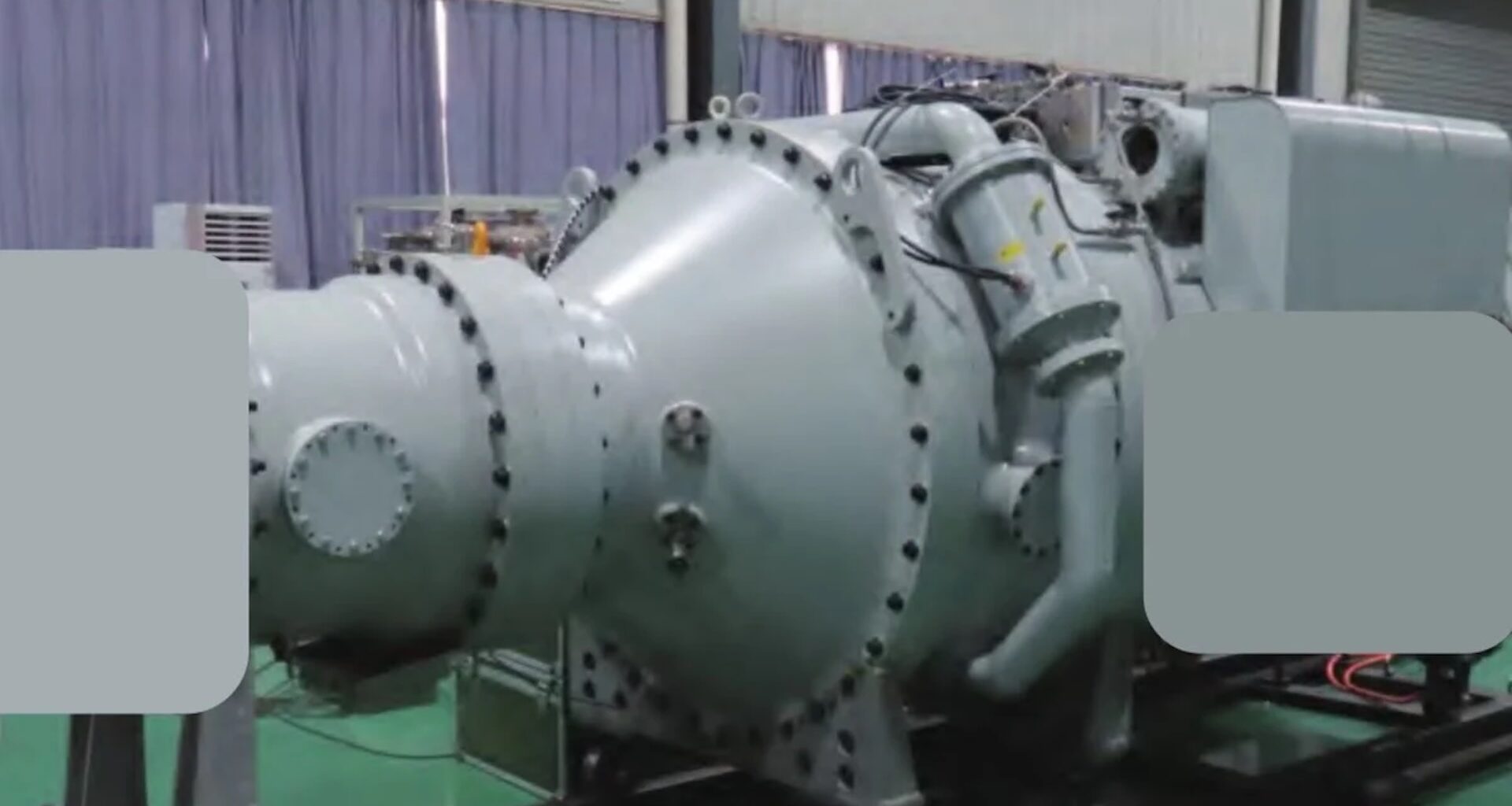
Designated TPG1000Cs, it is the world’s first compact driver for a high-power microwave (HPM) weapon.
China’s TPG1000Cs microwave beam device
The TPG1000Cs is only four meters (13 feet) long and it weighs only five tons, thanks to a structure made with aluminum alloy. This makes it small and compact enough to be mounted on trucks, aircraft, and even satellites. By mounting it on satellites, operators could easily tackle satellites marked as a threat.
The team behind TPG1000Cs, from the Key Laboratory on Science and Technology on High Power Microwave at NINT, published their findings in a paper in the journal High Power Laser and Particle Beams.
In their paper, they explain that the system can deliver up to 3,000 high-energy pulses in a single session. This far exceeds other similar devices.
The system “has already accumulated more than 200,000 operational pulses, demonstrating stable and reliable performance and opening the way for multi-platform deployment of high-power systems”, the scientists wrote in their paper.
According to a South China Morning Post (SCMP) report, with a power output of even 1GW, a ground-based microwave weapon could disrupt Starlink satellite communications, or even damage the satellites themselves. Russia’s Sinus7 driver, for example, could run for approximately a second, delivering roughly 100 pulses per burst. Despite these comparatively limited capabilities, the system weighed roughly 10 tons.
Designing ‘Starlink killers’
For their system, the NINT scientists explained that they replaced traditional straight-tube designs with a compact dual-U-shaped structure, allowing energy to bounce back and forth efficiently. This reportedly achieves equivalent performance in roughly half the space.
Additionally, simple material upgrades—like switching to a better insulating oil—enabled significantly higher energy storage capacity. These combined advancements offered more compact, powerful, and reliable energy-storage solutions.
With Chinese officials having repeatedly warned that SpaceX’s Starlink satellites pose a threat to its national security, the country is developing “Starlink killer” weapons. These include high-power microwave systems and lasers, capable of countering mega-constellations at low costs.
It’s worth noting that SpaceX has been lowering the altitude of its Starlink satellites to reduce collision risks with other satellites and space debris. This move could also make the satellites more vulnerable to attacks from ground-based systems.