
For the modern moviegoer, the Marvel brand is synonymous with the Marvel Cinematic Universe, a multi-platform narrative machine that has successfully integrated dozens of feature films and television projects into a singular timeline. Although Marvel Studios has faced several commercial hurdles in recent years, the 2026 calendar indicates a strategic pivot back toward massive ensemble events, thanks to the high-stakes arrival of Spider-Man: Brand New Day and the monumental return of Robert Downey Jr. as Victor von Doom in Avengers: Doomsday. However, Marvel’s cinematic journey began many decades before the MCU, and even before the company got rebranded as Marvel. That’s because the first live-action adaptation of a Marvel character premiered in 1944.
The inaugural live-action Marvel adaptation, a 15-chapter serial titled Captain America, officially hit theaters on February 5, 1944. During this era, serial films were a staple of the cinematic experience, functioning as episodic narratives that were screened as short chapters before a main feature. Each chapter ended with a cliffhanger designed to entice audiences to return to the theater every Saturday to see how their favorite heroes escaped certain death. The Captain America serial starred Dick Purcell as the titular hero, marking the first time a Marvel character appeared in a professional theatrical capacity. However, while the production was a massive investment for Republic Pictures, the serial largely ignored the source material. Without the explicit branding of the title, contemporary fans would undoubtedly wonder if the story was a Captain America narrative at all.
Why the Captain America Serial Film Is Such a Bad Adaptation?
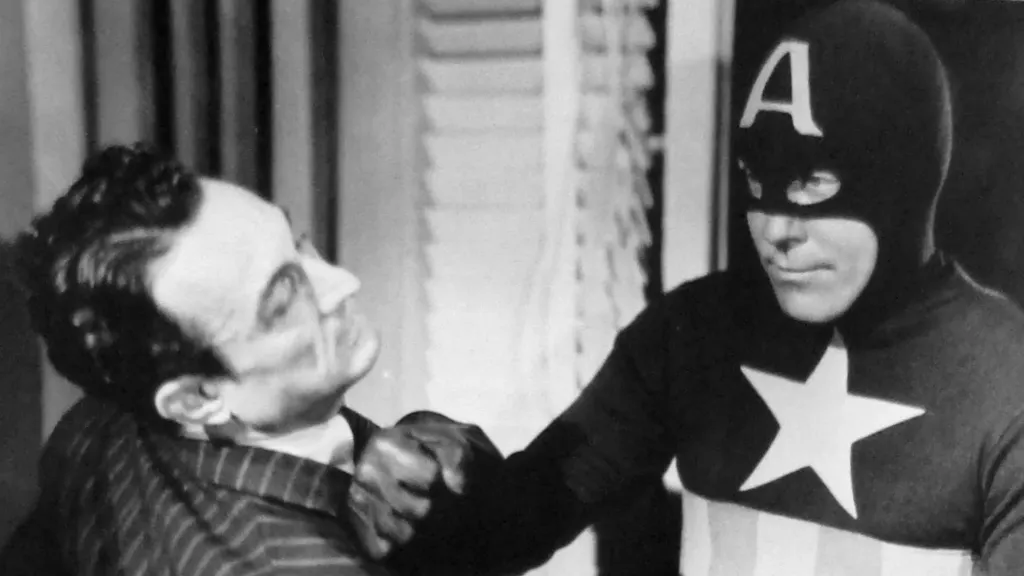 Image courtesy of Republic Pictures
The production of the Captain America serial is a fascinating case study in the lack of brand fidelity during the early years of the film industry. Republic Pictures essentially viewed the Marvel license as a secondary element to an existing script they were already developing. Historical records and production notes suggest that the screenplay was originally intended to be a sequel to The Mysterious Doctor Satan or an adaptation of Mr. Scarlet from Fawcett Comics. When these plans shifted, the studio simply inserted the Captain America name into a narrative that was never designed for him. This lack of interest in the source material resulted in a version of the character that is almost entirely unrecognizable to comic book readers.
Instead of the frail patriot Steve Rogers, who undergoes a miraculous transformation via a super-soldier serum, the serial introduces Grant Gardner—yes, they even changed the hero’s civilian name. This version of the hero is a crusading District Attorney who wears a costume to fight crime but possesses no biological enhancements. In addition, despite the film being released at the height of World War II, there are no references to the military, no Nazi antagonists, and no mention of the Red Skull. Instead, Captain America battles a generic villain known as The Scarab, portrayed by Lionel Atwill. Furthermore, the iconic weaponry of Captain America was discarded in favor of standard noir tropes. The indestructible Vibranium shield, which was already a fixture of the comics by 1944, is absent. This version of Captain America primarily uses a revolver to dispatch his enemies.
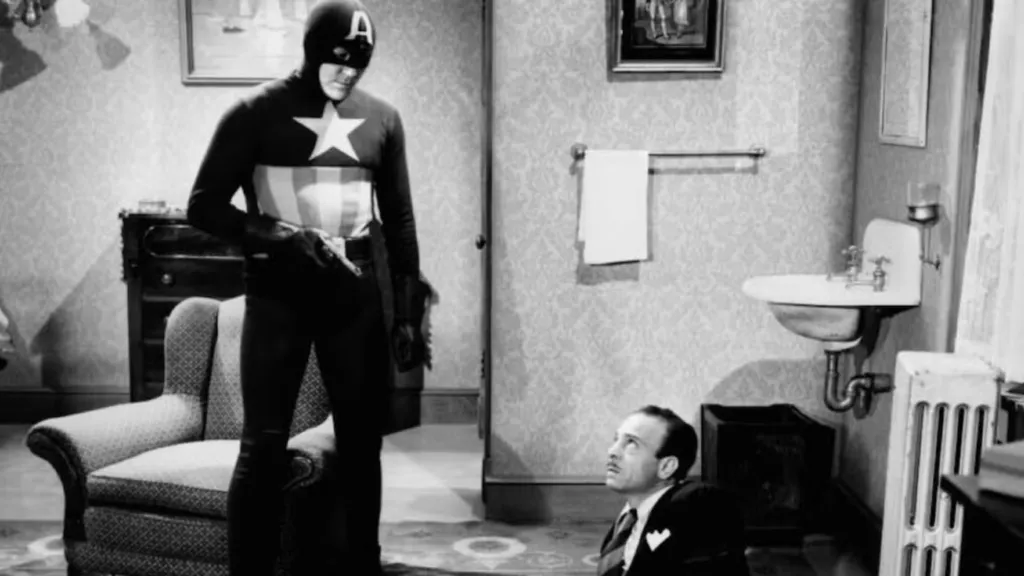 Image courtesy of Republic Pictures
The serial’s deviation was so extreme that Timely Comics—Captain America’s original publisher— reportedly protested the changes, only to be ignored by a studio that had no contractual obligation to maintain narrative consistency. On top of that, the physical demands of the production were also notoriously grueling. Dick Purcell was not in peak athletic condition, and the strain of performing his own stunts while filming fifteen chapters of the serial in six weeks took a devastating toll. Tragically, Purcell suffered a fatal heart attack shortly after production concluded, making his portrayal of the first Marvel hero his final professional contribution to the industry. Some attribute Purcell’s intense stuntwork as the reason for his fatal heart failure.
While the Captain America serial remains a bizarre footnote in the history of the genre, it highlights the evolution of superhero media over the last eight decades. Modern fans can currently prepare for a much more faithful return to the character’s legacy when Sam Wilson (Anthony Mackie) and Steve Rogers (Chris Evans) return in Avengers: Doomsday, which is scheduled to be released in theaters on December 18th.
Do you think the 1944 serial would have been more successful if Republic Pictures had stayed true to Captain America’s World War II origin story? Leave a comment below and join the conversation now in the ComicBook Forum!