
Researchers at Penn State have developed a new fabrication method that allows a programmable “smart synthetic skin” to change its appearance, texture, and shape while also hiding or revealing information on demand.
The material is made from hydrogel, a water-rich, gel-like substance, and is produced using a technique the team describes as 4D printing.
Unlike traditional synthetic materials with fixed properties, the smart skin can dynamically respond to external stimuli such as heat, solvents, or mechanical stress.
The approach allows a single sheet of material to perform multiple functions at once, including adaptive camouflage, information encryption and decryption, and shape morphing.
Researchers say this level of multifunctionality has been difficult to achieve with existing synthetic materials, which are typically designed for one specific role.
The work was inspired by cephalopods such as octopuses, which can rapidly alter their skin’s appearance and texture to blend into their surroundings or communicate.
The team aimed to recreate this kind of dynamic control in a soft, synthetic material using digital design rather than complex biological systems.
Printing instructions inside
The key to the smart skin lies in a technique called halftone-encoded printing. The method translates digital image or texture data into binary patterns that are printed directly into the hydrogel.
These patterns act as embedded instructions that determine how different regions of the material respond when exposed to changes in the environment.
“In simple terms, we’re printing instructions into the material,” said Hongtao Sun, assistant professor of industrial and manufacturing engineering at Penn State and the project’s principal investigator. “Those instructions tell the skin how to react when something changes around it.”
When exposed to stimuli such as temperature shifts, liquids, or mechanical forces, different areas of the hydrogel swell, soften, or deform in controlled ways. By designing the halftone patterns carefully, the researchers can decide how the material behaves as a whole.
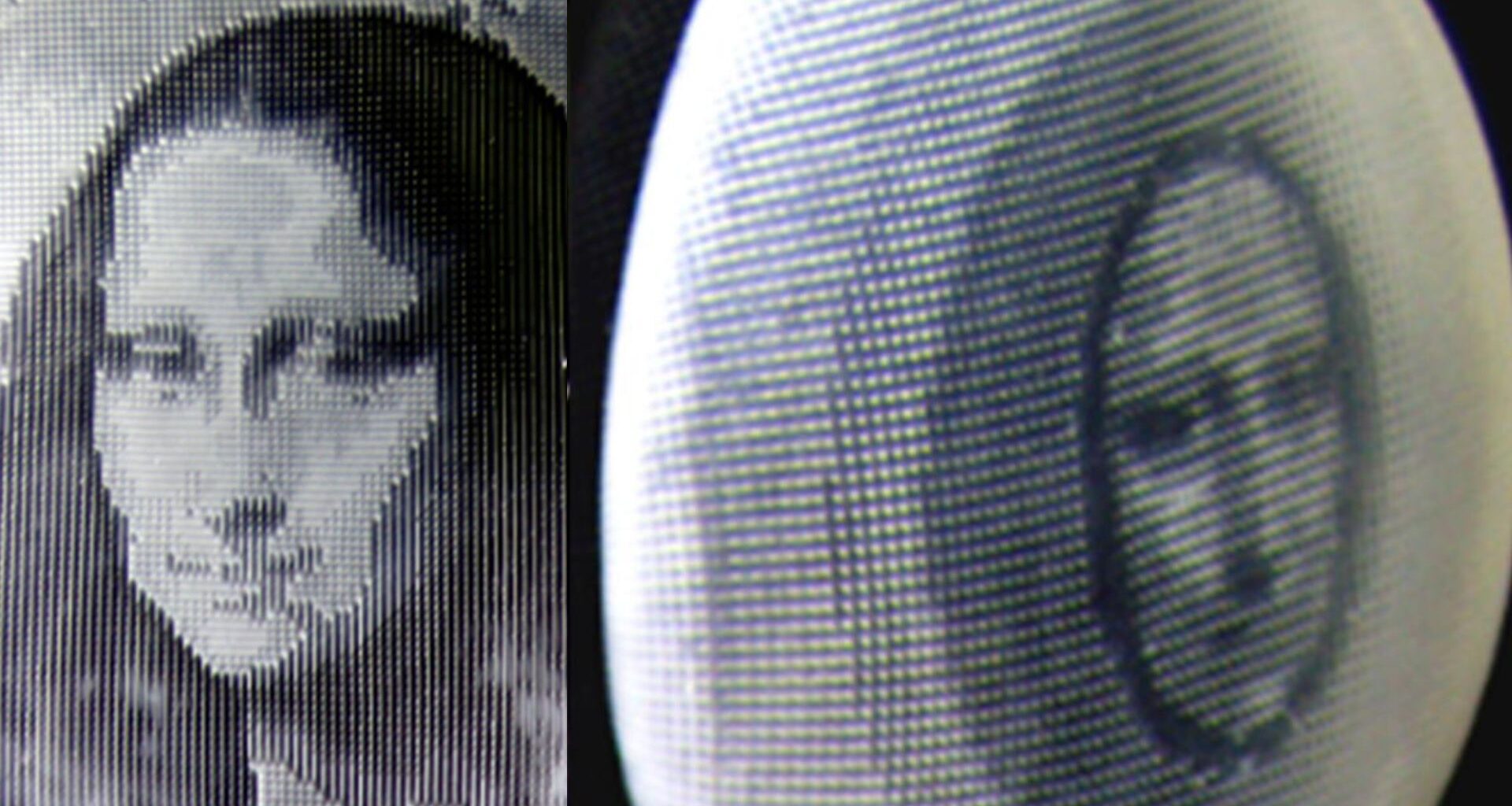
One of the most striking demonstrations involved encoding an image of the Mona Lisa into the smart skin.
When washed with ethanol, the hydrogel appeared transparent, hiding the image entirely. The image became visible again when the material was immersed in ice water or gradually heated.
“This behavior could be used for camouflage, where a surface blends into its environment, or for information encryption, where messages are hidden and only revealed under specific conditions,” said Haoqing Yang, a doctoral candidate at Penn State and first author of the study.
Shape, texture, information
Beyond visual changes, the smart skin can also reveal hidden information through mechanical deformation. By gently stretching the material and analyzing how it deforms, encoded patterns can be detected using digital image correlation techniques.
The hydrogel proved highly malleable, transforming from flat sheets into complex, bio-inspired shapes without requiring multiple layers or different materials.
In another demonstration, images encoded into flat films gradually became visible as the material morphed into dome-like 3D structures.
“Similar to how cephalopods coordinate body shape and skin patterning, the synthetic smart skin can simultaneously control what it looks like and how it deforms, all within a single, soft material,” Sun said.
The researchers say the method could lead to scalable platforms for adaptive materials used in soft robotics, secure communication, biomedical devices, and advanced manufacturing.
The study was published in Nature Communications.