
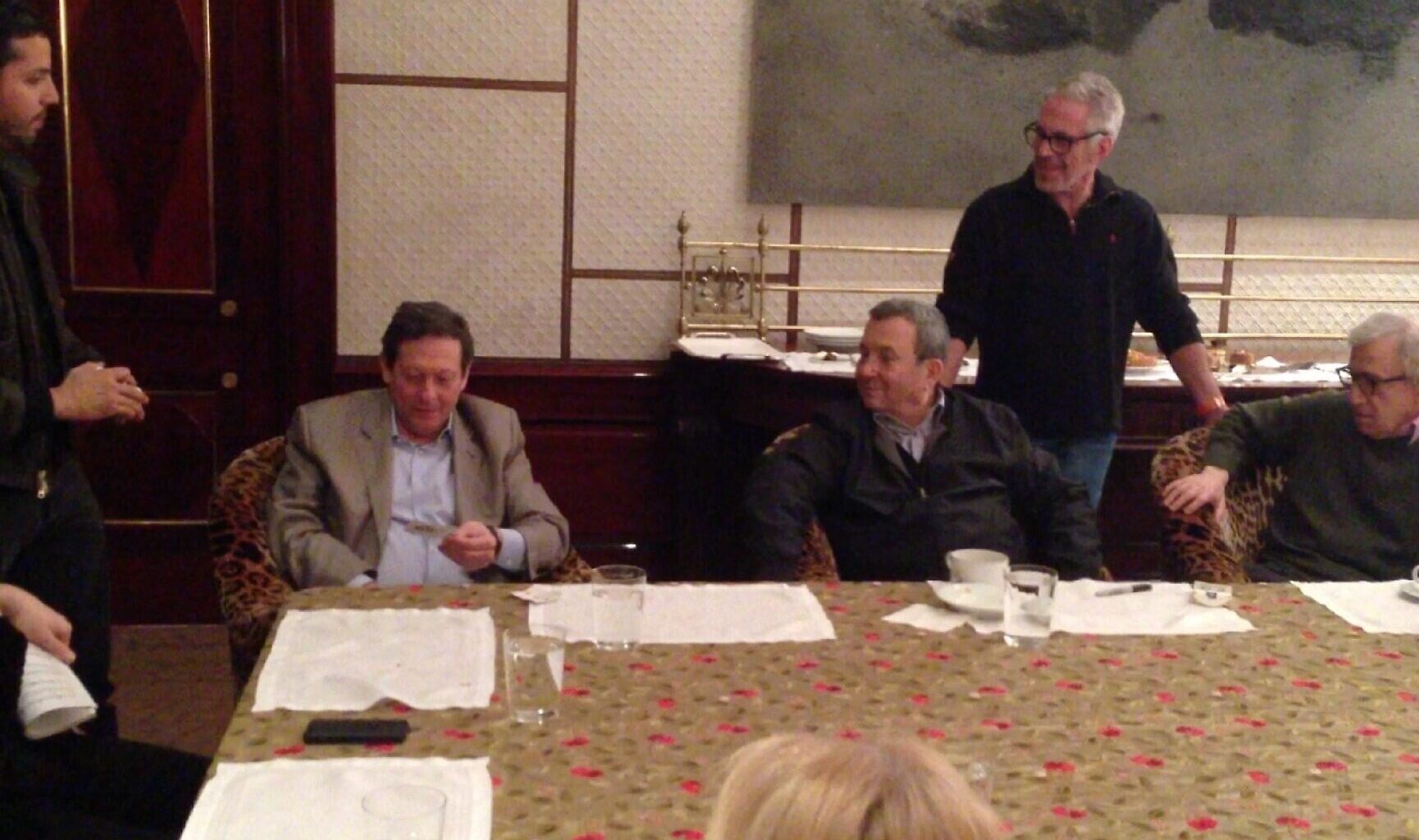
Former prime minister Ehud Barak fretted about Israeli Arab population growth and said he had told Russian President Vladimir Putin that Russian immigration could offset that growth, according to a recording released in the so-called Epstein files this week.
The files, released by the US Department of Justice, are documents investigators compiled about Jeffrey Epstein, the late sex offender with a sprawling, global network of powerful acquaintances.
Barak’s ties to Epstein have been known for years. There is no evidence of wrongdoing by Barak.
One of the millions of files released by the Department of Justice is an audio recording of a meeting attended by Barak and Epstein.
The circumstances of the conversation were unclear, but background noise seemed to indicate it took place during a meal. It was not clear who made the recording or why. Some of the audio is unclear.
Get The Times of Israel’s Daily Edition
by email and never miss our top stories
By signing up, you agree to the terms
In the recording, Barak said he was 71 years old, putting the meeting around 2013 or 2014. Barak was the prime minister in 1999-2001, and defense minister in 2007-2013, but the audio seemed to indicate he was entering the private sector at the time of the conversation.
Barak was asked about demographics in Israel, and expressed concern about Arab population growth in Israel, the West Bank and Gaza.
“The Haredim are more productive than the Arabs,” he said, referring to the ultra-Orthodox community’s high population growth.
“The future in Israel is waking up in the right moment, before it’s too late,” he said.
“It will be an Arab majority,” he said, referring to population growth in the West Bank and Gaza and the failure to reach a two-state solution with the Palestinians. “It’s a collective blindness of our society.”
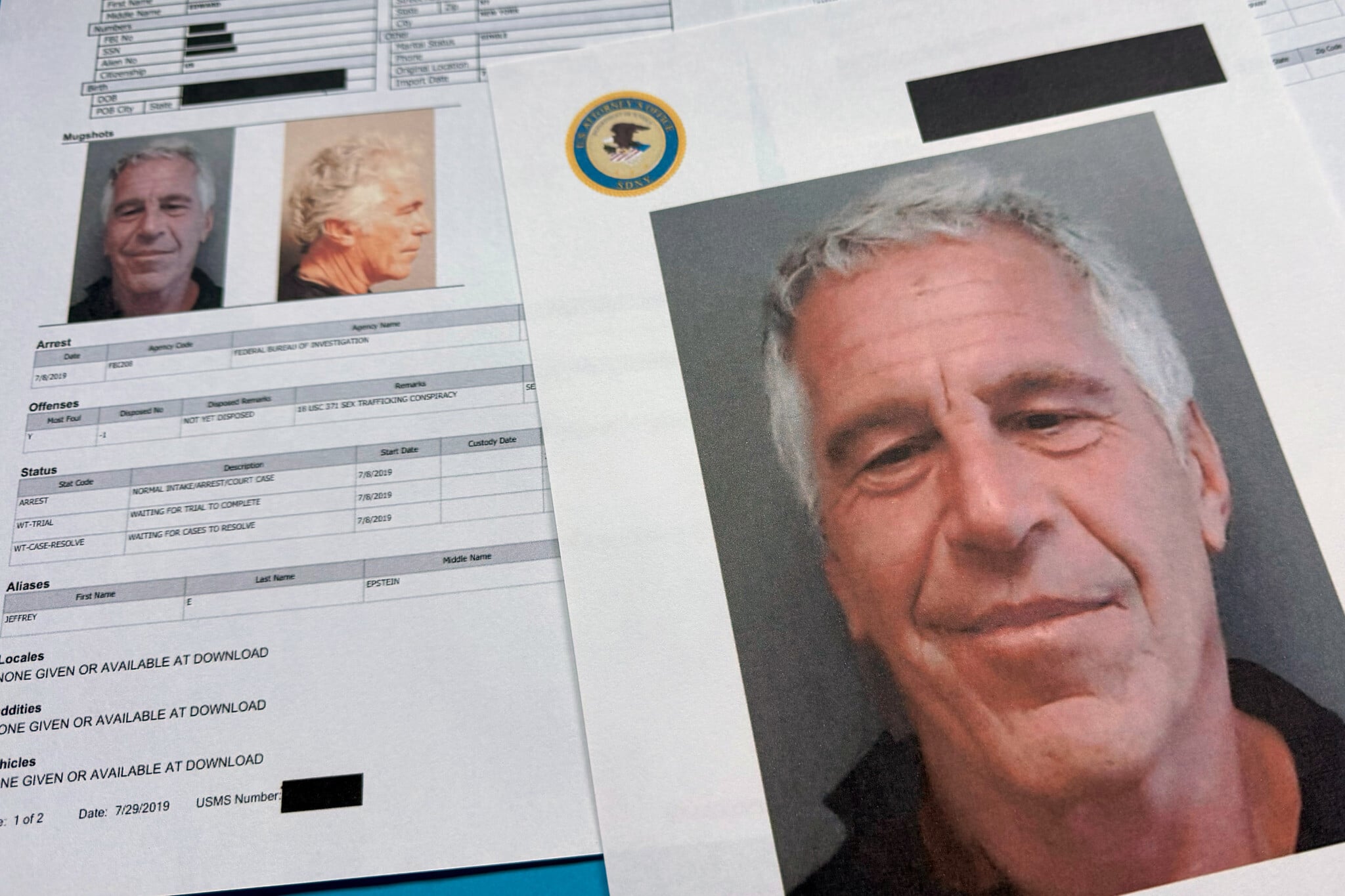
Documents that were included in the US Justice Department release of the Jeffrey Epstein files are photographed on January 2, 2026. (AP Photo/Jon Elswick, File)
Barak also expressed concern about Israel’s growing proportion of Arab Israelis.
“Even within the borders of smaller Israel, there is still an issue. I think the Arabs are growing slowly. Forty years ago, they were 16 percent, now they’re 20,” he said.
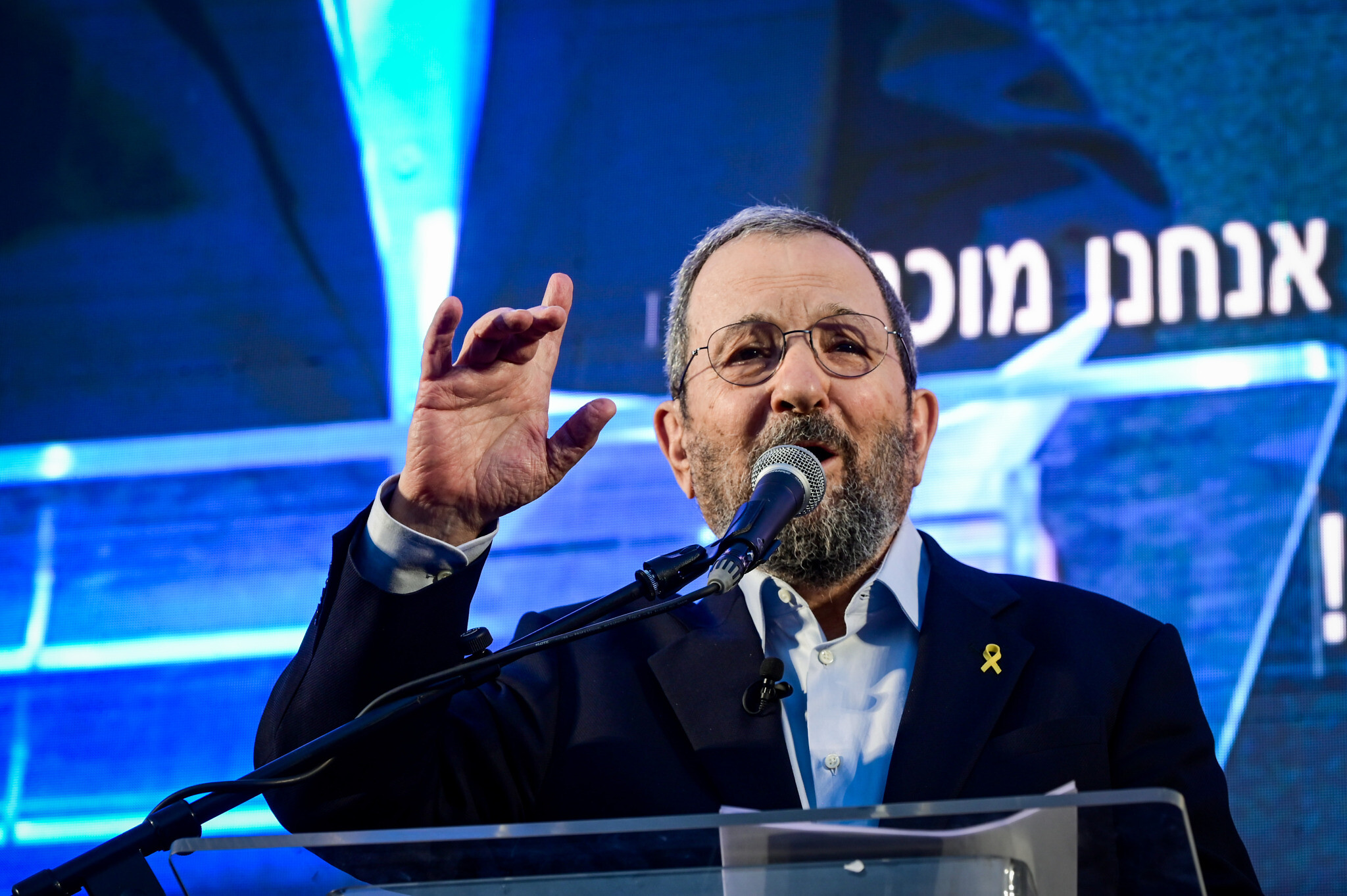
Former prime minister Ehud Barak at an anti-government rally in Tel Aviv on May 17, 2025. (Avshalom Sassoni/Flash90)
He proposed having other minority groups, immigrants and converts make up for the difference.
“First, with the Druze — they’re about one percent. They are totally Israeli in their behavior,” he said. “Then we should take the Christian minority. They’re about another two percent. They have an education system that is better than ours.”
“We have to break the monopoly of the Orthodox rabbinate, on marriage and funerals, the definition of a Jew,” he said. “Open the gates for massive conversion into Judaism. It’s a successful country. Many will apply.”
He was apparently referring to Russian immigrants with mixed ancestry, saying it takes the “second generation to adapt,” and mentioning Israelis with mixed Russian-Israeli names. During a wave of immigration from the former Soviet Union in the 1980s and early 1990s, more than a million people moved to Israel.
“You would interview someone entering to some unit in the army, asking, ‘What’s your name?’ He answers, ‘Sergey Bitton,’ or ‘Vladimir Butbul,’” Barak said.
“We can control the quality much more effectively, much more than the founding fathers of Israel did,” he said. “They took whatever came. They had to save people. Now, we can be more selective.”
“I think, with [a] much more open mind about turning Jews, we can easily absorb another million. I have to tell Putin always, what we need is not just one more million. We need, dramatically, the million Russians,” he said. “I see that many prefer to be Belarusian, or maybe young, handsome girls will come.”
Barak made the comments in passing during a conversation that lasted more than three hours.
Barak also discussed failed efforts at reaching a lasting peace agreement with the Palestinians, and how Israel could lessen tensions with the Palestinians to help forge ties with moderate Arab states.
“When you focus only on the Palestinian-Israeli issue, Israelis feel freier, you say in Yiddish, kind of “suckers,” if you go to peace,” mentioning how Israel’s withdrawals from Gaza and Lebanon had led to more violence, such as rocket attacks.
“If Bibi [Netanyahu] will pull out from the West Bank, when you come to land, to Ben Gurion [airport], you go [at] 2,000 feet over Arab occupied territory. It could be crazy,” he said.
“People feel that we are only giving. We cannot get anything, and it’s true. From the Palestinians, you cannot get anything,” he said. “But once you put into the equation the whole Arab moderate world, you get a lot. Recognition from the Arab world.”
“We never tried, in the last four years, to make, never ready to make painful decisions in order to have a breakthrough. We played around. Abu Mazen is a responsible party for what happens,” he said, using the nom de guerre of Palestinian Authority President Mahmoud Abbas.
“The Americans made mistakes, Europeans made mistakes, but that cannot justify our failure, and it’s true, Abu Mazen doesn’t help. He’s not an easy client,” he said.
Other world leaders are featured in the Epstein files, including former US president Bill Clinton, US President Donald Trump, and the UK’s former Prince Andrew.