

A joint list of Arab parties would win 14 of the Knesset’s 120 seats if elections were held today, continuing to prevent a parliamentary majority from either Zionist opposition parties or Prime Minister Benjamin Netanyahu’s coalition, according to a poll published Thursday by Zman Yisrael, The Times of Israel’s Hebrew-language sister site.
The result represented a two-seat dip from last week’s poll for the Joint List, which Arab party leaders vowed to work toward reviving last month, and which is expected to command more Knesset seats than the parties collectively would if they were to run separately.
Still, the result precluded the option of a government composed solely of Zionist opposition parties, which won a combined 54 seats, or of Netanyahu’s current coalition, which won a combined 52 seats. Leaders of both blocs have rejected the prospect of a government reliant on Arab parties.
Netanyahu’s bloc would fail to form a government even if joined by the four seats awarded in the new poll to Benny Gantz’s Blue and White, the only Zionist opposition party that has expressed openness to forming a government with the premier.
Zionist opposition parties, meanwhile, would fail to form a government even if Arab party Ra’am were to splinter from the Joint List and join them in a constellation similar to the short-lived government of 2021-2022 that unseated Netanyahu, according to the poll.
Get The Times of Israel’s Daily Edition
by email and never miss our top stories
By signing up, you agree to the terms
In Netanyahu’s coalition, the new poll awarded 27 seats to the premier’s Likud, 10 seats to the Sephardic ultra-Orthodox Shas, eight seats to the Ashkenazi ultra-Orthodox United Torah Judaism and seven seats to National Security Minister Itamar Ben Gvir’s extremist Otzma Yehudit party. Finance Minister Bezalel Smotrich’s Religious Zionism party would fail to clear the electoral threshold.
The results for the parties in Netanyahu’s coalition were identical to last week, except for Shas, which saw a one-seat increase.
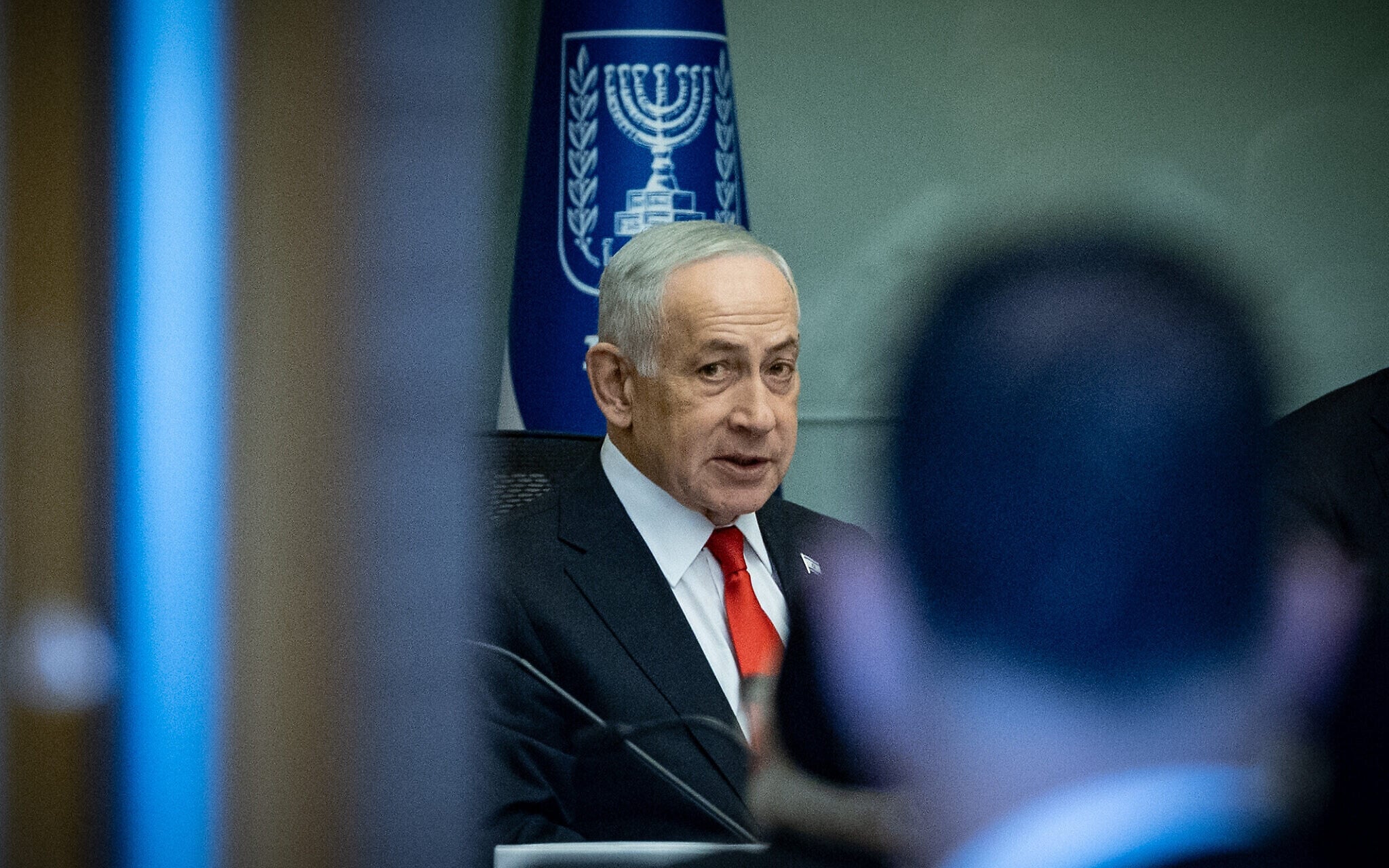
Prime Minister Benjamin Netanyahu takes part in a Foreign Affairs and Defense Committee meeting at the Knesset in Jerusalem on February 5, 2026. (Yonatan Sindel/Flash90)
Among opposition parties, right-wing former prime minister Naftali Bennett’s prospective party would win 18 seats, down from 19 last week; former defense minister Avigdor Liberman’s hawkish Yisrael Beytenu would win 10 seats, the same as last week; former deputy IDF chief Yair Golan’s left-wing Democrats would win eight seats, down from nine last week; and former IDF chief Gadi Eisenkot’s centrist Yashar party would win six seats, down from seven last week.
Blue and White, led by former IDF chief Gantz, would win four seats, after failing to clear the electoral threshold in last week’s poll.
The net result for the Zionist opposition parties represented a one-seat decrease from last week.
The result came days after Bennett defended the inclusion of Ra’am in his 2021-2022 government, but said there was no “mandate” to form a government reliant on Arab parties following the Hamas-led onslaught of October 7, 2023. Gantz and Liberman have also vetoed a government reliant on Arab parties.

Naftali Bennett speaks during a conference at the Reichman University in Herzliya, on January 22, 2026. (Avshalom Sassoni/Flash90)
The Islamist Ra’am party joined the communist Arab-majority Hadash, secularist Ta’al and nationalist Balad parties in signing an agreement last month to work toward running together in the next election, as soaring violent crime in the Arab community triggered public pressure on the factions to unite.
The Arab parties had for months been in talks to revive the list, which seemed halted amid internal fights between Ra’am and the other parties, mainly over Abbas’s demand for the bloc to be merely a technical alliance to allow him the option to split after the elections and join a governing coalition separately.
According to the Kan public broadcaster, the other parties acquiesced, enabling an agreement to be signed.
The Zman Yisrael survey was conducted on Wednesday and Thursday by Tatika Research and Media in collaboration with the Adgenda panel, and included 500 Jewish and Arab respondents, controlled for age, religion, gender and place of residence. The margin of error is 4.4%.
Ariela Karmel contributed to this report.
Is accurate Israel coverage important to you?
If so, we have a request.
Every day during the past two years of war and rising global anti-Zionism and antisemitism, our journalists kept you abreast of the most important developments that merit your attention. Millions of people rely on ToI for fact-based coverage of Israel and the Jewish world.
We care about Israel – and we know you do too. So we have an ask for this new year of 2026: express your values by joining The Times of Israel Community, an exclusive group for readers like you who appreciate and financially support our work.
Already a member? Sign in to stop seeing this
You appreciate our journalism

You clearly find our careful reporting valuable, in a time when facts are often distorted and news coverage often lacks context.
Your support is essential to continue our work. We want to continue delivering the professional journalism you value, even as the demands on our newsroom have grown dramatically since October 7.
So today, please consider joining our reader support group, The Times of Israel Community. For as little as $6 a month you’ll become our partners while enjoying The Times of Israel AD-FREE, as well as accessing exclusive content available only to Times of Israel Community members.
Thank you,
David Horovitz, Founding Editor of The Times of Israel