
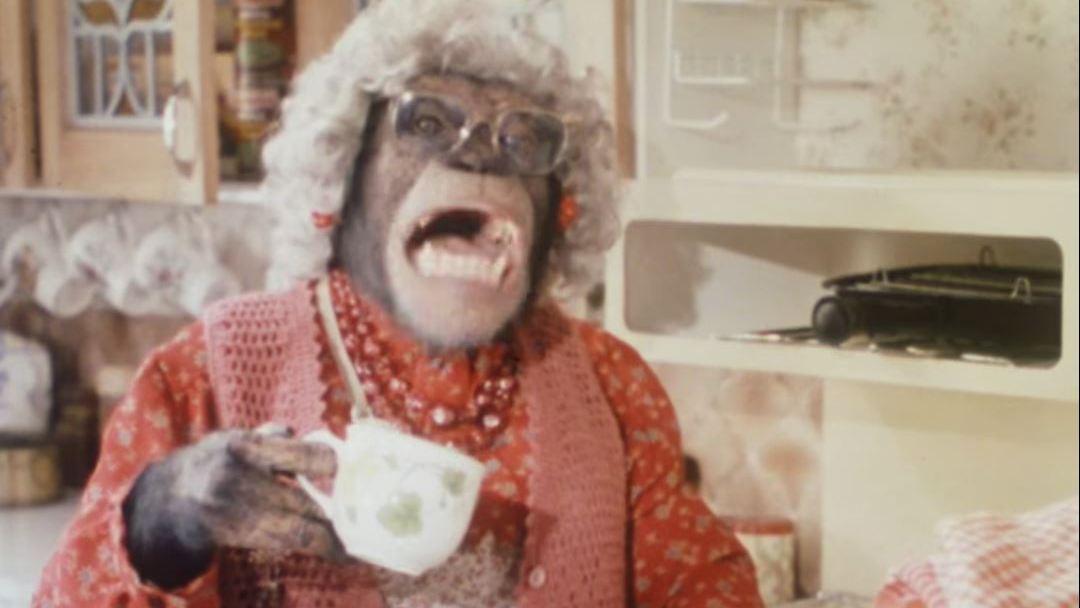
An apes’ tea party may sound like a euphemism for chaos, but if you organise one you may find that primates have more vivid imaginations than anyone expected.
Apes can play and pretend in an imaginary world of make-believe, scientists have found for the first time, showing that the skill is not uniquely human.
Across three experiments, researchers found that a bonobo could understand the concept of pouring imaginary juice from an empty jug into an empty cup and picking an invisible imaginary grape from an empty bowl.
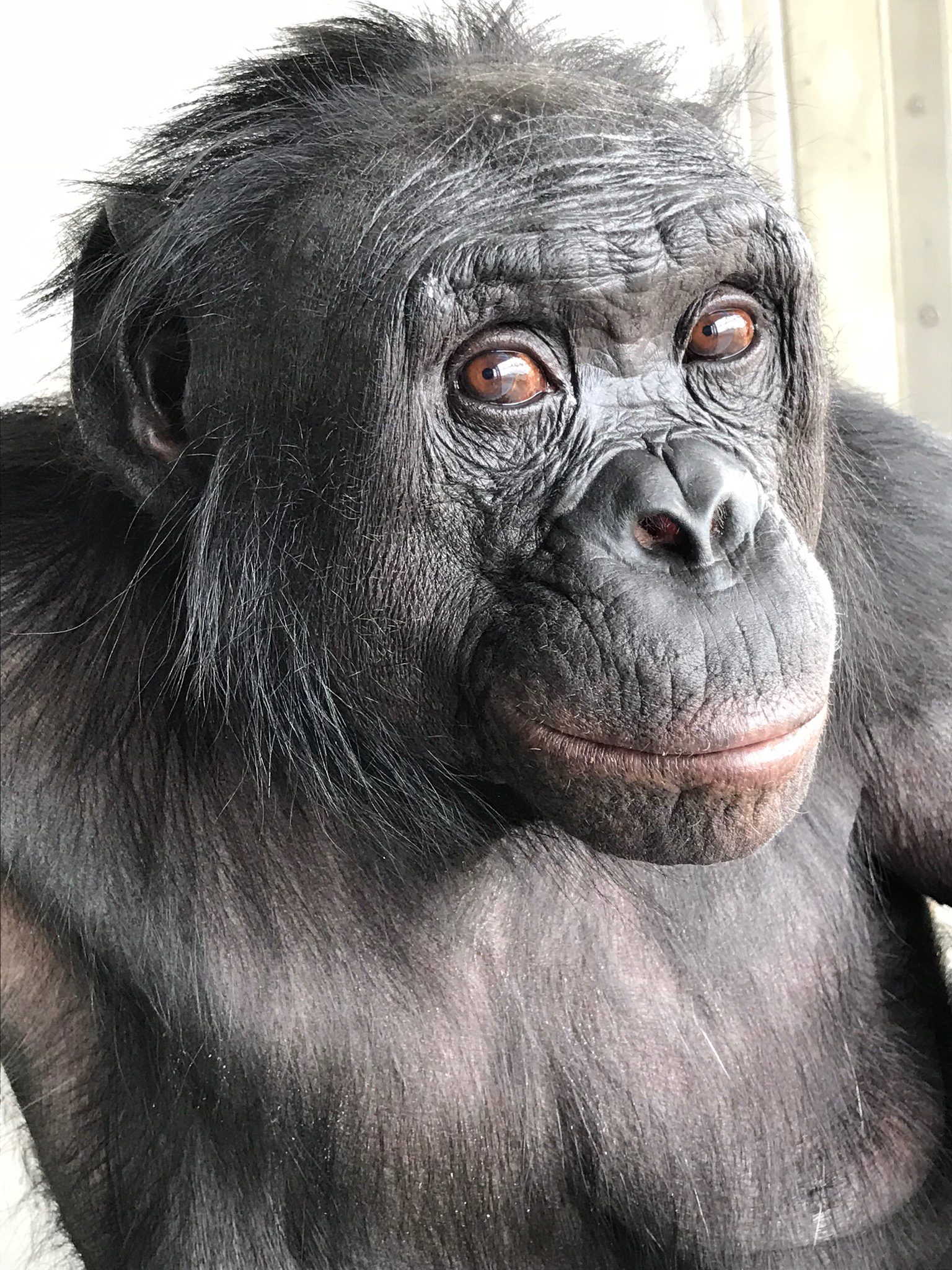
Each of the experiments saw researchers from Johns Hopkins University in Baltimore, Maryland, set up scenarios similar to a child’s make-believe tea party. Kanzi, a 34-year-old bonobo, would face a researcher across a table set up with empty jugs, cups, bowls and jars.
In one experiment, the cups and jugs were transparent and the researcher pretended to pour juice into the two cups and then pretended to pour the imaginary juice out of one of the cups before asking the bonobo “Where’s the juice?” They found that he was consistently able to point to the cup that was still full of imaginary juice.
• Gay sex may help strengthen social bonds among primates
In a second experiment designed to test whether Kanzi understood the juice to be imaginary, the bonobo was able to differentiate between a cup full of real juice and the cup filled with imaginary juice, showing that he knew the cups in the first experiment were really empty.
In a third experiment, the researcher pretended to take an imaginary grape from a bowl and then place it inside one of two jars, before pretending to empty one of the jars. Kanzi was able to correctly pick the jar containing the imaginary grape on most occasions.
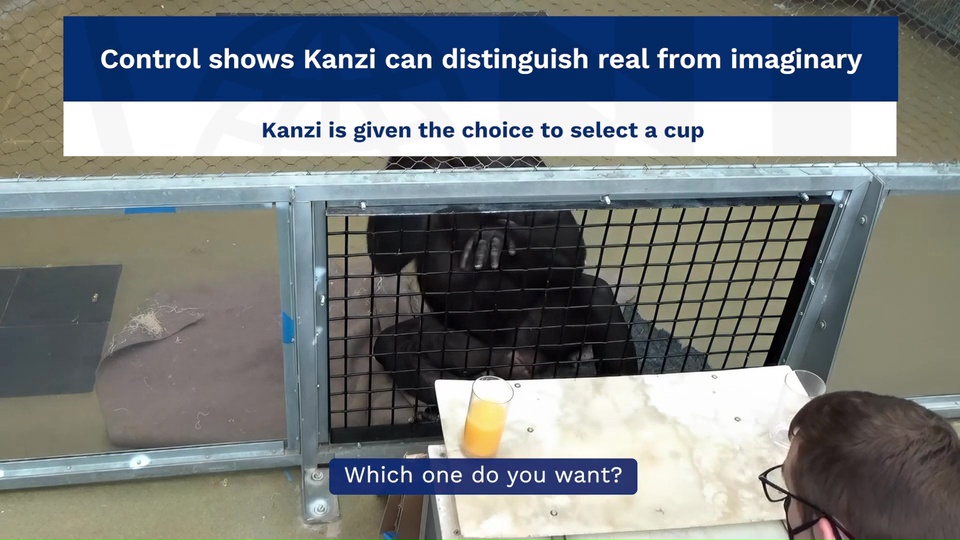
Kanzi took part in several experiments
The study moved the cups and jugs around. Researchers found: “Kanzi’s performance cannot be explained by imitation because the experimenters’ pretence actions were entirely distinct from the pointing behaviour that Kanzi produced.”
Amelia Bastos, who was a fellow at Johns Hopkins and is now a lecturer at the University of St Andrews, said: “It’s extremely striking and very exciting that the data seem to suggest that apes, in their minds, can conceive of things that are not there.” She added: “Kanzi is able to generate an idea of this pretend object and at the same time know it’s not real.”
• Wild chimps consume ‘equivalent of pint of lager every day’
Christopher Krupenye, co-author of the study published in the journal Science and an assistant professor of brain sciences at Johns Hopkins, said: “It really is game-changing that their mental lives go beyond the here and now. Imagination has long been seen as a critical element of what it is to be human but the idea that it may not be exclusive to our species is really transformative.
“Jane Goodall discovered that chimps make tools and that led to a change in the definition of what it means to be human and this, too, really invites us to reconsider what makes us special and what mental life is out there among other creatures.”
• Jane Goodall, primatologist, dies aged 91
The study concluded: “Our study offers experimental evidence that a non-human animal can track pretend objects across novel displacements by a partner in pretend play. As such, our findings suggest that the capacity for representing pretend objects is not uniquely human.
“Our findings suggest that the capacity to form secondary representations of pretend objects is within the cognitive potential of at least an enculturated ape, and likely dates back 6-9 million years, to our common evolutionary ancestors.”