
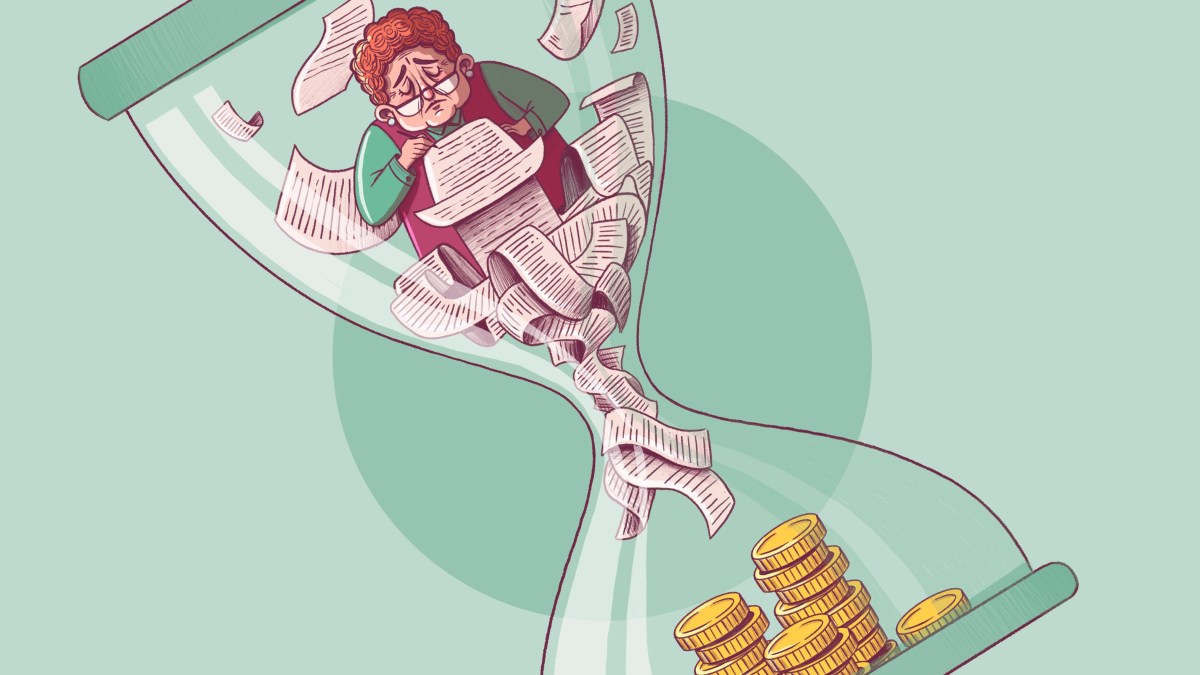
My 94-year-old mother has been getting a civil service pension since August 1990 when my father died and she inherited his. The monthly payments account for roughly half her income. She has not remarried, has advised the scheme administrators of her two house moves since that time and everything ran smoothly until August 2025, when her pension was suspended.
I found out about this in November, and have since been trying to help get her pension reinstated.
In June 2022 my mother was asked to verify her entitlement by submitting a witnessed declaration confirming her details. She did this, although I understand it is something that normally only applies to overseas members. She continued to have her pension paid and had the yearly updates regarding increases up to and including April 2025.
In June she had another request to verify her entitlement and again complied. In October she noticed that her pension hadn’t been paid for a couple of months and so rang to find out why. She was told that the form she’d sent back in June had not been received and that she would be sent another one. Another letter in November stated that she had been sent a request for verification of entitlement in November 2024, which she had not done.
That letter was apparently “sent to all overseas members every five years”, and my mum had apparently been given eight weeks to comply after which her pension would be stopped. None of this makes sense. Mum is not overseas — she lives in Wales, which as far as I’m aware is still part of the UK unless I’ve missed something quite radical.
She did not get a request for verification in November 2024 and continued to have her pension paid until August 2025. She has all the correspondence regarding her pension and still keeps meticulous records. There is nothing that suggests why her pension has been stopped.
Ann, Lincolnshire
Holly Thomas writes
Until the end of November last year, the civil service pension scheme was administered by a company called MyCSP. The contract was taken over by Capita at the beginning of December. When it took over, Capita inherited a backlog of 86,000 “outstanding cases”, such as inquiries and complaints. Your mum’s was one of these cases.
It seems that in 2022 somebody had incorrectly flagged your mum’s pension account as being overseas. You’ve tried everything under the sun to get this matter sorted, but with such a backlog of cases for Capita to deal with, it has been impossible to get any clarity.
You told me that when you visited your mum in early December last year you phoned the helpline together. She was 90th in the queue and the battery on her cordless landline handset ran out before you got through. You also tried to register her details on the portal, which the automated message tells you to use, but it didn’t work.
• ‘We have big plans for my £125k — what has Embark Pensions done with it?’
I contacted Capita, which was unable to find when this “overseas” marker was first applied, why it happened or why it was not corrected.
The good news is that this has now been removed from your mum’s record so it should be plain sailing from here. Backdated payments of £5,436.95 have been issued and the usual monthly payments should resume.
You said: “We can’t thank you enough for sorting this out for her. As you know this has caused her a great deal of worry over the past five months and she was becoming increasingly anxious, to the point where it was affecting her health. I’d managed to help her get so far but had then hit a brick wall, so I’m very grateful to you as well.”
Capita did not offer any compensation. It said: “We are very sorry to hear about the delay this member has faced and for the inconvenience and worry this has caused. This case dates back to the previous pensions firm and was part of the backlog we inherited in December 2025. We have since reached out to the member to resolve the issue.”
The Civil Service Pension Scheme says members aged over 75 and living in the UK may be periodically asked to complete a certificate of existence, to check they are still eligible for payments.
How have I paid £455 to a website I’ve never heard of?
I am 90 and in good health. I am, however, inclined to be careless when checking my bank statements. This is because there are seldom discrepancies.
When checking my transactions in January I noticed a debit of £35 taken out of my account for “Just Answer”. I have no knowledge of this business name, nor have I used any service it may provide. I checked back through 2025, with the help of my bank, RBS, and found that Just Answer has taken £35 out of my account each month for 13 months — costing me a total of £455. Perhaps I inadvertently ticked a box or did not tick a box when online but I have no memory of this.
I have stopped the Just Answer access to my account. Is there anything I can do to get the money back? I would be very grateful for your help. I tried to contact Just Answer by telephone but was answered by a robot.
Lesley, Cheltenham
Holly Thomas writes
Just Answer is a US-based website where consumers can ask questions and have a professional review it and send an answer. Members who sign up to the monthly subscription have 24/7 access to more than 12,000 “verified experts”, including doctors, vets, lawyers, tech support, and tradespeople such as plumbers.
None of this rang a bell with you but you were understandably concerned that Just Answer had access to your bank account without your knowledge. I contacted Just Answer, which came back with a very quick response to my question of whether it was willing to refund you. Its answer was yes.
Four days later you had a full refund of the £455 and I had a statement from the firm, which read: “We are sorry for the confusion and inconvenience this caused. Our records indicate that the customer entered her credit card information and email address on our website to enrol in a free trial, which converted into a monthly membership. In this instance, the customer’s account has been closed and the issue has been addressed.”
• Why am I paying £50 a month to Rihanna’s lingerie company?
You said: “Thank you so much for your intervention on my behalf. Your well-composed letter and the name of The Times has had immediate effect. I am very grateful.”
A quick search online shows that many people have inadvertently signed up to Just Answer. Often, after paying an initial small fee for a single question — perhaps just £1 — it reverts to a subscription unless you cancel it. The subscription is paid using a continuous payment authority, which allows merchants to charge your credit or debit card regularly.
It’s important to check what you’re buying when handing over card details. And if you do sign up to a free trial with no intention of paying for a long-term subscription, put a reminder in your diary to cancel it before the contract reverts into a paid one.
The consumer campaigner Martyn James said: “Subscription traps are such an issue that the government is clamping down on them. While we don’t know the full extent of these unwanted contracts, conservatively, it’s likely that hundreds of thousands of people are paying for services they don’t want or need.
“How you end up signed up to subscription traps can be a mystery. Sometimes they can occur when you’ve paid for legitimate goods and services — like train tickets — and are offered discount vouchers or offers if you click a link. But it’s for the business to demonstrate that you agreed to the subscription and charges each month — and even if you did, if you were tricked, manipulated or not given the whole story, the firm should refund you.”
• £237,859.95 — the amount Your Money Matters has saved readers so far this year
If you have a money problem you would like the Times or Sunday Times to investigate, email yourmoneymatters@thetimes.co.uk. Please include a phone number