


Listen to this article
Estimated 4 minutes
The audio version of this article is generated by AI-based technology. Mispronunciations can occur. We are working with our partners to continually review and improve the results.
Laura Pfeifer has spent two years looking for a family doctor in Saskatchewan.
But it’s a path the mother of two children, aged seven and 10, has travelled before since moving to Regina from Toronto in 2021, when she also spent two years trying to find a family doctor.
Pfeifer said she and her family had a “fantastic” doctor they “adored” for about eight months, but then she moved away and the family’s search started again.
The results of an Angus Reid survey suggest Pfeifer is trying to find a family doctor in the worst place in Canada to do so.
“I think I described it to a friend as the Hunger Games,” Pfeifer said in an interview on Thursday. “It’s like you’re kind of on your own. There’s no real centralized place to find who’s taking [on new patients] or not.”
Pfeifer relies on social media posts and friends in her quest to find a primary care physician, but it’s a lot of work.
She took time off from her job recently to get forms from a doctor’s office when it opened in the morning, after she heard new patients were being accepted.
“It’s a slog,” she said. “And it takes a lot of time and energy.”
The Angus Reid Institute survey of online panelists, which was conducted from Nov. 26 to Dec. 1, found 63 per cent of respondents from Saskatchewan either had no family doctor (22 per cent) or had difficulty accessing their family physician (41 per cent).
That 22 per cent with no family doctor ranks above the national average of 18 per cent, and is second only to Quebec (31 per cent) in the survey.
And the 41 per cent who said they found it difficult to access their current doctor is the highest rate in the country, far exceeding the national number of 32 per cent.
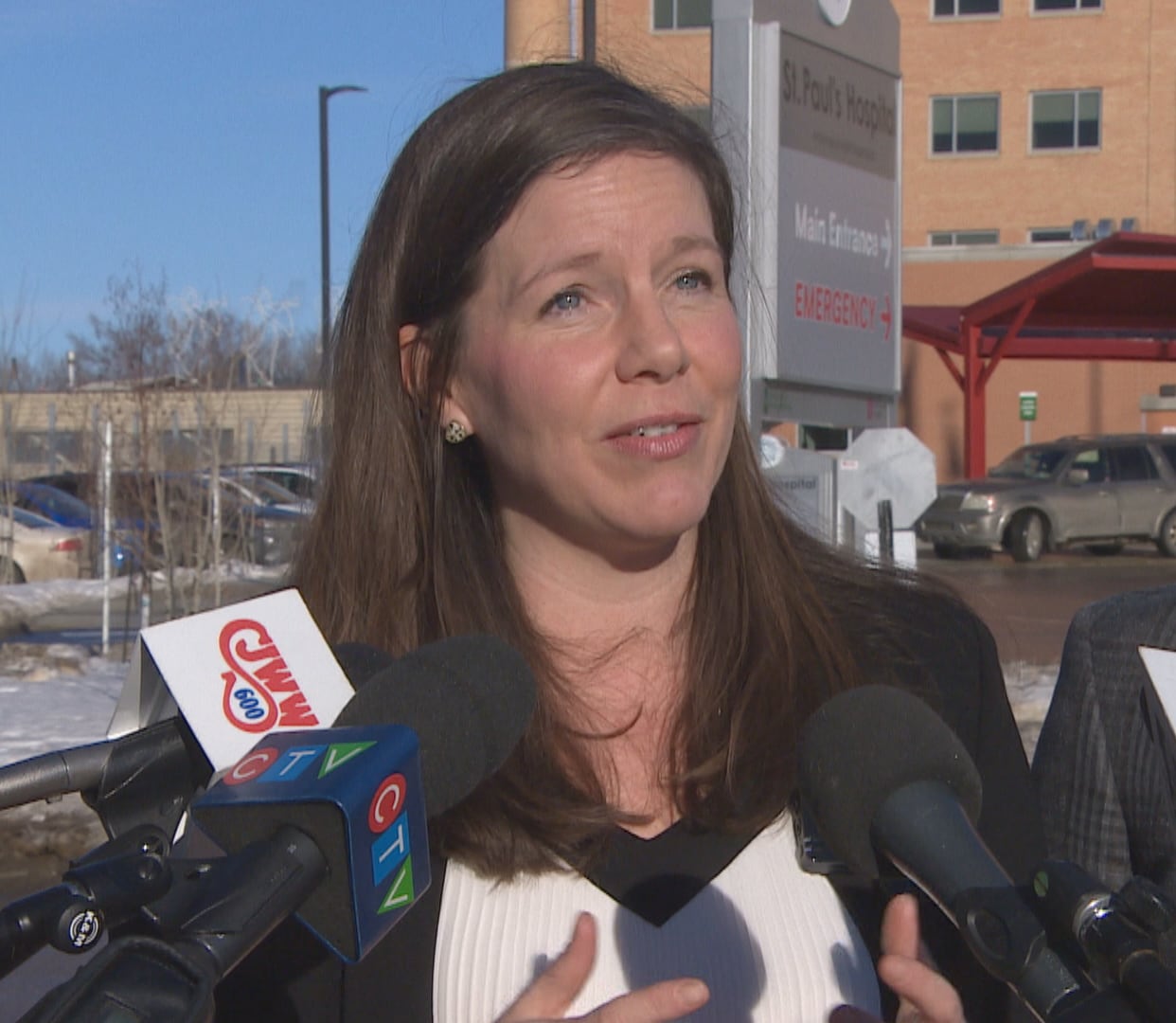 Saskatchewan’s NDP Opposition health critic Meara Conway stands outside St. Paul’s Hospital in Saskatoon while speaking about the difficulties of finding family doctors in the province. (Thomas Simon/CBC)’Not meaningful’
“We have such a low number or ratio of family doctors to citizens that even those that do accept patients, it’s very hard for someone to access a doctor,” NDP Opposition health critic Meara Conway said at a news conference in Saskatoon.
“So if you have a doctor in theory and you can’t see them in a timely way, it’s not meaningful.”
Conway said the Opposition is consulting with medical professionals in the province and will propose solutions for health care in a few months.
Angus Reid, which surveyed 4,025 of its online panelists for the poll, found that the situation has deteriorated since a September 2015 poll, which found 40 per cent nationally said they had no family doctor or faced difficulty accessing their doctor.
It’s like you’re kind of on your own.- Laura Pfeifer
The national number increased to 50 per cent in the December survey. But in Saskatchewan, the total jumped to 63 per cent from the 51 per cent recorded in September 2015.
The province also leads in the share of those who have given up trying to find a family doctor, at nine per cent — nearly twice the national rate.
“I’m not planning to give up, though I will say that doesn’t surprise me too much either,” Pfeifer said.
“There’s been chunks of months at a time where I’ve just given it a break because there’s only so many times you can call a clinic again and again and again.”
In an emailed statement, the Ministry of Health said the Saskatchewan Party government remains committed to ensuring everyone has a primary care provider “closer to home” by the end of 2028.
The email said expanded placements for international doctors have resulted in 338 more physicians working in the province, with about three-quarters of those in rural or remote areas.
The provincial government is also adding educational opportunities for doctors at the University of Saskatchewan and expanding the use of nurse practitioners to deliver primary care.
The Angus Reid survey found 63 per cent of the 363 respondents in Saskatchewan lacked confidence in their ability to receive emergency care in a timely fashion. That exceeded the national average of 59 per cent.