
This article is an on-site version of our Moral Money newsletter. Premium subscribers can sign up here to get the newsletter delivered twice a week. Standard subscribers can upgrade to Premium here, or explore all FT newsletters.
Visit our Moral Money hub for all the latest ESG news, opinion and analysis from around the FT
Greetings from São Paulo, where I cover Brazil for the Financial Times. Today I’m standing in for Simon with a report on the possible end of a long-standing private-sector pledge to protect the Amazon.
Agribusiness traders were once pioneers in preservation
Well before the fad for corporate sustainability promises, a trailblazing initiative in the South American country demonstrated how companies can take effective action on a voluntary basis for the good of the planet.
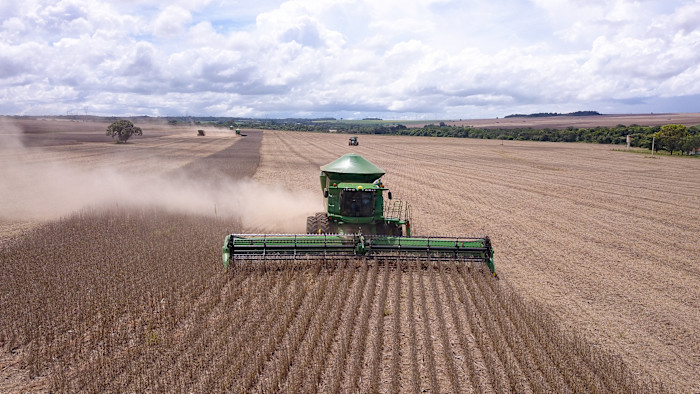
Under the Amazon Soy Moratorium, leading agricultural commodity traders freely committed not to buy the crop from land deforested after July 2008. The pact was credited with reconciling preservation of the world’s largest rainforest with rising soyabean production.
But following a co-ordinated offensive against the ban, its days now appear numbered.
The death knell sounded when Abiove, a sector association representing soyabean traders, last month announced that it was quitting. Its members include the “ABCD” agribusiness giants — Archer Daniels Midland, Bunge, Cargill and Louis Dreyfus — that dominate global grain trade.
Activists warn the withdrawal could fuel tree-felling in an ecosystem that is a critical buffer against climate change.
The development falls into a wider rollback of environmental pledges by big business. Yet unlike many of the net zero and climate targets watered down or abandoned in recent times, the soy moratorium actually proved robust.
The agreement was first established in 2006 following a Greenpeace campaign that linked soyabeans grown on gutted rainforest to supermarket shelves and fast food in Europe (the legume is mostly used to feed livestock).
Facing a consumer backlash, European retailers pressured the traders to act. Initially intended for only a couple of years, the moratorium was extended and renewed indefinitely in 2016.
It is widely considered one of the most successful market-based conservation mechanisms. An academic study published by Nature Food in 2020 found the ban reduced forest loss by an estimated 18,000 square kilometres over its first decade.
Between 2009 and 2022, deforestation fell 69 per cent in municipalities monitored by the moratorium, even as soyabean planting expanded more than fourfold — mainly on cattle pasture, according to the NGO Imaflora. Today Brazil is the top grower globally, with total soyabeans, meal and oil exports worth more than $54.5bn in 2024, based on figures from the Observatory of Economic Complexity.
So what changed? While proclaiming that the moratorium “left an indisputable legacy”, Abiove didn’t give a clear explanation. Instead, it suggested legislation should guide anti-deforestation policies and insisted members “will individually meet the strict demands of global markets, while also relying on Brazilian authorities for the full implementation of a new regulatory framework”.
However, few doubted the reasons behind the move, which followed concerted political action and lobbying by farmers’ groups. Opponents of the pact argue it is unfair to soy growers by imposing tougher restrictions than required by Brazilian law, which forces landowners in the Amazon to maintain four-fifths of their property as native vegetation. Moreover, they said it was designed for the European market, which today absorbs only about 14 per cent of Brazil’s soy shipments, with three-quarters going to China.
Brazil’s top agricultural state, Mato Grosso, passed legislation last year stripping tax benefits from companies that adhere to the moratorium. The national antitrust regulator then suspended the agreement and opened a full investigation on the grounds it could constitute a cartel harmful to exports.
The other main business group behind the moratorium, the National Association of Grain Exporters, remains officially signed up. Even if it is doomed, the commercial ramifications remain unclear.
More than a dozen European supermarkets, including Aldi, Asda, Lidl, J Sainsbury and Tesco, wrote to the trading houses last week, urging them to confirm their commitment to the 2008 deforestation cut-off date.
Though not explicit, it hinted the grocers might stop sourcing from suppliers that don’t. Another complicating factor is an incoming EU law banning imports of agricultural commodities linked to deforestation after 2020.
“Trading companies will eventually need to develop alternative mechanisms to ensure the commercialisation of environmentally responsible soy,” said Raphael Bulascoschi, an analyst at commodities brokerage StoneX. He points out that new soyabean planting is less about land availability and more about international prices, which haven’t been great lately.
Even so, a preliminary study by the Amazon Environmental Research Institute non-profit suggests the moratorium’s demise could increase deforestation by 30 per cent by 2045. Brazil’s President Luiz Inácio Lula da Silva has overseen a sharp fall in Amazon clearances, so any uptick will threaten his goal to eliminate deforestation entirely by the end of this decade.
Smart reads
A clean cooking start-up with more than 1mn customers has filed for insolvency after the Kenyan government stopped it from selling carbon credits.
Even as China’s BYD moved ahead of Tesla in the world’s EV race, a lesser-known local rival has been in the rear-view mirror.
India, the fastest-growing large economy in the world, is being fuelled by coal. Check out the latest FT Film on how coal is king in India.
Recommended newsletters for you
The Climate Graphic: Explained — Understanding the most important climate data of the week. Sign up here
The AI Shift — John Burn-Murdoch and Sarah O’Connor dive into how AI is transforming the world of work. Sign up here