
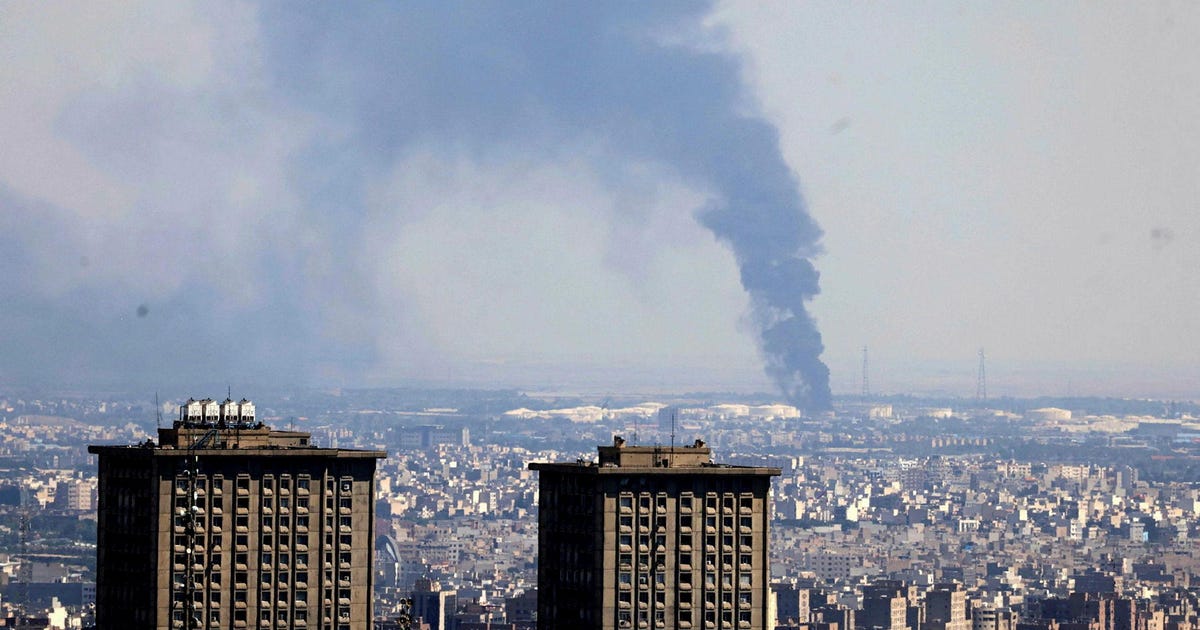
Iran has rapidly restored ballistic missile facilities damaged in its June war with Israel, while repairs at nuclear sites hit by Israeli and U.S. strikes remain limited, satellite images analyzed by the New York Times show.
The analysis examined 24 sites hit in the strikes and found that Iran is carrying out work at 12 of them. Repairs at multiple missile-related locations began soon after the strikes, while damage at key nuclear facilities remains largely visible above ground.
The uneven pace of the restoration of facilities may indicate Tehran’s priorities, as U.S. President Donald Trump is considering a strike in the country.
Haaretz Podcast‘Organized crime groups are subcontractors for the Netanyahu government’s destruction of Israel’s Arab society’
play
Haaretz Podcast
‘Organized crime groups are subcontractors for the Netanyahu government’s destruction of Israel’s Arab society’
Volume: 0.5
X1
total– : –time0:00
fast forward15
play
rewind15
Satellite imagery shows repair activity at at least a dozen missile facilities, including production and testing sites. Intelligence assessments cited by the Times say Iran has largely rebuilt its ballistic missile program since the June attacks.
John P. Caves III, a consultant at the U.S. National Defense University’s Center for the Study of Weapons of Mass Destruction, said that threatening “Israel and U.S. bases and allies in the region with missile attacks is one of Iran’s few options to deter repeat strikes on its nuclear facilities.”
 Close
Close
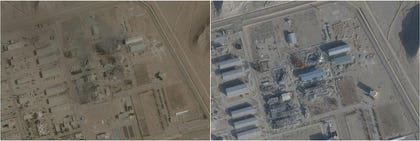
Satellite images shows previously destroyed buildings (left) and a new roof over one destroyed building (right) at Isfahan nuclear site, Iran, June 2025, and Sunday. Credit: PLANET LABS PBC/Reuters
Satellite images shows previously destroyed buildings (left) and a new roof over one destroyed building (right) at Isfahan nuclear site, Iran, June 2025, and Sunday. Credit: PLANET LABS PBC/Reuters
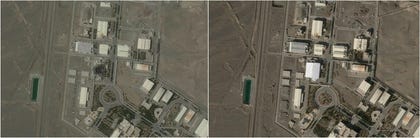
In contrast, experts point out that Iran’s three principal enrichment sites – Natanz, Isfahan and Fordow – appear to be lying dormant. Western and Israeli sources have detected scant evidence of Iran restoring its uranium enrichment capabilities or nuclear warhead construction capacity. Latest satellite imagery shows partial renovations and new roofing that blocks the view into damaged structures, though the bulk of the devastation persists.
 Close
Close
Satellite images show a previously destroyed building (left), and a new roof over it (right), at Natanz nuclear site, Iran June 2025, and last Friday. Credit: PLANET LABS PBC/Reuters
Satellite images show a previously destroyed building (left), and a new roof over it (right), at Natanz nuclear site, Iran June 2025, and last Friday. Credit: PLANET LABS PBC/Reuters
The Times has also spotted new fortifications at subterranean tunnel compounds near Isfahan and Natanz, alongside fresh construction at the Parchin military compound southeast of Tehran – a location historically associated with tests involving explosives pertinent to nuclear weapons development.