
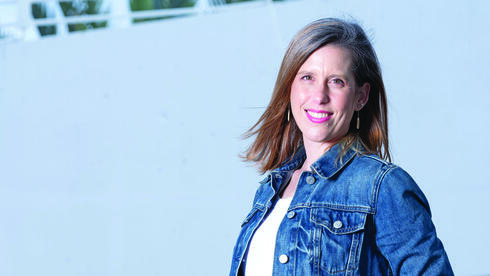
Ayelet Halperin Kates is 41, married and the mother of six daughters. She lives in Oranit, works in high tech and is a writer. For years, she says, she tried to reconcile her deep emotional attachment to religious life with a growing sense that the religious system exerted control over her body and choices in ways she could no longer accept.
“Five years ago I went to the mikvah (ritual bath) and asked the balanit — the female attendant — to let me immerse on my own, without her presence. I knew this was not accepted practice and I came trembling with fear. She looked at me very seriously and said, ‘If you do not immerse properly, karet will be decreed upon you and your husband’ — meaning death at the hands of heaven. I was shaking. I told her I respected her, but that I was going in alone. At that moment I decided it would be the last time I ever immersed in a mikvah.
2 View gallery
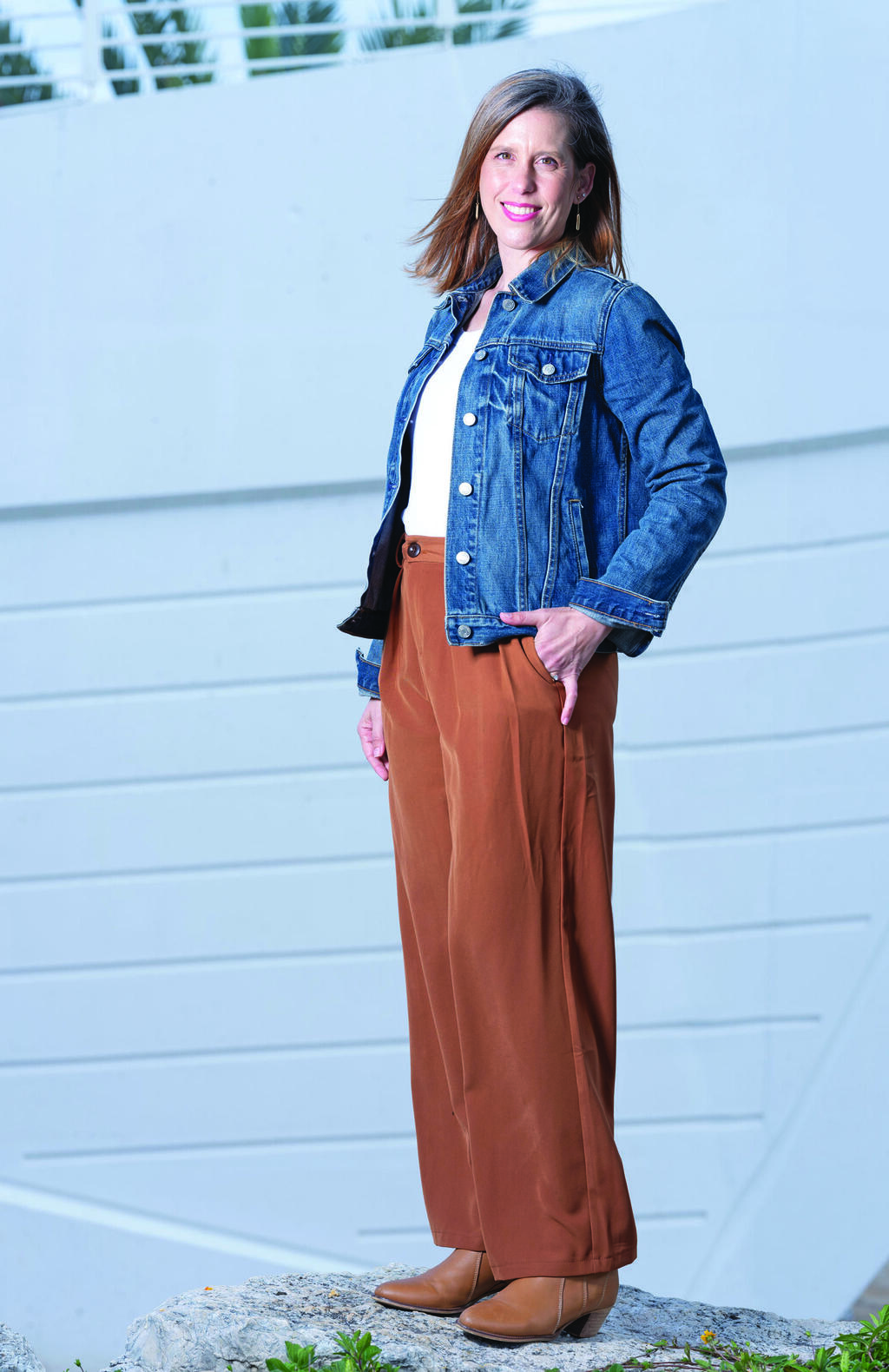
Ayelet Halperin Kates
(Photo: Yuval Chen)
“After that, I discovered the depths surrounding this commandment. I realized it is a ritual that defines my body as impure and transfers ownership of it into other hands. When I wrote a post about this in a group of religious feminists, they told me, ‘Go to this rabbi or that rabbi and he will give you permission not to immerse.’ Why do I need a man to permit me something about my own body? I had reached the end of my patience with men I am supposed to turn to so they can decide my life. I am a modern woman in 2026, and I do not want to ask a rabbi for permission over my body.
“I grew up in Oranit in a modern Orthodox home and was educated in the national-religious system. One of the first things I learned as a child was that there are things you do not ask questions about. You do not really challenge the order of the world and you are not supposed to ask whether God exists. You have roles, you say thank you and you live your life. I remember myself at age 6 imagining that the teacher walks in and says, ‘I have news, there is no God,’ and we all cheer and are happy.
“The preoccupation with the body began at the girls’ religious high school. I was shocked when a teacher said that pants are not modest — my mother wore pants. They talked to us about shmirat negiah (rules prohibiting physical contact) and about how we are responsible for boys’ urges. A lecturer explained to us what an elbow and a knee do to a man. Today I know how to say that this was sexual harassment. It left a scar. I had no freedom to develop without feeling that there were eyes watching me all the time, that even God knows what I am wearing and what I am thinking.
“In the army I served as an education NCO and I became secular, but not publicly. I enjoyed encountering the world outside my small settlement. My eyes were opened. Deep down I understood that I did not really belong to the world I grew up in, but I was afraid to leave it.
2 View gallery
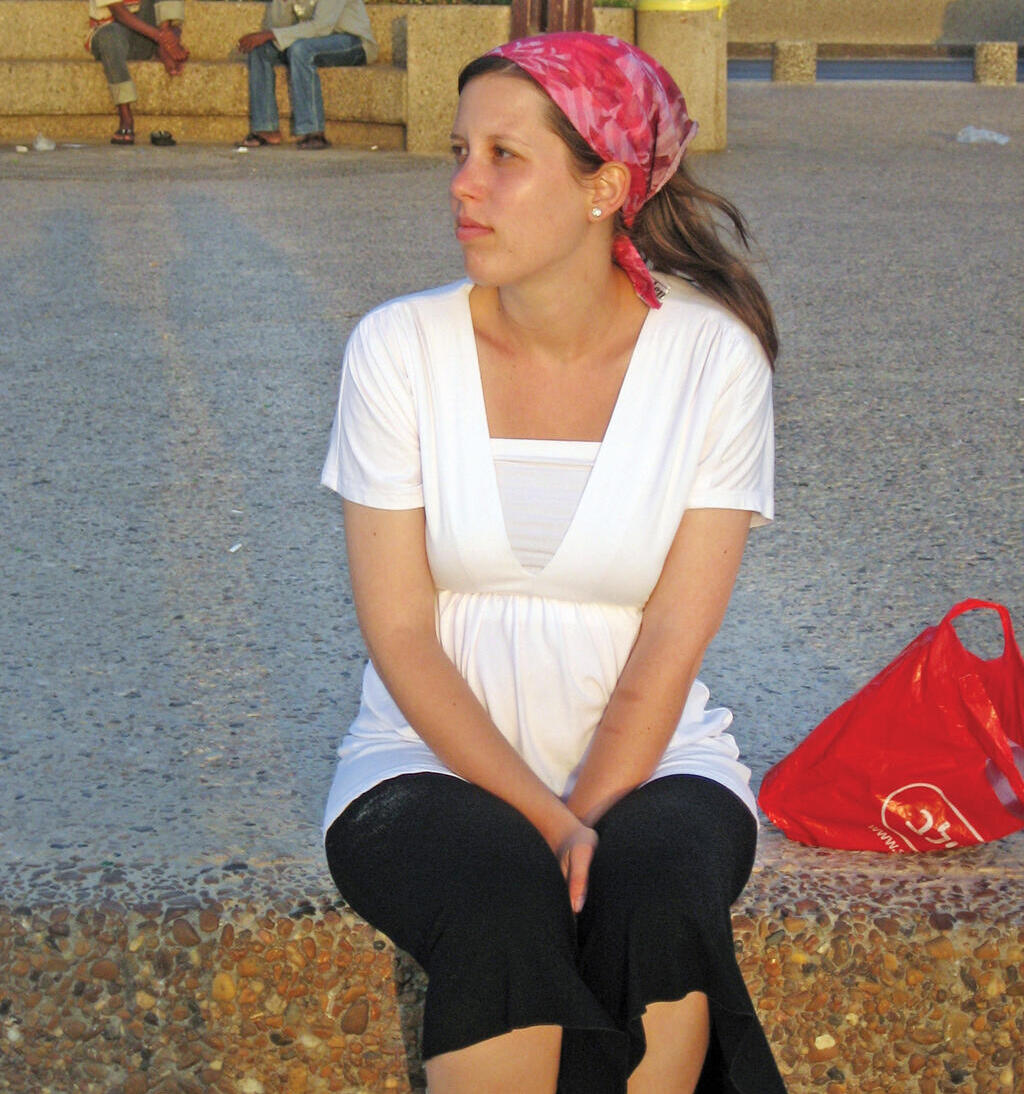
Ayelet Halperin Kates
(Photo: Courtesy)
After I got married I stopped wearing pants and covered my head with a scarf. I was confused. In retrospect I understand that I never processed the religious messages and the fear alongside the freedom and the things I discovered about myself. I clung to the world I knew.
“When I was 30, my eldest daughter was diagnosed with juvenile diabetes. She was 6 at the time. From a people-pleasing woman who was afraid to move and speak, I became a lioness mother. I had to open my mouth in the face of the system and something inside me opened. I was angry at the world and decided to remove my head covering. People thought I was getting divorced and it stirred a huge storm around me.
“Hillel, my partner, accepted my changes with support and understanding, but there were gaps. I was ready for more radical steps and he was less so. Today we live as a religious household, the girls are in religious education and I exist in a kind of in-between space — not religious in the classical sense and not secular. What is tragic in my story is that I am still very connected to religion and have a great deal of love for this world. The melodies of prayer make me cry more than anything else. For years I tried to blind myself to my critical eye so I would not suffer, but I understood that I am not meant to silence who I am.
“It may be that in a few years I will be managing a team at work, and still, in the synagogue, I will have to wait for a rabbi to take out the Torah scroll for me. What message am I passing on to my daughters?”
“As part of the change, two and a half years ago I moved from working as a clinical social worker to a job in high tech. Today I work at a SaaS company as a CSM, customer success manager. I realized that in the past I identified with the values of being the woman who is more at home with the children. Being a mother is a great value, but there was an ambitious part of me that I extinguished because it was perceived as extreme, showy and immodest.
“I think about the possibility that in the future I may manage a team at work, and still, in the synagogue, I will have to wait for a rabbi to take out the Torah scroll for me. We need to keep our eyes open to the fact that there is still something that preserves conservatism and gives all the power to a certain gender. What message am I passing on to my daughters?
“Before I wrote the book Far From Home, I wrote in a group of religious feminists and in a group of women who immerse about immersion in the mikvah. I wanted to conduct research. The responses were polarized. On one side were messages full of accusations that I was ‘leading women to sin,’ that I was making people hate religion — responses of silencing. On the other side, many religious and ultra-Orthodox women reached out to me and opened their hearts. I discovered how obsessively and oppressively this commandment manages women’s lives, and how it causes them to feel bad about their bodies. I want women who choose not to go to the mikvah not to be ashamed of it, and women who do immerse to see it as a commandment that still allows men to have ownership over their bodies.
“Far From Home is my second book. My first book, The Home of the Heart, was published about a year ago. It is a novel that deals with taboos surrounding the female body and the importance of living with one’s inner truth. I brought into the book issues such as women’s struggle to read from the Torah in front of women in their synagogue. Why do we still need men’s approval for this? There are people around me who say they no longer read my posts since I began dealing with these topics. On the other hand, there are many religious women who read me, who write to me, ‘I read the book throughout the entire Sabbath and did not stop crying.’
“At the girls’ religious high school, we were told that we were responsible for the boys’ urges. A lecturer explained to us what an elbow and a knee do to a man”
“There is also sexual content in the book, which was not easy for me to write. I was shocked at myself and almost cut those sections out, but I understood that the creation is bigger than me. It is part of the character’s development. I wrote those sections in one sitting and sent them without rereading them at all. I said that if the editor told me to leave them in, I would. She left them in.”
Halperin Kates says she does not see herself as having left religion behind. She still lives in a religious household, her daughters attend religious schools and the melodies of prayer, she says, move her more than anything else. What she no longer accepts is silence.
“My goal is for religious society to recognize that there are people who feel differently and that it is impossible to silence them,” she said. “There should be no fear of talking about this, even at the Sabbath table. These are small acts of repairing the world, and that is the power of words. A woman, in her body and in her faith, will live.”