
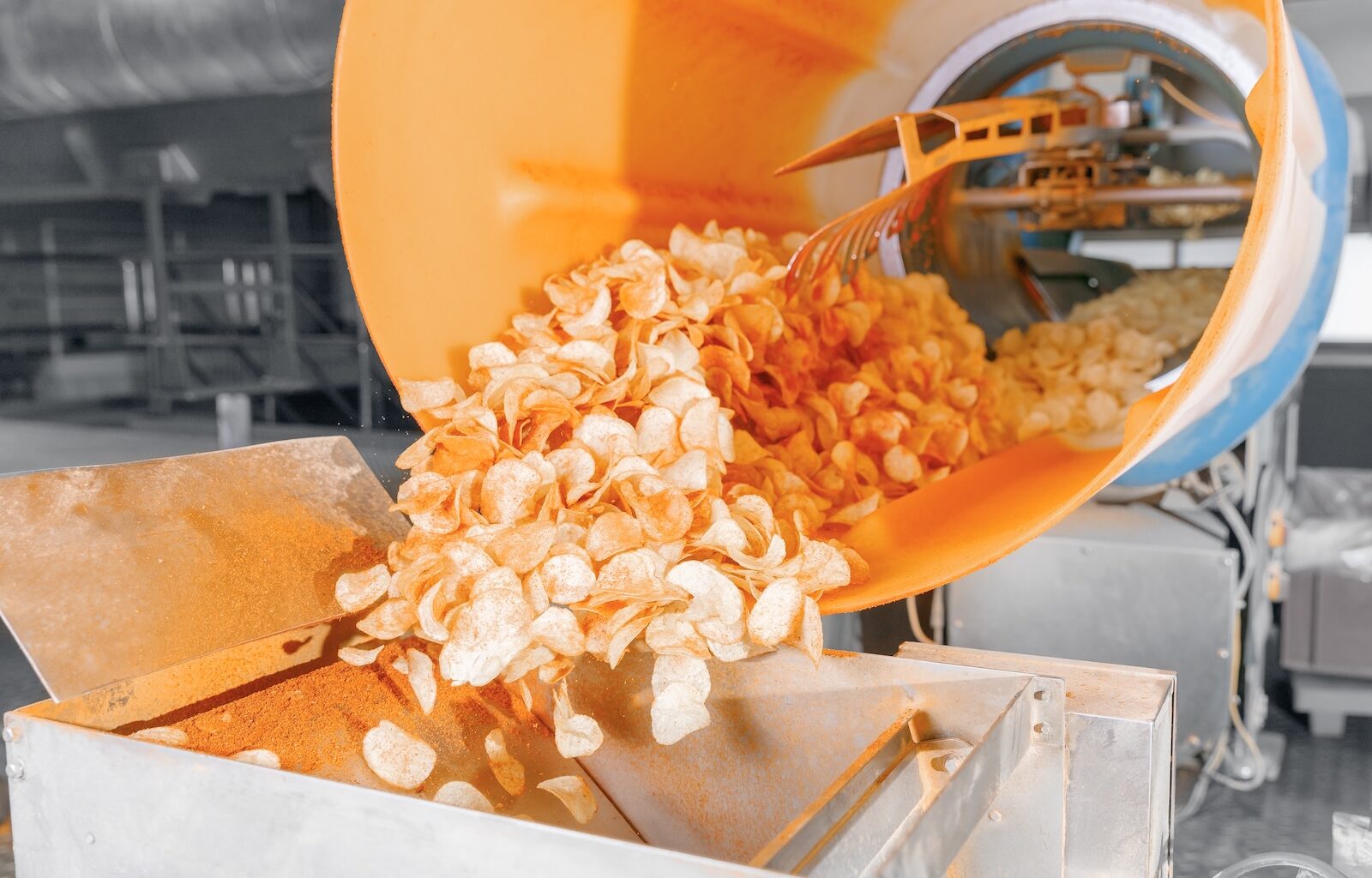
[MUSIC PLAYING] FLORA LICHTMAN: Hey, I’m Flora Lichtman, and you’re listening to Science Friday. Put down those cheese curls, because ultra-processed foods, UPFs, are back in the news. Those highly processed, often delicious, foods make up a big part of the average American diet, and they’ve been getting lots of attention from policymakers who want to limit how much of them we eat. Even the new federal dietary guidelines suggest avoiding these foods. Here’s Health and Human Services Secretary Robert F Kennedy Jr. on what you should be eating instead.
ROBERT F KENNEDY JR: Protein and healthy fats are essential and were wrongly discouraged in prior dietary guidelines. We are ending the war on saturated fats.
FLORA LICHTMAN: Good fats are in, Flamin’ Hot double-stuffed mini pizza rolls are out. So today, we’re digging into this buffet of nutrition news. And for the first course, we’re going to chew on these new federal food guidelines and why they matter. Then later in the show, we’re going to rifle through the snack drawer to see what we can learn about the world of ultra-processed foods.
Let me set the table with my guests. Laura Schmidt is a professor at the Institute for Health Policy Studies at UC San Francisco, and she studies chronic disease and our current food system. And Alyssa Moran is a deputy director of the Center for Food and Nutrition Policy at Penn. She’s a nutrition policy researcher and dietitian. Welcome to you both to Science Friday.
LAURA SCHMIDT: Hi, Flora.
Hi, Flora. Thanks for having me.
FLORA LICHTMAN: OK, Laura, what do you think of the guidelines generally?
LAURA SCHMIDT: I worry a little bit about the way the guidelines are positioned almost as personal health recommendations when most of us in the public health and nutrition field feel that the real problems are in the food environment. And they are really beyond the individual’s ability to control what’s available. And so it’d be great– I think there’s a lot of controversy in the nutrition science community about the saturated fat recommendations, but the general thrust of encouraging people to not eat ultra-processed foods I’m all over. Right on target. Great idea.
The challenge is that you can tell people to not eat ultra-processed foods, but when they’re 70% of what’s in your grocery store, it’s really hard to avoid them. And the other problem is they’re cheap. And so with food inflation going up, it’s a real problem to make that available to everybody. The wealthy people can probably skirt past these unhealthy products, but most people can’t.
FLORA LICHTMAN: Right. Alyssa, what about you? What were your thoughts on the guidelines?
ALYSSA MORAN: I would say that I have mixed feelings about the dietary guidelines, as I typically do. I think that the core message of eating real food is spot on. I was thrilled to see the recommendation around limiting highly processed foods and shifting towards more minimally processed, whole foods.
This is the first time in history that the dietary guidelines have explicitly called out highly processed foods. They’ve alluded to it in past guidelines by recommending that we limit foods high in added sugars or foods high in salt, but this is the first time that they have made it easier for consumers by identifying specific categories of foods that contain those ingredients. So these are things that we typically think of as junk foods.
They’re ready to eat, ready to heat, sweet and salty snacks, candy, sugary drinks. And the US actually lags behind many other countries in terms of recommending that these types of foods be limited. Countries like Brazil, for example, have recommended avoiding ultra-processed foods in their national dietary guidelines for more than a decade now.
FLORA LICHTMAN: Wow. What about this call for more protein and healthy fats? What do you make of that, Alyssa?
ALYSSA MORAN: I think the call for more protein doesn’t bother me as much as the types of protein that are being recommended.
FLORA LICHTMAN: And if you haven’t seen it, for listeners who haven’t seen it, with the guidelines, there’s this new food pyramid. Welcome back, food pyramid. I haven’t seen you since second grade, but you’re back. And it’s upside down. And at the top of the food pyramid, there’s like a roast bird and a steak.
ALYSSA MORAN: Yeah, exactly. So it’s almost comical the size of the steak–
LAURA SCHMIDT: Yeah.
ALYSSA MORAN: –and how prominently it’s featured in the new food pyramid. And past dietary guidelines– and this is very much aligned with the scientific evidence– recommend primarily seafood and plant-based proteins, things like nuts and legumes and whole grains, whereas the current version of the guidelines says that protein can come from any source. And if you look at the inverted food pyramid, they really seem to be prioritizing protein from meat and dairy, which goes against past advice.
FLORA LICHTMAN: I mean, there has been criticism of guidelines in the past that they’ve been influenced too much by the food industry, including the meat and dairy industries. Do you know how it’s decided what goes into the guidelines?
ALYSSA MORAN: Yeah, so typically there is a scientific advisory committee that is appointed by the federal government. And there’s a process for reviewing the scientific literature on various topics where we feel there are research gaps. So the scientific advisory committee is appointed for, I believe, two years.
And they engage in extensive food and dietary modeling activities. They do systematic reviews about topics, like the impact of low-fat milk, for example, on cardiometabolic health outcomes. And then they create a report that is hundreds of pages long that provide recommendations to the federal agencies that issue the dietary guidelines about what should be included.
However, we repeatedly see that the recommendations of the scientific advisory committee are not always precisely reflected in the guidelines that are issued by the federal agencies. So it’s always a political process. There are always things that are left out or that are included that weren’t necessarily in the scientific report.
LAURA SCHMIDT: So, Flora, one of the things I do research on is scientific conflicts of interest in nutrition science. And one of the concerns I’ve had for a long time is that the ultra-processed food industry, the people who brought us high-carb diets and chemical additives in our food supply, have been very influential in the past. And that may actually be one of the reasons why Brazil is 10 years ahead of us in terms of having a guideline that warns people to avoid ultra-processed foods.
The thing that happened with this cycle, with this newly released dietary guidelines, is that it’s just a different industry putting pressure on the committee. The folks on this committee have financial ties to the meat and dairy industry. And surprise, surprise, we get steaks and full-fat milk at the top of the inverted food pyramid, or what some people call the keto cone, which I think is pretty funny.
So as much as I was so hopeful when I heard all of this talk at HHS about getting rid of scientific conflicts of interest– I was just beside myself happy about that because this is a perennial problem. This food industry is so powerful and so well-organized and has been dominating the conversation over nutrition and health for decades and decades. And it’s so disappointing to me to see a committee with all of these financial ties to the meat and dairy industry. It’s just very disappointing.
ALYSSA MORAN: And I think, importantly, one thing that was different about this dietary guidelines process from past iterations of the guidelines is that, typically, the scientific advisory committee issues their report, it goes out for public comment, and then our federal agencies release the final guidelines based on those public comments and that scientific report. This time around, the current administration, after the scientific report went out for public comment, they appointed a new committee, who created a new report that did not go out for public comment. And many of the guidelines were based on that report.
And as much as this administration has talked about getting financial conflicts of interest out of nutrition science, those committee members were extremely conflicted. Many of them have financial ties to the meat and dairy industry. And then we see where the guidelines ended up.
LAURA SCHMIDT: And for all the promises we’ve had about increased transparency, it’s as if a ghost wrote the final guidelines. There are four pages–
FLORA LICHTMAN: What do you mean?
LAURA SCHMIDT: We have no idea who wrote them. And this is like our national federal advice on what’s right to eat. And–
FLORA LICHTMAN: Well, this is what I want to ask, Laura. What is the purpose of these guidelines? Do they effect any change?
LAURA SCHMIDT: Yes. That’s what is so upsetting to me. The big problem we have in America, why we are one of the fattest populations on the planet, we have high, high rates of diabetes, childhood diabetes, childhood fatty liver disease, the reason that we have this problem is the food environment. And where the DGAs really make a difference is in the federal food programs.
FLORA LICHTMAN: DGA is the dietary guidelines?
LAURA SCHMIDT: Yes. The dietary guidelines, where they really have an impact is in telling the federal government how to use its buying power in the market, like the National School Lunch Program, WIC, Women and Infant feeding programs. You think about the federal government, it’s one of the biggest buyers of food in the country, right?
And it can use its buying power to make our food much more healthy. It can influence the market. Or, it can continue to subsidize unhealthy food products. And what the new guidelines are doing is saying buy dairy and meat. Put that in the schools. And I’m happy that they’re saying avoid ultra-processed foods. Let’s hope that translates into healthier school meals for our kids.
ALYSSA MORAN: And I think, like Laura said, what many people don’t realize is that the dietary guidelines aren’t just advice for individual consumers about what to eat. They provide the legal foundation on which our federal nutrition programs are based. So schools that participate in the National School Lunch Program are legally required to adhere to the dietary guidelines. So when those guidelines change, it inherently changes the types of foods that can be purchased by schools and served to students.
FLORA LICHTMAN: There is so much to digest here when it comes to this subject and ultra-processed foods. We have to take a break. But when we come back, what ultra-processed foods do to our bodies, if we even have a definition of what these foods are, what it would take to minimize them in our diets. Don’t go away.
(SINGING) Pizza in the morning, pizza in the evening, pizza at suppertime.
FLORA LICHTMAN: Dig into the back of the freezer and open up that snack drawer. We are doing a hyperpalatable deep dive on ultra-processed foods. I’m talking with Laura Schmidt, a food policy scientist at UC San Francisco, and Alyssa Moran, a nutrition policy researcher at Penn. Laura, do we have an agreed-upon definition of what an ultra-processed food is?
LAURA SCHMIDT: Yes, we do. It’s a nutrition classification that came out of Brazil in about 2009, 2010. The Nova classification is really a paradigm shift in the way nutrition scientists are thinking about diet and health. And it–
FLORA LICHTMAN: The Nova classification.
LAURA SCHMIDT: Yes–
FLORA LICHTMAN: This is the definition?
LAURA SCHMIDT: –the Nova classification. In Portuguese, Nova means new. And it really is new. It’s a whole new way to think about what’s going wrong in our food supply. Why do we have so much chronic disease and obesity in the world? And what happened was there was this Brazilian scientist, Carlos Monteiro, and a nutrition scientist. And he was watching as the population in Brazil started to get fatter and less healthy.
And he started to investigate and monitor changes in what people were buying. And he noticed that people were buying fewer culinary ingredients, like olive oil and salt and pepper, vinegar. It was clear that people were starting to stop cooking at home. And then he monitored what people were substituting for their home-cooked meals and their traditional diet. And that’s where he came up with the definition of ultra-processed foods.
FLORA LICHTMAN: Alyssa, I spent some time with this Nova classification system. And I’m a layperson, but it wasn’t trivial to understand. Can you walk me through a little bit of the details of that?
ALYSSA MORAN: Yeah, sure. So I think, with ultra-processed foods, for me, what it comes down to is intent. What is the intent of the processing? All foods are processed, to some extent, whether it’s slicing an apple before you eat it or grinding up grains to make flour or adding preservatives or fortifying ingredients, like vitamins and minerals, to food to make them safer and more nutritious. Those are all forms of processing, but those types of processes don’t make a food ultra-processed.
A food is ultra-processed when it is intentionally designed by food companies to be optimally reinforcing, which is just a fancy way of saying they’re designing the product to keep us coming back for more. So they’re adding ingredients like food dyes that make the product more visually appealing. They’re adding emulsifiers and texturizers so that the food makes a particular crunch when you eat it or it feels good in your mouth when you take a bite. And all of these properties, these are multiple levers that food companies are manipulating to make the food optimally appealing and to ultimately make us buy more of their products.
FLORA LICHTMAN: I mean, are there specific ingredients that make them ultra-processed? Is it engineering? What are some of the tricks that these food companies use to make us love these foods?
LAURA SCHMIDT: All of the above. What I do for a living these days is I study a big archive of internal industry documents– so these are documents that come out of food companies– while they were owned by tobacco companies, which is an interesting wrinkle in the whole story of ultra-processed foods. It turns out that, for 45 years in the 20th century, our largest food companies in America, companies like Kraft and Nabisco, were owned by tobacco companies, Philip Morris and RJ Reynolds.
FLORA LICHTMAN: So they had a lot of strategies on hand–
LAURA SCHMIDT: Yes–
FLORA LICHTMAN: –on how to sell them.
LAURA SCHMIDT: –they had a lot. And they also understood that sugar and nicotine impact the dopamine system in the brain, the reward center in our brain. And essentially, what they did was they figured out how to develop foods that would hijack that system and make us coming back for more.
FLORA LICHTMAN: Yeah. I mean, it’s not like the food companies even really hid this. The commercials I grew up with made these addictive properties a selling point.
(SINGING) Once you pop, you can’t stop.
Never had a trip like this before. Got to have some more.
Once you pop, you can’t stop.
SPEAKER: Lay’s potato chips are so thin, so crisp, so light, no one can eat just one.
FLORA LICHTMAN: This was part of the campaign to sell them.
LAURA SCHMIDT: Absolutely. It was all driven by profit motive. The companies were doing what companies do, right? That’s their job. They’re supposed to design products that sell.
FLORA LICHTMAN: Yeah. Alyssa, I want to talk about this from another angle. I’ve seen at least two companies start to label their products non-ultra-processed. Do you think this is a good idea?
ALYSSA MORAN: Yeah. So yes, I have seen that the industry is coming up with definitions of non-ultra-processed foods. And I suspect that is in response to efforts by the federal government, but also many governments around the world to try to create a legal definition of ultra-processed foods. And the purpose of the legal definition of ultra-processed food is to identify all products that could potentially be in scope for regulations.
So this could be future regulations that limit their production, their marketing, their sale. It could be taxation. So this definition, this legal definition of ultra-processed foods is really important. And I think we’re seeing industry backlash to that by saying, OK, how can we create a definition of what is non-ultra-processed to try to potentially influence the legal definition, and also market to consumers that these products are safe for consumption.
FLORA LICHTMAN: If you have a legal definition of ultra-processed foods and it involves certain ingredients or certain levels of ingredients, can’t food companies just reformulate around that definition and get around the problem?
ALYSSA MORAN: Yes, absolutely. And that’s a problem that I personally am really concerned about with the direction that we’ve been going towards defining ultra-processed foods for policy. So right now, a lot of scientists and regulators are heading down this road of, OK, let’s use the Nova classification system to define ultra-processed foods according to this Nova Group 4 definition, which uses a long list of additives and ingredients that are markers of ultra-processed foods.
The concern about that is that companies can easily get around that. So for one, no regulatory body in the world, including FDA, has a list of every ingredient that’s been added to the food supply. And that’s because companies are not legally required to get approval or to even notify FDA when they add new ingredients to food. So we don’t actually–
FLORA LICHTMAN: Can we just pause for a second?
ALYSSA MORAN: Yeah.
FLORA LICHTMAN: That seems very surprising.
ALYSSA MORAN: It is, yes. I think many people are surprised to hear this, and most people probably don’t realize that there is a loophole in our federal regulations that essentially allow companies to self-declare that the ingredients they’re adding to the food supply are safe. So in many other countries, that ingredient would go through a regulatory review process.
There would be a scientific committee determining whether that ingredient is actually safe for human consumption. In the US, companies decide that themselves. They don’t need to provide any proof, and they don’t even need to notify our regulatory bodies that the ingredient has been added to the food supply.
FLORA LICHTMAN: That’s wild.
LAURA SCHMIDT: That’s our food system.
ALYSSA MORAN: Yeah, yeah. And I will say that the FDA just released their priorities for 2026, and one of their priorities is called grass reform. So they actually have at least said that they’re moving towards a new system whereby food companies would need to notify FDA when they’re adding new ingredients to the food supply. And there would be a more extensive post-market review process to review the safety of ingredients that people are consuming every day.
FLORA LICHTMAN: So if you’re going to regulate ultra-processed foods, does it make sense to just define what is not an ultra-processed food?
ALYSSA MORAN: Yes, this is exactly what we’ve proposed. So in addition to the problem of not having a complete list of every ingredient in the food supply, even if we had a complete list, companies would simply introduce new ingredients with very similar structures and function to skirt regulations. And we see this happening time and time again. So this is a huge problem in regulatory science. And I think it’s one that we could address by defining non-ultra-processed foods, and then assuming everything else is ultra-processed by default.
So what are the ingredients that make a bread a bread? What are the ingredients that make a yogurt a yogurt? And that can also include fortifying ingredients like vitamins and minerals or preservatives that help to extend shelf life and make a product safe for consumption. But I think, by defining non-ultra-processed foods and then assuming everything else is ultra-processed, we help to prevent this problem of reformulation that we see time and time again throughout history.
FLORA LICHTMAN: I want to talk about what these foods do to our bodies. Do they make us sick, and how? Alyssa.
ALYSSA MORAN: Yes. So consumer advocates, nutrition scientists have long suspected that these types of industrially produced foods are harmful to health. So at this point, we have a lot of literature documenting the association of diets high in ultra-processed food and chronic diseases. We have data from more than 10 million individuals across dozens of countries that are associating long-term intake of diets high in ultra-processed foods with cardiometabolic diseases, with obesity, and emerging research even showing impacts on things like depression and infertility.
At the same time, there’s nearly 300 studies that are implicating these foods in addiction. So research shows that these products are intentionally formulated to be reinforcing, to keep us coming back for more. And we now have hundreds of studies showing that they cause behaviors that are consistent with substance use disorders.
FLORA LICHTMAN: I mean, the World Health Organization classifies processed meats, like bacon, sausage, as Group 1 carcinogens.
LAURA SCHMIDT: Yep. They sure do.
FLORA LICHTMAN: Again, shocking. Why are we eating them?
LAURA SCHMIDT: Yeah, yeah, it’s a really good question. And I can only say that they also, the IARC at WHO, they classify glyphosate as a carcinogen, but we’re spraying it all over our crops.
FLORA LICHTMAN: We just talked about that on the show last week.
LAURA SCHMIDT: Yeah.
FLORA LICHTMAN: Yeah, I mean, is that what’s bad for us in ultra-processed food? Is it the chemicals or is it the calories, or is it both?
LAURA SCHMIDT: All of the above. And the fact that they cause people to overeat. And this goes back to the addiction piece. They’re designed to make people overeat. And we know in clinical trials, people aren’t just overeating them a little bit. They’re overeating them by 500 calories per day. That’s almost as many calories as are in a Big Mac. So can you imagine, it’s like having an extra meal.
And so it’s all of this. It’s the chemicals. It’s the macronutrients, the sugar, fat, and salt. It’s the chemical additives. It’s everything. And currently, that’s the focus of nutrition scientists in this area, is trying to unpack the mechanisms.
FLORA LICHTMAN: That’s what I was going to ask, Laura. Do we understand the mechanisms of action, how processed meats are linked to colorectal cancer? What is going on in the body?
LAURA SCHMIDT: It’d be the nitrates and the chemical additives. Again, we don’t have complete lists of what all the chemicals are, so it makes it very hard to study this kind of thing. There are probably multiple mechanisms at play here. There’s the hyperpalatability that makes people overeat.
When people overeat, they gain weight. When you gain weight, you are more prone– not destined, but more prone– to insulin resistance and chronic inflammation and other things that we know drive chronic disease. So just right there, just the obesity pathway is a very important piece of this puzzle.
But then you have things like, if the food is designed to melt in your mouth, by the time that food gets down into your gut, there’s nothing left for the microbiome to eat. We know the microbiome is absolutely critical to health. And so that’s a pathway. And then there are the direct effects of the chemicals.
ALYSSA MORAN: I just wanted to make the point that perfect mechanistic understanding is not a requirement for regulatory action.
LAURA SCHMIDT: Thank you. Absolutely.
ALYSSA MORAN: There were still a lot of open questions about how cigarettes cause cancer when we decided to regulate. We still don’t understand the precise dose at which nicotine is addictive, at which alcohol becomes addictive, but we’ve been able to pass regulatory policy that has changed the environment and substantially reduced alcohol intake and smoking, and has saved millions of lives.
So at this point, we have hundreds of studies implicating ultra-processed foods in addiction, in chronic disease. I would say that we have enough evidence to take action. There will always be open scientific questions, but at this point, the harms of inaction far outweigh any outstanding scientific controversy on the topic.
LAURA SCHMIDT: Absolutely. And not only that, we know how to regulate this stuff. We’ve been regulating alcohol for 100 years.
FLORA LICHTMAN: What is your prescription for this problem? Because here, I just want to make the point that we cannot expect individuals to solve this problem in their own lives.
LAURA SCHMIDT: Absolutely.
FLORA LICHTMAN: When you go to the grocery store, you are confronted with an avalanche of ultra-processed food choices. And they’re cheaper, and grocery bills are going up, as you noted. So what is the regulation, in your opinion, that needs to happen?
LAURA SCHMIDT: It’s not hard, it’s not complicated, and we’ve done it before. And like I said, we’ve been regulating alcohol. Every country in the world has a tax on alcohol. Why don’t we have one on sugar-sweetened beverages? It’s the same problem. And the only thing between us and a healthy food environment is the will of policymakers to make the change.
ALYSSA MORAN: I completely agree. Like Laura said, we have a playbook from tobacco and alcohol control that has been very successful and that could be applied to ultra-processed foods. I would add that, on the flip side of that, we need alternatives because everyone needs to eat. So we also need policies that promote access to minimally processed, scratch-cooked foods and meals.
It also includes investments in the institutions that provide most meals to kids. Those are schools. So many schools right now, they’re reimbursed by the federal government for the foods that they serve. But the reimbursement rate is really low. It doesn’t cover their costs.
And we know that minimally processed foods tend to be more expensive. So if we want to see the shift away from ultra-processed foods, we need to provide schools with more infrastructure, kitchen space, training for food service staff, increased wages, higher reimbursement rates for the meals that they serve. We really need to make it a priority and invest in schools to be able to serve these healthier products to their kids.
FLORA LICHTMAN: Is the glass of wine, the giant glass of wine I’m going to have to drink after this segment, ultra-processed?
LAURA SCHMIDT: Yes. Yes, it is. I’m sorry to have to tell you that.
ALYSSA MORAN: It may be.
LAURA SCHMIDT: There’s no way out.
FLORA LICHTMAN: Laura Schmidt is a professor at the Institute for Health Policy Studies at UC San Francisco, and Alyssa Moran is a deputy director of the Center for Food and Nutrition Policy at the University of Pennsylvania. Thank you to you both.
LAURA SCHMIDT: Thank you.
ALYSSA MORAN: Thank you.
FLORA LICHTMAN: This hyperpalatable but minimally processed episode was produced by Annette Heist. If you are fully addicted to Science Friday– this is a healthy addiction– I’d encourage you to leave us a review on your podcast platform of choice. And if there’s any morsel of this ultra-processed foods conversation that we didn’t get to, give us a ring, 877-4-SciFri. Thank you for listening. See you tomorrow. I’m Flora Lichtman.
[MUSIC PLAYING]
Copyright © 2026 Science Friday Initiative. All rights reserved. Science Friday transcripts are produced on a tight deadline by 3Play Media. Fidelity to the original aired/published audio or video file might vary, and text might be updated or amended in the future. For the authoritative record of Science Friday’s programming, please visit the original aired/published recording. For terms of use and more information, visit our policies pages at http://www.sciencefriday.com/about/policies/