
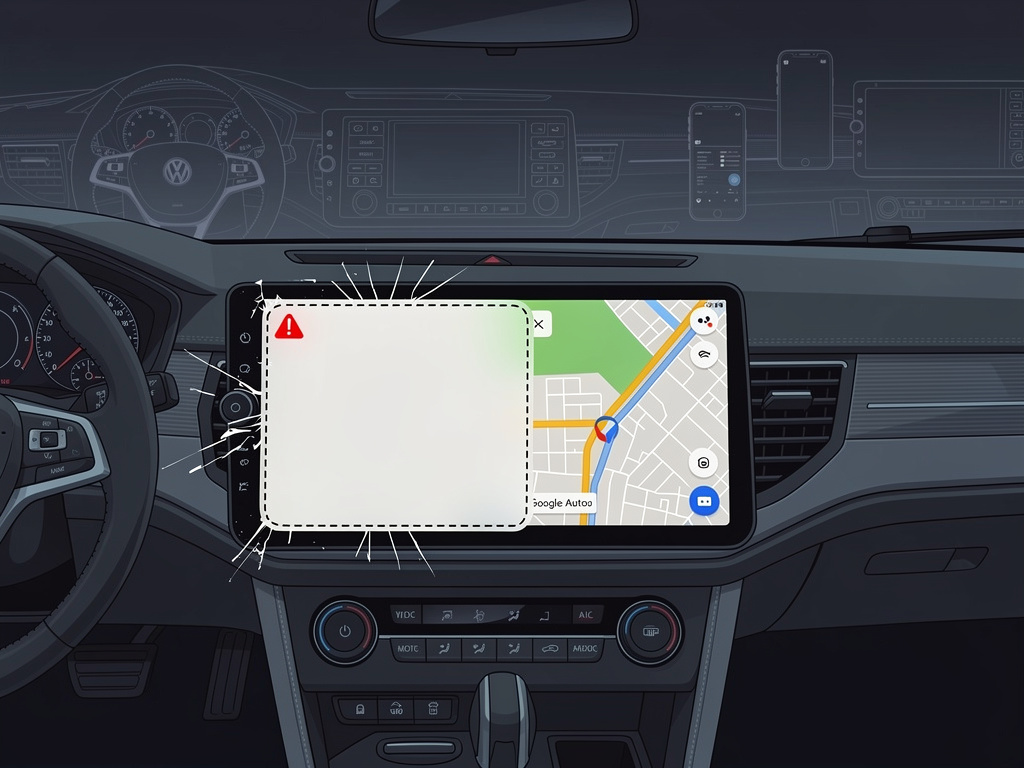
For millions of drivers who depend on Android Auto to guide them through daily commutes and cross-country road trips alike, Google Maps has long been the gold standard of in-car navigation. But a growing chorus of frustrated users is now reporting a bug so fundamental it undermines the very purpose of the application: the step-by-step direction list has vanished, leaving drivers with a map and little else to go on.
The issue, which has been gaining traction across online forums and social media platforms, strips Google Maps of its turn-by-turn direction list — the scrollable roster of upcoming maneuvers that drivers rely on to anticipate lane changes, exits, and turns well in advance. Without it, users are left staring at a moving map with only the next immediate instruction displayed, a reduction in functionality that many describe as not just inconvenient but potentially dangerous.
A Core Feature Quietly Disappears
As first reported in detail by Android Central, the bug appears to affect the directions list that users typically access by tapping on the next-turn instruction bar at the top of the Google Maps navigation screen within Android Auto. Under normal operation, this tap reveals a full list of every upcoming step in the route — street names, distances, estimated times, and turn-by-turn breakdowns. Now, for an apparently growing number of users, that tap does nothing, or the list simply fails to populate.
The reports have surfaced across multiple channels, including Google’s own support forums, Reddit communities dedicated to Android Auto, and posts on X (formerly Twitter). Users describe the experience as “jarring” and disorienting, particularly on unfamiliar routes where previewing upcoming turns is essential for safe driving. The bug does not appear to affect Google Maps when used on a smartphone outside of Android Auto, suggesting the issue is specific to the in-car integration layer.
User Frustration Mounts as Reports Proliferate
The timing of the bug’s emergence is difficult to pin down precisely, as user reports have trickled in over recent weeks without a single catalyzing update that can be definitively blamed. Some users on Reddit’s r/AndroidAuto community have speculated that a server-side change to Google Maps — the kind Google frequently rolls out without requiring a traditional app update — may be responsible. Others point to recent Android Auto updates as the potential culprit. What is clear is that the problem is not isolated to a single device, vehicle, or software version.
Reports span a wide range of Android smartphones, from Google’s own Pixel line to Samsung Galaxy devices and OnePlus handsets. The vehicles involved are equally varied, encompassing factory-installed Android Auto head units from manufacturers like Honda, Hyundai, Ford, and Volkswagen, as well as aftermarket systems from Pioneer and Kenwood. This breadth of affected hardware suggests the root cause lies in the software stack shared across all Android Auto implementations rather than in any particular device or vehicle pairing.
Why the Directions List Matters More Than You Think
To understand why this bug has generated such an outsized reaction, it helps to appreciate the role the directions list plays in the driving experience. Unlike the real-time navigation prompt — which shows only the next immediate maneuver — the full directions list allows drivers to mentally prepare for a sequence of actions. On a complex highway interchange, for example, a driver might need to know that after taking the next exit, they must immediately merge left and then take a second exit within half a mile. The single-turn prompt alone cannot convey this kind of sequential complexity.
Professional drivers, rideshare operators, and long-haul travelers are among those most affected. For Uber and Lyft drivers who navigate to unfamiliar destinations dozens of times per day, the ability to quickly scan upcoming directions is not a luxury — it is a workflow essential. Several users on X have noted that the bug has forced them to pull over more frequently to check their phone directly, defeating the purpose of the hands-free Android Auto interface and, ironically, creating the very safety hazard the system was designed to eliminate.
Google’s Silence Adds to the Unease
As of this writing, Google has not issued a public statement acknowledging the bug or providing a timeline for a fix. This silence is consistent with the company’s typical approach to Android Auto issues, which are often resolved quietly through incremental updates without formal communication. However, the lack of acknowledgment has done little to reassure affected users, many of whom have taken to marking bug reports on Google’s Issue Tracker with stars and comments in hopes of elevating the problem’s visibility internally.
According to Android Central‘s reporting, some users have attempted a variety of workarounds with mixed results. These include clearing the Google Maps cache, uninstalling and reinstalling both Google Maps and the Android Auto app, resetting the vehicle’s infotainment system, and even factory-resetting their phones. None of these steps have produced a consistent fix, further supporting the theory that the issue originates on Google’s server side rather than in locally stored data or settings.
A Pattern of Android Auto Growing Pains
This is far from the first time Android Auto users have encountered significant bugs following updates or server-side changes. The platform has a well-documented history of issues ranging from random disconnections and audio routing failures to the infamous Coolwalk redesign rollout in 2023, which introduced a new split-screen interface that many users found buggy and unintuitive at launch. Google eventually smoothed out most of those issues, but the process took months and left a residue of distrust among the platform’s most dedicated users.
The directions list bug arrives at a particularly sensitive moment for Google’s automotive ambitions. The company is simultaneously pushing Google Built-In — a version of its services embedded directly into vehicle operating systems — and competing with Apple CarPlay, which recently announced a next-generation version promising deeper integration with vehicle instrument clusters and controls. Any perception that Android Auto is unreliable could influence both consumer preferences and automaker partnerships at a critical juncture in the connected-car market.
The Competitive Implications of Software Reliability
Apple CarPlay, Android Auto’s primary rival, has historically been perceived as more stable, though it is not without its own bugs and limitations. The key difference, industry analysts note, is that Apple tends to maintain tighter control over the software-hardware integration, whereas Google’s open ecosystem — while offering broader device compatibility — introduces more variables that can lead to inconsistent experiences. The directions list bug is a textbook example of this tradeoff: the sheer number of device and vehicle combinations makes it difficult for Google to test every scenario before pushing changes.
For automakers evaluating which platforms to prioritize in their next-generation infotainment systems, reliability is a first-order concern. A navigation bug that removes a core feature — even temporarily — can generate warranty complaints, negative dealership feedback, and customer dissatisfaction that automakers absorb regardless of whether the fault lies with Google’s software. This dynamic gives car manufacturers a strong incentive to demand higher quality assurance standards from their technology partners, and it gives Google a compelling reason to fix issues like this one quickly and transparently.
What Affected Users Can Do Right Now
While waiting for an official fix, affected users have a limited set of options. Some have reported that switching to Waze — which Google also owns but which operates on a separate codebase — provides a functional directions list within Android Auto. Others have temporarily reverted to using their phone’s screen for navigation rather than projecting to their car’s display, though this approach sacrifices the larger screen and hands-free benefits that make Android Auto appealing in the first place.
A few technically inclined users have experimented with rolling back to earlier versions of Google Maps via sideloaded APK files, but this approach carries its own risks, including potential security vulnerabilities and incompatibilities with newer Android Auto features. The consensus among the user community, as expressed across Reddit and Google’s support forums, is that the only real solution will come from Google itself — either through a Maps update or a server-side correction that restores the missing functionality.
The Road Ahead for Android Auto’s Reputation
The directions list bug, while seemingly narrow in scope, touches on a broader question that has dogged Android Auto since its inception: can a platform built on the open, fragmented Android ecosystem deliver the kind of rock-solid reliability that drivers expect from their vehicles? Cars are not smartphones; a glitchy app on a phone is an annoyance, but a malfunctioning navigation system at highway speed is a safety concern.
Google has invested heavily in Android Auto and its more deeply integrated sibling, Android Automotive OS, signaling that the car is a strategic frontier for the company’s services ecosystem. But investment in features means little if the foundational experience — getting reliable directions from point A to point B — cannot be taken for granted. Until Google addresses this bug and communicates its resolution to affected users, the incident will serve as a reminder that in the high-stakes environment of automotive software, even small failures carry outsized consequences.