
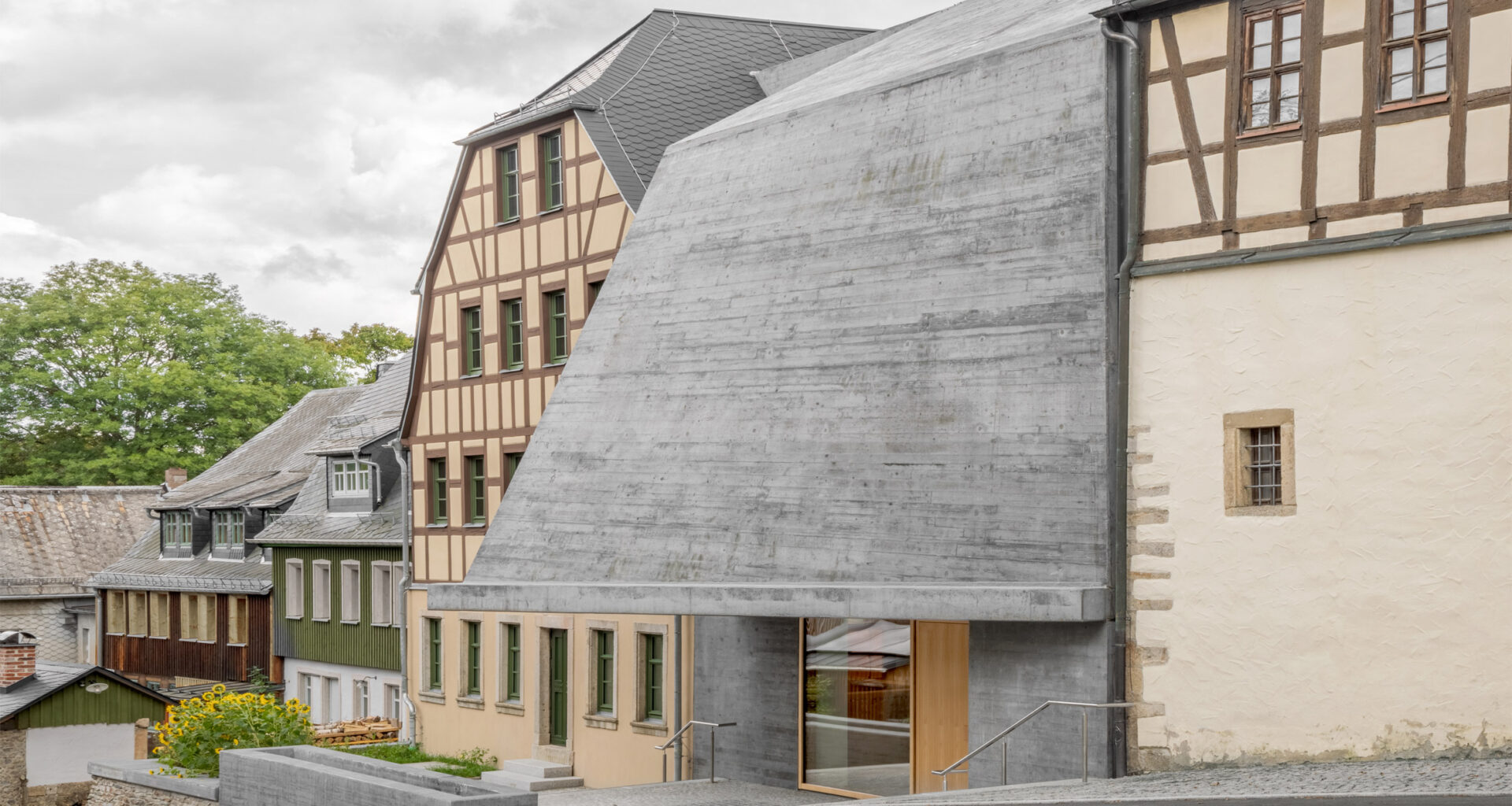
An irregular concrete volume connects a cluster of historic half-timbered buildings to form the Mother-of-Pearl Experience Museum in Germany, designed by local studio Schulz und Schulz.
Schulz und Schulz drew on the form of a mussel when designing the rough concrete exhibition space, which occupies a formerly derelict plot in the town of Adorf.
The volume is surrounded on three sides by existing buildings, including a historic city gate built in 1778, which the studio overhauled as part of the project.
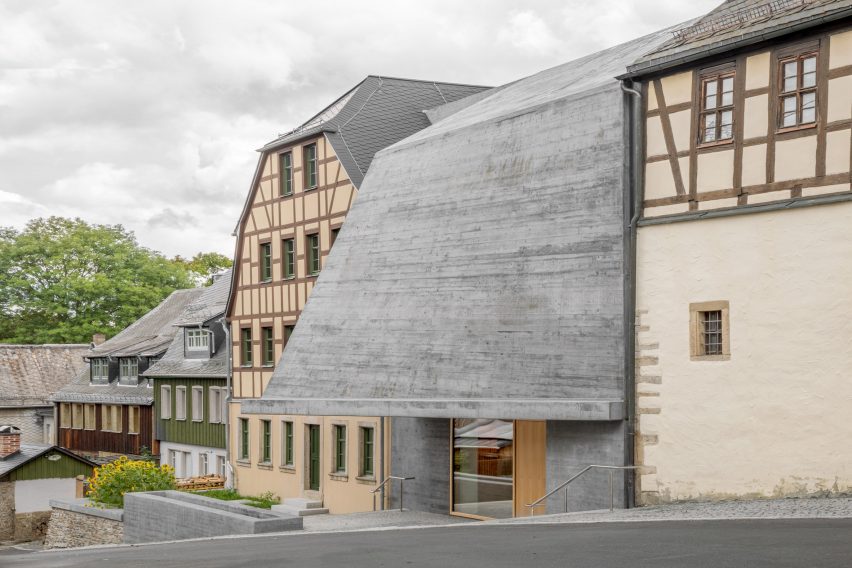 A concrete extension sits between half-timbered buildings at the Mother-of-Pearl Experience Museum
Schulz und Schulz preserved and overhauled these buildings to create the Mother-of-Pearl Experience Museum complex, which is dedicated to the cultural heritage of freshwater pearl mussels, pearl fishing and the craftsmanship of mother-of-pearl objects.
Contrasting these half-timbered neighbours, the concrete volume has an angular, protruding facade with a gutter that channels rainwater into a water feature.
Inside, the Mother-of-Pearl Experience Museum features smooth white surfaces designed to contrast with the grey exterior, evoking the appearance of mussel shells.
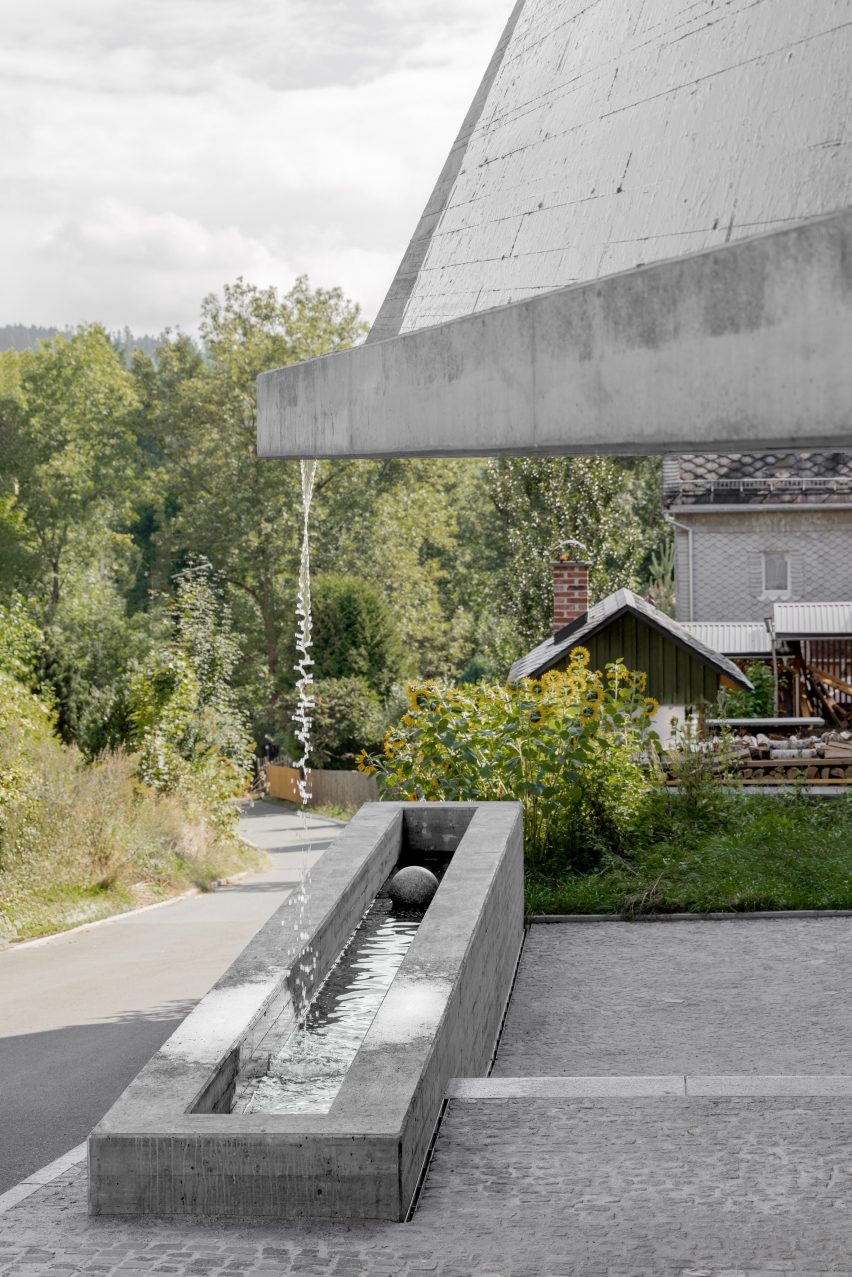 The concrete facade features a gutter that directs water into a pool
“The building represents a shell that has come to rest within its surroundings,” Schulz und Schulz told Dezeen.
“Its rough exterior washed by water, enclosing a precious, shimmering interior,” it continued. “The facade, with its rough outer layer, is conceived to evoke a shell sculpted by the flowing water of the adjacent stream.”
ZAO/standardarchitecture snakes concrete art gallery around courtyard in China
Exhibition spaces are located in the upper levels of the Mother-of-Pearl Experience Museum, including in the cantilevered concrete section that protrudes over the museum entrance.
The foyer on the ground floor leads to an atrium, which backs onto Adorf’s historic city wall. Schulz und Schulz hoped to celebrate the architectural history of Adorf by conserving the site’s existing buildings and exposing the city wall within the museum’s interior.
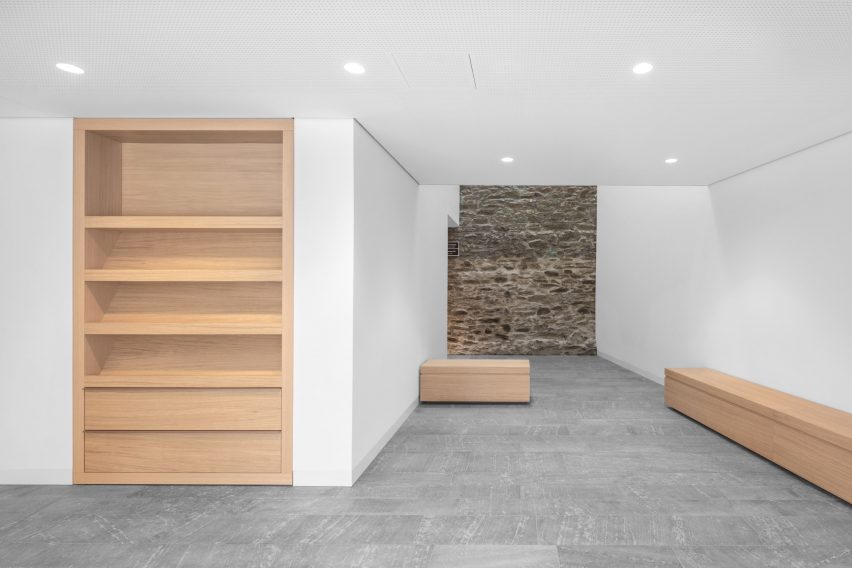 Adorf’s city wall is exposed in the atrium
“The existing older buildings on the plot were partly vacant and at risk of falling into disrepair,” and the studio. “Their preservation and adaptive reuse contribute to the stabilisation and strengthening of the local urban fabric.”
“The integration of the historic city wall into the museum’s inner courtyard creates a tangible connection to Adorf’s history.”
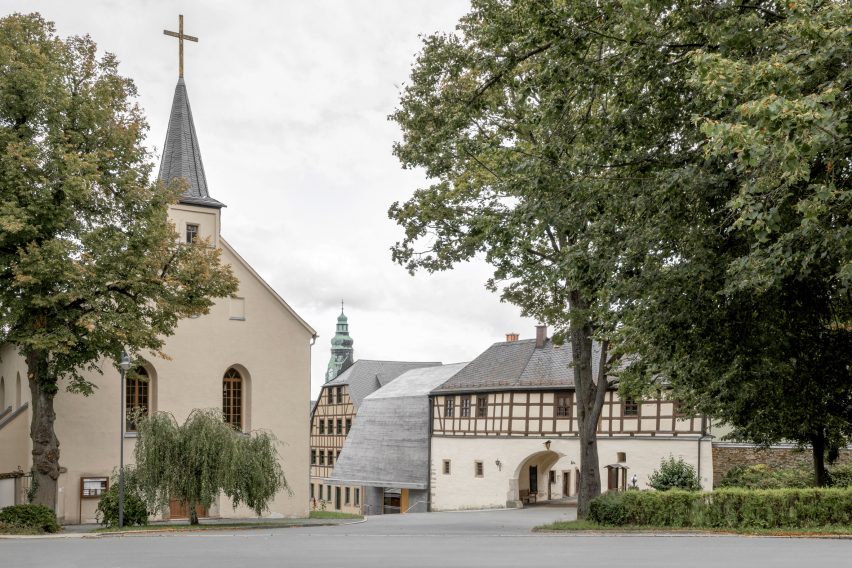 A city gate building constructed in 1778 forms part of the museum complex
Schulz und Schulz was founded in 1992 by brothers Ansgar and Benedikt Schulz, and currently has offices based in Leipzig and Berlin.
Other museums that have recently been featured on Dezeen include a looping concrete art gallery in Hangzhou and a museum and art library situated in a renovated power station in Shanghai.
The photography is by Gustav Willeit.