
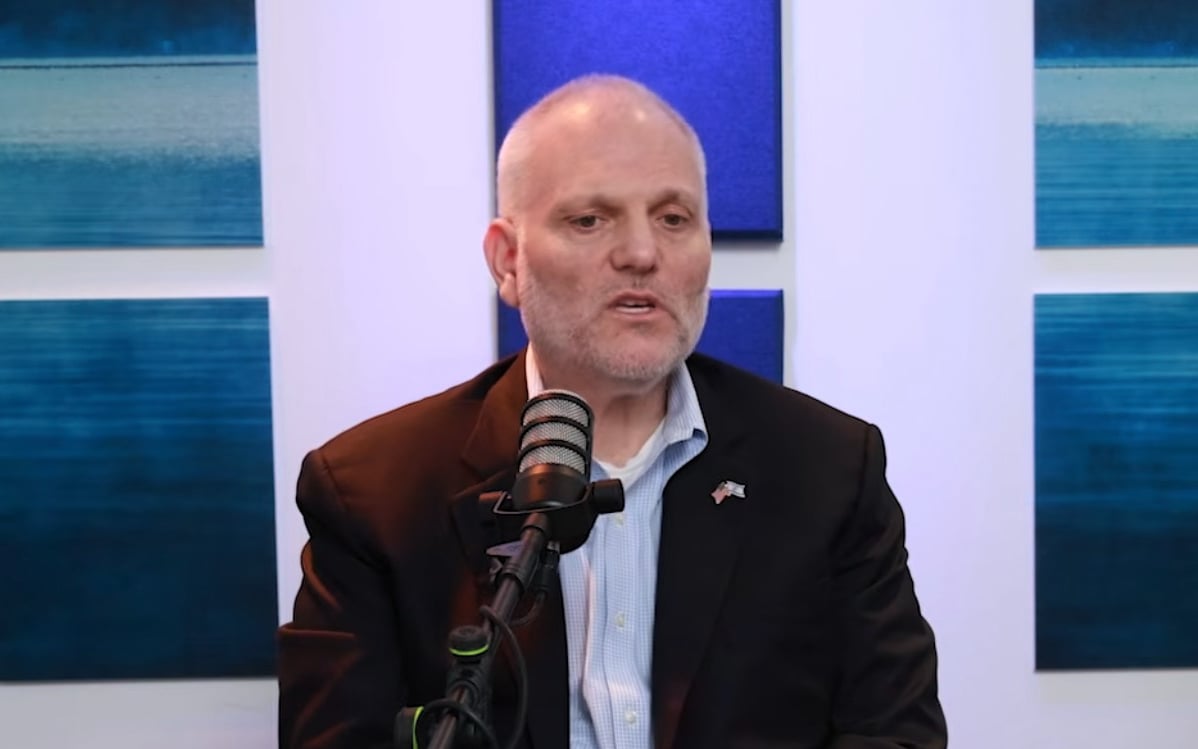
American Jewish organizations are rethinking the value of traditional coalition-building efforts after many long-time allies “punched us in the gut” following the October 7, 2023, Hamas massacre, CEO of the Conference of Presidents of Major American Jewish Organizations William Daroff told The Times of Israel Thursday.
Ahead of the organization’s annual mission to Israel later this month, Daroff, considered one of the most influential figures in American Jewry, said that community leaders are thinking about how to “press reset” after the ceasefire and hostage return that brought Israel’s two-year war in Gaza to a level of closure.
After the shock of the Hamas attack, in which 1,200 people were killed and 251 kidnapped, the Jewish world experienced a second shock afterwards, on the proverbial “October 8,” when many saw friends and partners turn against Israel or stay silent, Daroff said.
“The day after the attack, we were punched in the gut a second time when we saw how many of our erstwhile friends and allies, with whom we’d marched and supported, abandoned us,” he said.
For years, mainstream Jewish organizations have invested heavily in community-relations work, building ties with African American, Latino, LGBT groups and labor unions, among others, Daroff said. They joined coalitions on issues such as raising the minimum wage, civil rights and broader social justice agendas. Part of the purpose was basic decency, but there was also a strategic aspect: an expectation that when Jews faced rising antisemitism or when Israel was under attack, those allies would stand with them.
Get The Times of Israel’s Daily Edition
by email and never miss our top stories
By signing up, you agree to the terms
That assumption did not hold after October 7, however, Daroff said.
“The unions that we had stood with abandoned us,” he said bluntly. “Now, in an environment where organizations have limited resources, I think there needs to be a reassessment of how we prioritize engaging with allies.”
This does not mean turning inward and ignoring broader social issues, Daroff stressed.
“Fighting for minimum wage, for instance, in and of itself, might be a good thing” from a Jewish values perspective, he said. However, he said, the notion that such advocacy would “pay dividends” for the Jewish community in the form of support on issues of Israel or antisemitism has been “blown away.”
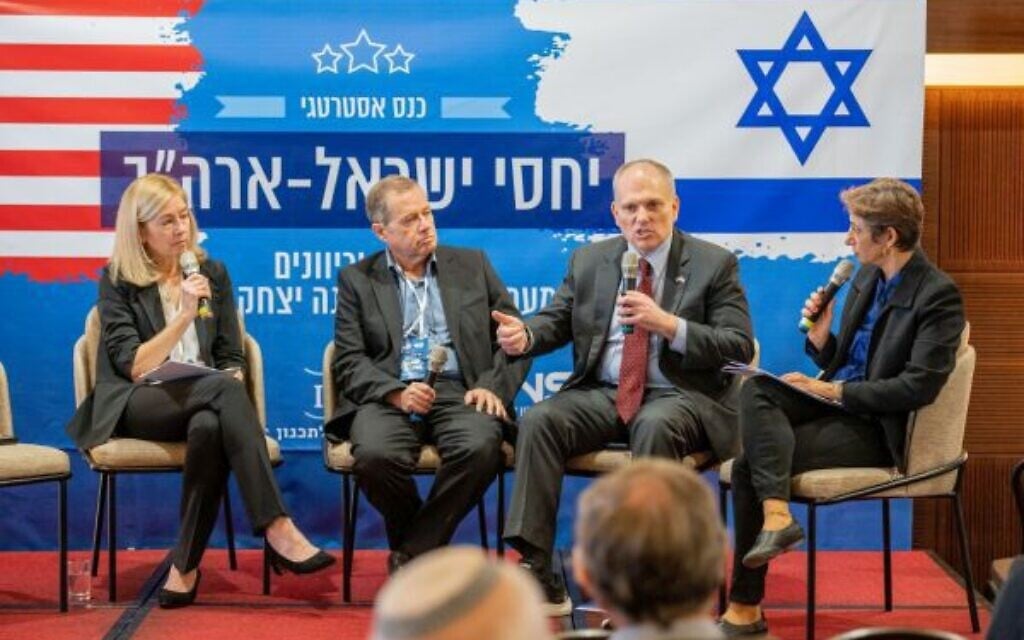
From left, pollster Fern Oppenheim, INSS researcher Eldad Shavit, Conference of Presidents CEO William Daroff and journalist Nurit Canetti appear on stage at a conference on the Israel-US relationship in Tel Aviv on November 14, 2022. (Eran Alergant/Reut Group)
Meanwhile, Daroff said, the last two years have shown that organizations should pour more resources into “doubling down” on Jewish education to strengthen people’s identity and resilience.
“We need to ensure that these kids have the self-confidence to talk about Judaism, about Israel, so when they hit the campus as freshmen, they’re not hit with challenges for the first time and have no way to respond.”
A return to unity
Looking at the current landscape, Daroff, whose umbrella organization represents 50 mainstream Jewish organizations from across the political spectrum, said he sees a new level of unity and willingness to cooperate following the events of the past two years.
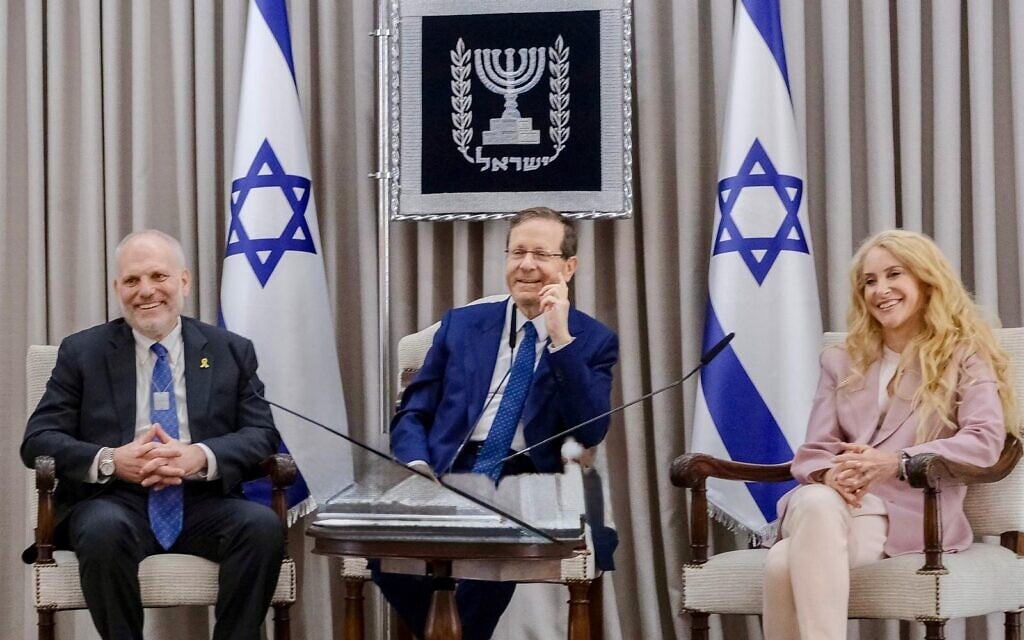
CEO of the Conference of Presidents of Major American Jewish Organizations William Daroff, President Isaac Herzog, and COP Chair Betsy Berns Korn at the President’s Residence, February 2025 (Amit Elkayam)
After Israel’s judicial reform debate split society in the year before the October 7 attack, “organizations have learned to bite their lips on the 10% they disagree on for the sake of Shlom Bayit [cohesion] and to cooperate on the 90% that they do agree on,” Daroff said. “October 7 forced us to focus on who our real enemies are and what our real priorities are, and there is so much work to be done that we can do better together.”
Mainstream Jewish leaders are nearly all in agreement on most of the core issues, such as the centrality of Israel in Jewish life, Jerusalem as the eternal capital of the Jewish people, and a basic understanding of Israel’s role and rights in a hostile region, Daroff said. While they may have squabbled over secondary matters before the war, unity now means working together on these issues and speaking with commonality of purpose and agreement.
“My big focus now for the American Jewish community is to try to continue this, and to impress upon our Israeli brothers and sisters to put unity at the top of their priorities,” he added.
Daroff outlined his approach to “leading from consensus” as the head of the Conference of Presidents, whose members span the entire political spectrum.
“My practice has been to focus on areas of agreement, and from there, tiptoe into areas of disagreement to see if there are ways to bring people together in a way that will make everybody happy,” he said.
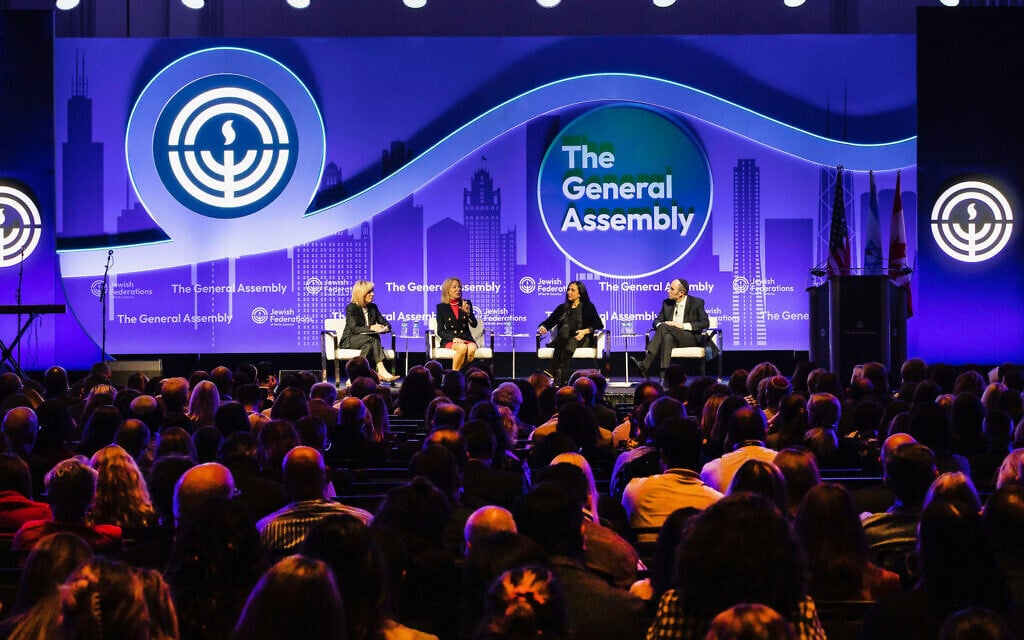
Illustrative: A panel discussion at the JFNA General Assembly in Chicago on October 30, 2022. (Jewish Federations of North America)
Antisemitism and engagement
Looking at the state of antisemitism today, Daroff sees “early indications” of a gradual cooling of the explosion in anti-Jewish hostility over the last two years. While it is too early to guess how things will progress over the coming months, there are signs of progress, especially on the fierce ideological battlefields of college campuses.
“Things like anti-Israel encampments and Jewish students being harassed are not happening anymore,” Daroff said. “Campuses are much calmer now than they were previously.”
That marks a sharp contrast with the spring of 2024, when weeks-long encampments, building occupations and class disruptions were common at major universities.
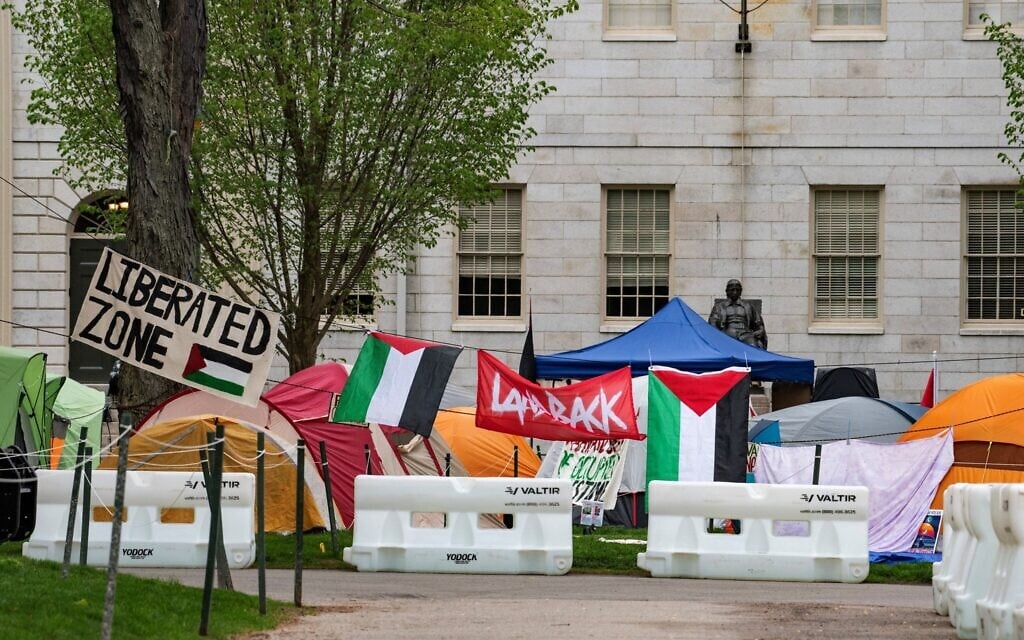
Tents and signs fill Harvard Yard by the John Harvard statue in the pro-Palestinian, anti-Israel encampment at Harvard University in Cambridge, Massachusetts, on May 5, 2024. (Joseph Prezioso / AFP)
Much of that, he said, is because the Trump administration took strong steps to enforce Title VI protections against discrimination, including threatening to withdraw federal funding, to force university administrators to clamp down on hate activities on campus.
“Those interventions raised the stakes for institutions and literally changed the atmosphere for Jewish students and faculty overnight,” he said.
Meanwhile, the phenomenon of surging Jewish engagement among non-affiliated Jews since October 7 shows no signs of abating, Daroff said. Organizations continue to report rising synagogue and JCC attendance, increased involvement in Jewish and pro-Israel advocacy, and public displays of Jewish identity such as wearing yarmulkes and Magen David necklaces.
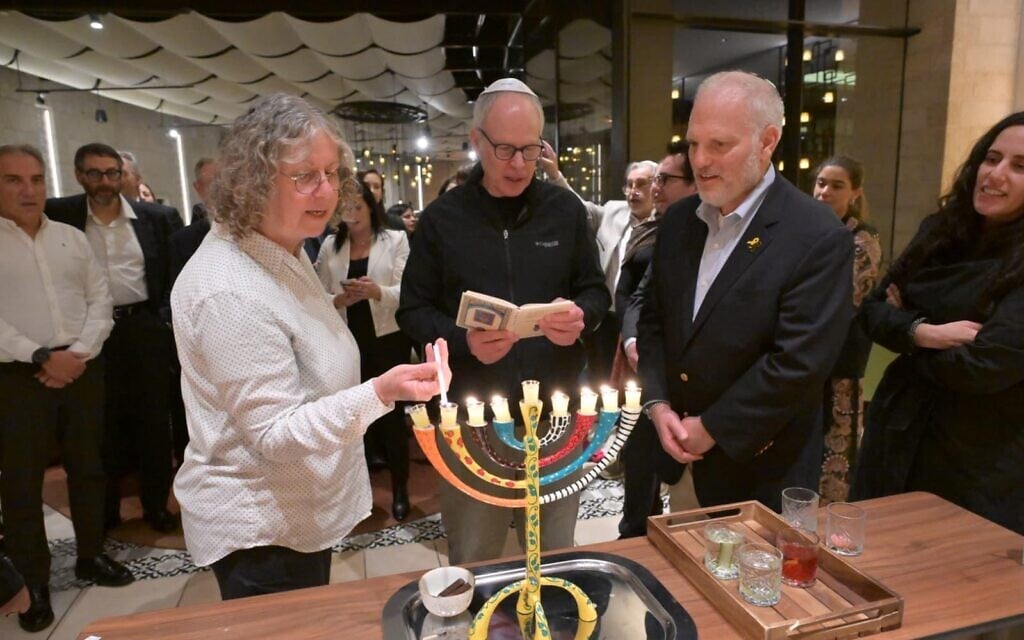
Former hostages Keith and Aviva Siegel light Hanukkah candles with William Daroff and participants at the Israel Foreign Ministry’s J50 Conference in December 2025 (Shlomi Amsalem/GPO)
“We haven’t seen indications that the surge is reversing,” Daroff said. “As a community, we have been circling our wagons because we have seen that, at the end of the day, the people we can count on the most are our Jewish friends and neighbors. I think that’s been an important part of the surge, and we need to find ways to ensure that Jewish engagement continues.”
“My hope at this point,” Daroff said, “is that with the conflict here receding, the Jewish community can press reset and focus on what is important.”