
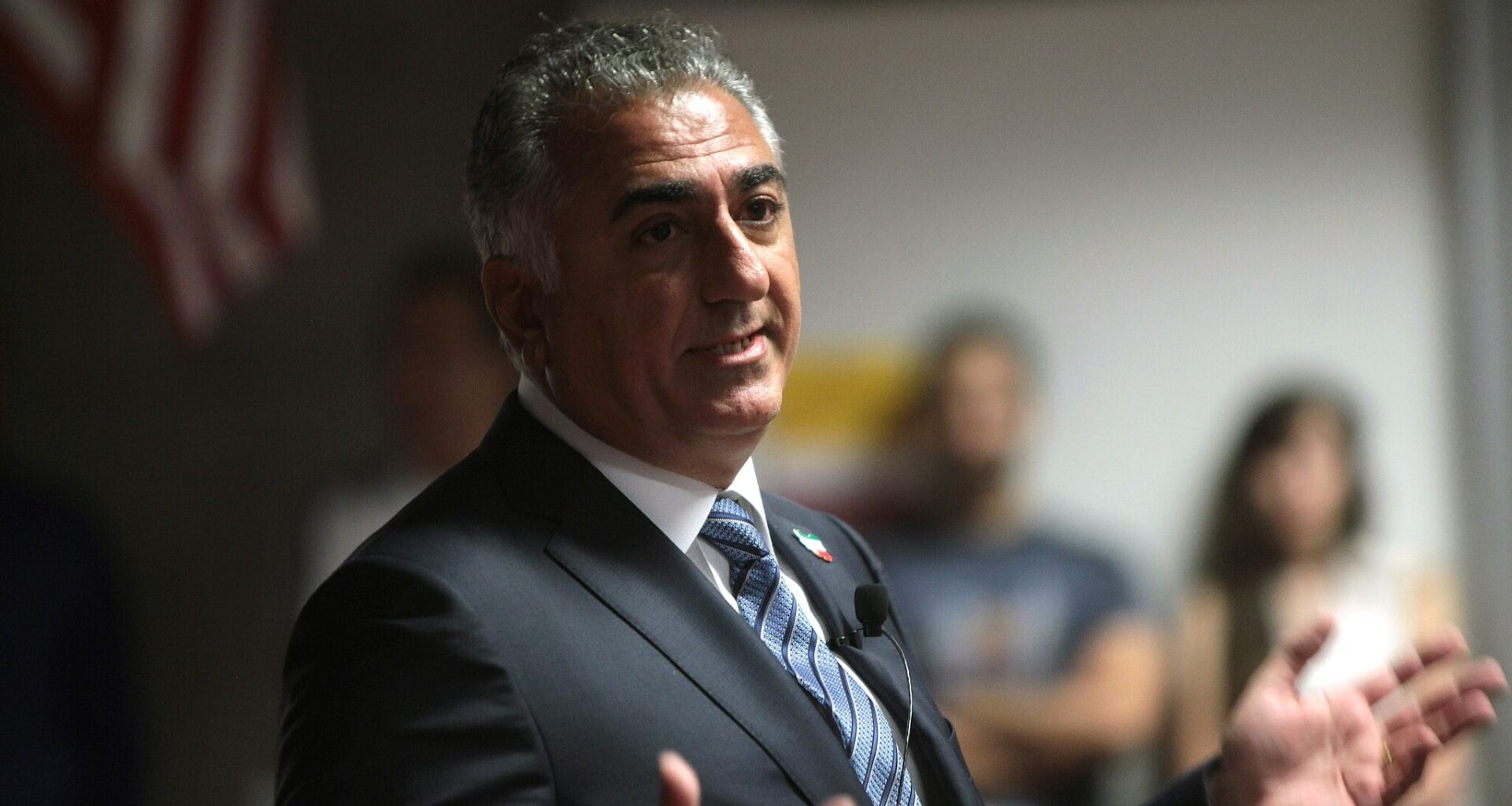
For more than four decades, the Islamic Republic of Iran has defined itself through hostility toward Israel and the normalization of antisemitic rhetoric, exporting terror, financing proxy wars, and making eliminationist rhetoric toward Israel a pillar of state ideology. As Iranians continue to challenge the regime at home, I spoke with Reza Pahlavi, the exiled son of Iran’s last shah and a prominent opposition voice, about what would replace it, and whether a free Iran would openly reverse the ideology that has made Israel its primary enemy.
In written responses to my questions, Pahlavi did not offer the West a plea. He offered a proposition. Asked whether he would host Israel’s prime minister in Tehran during a transitional period following the fall of the Islamic Republic, Pahlavi replied without hesitation: “Of course.” He did not hedge or frame the idea as symbolic. He spoke of it as a natural outcome of a post-mullah Iran, one in which hostility toward Israel is understood not as an expression of Iranian identity, but as an imposed ideology enforced by a coercive state.
Pahlavi added that he would also welcome President Donald Trump in a free Iran, envisioning the first visit by a sitting American president since Jimmy Carter’s visit to Iran in late 1977. The symbolism, he said, would be unmistakable: Iran’s return to the international community, and the collapse of a regime whose power has long rested on permanent confrontation.
For Israel, the implications extend far beyond symbolism. The fall of Tehran’s current regime would redraw the Middle East’s strategic map overnight. Iran is not merely an adversary; it is a central sponsor and organizer of the region’s terror and proxy networks, funding and directing forces that have encircled Israel for years.
Pahlavi argued that the Islamic Republic does not represent Iran’s people, but occupies the country through repression, propaganda, and fear. Its slogans, including “Death to Israel,” should not be mistaken for a reliable measure of public sentiment, he said, but understood as tools of ideological control. Normal relations with Israel and the United States would bring opportunity, security, and regional stability, not endless war.
He tied this vision to practical cooperation, including water management and environmental expertise, echoing themes he raised during his 2023 visit to Israel. That visit, he said, was not performative. It reflected what a future relationship could look like: pragmatic, forward-looking, and focused on improving the lives of ordinary Iranians after decades of severe mismanagement by the clerical regime.
To skeptics who argue that Iranian society is not ready for such normalization, Pahlavi’s response was blunt. The regime’s rhetoric, he said, should not be mistaken for public sentiment. Many Iranians recognize that permanent hostility has delivered only isolation and hardship, while cooperation and normal relations bring opportunity and security. They want a free country at peace with the world, including with Israel.
Pahlavi also laid out what he believes Western governments must do now.
He called for targeted measures against the regime’s coercive apparatus, particularly the Islamic Revolutionary Guard Corps, while drawing a clear distinction between Iran’s citizens and those enforcing repression at gunpoint. Democratic governments, he said, should sever the regime’s financial lifelines, keep Iran connected to the outside world, expel regime diplomats, and pursue accountability for crimes against humanity, while pressing for the release of all political prisoners.
Most critically, he argued that the West must be prepared to recognize a legitimate transitional authority quickly if the regime collapses, to prevent chaos, power vacuums, or the re-emergence of hardline forces under a different name.
His sharpest words were reserved for Supreme Leader Ali Khamenei.
“Ali Khamenei, you have a final chance to leave the country; if you do not, we, the people of Iran, will topple you and you will face justice for your crimes against our nation,” Pahlavi said.
He paired that warning with a message aimed at mid-level enforcers: accountability would focus on leadership, but there would be a path forward for those who refuse unlawful orders and stand with the nation. Even exile, he added, would not shield the regime’s architects from justice.
If he were in charge tomorrow, Pahlavi said, his foreign-policy priorities would be immediate and unambiguous: end Iran’s sponsorship of terrorism by dismantling proxy networks; withdraw from destabilizing regional conflicts; normalize relations beginning with the United States and Israel; and fully dismantle the regime’s nuclear program under international supervision.
He pointed to a transition blueprint, the Iran Prosperity Project, envisioning a technocratic interim structure followed by a democratic process in which Iranians themselves would decide their country’s future system of governance.
Debate will continue over whether Pahlavi is the figure capable of unifying Iran’s fractured opposition. But one fact is indisputable. At a moment when the Islamic Republic appears under greater internal and external pressure than at any point in recent years, he is placing a concrete proposition before the world, and before Israel.
Iran’s people are risking everything. History will not only record how this regime ends, but who was prepared to act when the moment arrived. The free world can help Iranians dismantle one of the world’s most persistent state sponsors of terrorism, or watch it survive yet another crisis through hesitation and delay.
Michael Kuenne works as a journalist on antisemitism, extremism, and rising threats to Jewish life. His reporting continually sheds light on the dangers that come from within radical ideologies and institutional complicity, and where Western democracies have failed in confronting the new rise of Jew-hatred with the due urgency it does call for. With hard-hitting commentary and muckraking reporting, Kuenne exposed how the antisemitic narratives shape policymaking, dictate public discourse, and fuel hate toward Israel. His writings have appeared in a number of international media outlets, including The Times of Israel Blogs. Kuenne has become a voice heard for blunt advocacy in regard to Israel’s right to self-defense, critiquing ill-conceived humanitarian policies serving only to empower terror, while demanding a moral clarity which seems beyond most Western leaders. With a deep commitment to historical truth, he has covered the resurgence of Holocaust distortion in political rhetoric, the dangerous normalization of antisemitic conspiracies in mainstream culture, and false equivalencies drawn between Israel’s actions and the crimes of its enemies. His reporting dismantles sanitized language that whitens the record of extremism and insists on calling out antisemitism-whether from the far right, the far left, or Islamist movements, without fear or hesitation.