
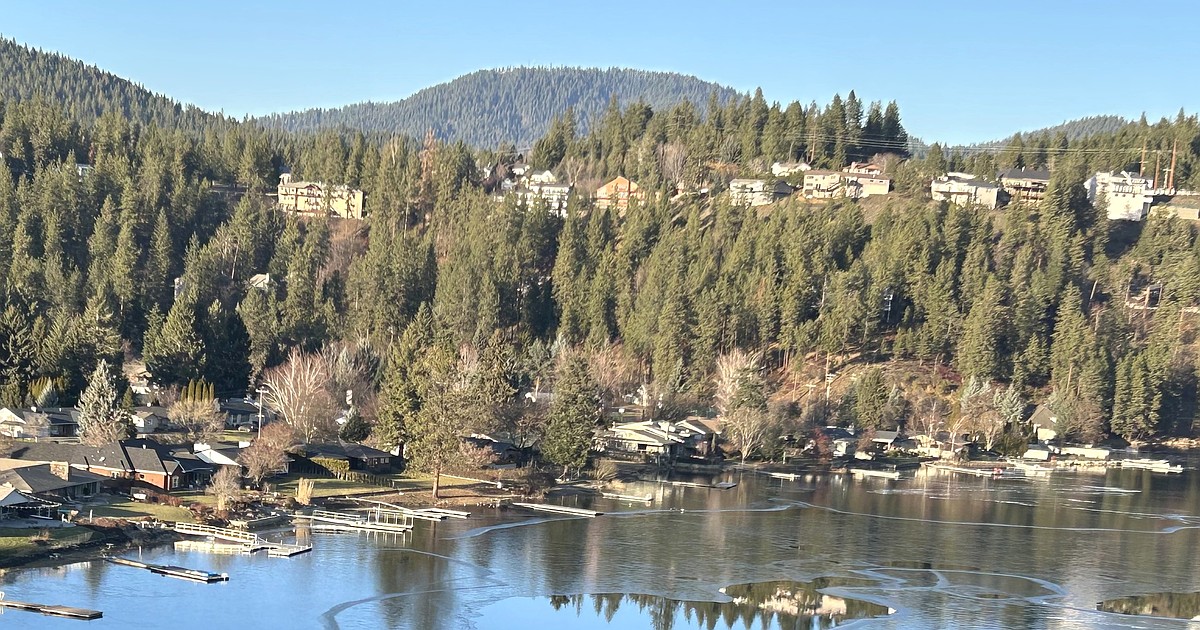
A lackluster winter with low snowpack in the Panhandle mountains worsened in January.
“Although there was 200% of normal precipitation in December, the region’s snowpack took a big hit with record warm temperatures which lead to rain falling instead of snow,” the Natural Resources Conservation Service said in its Feb. 1 Idaho Water Supply Outlook Report.
There was almost no measurable precipitation during the latter half of January, as precipitation was only 50 to 65% of normal. Coeur d’Alene saw a shade over 6 inches of snow in January.
The snowpack is well below normal at 55%. Numerous SNOTEL sites across the region are setting new records for their lowest snowpack on record in 40 years of measurements), the report said.
“With only two months left until this area typically reaches its peak snowpack, there isn’t much time for conditions to improve,” according to the report that came out Friday. “It will take significantly above normal snowfall during the remainder of winter to reach normal snowpack conditions”
Reservoir storage in the Panhandle lakes is near to above normal: Coeur d’Alene is 79% of normal (35% full); Pend Oreille is 125% of normal (50% full); and Priest Lake is 122% of normal (57% full).
Streamflow forecasts for April through July are 60 to 100% of normal at the 50% exceedance level in the Panhandle basins.
Idaho’s snowpack is on track to set a new record low (since 1982) over the weekend. Many watersheds across the state have set or are setting new records for low snowpack conditions.
Idaho gets about 75% of its surface water from the mountain snowpack with almost 99% of the surface water withdrawals being used for irrigation and aquaculture. In 2023, agribusiness generated $11 billion for Idaho’s economy.
“So, it’s safe to say the snowpack is vital to Idaho’s economy,” the report said.
The winter recreation and tourism sectors have also been hit hard due to the lack of snow this winter. Energy, fisheries, forestry and summer recreation sectors will also feel significant impacts from a low snowpack.
“Nearly all of Idaho is experiencing drought or abnormally dry conditions. With virtually no precipitation falling in Idaho since January 9, drought conditions have deteriorated across all but the central mountains since the January report,” the report said. “While total water year precipitation levels remain near to above normal north of the Snake River Plain thanks to a very wet December, if the mountain snowpack remains well below normal, many water supply challenges and impacts will be felt this summer.”
NRCS officials said they remain optimistic and said a lot can change in the next two months. They note that Idaho also had a prolonged dry spell in January last year before a very wet February changed the story.
The difference between these years is that the statewide snowpack is currently 72% of normal versus 88% last year.
“So, we have more of a deficit to overcome this winter,” the report said. “However, it’s Super Bowl Sunday this weekend and the Seahawks are facing a team that beat them 10 years ago. So, like any good football fan — we believe in the possibility of a comeback even when it looks to be a nailbiter.”