
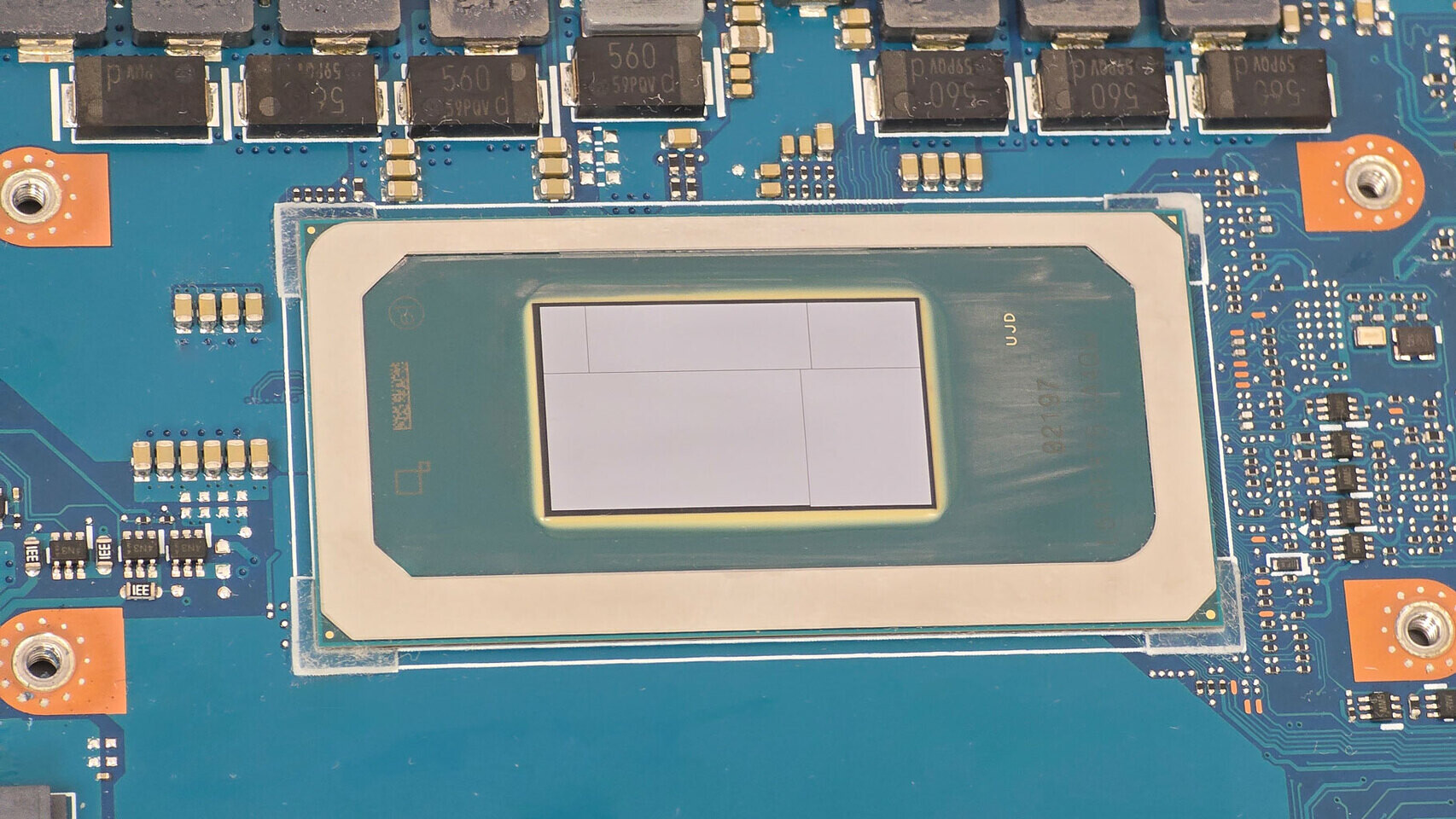
In an exclusive report for VideoCardz, Intel is reportedly targeting an LPDDR5X memory speed of 8,533 MT/s for its upcoming Core Ultra G3 series of “Panther Lake” chips arriving in the second quarter for handheld gaming devices. After we learned that Intel is imposing certain memory mandates on its OEM partners, it seems like the Core Ultra G3 will face similar mandates from the company to prevent OEMs from “cutting corners” and implementing slower LPDDR5X memory. For the new handheld-tuned Core Ultra G3 and G3 Extreme, that specification is now set to 8,533 MT/s, which is slightly below its flagship “Panther Lake” Core Ultra X SKUs that can support LPDDR5X memory running at 9,600 MT/s.
Presumably, Intel will require OEM partners and makers of the next-generation handheld consoles to use this 8,533 MT/s memory on both SKUs. These chips will feature a 14-core CPU configuration, including two P-Cores, eight E-Cores, and four LPE-Cores. A key selling point of these SoCs is the Arc integrated graphics, with the G3 Extreme offering 12 Xe3 cores and the standard G3 featuring 10 Xe3 cores. The G3 Extreme plans to run the Arc B380 iGPU with 12 Xe3 cores at 2.3 GHz, just 200 MHz below the flagship Core Ultra X9 388H’s Arc B390. Essentially, G3 Extreme handhelds can expect gaming performance similar to that of the flagship SKU, albeit with two fewer P-Cores and a slightly lower GPU clock speed. The regular G3 maintains its CPU capabilities, but the GPU is reduced to a 10-core Xe3 IP called Arc B360, with a GPU boost frequency of 2.2 GHz, resulting in a notable decrease in both gaming performance and TDP.

 Interestingly, this is the first generation where Intel is demanding a certain memory configuration from OEMs. This may stem from the fact that “Panther Lake” SoCs are memory bandwidth-bound, and Intel needs fast memory to extract every drop of performance from the integrated graphics. As the Core Ultra G3 series will power handheld consoles, having a memory configuration that doesn’t starve the entire chip is vital for stable performance targets. Additionally, handheld consoles are limited in their power envelopes, so smaller system clocks may be offset by faster LPDDR5X memory.