

Former defense minister Yoav Gallant accused Prime Minister Benjamin Netanyahu of stirring up his government ministers against Israel’s security chiefs as they led their troops on the front lines against Hamas and lying about the events of October 7, 2023.
“I did not think I would have to come here to the studio and say, ‘We have a liar for prime minister. The prime minister is a liar,” Gallant said in a caustic Channel 12 interview on Saturday, in which he repeatedly castigated his former boss.
“After the huge failure on October 7, when the IDF and Shin Bet, led by the chief of staff and the Shin Bet chief, were courageously fighting back, when they were at the front, Netanyahu stabbed them in the back and stirred up all the government ministers against them and presented it all to the public,” Gallant charged.
The former Likud MK, who was fired as defense minister in late 2024, accused Netanyahu of claiming that a delay in the IDF entering the southern Gaza city of Rafah in early 2024 was due to the supposed fear of the IDF leadership, when in reality it was because the IDF had been replenishing its supplies after allocating ammunition for potential conflict in the north.
“Netanyahu’s first priority is himself, then his government, and then the country,” Gallant said, adding that the premier “takes credit for actions after they are completed, if they succeed.”
Get The Times of Israel’s Daily Edition
by email and never miss our top stories
By signing up, you agree to the terms
“If they don’t succeed, it’s someone else’s responsibility,” claimed Gallant.
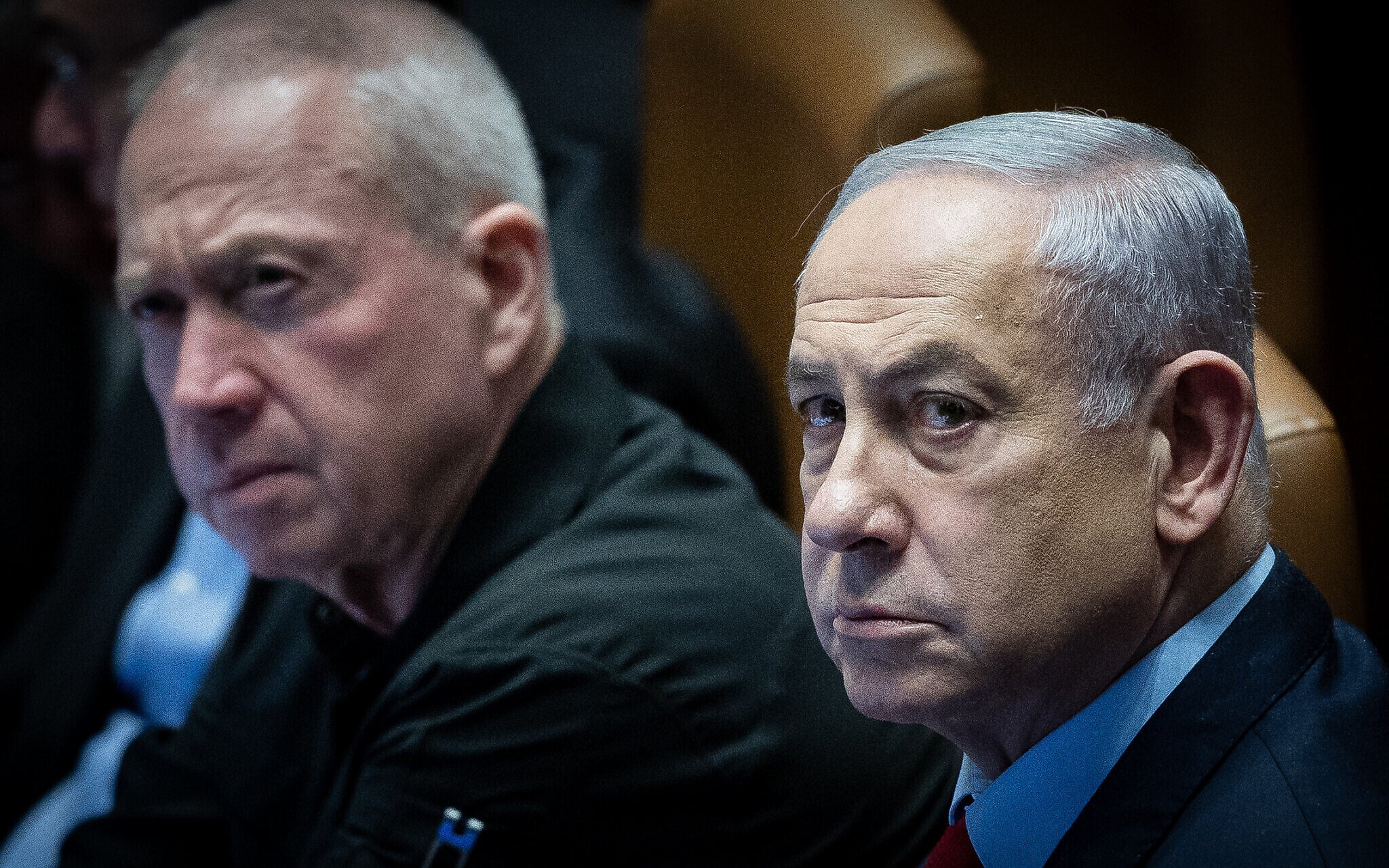
Prime Minister Benjamin Netanyahu, right, and then-Defense Minister Yoav Gallant attend a vote at the Knesset plenum in Jerusalem, March 13, 2024. (Yonatan Sindel/Flash90)
Gallant’s criticism of Netanyahu came two days after the premier attempted to distance himself from the failures of October 7 by releasing a 55-page document of his answers given to the State Comptroller Matanyahu Englman as part of the ombudsman’s investigation into the attack.
Among the selective citations provided by Netanyahu were quotes that appeared to be aimed at pinning the failure to prevent the onslaught on political rivals and security chiefs, including Gallant, while painting himself as more hawkish on Hamas than his political adversaries.
It cited deliberations in the month prior to the massacre, including a cabinet meeting on September 12, 2023, in which Gallant was quoted as saying the security situation in Gaza is “stable,” and that Israel should “hold back its forces” against Hamas.
Netanyahu’s response to the state comptroller, Gallant charged, “is a case of engineering the narrative — taking fragments of discussions, sentences, from lengthy periods, putting them together, turning them into a news item.”
Rather than the truth, the whole truth and nothing but the truth, “Netanyahu doesn’t tell the truth, certainly not the whole truth, and certainly not nothing but the truth,” his former defense minister said.
Gallant also rejected Netanyahu’s claim at a January press conference that IDF soldiers were killed in the war against Hamas because of a Biden administration “embargo” that left ground forces lacking essential ammunition. “That’s not correct,” said Gallant, “[though] the Americans made it difficult for us.”

Defense Minister Yoav Gallant speaks with officers and soldiers in southern Gaza’s Rafah, October 30, 2024. (Ariel Hermoni/Defense Ministry)
Netanyahu and Gallant frequently clashed after the government took power at the end of 2022, with the prime minister firing him in March 2023 — after he had warned of the security dangers stemming from the national rift over the government’s judicial overhaul agenda — only to reverse the move shortly afterward amid intense public objection.
Gallant resigned from the Knesset in January 2025, several months after Netanyahu fired him from his cabinet for the second and final time in late 2024. The Likud party has since launched proceedings to expel Gallant from its ranks.
In his own 12-page response to the prime minister released on Saturday evening, Opposition Leader Yair Lapid came out strong against Netanyahu’s document, accusing him of trying to erase his culpability in the October 7 failure.
According to Lapid, the premier omitted from his response to the state comptroller, Shin Bet and IDF recommendations to prepare for flare-up scenarios in Gaza.
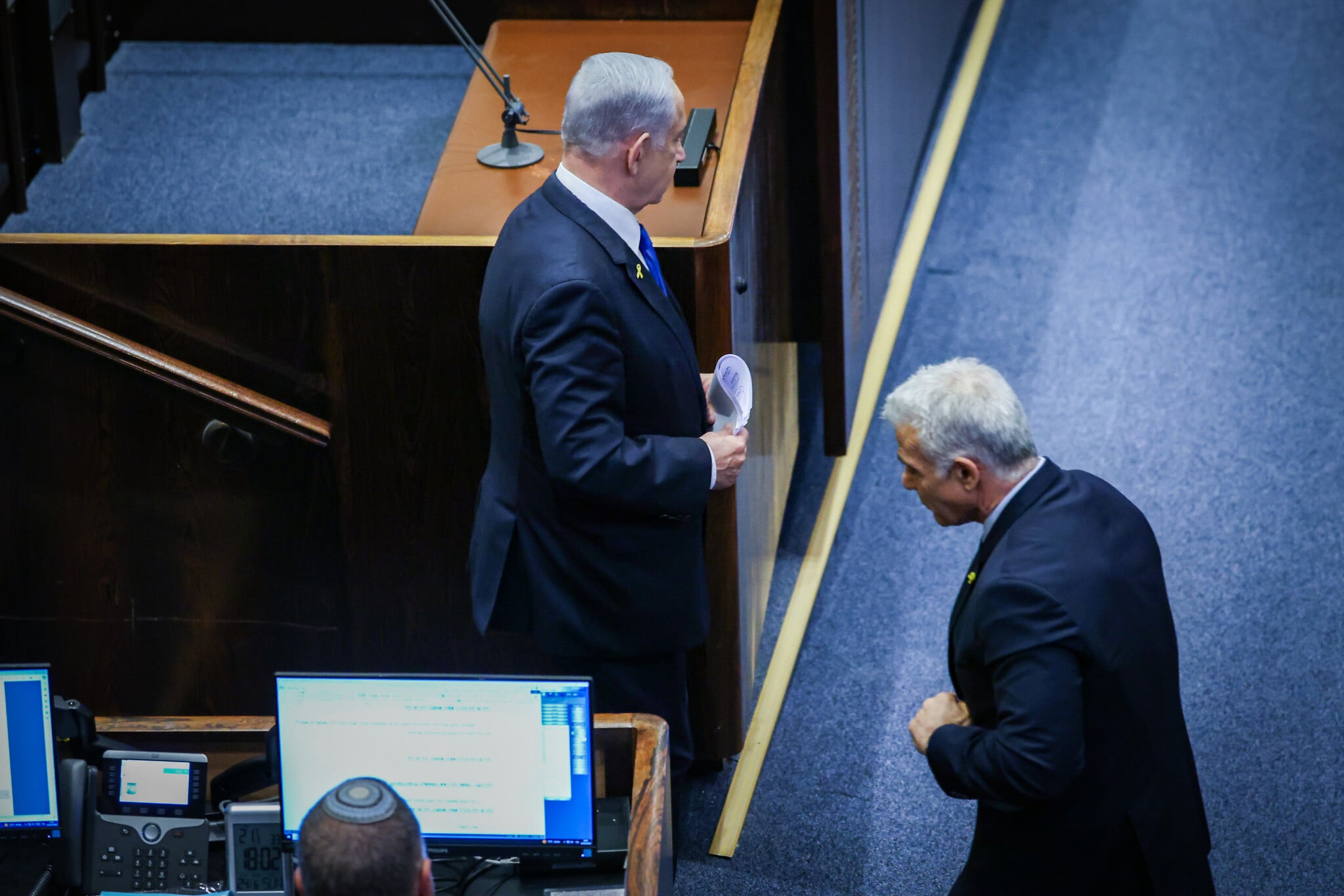
Prime Minister Benjamin Netanyahu and Opposition Leader Yair Lapid attend a “40 signatures” debate at the Knesset plenum, Jerusalem, June 24, 2024. (Chaim Goldberg/Flash90)
Lapid said he attended a briefing with Netanyahu in August 2023 in which intelligence materials “clearly indicated a risk of flare-ups at levels completely different from anything we’ve known in years.”
This led Lapid to warn at a press conference the following month that “we are approaching a violent, multi-front confrontation” — without predicting a full-on invasion from Gaza. “If the opposition leader knew, how can the prime minister claim he didn’t know?” Lapid asked.
He further accused Netanyahu of working to strengthen Hamas as a counterbalance to the Palestinian Authority, insisting such a policy led to the October 7 onslaught.
This unspoken policy was characterized by a series of squandered opportunities to assassinate Hamas leaders, the continuous channeling of Qatari funds to Gaza and utter disregard for intelligence warnings that the cash was funding Hamas’ military wing, Lapid claimed.
In his submission to Englman, Netanyahu tried to obfuscate while “relying on a series of manipulations of secret documents, deliberate deceptions, false versions and a consistent attempt to place the blame on his subordinates,” the opposition leader added.
Englman has not released any findings from his investigation, which the High Court of Justice ordered him to freeze in December. The comptroller’s probe was controversial from the get-go, facing claims that it is severely flawed, would taint evidence and the investigative process, and that only a state commission of inquiry could properly investigate the disaster.
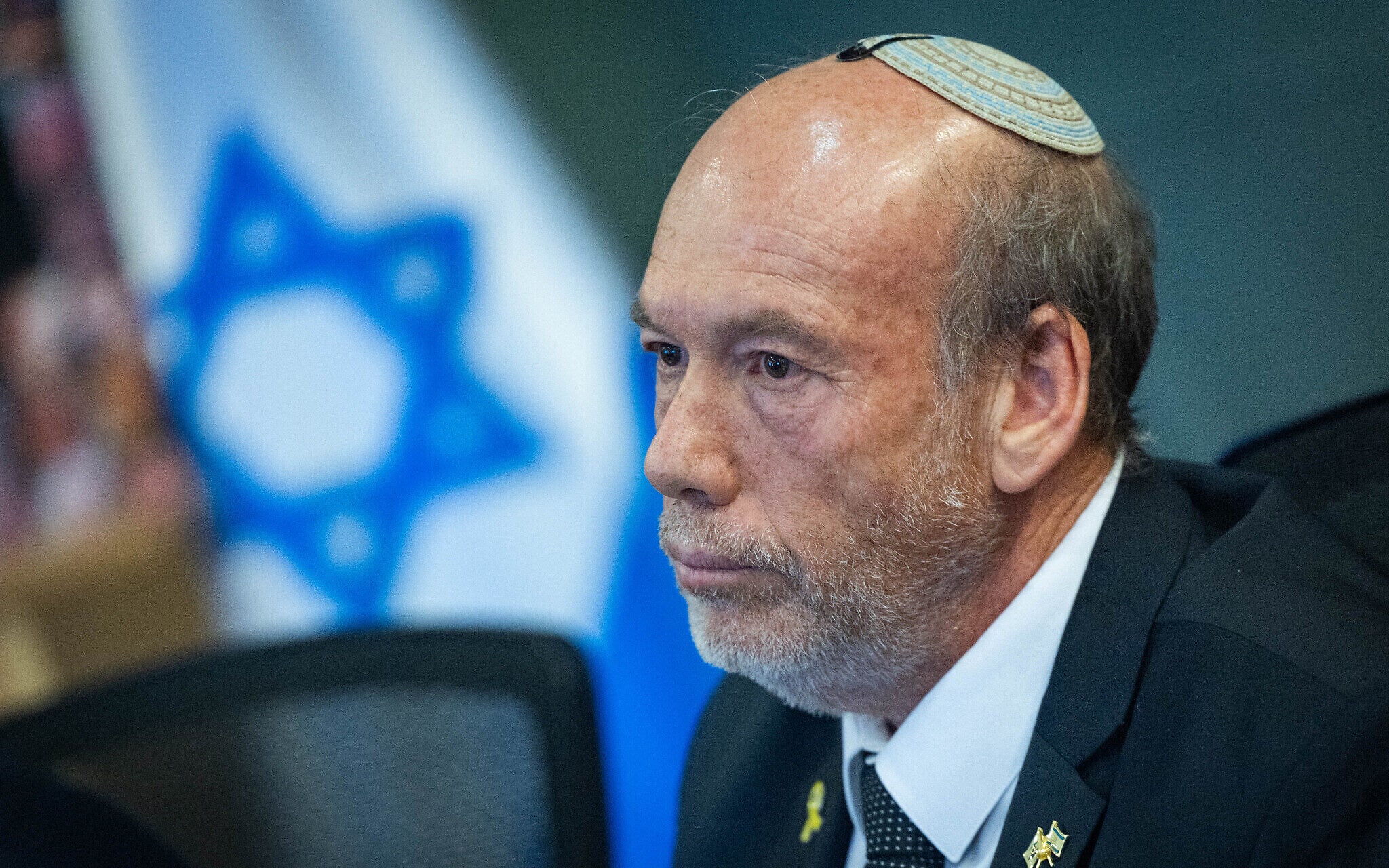
State Comptroller Matanyahu Englman attends a meeting at the Knesset in Jerusalem on May 12, 2025. (Yonatan Sindel/Flash90)
Netanyahu released a video last week at the same time as his document, in which he insinuated that the High Court was motivated by political considerations in freezing Englman’s probe.
The prime minister has repeatedly called for a commission of inquiry into October 7 that would have half its members chosen by the government and half by the opposition, rather than a state commission of inquiry, whose members would be appointed by the judiciary.
The opposition has rejected Netanyahu’s bid to set up a political inquiry, but the coalition is aiming to move ahead with that process anyway, which is already underway in the Knesset.
Lazar Berman and Times of Israel staff contributed to this report.