
A previously unknown species of microscopic algae has been formally documented in coastal waters along India’s southwestern shore.
The finding redraws a small but consequential part of the biological map, revealing how much life in these dynamic margins remains unnamed and untracked.
A name for the newcomer

The discovery centers on estuarine waters near Udupi, where freshwater rivers meet the Arabian Sea. Here, microscopic life must tolerate constant environmental swings.
Within samples from this mixing zone, a team led by Dr. Anish Kumar Warrier at Manipal Academy of Higher Education (MAHE) documented a diatom whose shell form did not match any known species.
The organism’s uneven valve structure consistently set it apart from related forms already described from similar habitats.
The team named the previously unknown diatom as Climaconeis heteropolaris sp. nov.
Assigning it a formal name establishes a reference point that allows the species to be recognized, compared, and tested as the story moves beyond a single location.
Where rivers meet the sea
Life in an estuary, where river water mixes with seawater, faces rapid swings in salt and temperature each day.
Samples came from waters where Sita River and Swarna River merge before reaching the Arabian Sea near Udupi, Karnataka.
Tides push salty water upstream, and storms can change sediment, giving microbes new surfaces and new stress.
Those tight swings can favor specialists, so even small sampling gaps may leave entire populations unseen for years.
A lopsided shell stands out
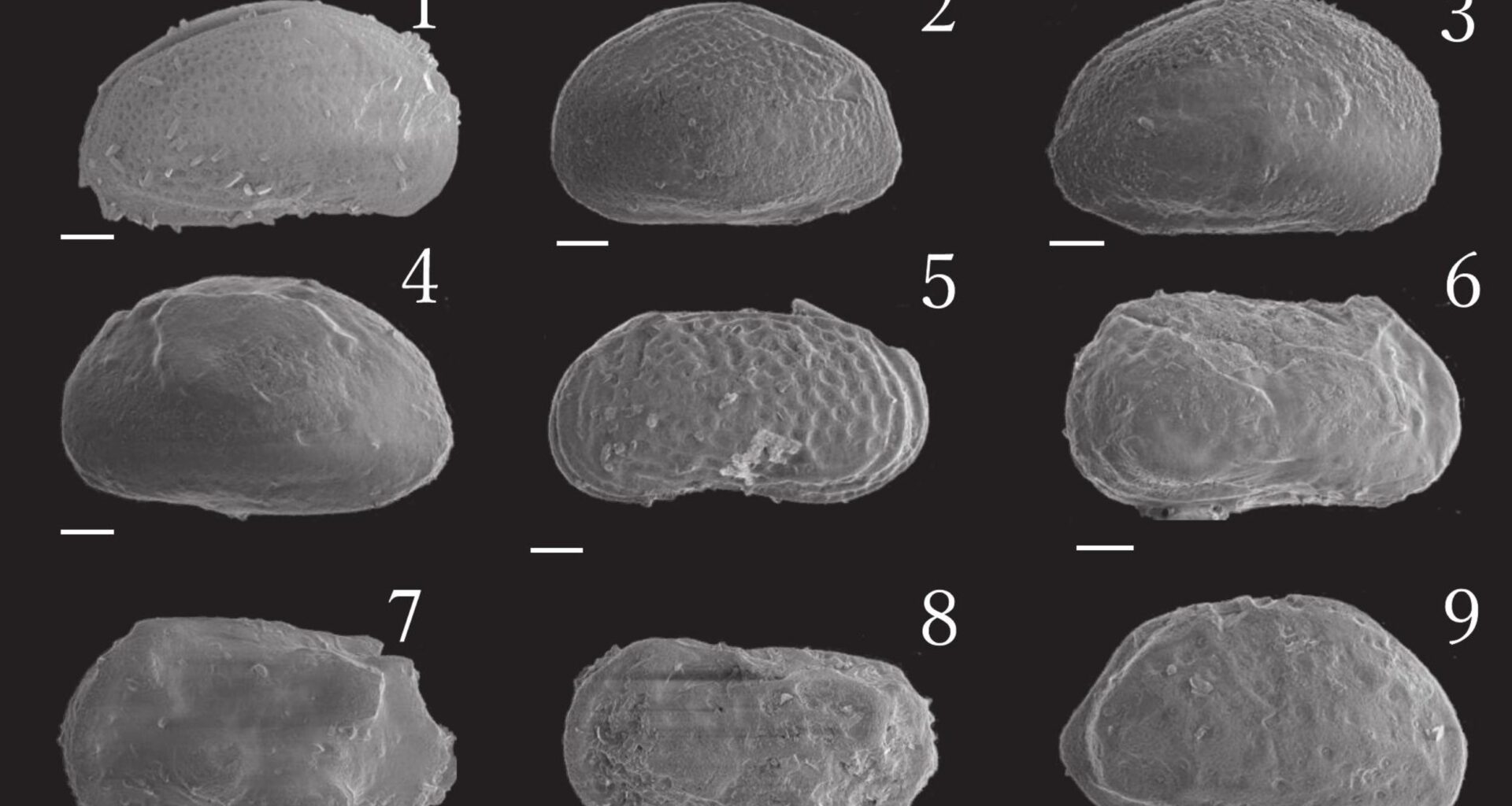
Under a light microscope, the new cell showed a shell that looked unbalanced from one end to the other.
The researchers described it as heteropolar, meaning its two ends differ, a lopsided form that sets it apart from similar species.
Its body was tiny even by microscopic standards, stretching only a few thousandths of an inch from end to end and far slimmer across.
That size range forced the team to rely on fine surface details, since many tiny algae share similar overall proportions.
Surface markings tell the story
To prove the organism was truly new, the team zoomed in until the shell’s tiny patterns turned crisp.
A scanning electron microscope, a tool that maps surfaces with electron beams, revealed lines, pores, and a straight slit down the center.
Near the middle, lines spread outward, ran parallel, then converged again, while a rectangular band cut across the face.
Those micro-features let specialists separate one species from another, but they demand careful imaging and careful comparisons.
How a species earns status
Naming a species means drawing a line that other researchers can recognize when they study samples from elsewhere.
When the team lined it up against its closest known relatives, none shared the same mix of features, leaving this organism clearly on its own branch.
They weighed the overall outline, the spacing of surface lines, and details around the central slit before settling on a new label.
Later genetic work could refine that boundary, yet the physical description gives scientists a starting point for any follow-up.
Diatoms keep waters productive
The organism belongs to a group of single-celled algae that build hard outer shells from minerals dissolved in the water around them.
When sunlight hits these algae, they turn carbon dioxide into new cell material and release oxygen as a byproduct.
One analysis credits diatoms with producing about one-fifth of the oxygen people breathe, even far from shore.
That global job means local species losses can ripple outward, especially when food webs depend on these fast-growing cells.
Old shells preserve evidence
After diatoms die, many silica shells sink and settle into mud, where layers build year-after-year.
Buried shells resist decay, so scientists can later read which species lived when conditions turned warmer, saltier, or dirtier.
A U.S. Geological Survey report describes how fossil diatoms helped reconstruct lake histories and date sediment layers over time.
That long view makes each new named species more valuable, because it improves the guide for reading old sediments.
Pollution threatens unseen diversity
Coastal development can dump nutrients, metals, and plastic into mixing zones, changing which algae survive from season-to-season.
Human-made pollution creates anthropogenic, caused by direct human actions, pressures that hit sensitive species first, and the loss can look like normal variation.
“The discovery highlights both the rich biodiversity of India’s coastlines and the urgent need to document it, as many such species remain undiscovered and are increasingly threatened by pollution and other anthropogenic pressures,” said Warrier.
Without a solid record of who lives there, managers cannot tell whether a quieter microscope slide reflects recovery or collapse.
What comes after a name
What remains unknown is whether this species is confined to one small stretch of water or quietly spread along much of the coast.
Repeated sampling across tides and seasons could show when it blooms, which surfaces it prefers, and how far it travels.
Monitoring programs already use diatom communities to grade water quality, and MAHE could test whether this species helps.
For now, the name marks a beginning, not a full map, and the coast may hold many more surprises.
By linking one microscopic shell to a verified name, scientists strengthened the tools used to track coastal change.
Better catalogs will not stop pollution on their own, but they can show exactly what disappears, and when.
The study is published in the journal Diatom Research.
—–
Like what you read? Subscribe to our newsletter for engaging articles, exclusive content, and the latest updates.
Check us out on EarthSnap, a free app brought to you by Eric Ralls and Earth.com.
—–