
A small stone long dismissed as an ordinary Ice Age tool has been shown to contain the oldest known blue pigment ever documented in Europe.
The discovery pushes the use of blue thousands of years earlier than expected and reshapes how archaeologists think about color in the late Ice Age.
A lamp label breaks

For decades, the object sat in a German museum cataloged as a simple stone lamp, its surface offering no obvious reason to question that label.
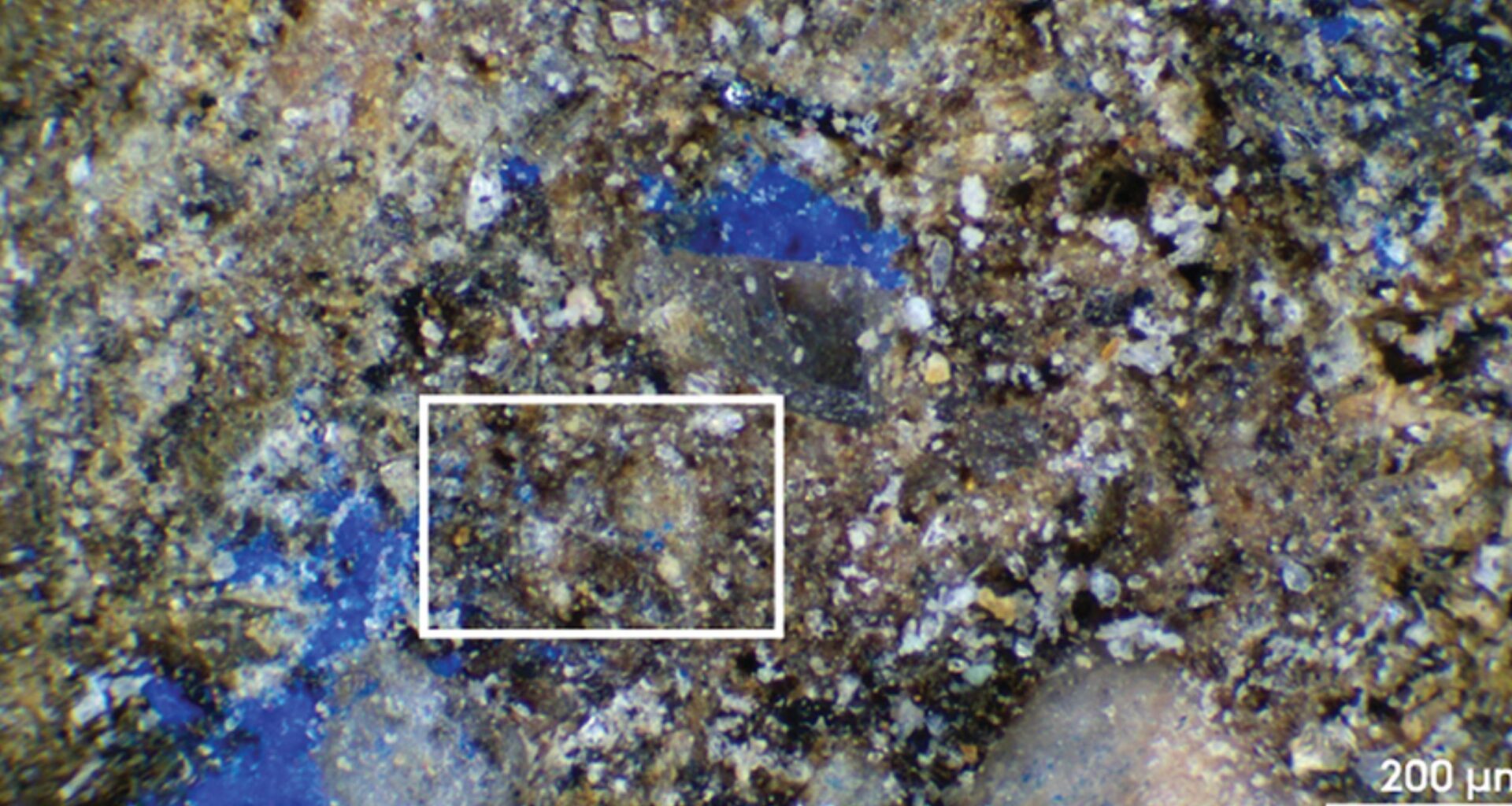
Closer inspection of the artifact connected the blue traces to work by researchers at Aarhus University, where archaeologist Dr. Izzy Wisher documented the residue while reexamining material from the site.
The pigment on the stone dates to about 13,000 years ago, placing it far earlier than any previously confirmed use of blue in Europe.
That single object now anchors the finding, while leaving open how widely such blue pigments were used and why they remained archaeologically rare.
Oldest blue pigment in Europe
Tests dated the blue residue to about 13,000 years ago, making it far older than any previously documented blue pigment in Europe.
Undisturbed sediment layers fixed the stone firmly in its original position, ruling out the possibility that the color came from later contamination or mixing.
By that clock, the blue traces arrived roughly 8,000 years before the earliest confirmed European blue pigment. The dating does not reveal how often people made blue, but it proves they did it at least once.
Copper tells the story
Chemical scans showed copper packed into the blue specks, which ruled out common catalog ink and dirt stains.
Those signals matched azurite, a copper mineral that turns blue when ground, rather than later manmade pigments.
Researchers checked the stone surface in several ways, and each test pointed to the same mineral signature. Once azurite entered the picture, the key mystery became whether people found it by chance or went looking.
The mineral had neighbors
Geology around the findspot includes azurite-bearing rocks within about 12 miles, close enough for frequent trips.
Its chemical fingerprint lined up with nearby copper deposits, so long-distance exchange did not need to explain the pigment.
People in the area already collected flint and ochre from nearby outcrops, materials they regularly mined and shaped for tools and pigments.
That local know-how meant blue minerals were available, even if artists rarely put them on cave walls.
A stone built for mixing
Wear and residue clung to the stone’s concave hollow, which matched handling and mixing better than steady burning.
Researchers first tested it for animal fat because a true lamp usually keeps greasy traces locked into the surface.
“This is actually one of the rare examples when we were completely surprised by the discovery,” said Dr. Wisher.
If the hollow served as a palette, many similar stones in collections could hide pigment work in plain sight.
Where blue may disappear
Body paint and dyed fabrics can vanish without a trace, so blue use could have stayed mostly invisible.
When people rubbed pigment onto skin or fibers, wind, water, and decay erased the evidence long before archaeologists arrived.
Meanwhile, surviving art in Europe leaned on red and black minerals that cling to rock for millennia. The new find suggests missing blues may reflect what did not preserve, not what people lacked.
Choice mattered more than access
Blue azurite sitting beside common reds makes one point clear: color choice in the Ice Age could be deliberate.
Different pigments behave differently, and people likely learned which powders stayed bright, smeared cleanly, or stood out in dim light.
Grinding azurite into usable powder took effort, so the blue probably served a purpose worth that extra work.
The find reframes pigment history as a story of preference and practice, not just what minerals lay nearby.
Other blues left faint tracks
Evidence for blue in the deep past stays rare enough that each new trace changes the comparison set.
Figurines from Mal’ta in Siberia carried blue paint traces, offering the closest Ice Age parallel outside Europe.
At Dzudzuana Cave in today’s Georgia, grinding stones held chemical traces of wood, a plant used to make blue dye, on their surfaces.
Those scattered hints show that blue experiments happened, but they rarely left durable marks that museums can still detect.
Museums may hold more
After 50 years in a case, the stone finally met tools that can spot pigments too faint for eyes alone.
Non-destructive scans can map elements across a surface, letting researchers pick out copper-rich dust even on worn stone.
As teams revisit museum drawers, old labels may become starting points rather than final answers.
That work will move slowly, because residue is sparse and contamination is easy, but the payoff could be a fuller palette.
This overlooked stone shows blue pigment belonged to European Ice Age life earlier than expected, even when art stayed mostly red.
Future work will test more artifacts for residues, while questions about blue’s meaning will wait for finds that survive.
The study is published in the journal Antiquity.
—–
Like what you read? Subscribe to our newsletter for engaging articles, exclusive content, and the latest updates.
Check us out on EarthSnap, a free app brought to you by Eric Ralls and Earth.com.
—–