
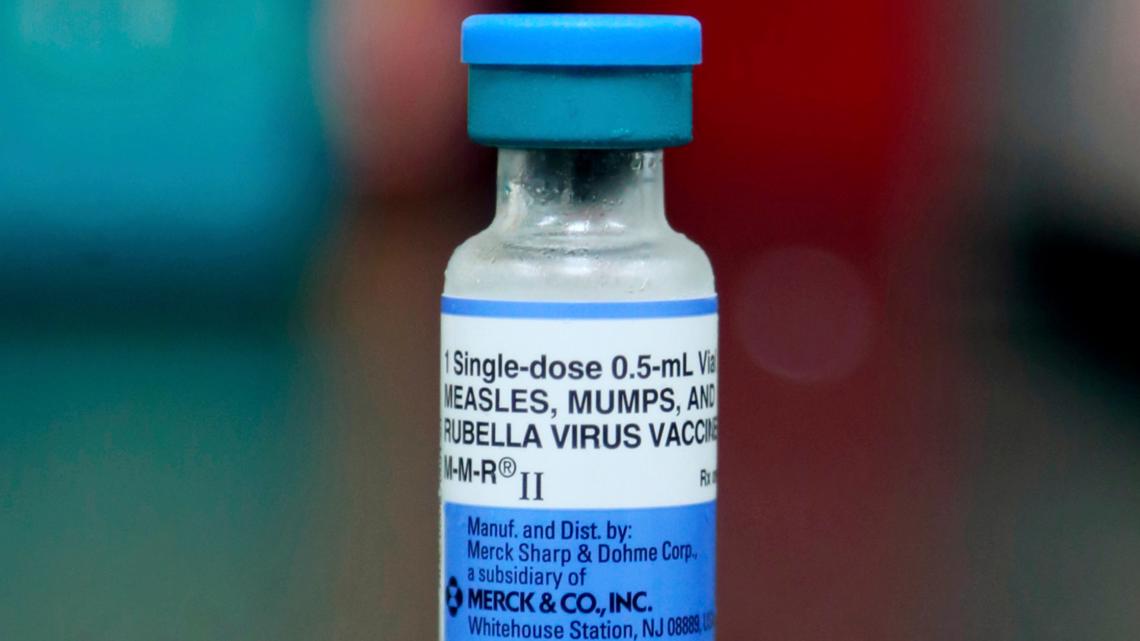
Health officials urge vigilance after confirming multiple measles cases in DC, potentially exposing attendees at several public venues.
WASHINGTON — Health officials are investigating after multiple people with measles cases were confirmed to have visited locations throughout the District.
The infections sites included the National March for Life Rally and Concert in January.
Officials declined to identify the people who had confirmed cases, nor did they provide any details about them. They also refrained from indicating how many cases they’d confirmed.
They say anyone who was at the following locations may have been exposed:
Basilica of the National Shrine of the Immaculate Conception, located at 400 Michigan Ave. NE Washington, DC 20017 — Wednesday, Jan. 21 from 3:30 p.m. to 8 p.m.National March for Life Rally and Concert — Friday, Jan. 23 from 11 a.m. to 5 p.m.Catholic University of America, Garvey Hall — Saturday, Jan. 24 from noon to 3 p.m.; and Sunday, Jan. 25 from noon to 3 p.m.Catholic University of America, Edward J. Pryzbyla University Center — Saturday, Jan. 24 from 6 p.m. to 9 p.m.; and Sunday, Jan. 25 from 6 p.m. to 9 p.m.Catholic University of America, St. Vincent de Paul Chapel — Sunday, Jan. 25 from 9 p.m. to midnightWashington Metro Area Transit: Red Line Train from Brookland-CUA station transferring at the Gallery Place-Chinatown station to the Yellow Line Train heading towards the Huntington Station — Monday, Jan. 26 from 11:30 a.m. to 2 p.m.Ronald Reagan Washington National Airport — Monday, Jan. 26 from 12:30 p.m. to 10:30 p.m.Washington Metro Area Transit: Yellow Line Train from Ronald Reagan Washington National Airport station transferring at the Gallery Place-Chinatown station to the Red Line Train heading towards the Glenmont station — Monday, Jan. 26, 8:30 p.m. – 11:30 p.m.Washington Metro Area Transit: Red Line Train from Brookland-CUA Station heading towards Shady Grove Station — Tuesday, Jan. 27 from 1:15 p.m. to 3:30 p.m.Amtrak Concourse, Union Station, 50 Massachusetts Ave NE, Washington, DC 20002 — Tuesday, Jan 27 from 1:30 p.m. to 6:30 p.m.Amtrak Northeast Regional Train 176, Northbound from Washington Union Station — Tuesday, Jan. 27 from 4:30 p.m. to 8 p.m.Children’s National Medical Center, Emergency Department, 111 Michigan Ave. NW, Washington, DC 20010 — Monday, Feb. 2 from 11:15 a.m. to 1:45 p.m.
Measles is a highly contagious airborne illness that can linger in an area for two hours. According to health officials, the contagion can infect nine out of 10 people if they have not been vaccinated.
Here’s what you should look for if you’re concerned about infection:
Measles symptoms usually appear in two stages. In the first stage, most people have a fever greater than 101 degrees, a runny nose, watery red eyes, and a cough. These symptoms usually start seven to 14 days after exposure. The second stage starts three to five days after the symptoms begin, when a rash begins to appear on the face and spreads to the rest of the body. People with measles are contagious from four days before the rash appears through four days after the rash appears.
If you were at any of the locations listed above at the specified times, you should call your health care provider or DC Health at (844) 493-2652.
If you have not been vaccinated, you may be at risk and you should watch for symptoms for 21 days after the exposure.
Anyone with symptoms should isolate at home and contact their healthcare provider. Before going to an appointment or the emergency room, you should notify staff ahead of time so they can take precautions.
The health department also provided these guidelines:
If you have received two doses of a measles-containing vaccine or were born before 1957, you are protected and do not need to take any action.If you have received only one dose of a measles-containing vaccine, you are very likely to be protected, and your risk of being infected with measles from any of these exposures is very low. However, to achieve complete immunity, contact your healthcare provider about getting a second vaccine dose.If you have an immunocompromising condition, please consult your healthcare provider if you have questions or develop symptoms.
For additional guidance on testing and infection control measures for healthcare providers, visit the DC Health measles page.
If you have any questions about these potential exposures, contact DC Health at (844) 493-2652 or via email at doh.epi@dc.gov