

Susan White was in and out of Portlaoise hospital with appendicitis for several months throughout 2024. She underwent several tests and keyhole surgery when surgeons discovered her appendix was attached to her bowel.
The 34-year-old was referred to St James’s Hospital for specialist surgery but in February 2025, when her surgeon went to operate, they discovered a tumour at her pelvis. She was diagnosed with stage three bowel cancer.
“It hadn’t been seen on anything, it was only when I was open on the table. I was diagnosed on Valentine’s Day, lying by myself in a hospital bed on a morphine drip,” she said.
“I remember looking behind me wondering if there was someone behind me he (the surgeon) was talking to, because I was high on morphine and I just didn’t think he could be talking to me.”
White says bowel cancer was known as the “old man disease” and she was completely taken by surprise by the diagnosis.
“The only symptoms I had was a really bad pain. I never had so much as a loose stool or changes or anything. I couldn’t believe it,” she added.
The mother-of-three is one of a growing number of people under 50 who are being diagnosed with cancer, according to several international bodies, including the World Health Organisation, which oncologists are describing as “concerning”.
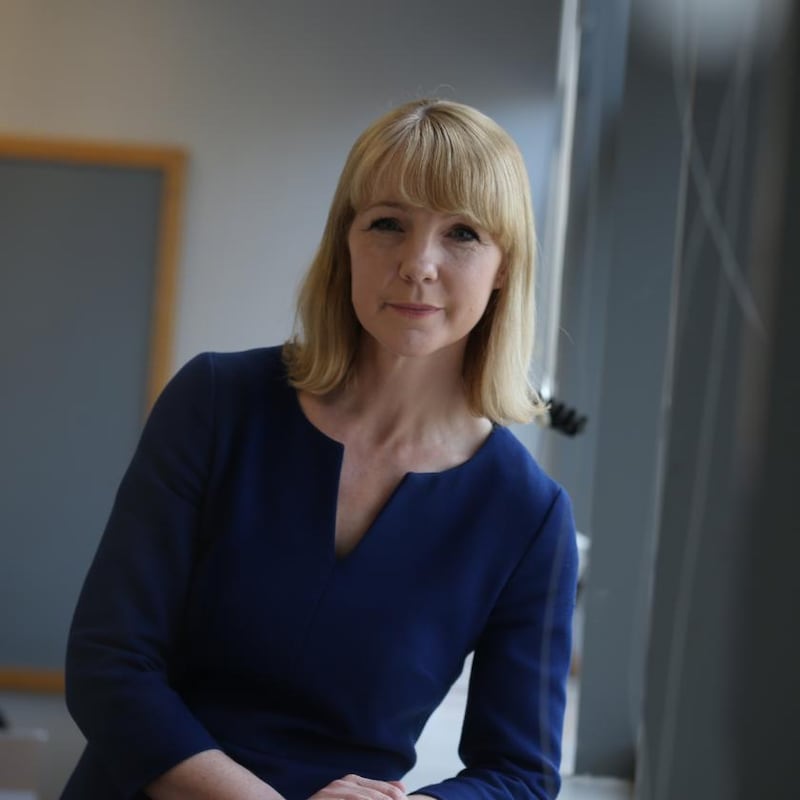
 Susan White. Photograph: Barry Cronin
A 2022 study from Brigham and Women’s Hospital and Harvard University, published in Nature Reviews Clinical Oncology, found people born after 1990 are more likely to develop cancer before the age of 50 than people born, for example, in 1970.
Prof Maeve Lowery, consultant medical oncologist and academic director for the Trinity St James’s Cancer Institute, said the first thing observed in this trend was an increase in colon cancer rates in younger people, but now there are also rises in lung cancer, breast cancer and kidney cancer, in particular.
“More recently and very concerningly, there have been several studies that show now we have an increase in the incidence of gastrointestinal cancers – stomach, pancreas, oesophagus, bile ducts and appendix,” she said.
“They’ve increased by 15 per cent from 2010 to 2019. That’s in the US but that’s huge.”
Lowery said the reasons behind the rise is unclear but there are “a lot of good hypotheses and research programmes” at the moment. Some patients are diagnosed due to a genetic predisposition, she said, but many are not.
“Young patients don’t have as many modifiable factors as our older patients do. Physically, they’re very active, they’re not obese, they’re following the healthy guidelines, they’re monitoring their alcohol and they’re not smoking.”
 Consultant medical oncologist Prof Maeve Lowery. Photograph: Bryan O’Brien
Consequently, Lowery said there is a lot of research going into what other possible drivers are, and examining patient childhoods to investigate possible causes.
“Things being investigated at the moment would be looking to see what kind of bacteria live in the gut which could be influenced by things like antibiotic use in childhood or diets exposed during childhood, which can affect the type of bacteria you can live healthily with in your gut,” she said.
“If there’s an imbalance in those, that might predispose someone to cancer. There are some early signals it might be a factor but it’s still under investigation.”
There is growing recognition that a cancer diagnosis for a younger person has different consequences, such as financial pressures, fertility concerns, housing instability and lack of support systems.
White says when you’re trying to balance loss of income, childcare and treatment, it can all feel overwhelming and like there’s no support.
“I got a medical card for six months, I was getting €100 a week, but you have a mortgage, or loans, and it just puts a huge strain on us,” she said.
In recognition of this, St James’s Hospital and the Irish Cancer Society established its young onset cancer programme, which caters for the specific needs of younger patients.
Amy Nolan, director of clinical affairs at the society, said the programme is for 25 to 50-year-olds with gastrointestinal cancers and head and neck cancers. More than 100 patients have been helped through the programme since its establishment last year.
“Younger people, they tend to go to a doctor a number of times before it’s considered that this could be a cancer. And then when it is identified it can be at a later stage so it can be incurable, you’re looking at multi-modal treatment,” Nolan said.
“From our perspective, these patients think about surviving this, children, the financial impact, and those elements that are additional to managing the treatment. They have different needs and enhanced needs.”
The programme has a number of specialists, including a social worker, advanced nurse practitioner (ANP) in survivorship and sexual health, and a programme manager to “help these people get through their treatment without having long-term side effects”.
Louise Kelly, ANP in sexual health, menopause and fertility in the young onset cancer programme, said these issues are underdiscussed areas that are a “huge part about being human and is not just about sex”.
“There are some physical side effects [to cancer] such as how the body works or looks – low libido, painful intercourse, erectile dysfunction, low testosterone. It can be early menopause, pelvic floor dysfunction,” Kelly said.
“There can be changes to how a body looks and works which has an effect on confidence, intimate relationships, and also navigating fertility concerns. We kind of help with all of that, and just coping with those changes.”
This is an issue that Rahul Gomes faced when, aged 19, he was diagnosed with acute lymphoblastic leukaemia (ALL), a blood cancer most commonly diagnosed in children and younger adults.
The diagnosis came as a “complete surprise” but he immediately focused on treatment options and remained positive about his prognosis.
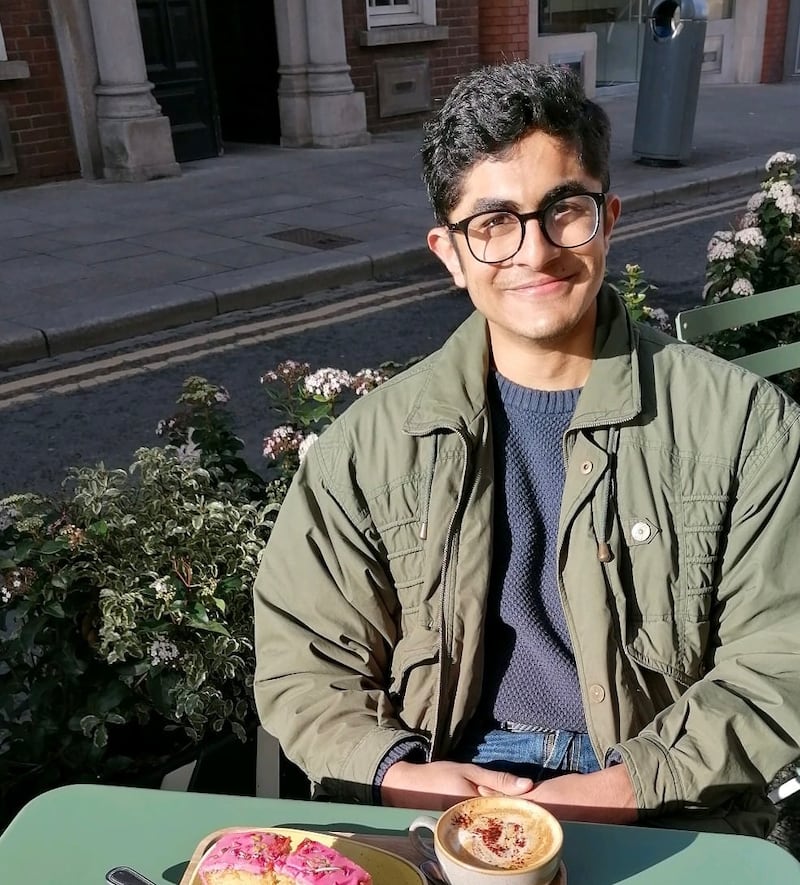 Rahul Gomes (23) was diagnosed with acute lymphoblastic leukaemia at 19
“When I got admitted, it was just an inconvenience at the time. I was looking forward to getting some extra hours in work. But when I started the treatment properly, that’s when I realised that this was serious,” he said.
Gomes underwent chemotherapy, radiation and, in August 2023, a bone-marrow transplant in St James’s Hospital. It was because of all of these treatment options, as well as the cancer itself, he decided to freeze his sperm.
“I did chemo and radiation and that would completely wipe out my sperm count. It was kind of the only decision I had because it was either do it or never have the chance to have my own children at all,” he said.
But there were other factors to having cancer that he didn’t expect, such as the impact on his education. The now 23-year-old was in his second year of college at the time, and had to defer his course for around 18 months. He has since graduated and is undertaking a master’s degree at Dublin City University.
“Mentally it was very tough. I was told if I could manage the mental thing, then I could manage the physical side much easier,” he said.
The mental impact of treatment and diagnosis is something to which White can also attest. She underwent an MRI last month and discovered cancer had developed in two new areas of her pelvis; she now has stage four cancer.
“I was absolutely devastated, to be honest. I’m not taking it well at all. This has hit me harder than my original diagnosis. We’ll start chemo and an immunotherapy drug my oncologist is hoping to get. Then there will be surgery at some stage again. We’re not out of options yet.”