
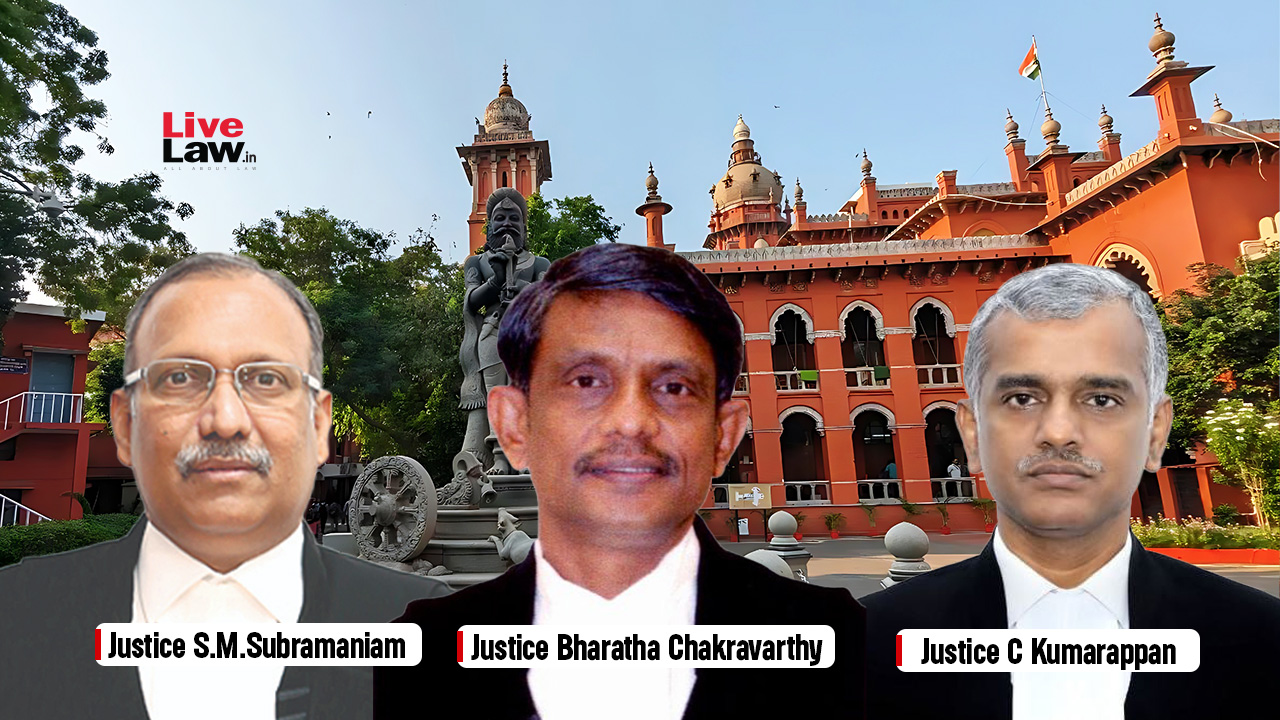
A full bench of the Madras High Court has clarified that resignation from service, even if for medical reasons, would result in forfeiture of past service and such a person would not be entitled to pensionary benefits.
The bench of Justice SM Subramaniam, Justice D Bharatha Chakravarthy and Justice C Kumarappan held as under,
“’Resignation’ from a service or post as per Rule 23 of The Tamil Nadu Pension Rules, 1978 entails forfeiture of past service. Therefore, resignation from service even on medical or health grounds entails forfeiture of past service. The grounds based on which resignation is sought is immaterial and resignation shall only mean forfeiture of past service,” the court said.
The full bench was constituted to clarify on the eligibility for pension under the Tamil Nadu Pension Rules 1978 where service had been forfeited due to resignation on medical grounds.
The court noted that as per Rule 23 of the Tamil Nadu Pension Rules resignation from service entailed a forfeiture of past service. The court also noted that as per the proviso to the Rule, a resignation would not entail forfeiture of service when it was submitted to take up another appointment under the Government where service qualifies.
The court further noted that the Rule was silent on resignation due to ill health. The bench added that when the Rule makes it clear that resignation on medical ground was not a component of the provision, a new reason or ground could not be accorded to the provision.
The bench added that when there was no ambiguity in the rules, a plain and literal meaning should be given effect to. The court added that when the provisions deliver the meaning as intended by the legislature, there is no need for any deviation.
The court also added that the mischief rule, which focuses on interpreting a statute in a way that resolves the problem or “mischief” the legislature intends to remedy, would not be applicable in the present case.
The court noted that the Tamil Nadu Pension rules had specific provisions that dealt with grant of pension on medical grounds and thus there was no need to forcefully read it into another provision dealing with a difference instance, which in the court’s opinion would lead to over interpretation.
“Rule 36 speaks about invalid pension. It is granted to a Government Servant, who is by physical or mental infirmity, is permanently incapacitated for the public service. Therefore, when there is a specific provision designed to deal with a particular instance/case, there is no compelling need to forcefully read it into another provision contemplating a different instance/case. This paves way for over-interpretation which is unwarranted, more so when the language of the statute is plain and clear. Further in the absence of any mischief, the provision warrants no further interference,” the court said.
The bench noted that when the provision made a specific inclusion [regarding resignation for another appointment] to the absence of the rest, the plain meaning should be taken to be the intent of the legislature, excluding other grounds or reasons.
The court also observed that the Rules have dealt with the consequences of resignation and an employee, who joined the service fully aware of such consequences cannot later turn around and claim pension benefits on medical grounds.
Thus, the bench concluded that there was a clear distinction between resignation and voluntary retirement and the employee, who resigned even on medical grounds, would not be entitled for pensionary benefits.
Counsel for Petitioner: Mrs. S. Nagashyla, Mr. Krishna Ravindran
Counsel for Respondents: Mr. K. H. Ravikumar Government Advocate, Mr. R. Sivakumar for Mr. S. Manikandan Standing Counsel, Mr. V. Vijay Shankar Standing Counsel
Case Title: Mr. D. Kaliyamoorthy v. State of Tamil Nadu
Citation: 2026 LiveLaw (Mad) 56
Case No: WP No. 39583 of 2015 AND WP No. 26986 OF 2011