
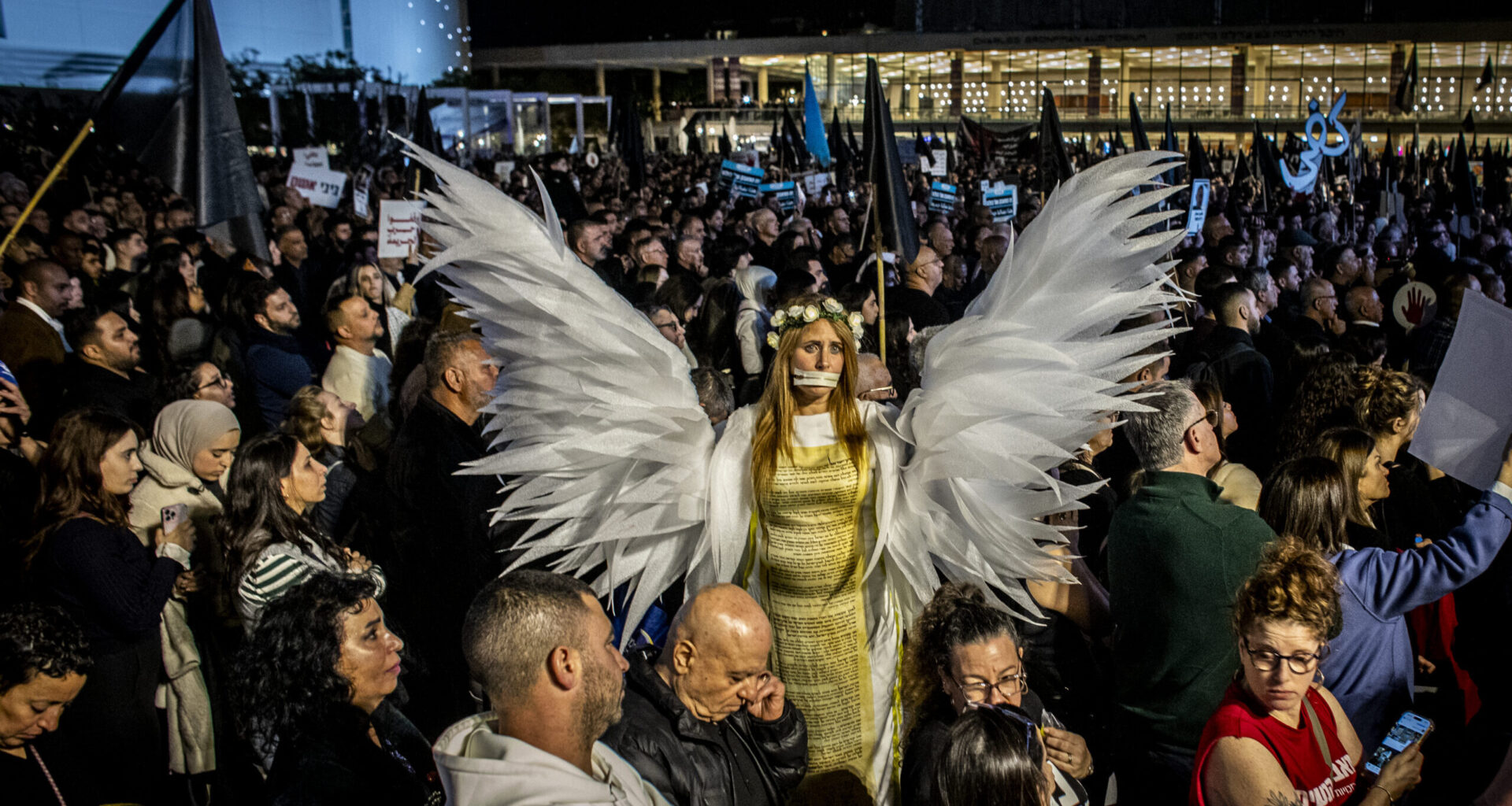
Thousands of Arab and Jewish citizens gathered in Tel Aviv for a mass protest against crime and violence, the first since the mass rallies advocating for the release of hostages, and at a scale unprecedented for an anti-crime demonstration
Thirty-five people have been killed in Israel’s Arab communities since the beginning of the year. The number did not emerge from a single dramatic incident or a moment that defined the story. It built up gradually, through reports that appeared days apart—and sometimes hours apart—across Arab towns and mixed cities. By the time the figure was widely noted, it had already begun to feel disturbingly familiar.
For residents in affected communities, the pace itself has become the story. Thirty-five killings in just over a month is difficult to explain as coincidence or as the result of one criminal feud. Families describe a reality in which concern has turned into expectation, and personal security into a daily calculation rather than an assumption.
In context teIn comparative terms, the scale of the violence stands out sharply. Research by the Taub Center, based on OECD data, places the homicide rate in Israel’s Arab society at about 11.7 per 100,000 people. The OECD average is 3.1. Only three OECD countries—Mexico, Colombia and Costa Rica—record higher rates. Within Israel, the gap is striking. Among the Jewish population, the homicide rate is roughly 0.74.
The tragic numbers from Arab society have increased dramatically over recent years. In 2018, 74 homicides were recorded. By 2022, the number had passed 100. In 2025, 252 homicides were recorded in the Arab sector. What once appeared as a warning sign has since become a sustained and escalating pattern.
This week, three men were killed in the village of Suwead in the Lower Galilee; a car bombing in Kiryat Yam killed one man and seriously wounded two others; and another shooting near Sde Warburg left three young men dead. Together with murders reported since Jan. 1, these cases pushed the total number of Arab citizens killed this year to 35.
Israeli police described the incidents as criminal in nature, often linking them to organized crime and disputes between families. Senior officers have acknowledged the situation’s complexity, pointing to limitations in investigative tools and authority. For families of the victims, those explanations feel disconnected and procedural.
For a full year, from that day until today, the police did nothing. They did not inform me of anything. Nothing.
“For a full year, from that day until today, the police did nothing,” Qasem Awad told The Media Line. “They did not inform me of anything. Nothing.”
Awad’s son, Dr. Abdallah Qasem Awad, was murdered last year after being shot inside his medical clinic while treating patients. The case remains unresolved. Awad does not describe his experience as exceptional. Instead, he presents it as emblematic of what many families encounter once initial attention fades. “It is as if the person who was killed meant nothing,” he said. “As if nothing else matters.”
A week ago, Awad was among several bereaved parents who brought their testimonies to the Knesset. Joined by Arab lawmakers, families whose children were murdered in separate incidents held a press conference inside parliament. The gathering was not framed as a protest or a political confrontation. The parents said their aim was visibility, after months in which many felt their cases had disappeared into bureaucracy.
“We have many questions, and because we have no choice, there are no answers,” one father said, in remarks shared with The Media Line. “Who will give us an answer? I don’t know.”
Another parent addressed lawmakers directly, saying, “I cannot do this alone. You can.”
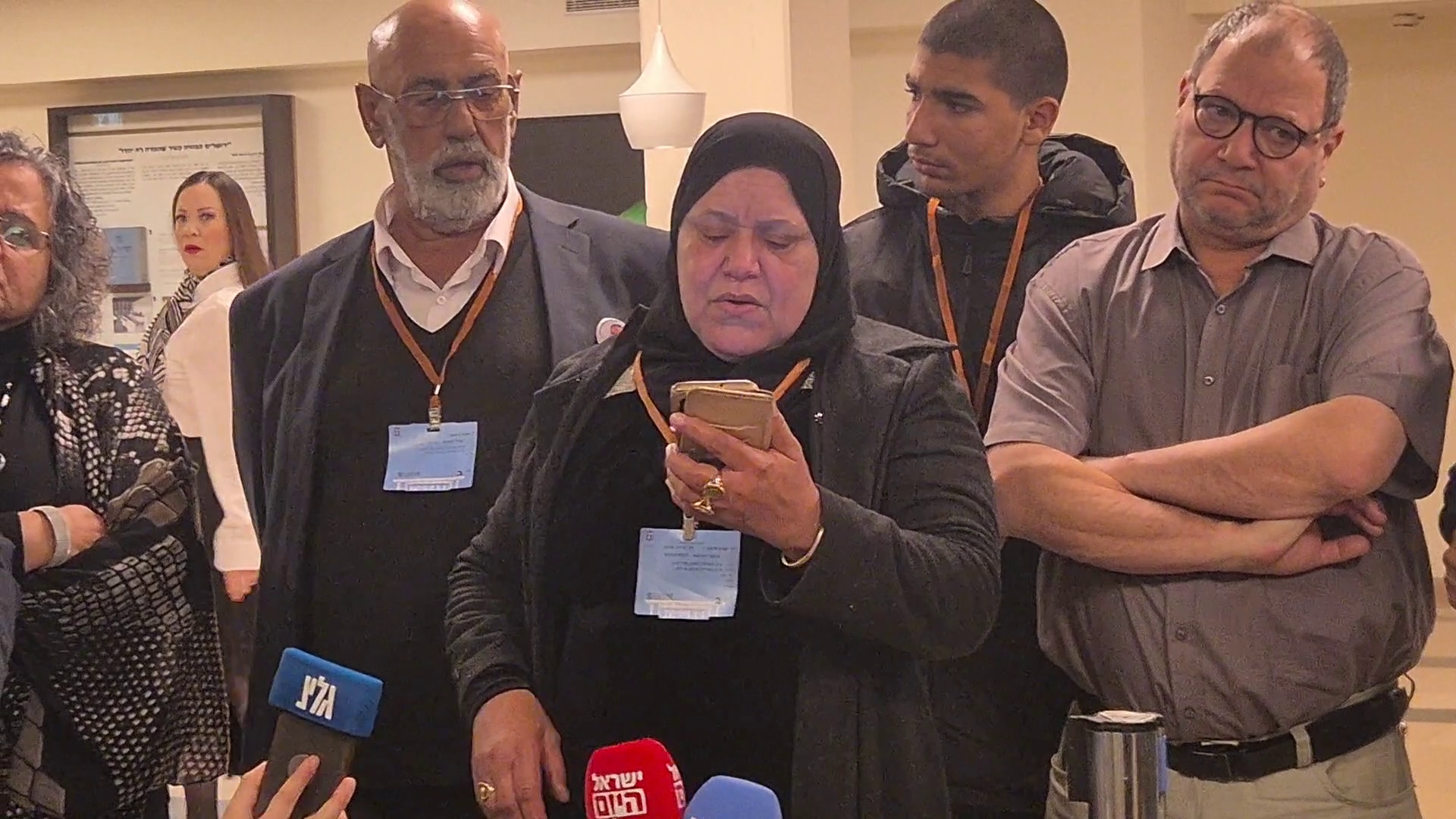
Arab parents of murdered children gather at the Knesset as Likud MK passed by and said, ”Everyone should give up their weapons!” February, 2026. (Gabriel Colodro, The Media Line)
During the press conference, an Arab Israeli mother began reading in Arabic a letter she had written to her murdered son, describing the morning he left home and never returned. As she read, Likud lawmaker Tally Gotliv walked past the gathering on her way to the Knesset plenum. Hearing Arabic and apparently misunderstanding the situation, she shouted, “Everyone should give up their weapons.”
The interruption stopped the reading and provoked immediate anger among those present. Speaking afterward, Awad criticized the remark without personal insults.
“This is a disgrace and a shame for the government of Israel that a member of Knesset speaks this way to people whose children were murdered,” he told The Media Line. “I do not hope and I do not wish that she goes through what we are going through. Not her and not anyone else.”
The press conference ended without official responses or commitments. Within days, political attention shifted elsewhere. The violence did not.
Last weekend, thousands of Arab and Jewish citizens gathered in Tel Aviv for a mass protest against crime and violence. It was the first large-scale civilian demonstration on a domestic issue since the protests demanding the return of Israeli hostages held in Gaza. Organizers described the turnout as unprecedented for an anti-crime rally.
Signs called for security and accountability, alongside criticism of the government and its ministers. The mixed composition of the crowd reflected a sense that the violence could no longer be treated as marginal or distant.
Arab political leaders say the move from parliamentary and legal appeals to street protests reflects frustration with the government’s handling of the crisis. Mansour Abbas, leader of Ra’am —an Arab party that previously split from the Joint List (a coalition of Arab parties in the Israeli parliament), was part of the Bennett–Lapid government, and recently rejoined the Joint List— addressed the broader implications.
“The beginning of the solution is to replace the minister of national security, Ben-Gvir, with another, professional minister who will provide answers to the citizens of Arab society and to Israeli society as a whole,” Abbas told The Media Line.
The beginning of the solution is to replace the minister of national security, Ben-Gvir, with another, professional minister who will provide answers to the citizens of Arab society and to Israeli society as a whole
National Security Minister Itamar Ben-Gvir has constantly emphasized deterrence, governance and tough policies as the foundations of his mandate. Since taking office, he has promised to restore order and strengthen law enforcement, while statistics reveal that during his tenure, murder rates in Arab communities have continued to rise, and trust between residents and police has further deteriorated.
Civil society organizations warn that the implications extend beyond Arab society. The proliferation of illegal firearms and the entrenchment of organized crime undermine public safety nationwide. Awad framed that concern in personal terms.
Violence has no religion and no color. What is happening today in Arab society can spread to other places as well.
“Violence has no religion and no color,” he told The Media Line. “What is happening today in Arab society can spread to other places as well.”
Thirty-five killings in the first 36 days of the year have already shaped the opening of 2026. The sense that emerges, across communities and political lines, is that public patience is wearing thin in ways not openly visible since before Oct. 7.
Whether that pressure will translate into concrete measures remains uncertain. What is clear is that the violence confronting Israel’s Arab citizens is no longer sporadic and no longer peripheral. It has become a test of the state’s ability and willingness to protect all those under its responsibility.