

Insiders reveal the reasons behind staggering burnout rates, with over half of the health professionals who judge claims leaving each year
The “staggering” scale of disability benefit assessors quitting their jobs each year has been revealed in a Government report.
Over half of the benefit assessors – 52 per cent – abandon the job each year, according to the research for the Department of Work and Pensions (DWP).
Health professionals who judge personal independence payments (PIP) claims reported feeling “despised” and “deskilled” by the job.
Ex-assessors told The i Paper exactly why they stopped, revealing the pressure to hit daily targets and downgrade the number of points needed to get PIP.
Former PIP assessor James Merrell, who worked for a DWP contractor from 2023 to 2024, quit after about a year.
The qualified nurse – who now independently advises people on PIP claims – told The i Paper that 52 per cent of assessors quitting each year was “staggering” but “sadly not surprising”.
‘Burnout and mismatch in expectations’
Merrell became frustrated by “unrealistic” targets – having to complete three assessments a day – and the pressure from managers to minimise the number of PIP awards given.
“The pressure was to reduce [points] or not give an award,” said Merrell.
PIP claimants who score eight points in questions about how they function get the lower of the benefit, with 12 points or more leading to the higher rate. The disability benefit can be worth up to £800 a month.
Merrell said he had hoped he would be apply “care, judgement and human support” to disabled claimants.
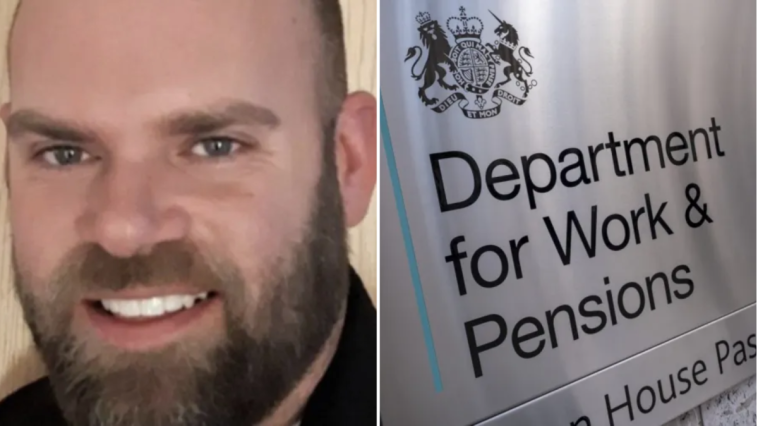 James Merrell became disillusioned working for DWP contract company
But he became disillusioned when he discovered he was confined to writing reports to meet “rigid criteria”. Merrell said those criteria do not deal with complex and fluctuating conditions very well.
The register nurse also said assessors struggle with “role misrepresentation” as well as “burnout” from the target culture.
“People join expecting to apply empathy and expertise, then discover they’re mainly producing paperwork to satisfy a system that isn’t fit for modern day disability,” he said. “That mismatch is corrosive.”
“Autonomy has been stripped away and replaced with rigid criteria, performance targets, and defensive reporting practices that prioritise consistency over truth,” he added.
Assessors can feel ‘despised’ in the job
The DWP report – carried out in 2022 by the Social Agency research firm but only released in recent days – found that 40 per cent of new recruits quit before they finish the training period.
Nurses, paramedics and occupational therapists can be attracted to the role because it is seen as less demanding than the NHS, offering a better work-life balance.
For younger people starting their careers, pay can be comparable. Starting salaries ranged from £34,000 to £46,200, the report found.
But researchers found “a mismatch of expectations and motivations and the realities of the role” among the serious problems in retaining staff.
The report said potential disability benefit assessors “were attracted to their therapeutic roles because of a desire to help people who were ill or hurt”.
But it found that there was perception the job “does not deliver this” – warning that assessors “may see themselves as transitioning from a role where they are high respected to one where they are despised”.
One told the researchers: “We all got in healthcare for altruistic reasons and that maybe isn’t the case in this job … you’re a cog in the machine doing bureaucratic work.”
‘I wasn’t able to use my clinical judgement’
Former assessor Michael – not his real name – carried out Work Capability Assessments (WCA) for universal credit for one of the DWP’s contract companies.
He lasted just under six months in 2022 before quitting, struggling with a “very stressful” target of completing six tests a day.
Michael, now a doctor, also got frustrated that he had no autonomy to use his common sense on health-related benefit claims by disabled people.
He told The i Paper: “I wasn’t able to use my clinical judgement. There was too much micro-managing, with my clinical opinion and reports being judged and scrutinised.”
 The Government axed plans to cut PIP after a Labour revolt, but there are fears there could be fresh attempt to restrict eligibility (Photo: Alishia Abodunde/ Getty)
Former benefit assessors have previously revealed to The i Paper the “ridiculous and superficial” process used to decide on disabled people’s PIP claims.
One described being told to note down claimants’ appearance and “even how they smelled”, saying: “Assessors would be encouraged to put down ‘looked well-dressed, didn’t smell, so they must be able to wash themselves’.”
Some quit over “burnout” from trying to meet private companies’ daily assessment targets. They also complained that there were not given enough time to find and properly assess medical evidence.
Four companies currently have the contracts to carry out PIP assessments: Serco, Maximus, Capita and Ingeus.
Labour’s disability minister Stephen Timms has launched his review of the PIP assessment process this month.
Timms has promised to “co-produce” any reforms with disabled people’s organisations, but some PIP claimants fear the Government may make a fresh attempt at eligibility cuts once his review is complete.
Your next read

A DWP spokesperson said it had worked closely with assessment companies to “improve recruitment, training and working conditions”, adding that the full-time assessor workforce “has grown since this research was carried out”.
They added: “We continue to work on improvements as part of our wider transformation of health assessment services.”