
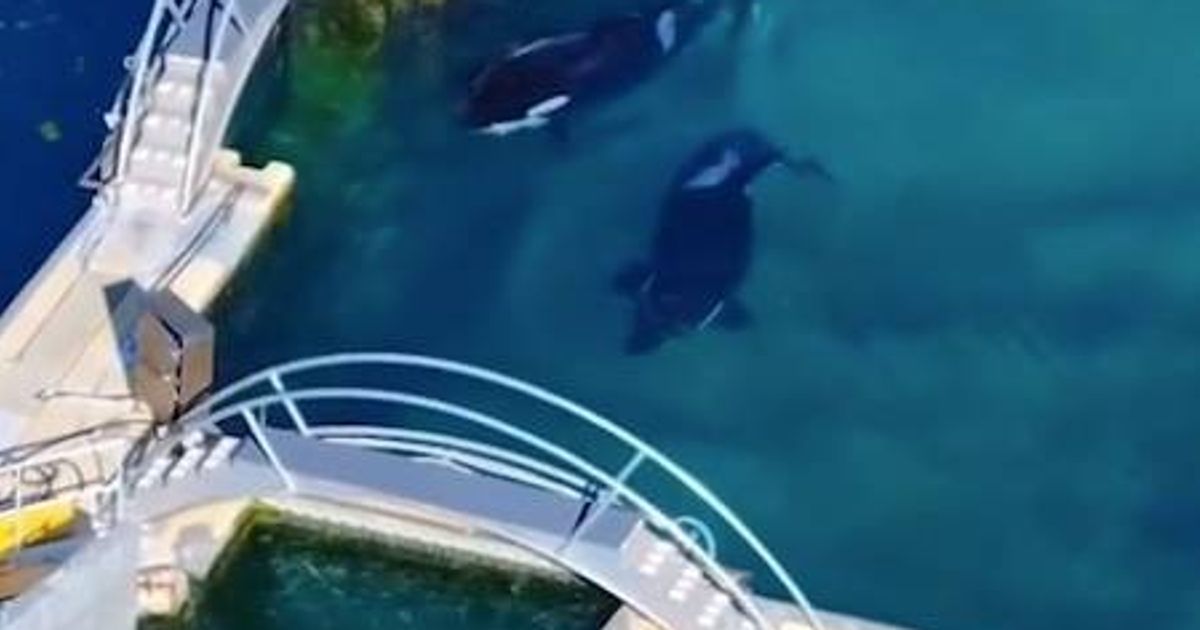
Two lonely whales are in need of ‘urgent’ attention experts warn the pair, who were left deserted at a marine centre – face huge safety risks in their rotting tank
08:00, 08 Feb 2026Updated 08:33, 08 Feb 2026
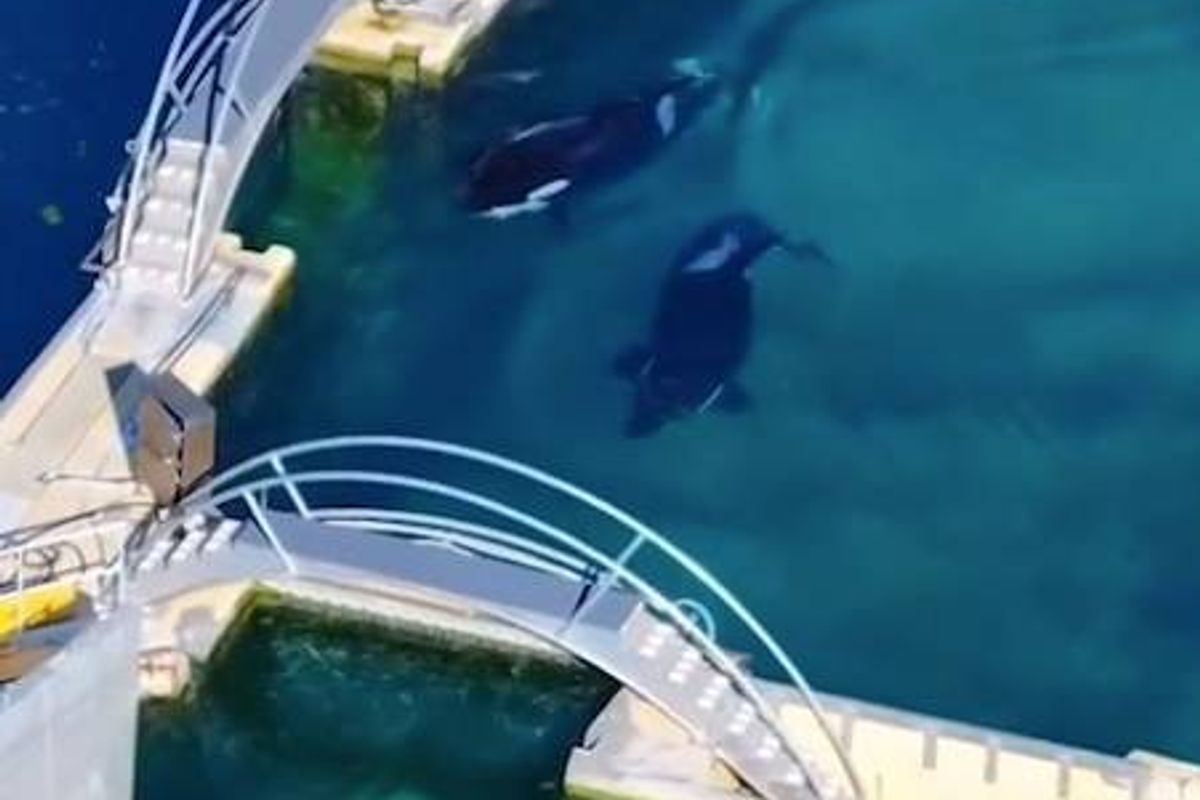
The pair are stuck at the shut down marine park
Swimming aimlessly around a rotting tank completely depraved of any stimulation, time is running out for this mother and son orca duo.
Wikie, aged 23, and her son Keijo, 11 are facing a grim fate without immediate intervention as they are confined to the deteriorating enclosure that could collapse in on them at any point.
Marineland Antibes in southern France was once the largest animal park in Europe, brimming with excited visitors. But now, after it closed its doors for good in January 2025, just two whales remain in tragic conditions.
After a court blocked a previous attempt to move the orcas to an operational marine park in Japan, the mother and son, who were once entertaining huge crowds, are still all alone.
READ MORE: Two killer whales face uncertain future at closed French marine park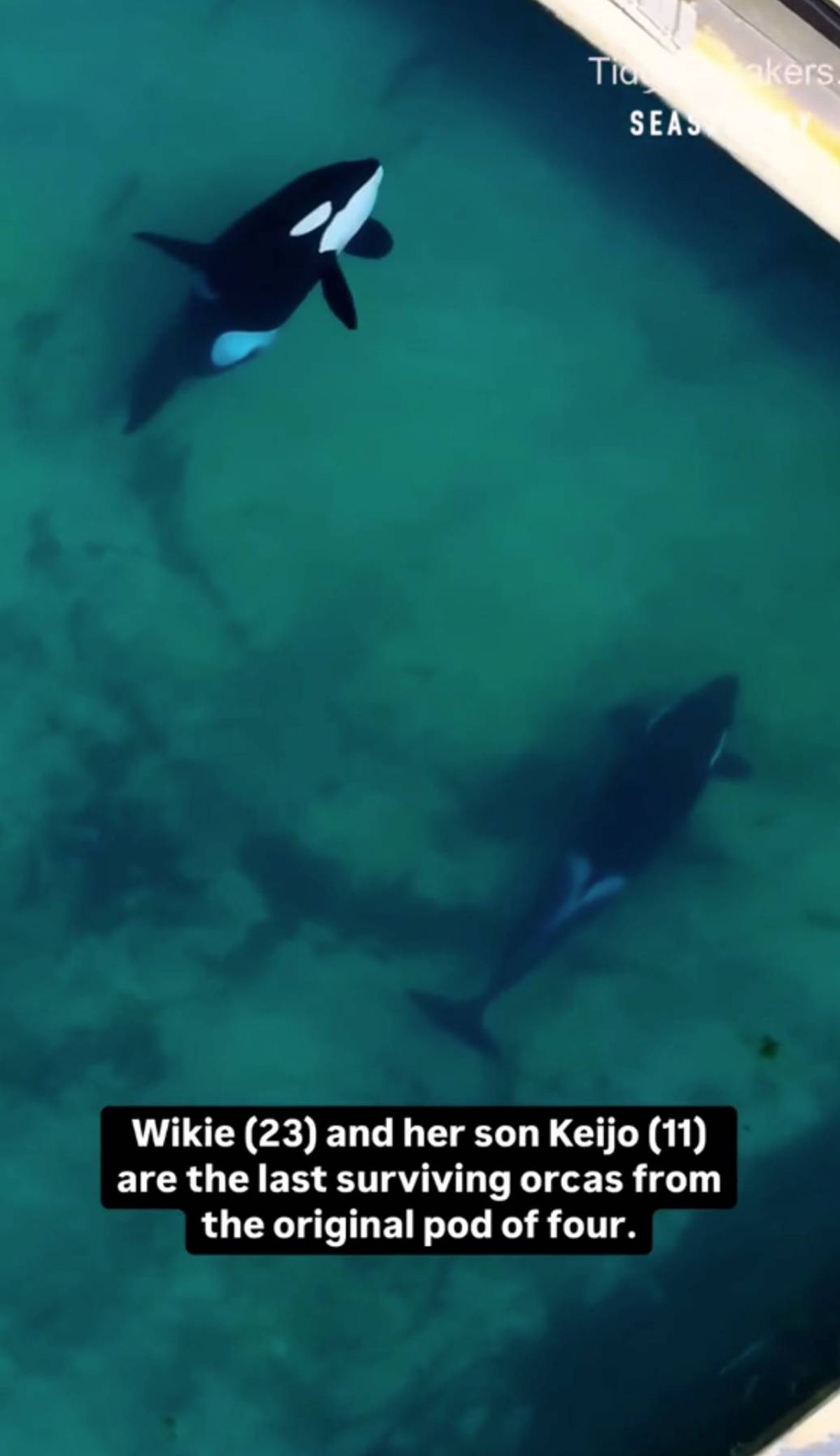
Wikie and Keijo are now in need of desparate attention
And experts warn that while the two orcas remain in good health, they have no quality of life in the abandoned park and the terrible condition of the pools poses a huge risk.
Valentin Ducros, a risk management agent and whale specialist at Forward Global with a expert knowledge of the situation in France, has shared grave concerns over the future of the whales and told the The Mirror there is an “urgent need to transfer the animals to a facility that is immediately operational.”
Offering a slither of assurance, he explained: “The orcas are in good health and caretakers look after them every day of the year”. But while Wikie and Keijo remain under Marineland’s legal guardianship until rehoming, the facility has declared the orcas must “leave now” for welfare reasons.
A bare-bones staff team meets the management company’s legal care requirements by feeding the animals but offers little in terms of mental enrichment – crucial for the social structure of orca pods. Wikie and Keijo are France’s last two captive orcas, having spent years entertaining crowds with their trainers’ tricks.
Valentin added: “Orcas and dolphins [in captivity] are [usually] kept busy all day by their trainers, who play with them because cognitive development is essential. Several experts also emphasize that shows are necessary to stimulate them physically and intellectually. Marineland has been trying to obtain a transfer permit for the cetaceans in its care for three years now.” This would allow them to go to a fully operational marine zoo.
The specialist added: “It has been emphasised once again that the situation of the orcas is extremely urgent, that the pools could collapse at any moment, causing the death of the animals, and that there are immediate operational solutions that should be implemented without delay by the authorities.”
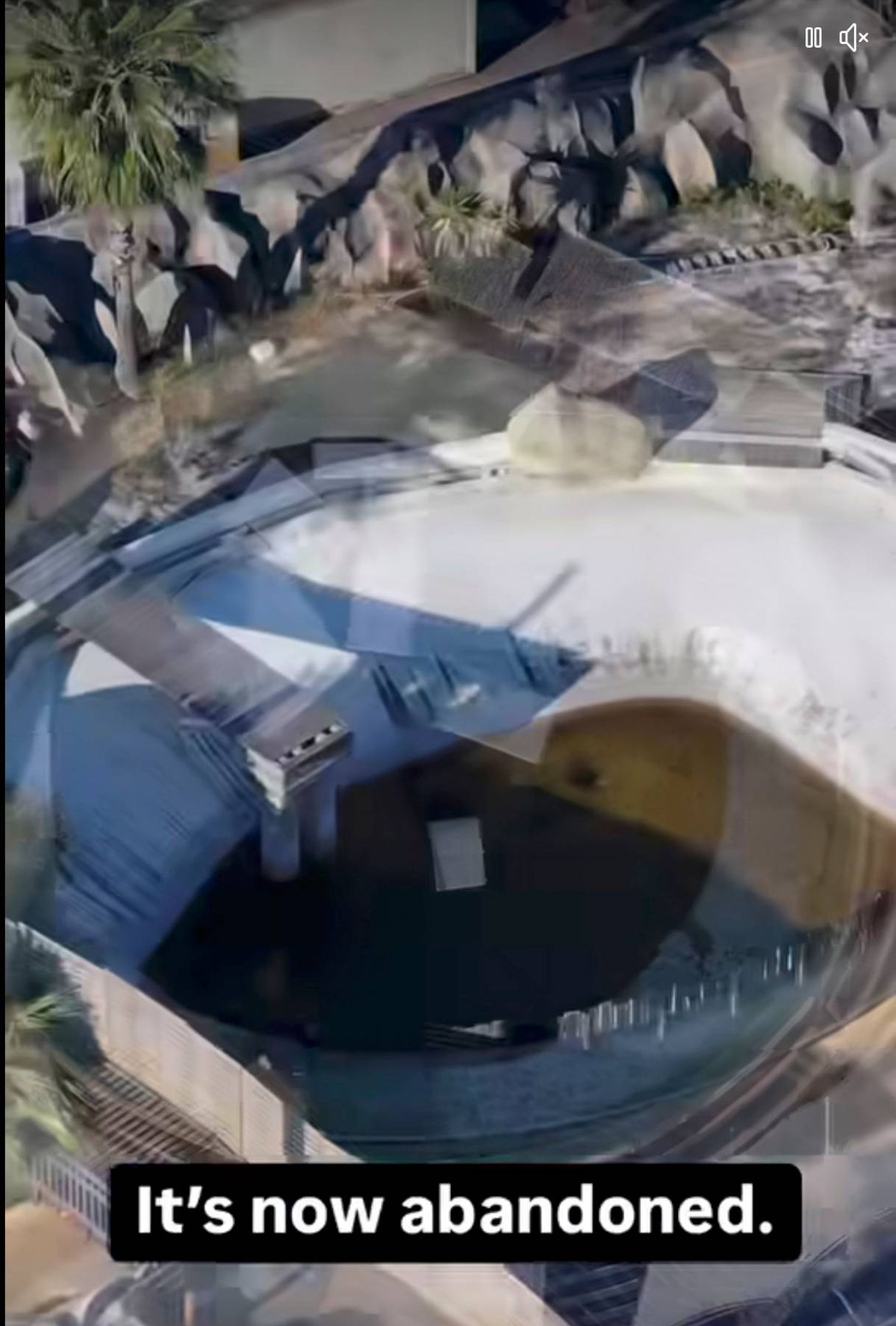
The marine zoo was abandoned in 2025 after PETA campaigned for the closure(Image: Facebook)
The park initially closed after years of campaigning by PETA and other animal protection associations, including protests at the park, petitions, letters, exposés.
After months of campaigning, the French government finally declared in December 2025 that Wikie and Keijo should be transferred to the Whale Sanctuary Project’s (WSP) proposed sanctuary in Nova Scotia, Canada. While the move still depends on Marineland’s approval, this formal decision marks a major step toward giving these social, complex animals the spacious, natural home they’ve been denied since birth.
The French government called the Canadian sanctuary “the most credible, the most ethical and the only one that complies with the requirements of animal safety and welfare,” and said that the orcas are “destined” to join it – potentially as soon as summer 2026, according to PETA.
However, Marketa Schusterova, co-founder of Tidebreakers, warns that the WSP project is nowhere near completion and worries the orcas could perish “before WSP has even got a stick in the ground”.
The ideal solution, Marketa reckons, would be establishing temporary holding facilities purpose-built to the orcas’ needs while a permanent sanctuary is developed for their long-term home. “Quite simply, if Wikie and Keijo are left in these conditions, they’re going to get sick and die,” she added. WSP’s CEO Charles Vinick has a history with marine sanctuaries, having been involved in the one created for Keiko, the orca star of the 1993 film ‘Free Willy’.
Born in the wild, Keiko was captured at just two years old in 1979. Keiko was snatched from the waters off Iceland and sold to various theme parks where he was trained to perform tricks. He grew reliant on human interaction and was eventually ‘cast’ by Warner Brothers as the lead in their film.
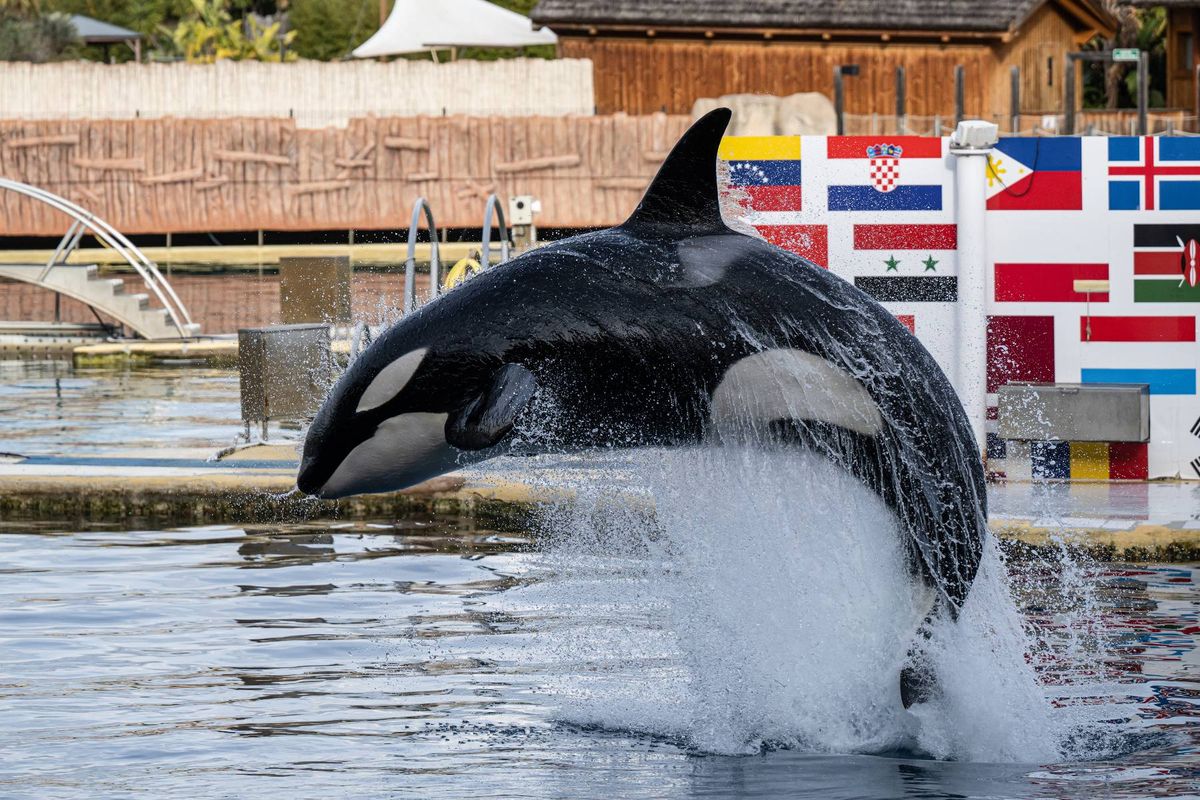
The whales once entertained huge crowds at the park(Image: AFP via Getty Images)
Marketa told the Mirror how the pair have already lost half their family group. Wikie’s son Moana died unexpectedly in 2023 aged just 12, whilst her other son Inouk perished a year later after swallowing a tiny metal fragment that had dropped into his tank. “We know from reviewing footage [of Marineland] that the tank is causing a hazard,” Marketa says. “We know that it’s not being cleaned, it’s falling apart. It’s a hazard for these orca every day.
“We are very worried that the situation is so critical, and the water quality is deteriorating to the point that it’s going to cause health issues to these whales, and they’re going to be euthanised before they get a chance to actually see a sanctuary,” she continued, “which is tragic because the male, Keijo, is only 11 years old, the mother is 23. Orcas in the wild can live to human age, outside of captivity they can live to 70 or 80 years old.”
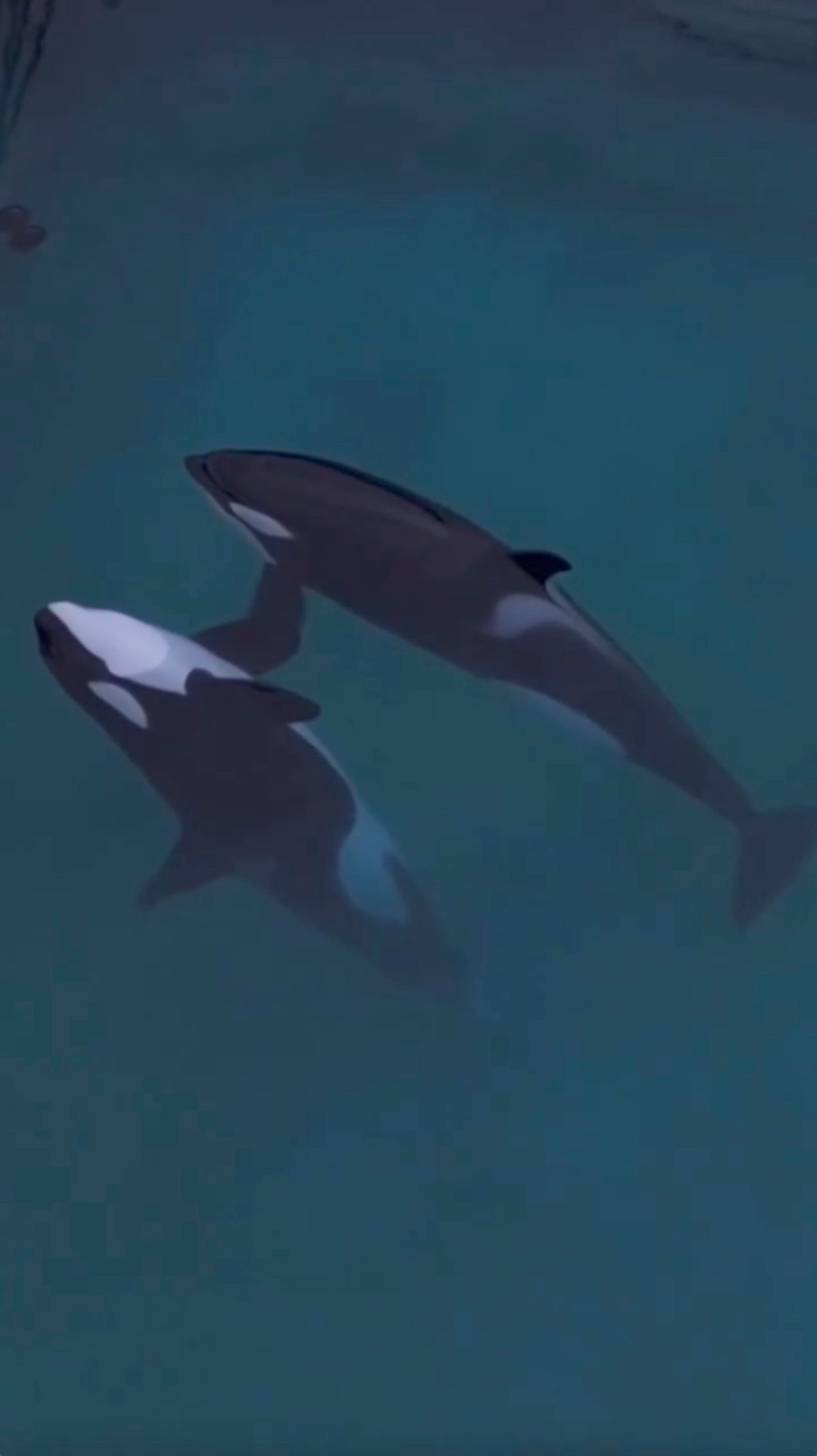
Keijo is only 11 years old, and orcas can live up to 70 or 80 years old(Image: Instagram/Seph Lawless)
A proposed transfer to Loro Parque marine zoo in Tenerife was recently vetoed, despite the facility housing four captive orcas of its own – including a calf born this March – because their new enclosure would “not meet the minimum requirements in terms of surface area, volume and depth necessary to house the specimens in optimal conditions”, according to the scientific panel responsible for approving such relocations.
A potential relocation to a Japanese marine park was also dismissed, whilst French ecology minister Agnès Pannier-Runacher stated in February that she was keen to secure a European sanctuary for the duo – though no appropriate location had been identified.
Certain campaigners are still advocating for the mother and son to be relocated to a Nova Scotia site in Canada, where they’d have access to a 1,000-acre bay secured with 1,600m of escape-proof netting. The Whale Sanctuary Project (WSP) maintains their facility is the “only option left” for Wikie and Keijo, offering them the freedom to swim in an environment far larger than a pool.
Born in the wild, Keiko was captured at just two years old in 1979. Keiko was snatched from the waters off Iceland and sold to various theme parks where he was trained to perform tricks. He grew reliant on human interaction and was eventually ‘cast’ by Warner Brothers as the lead in their film.