
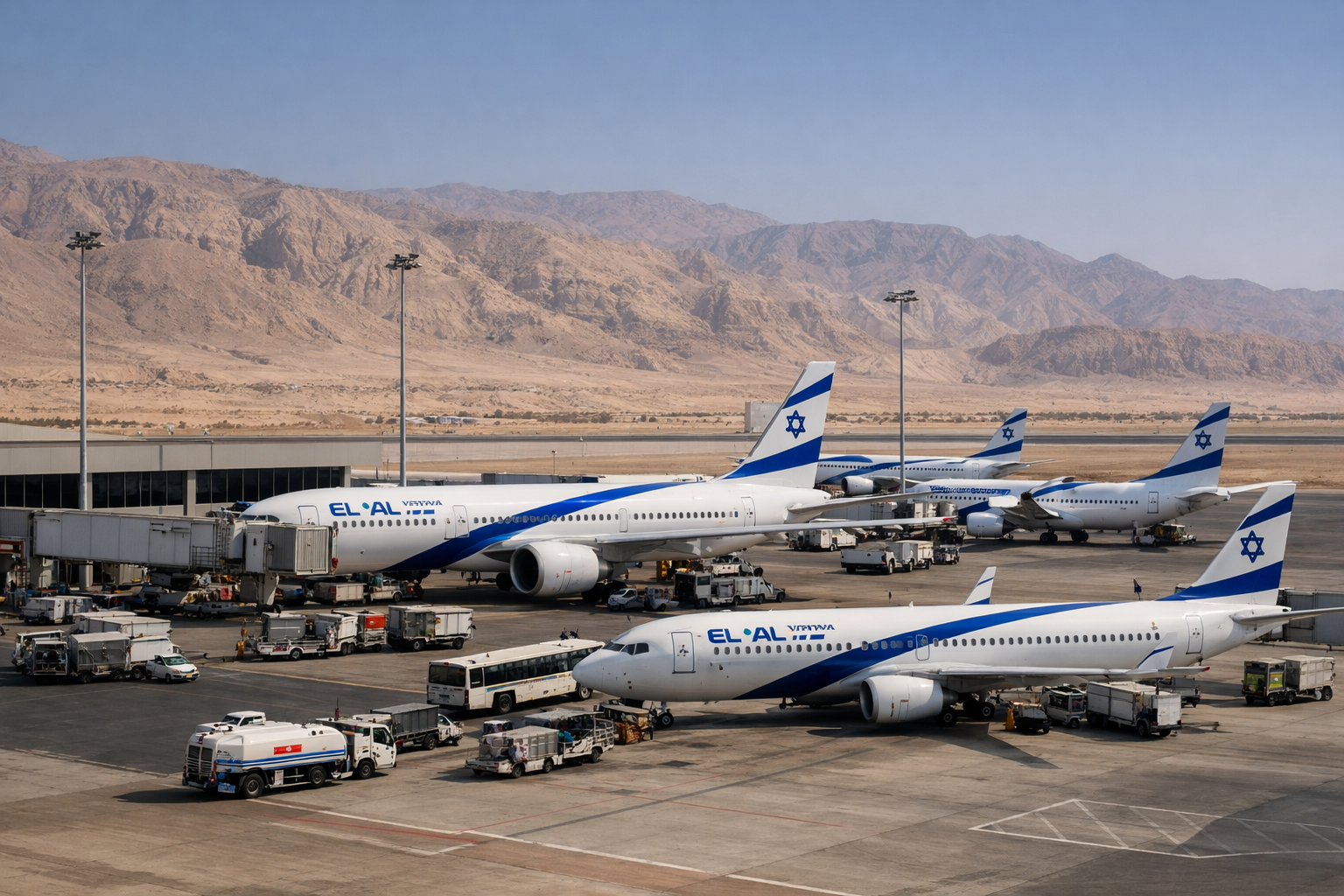
 Mockup of Israel’s New Negev Desert (not yet built)
Israel is advancing plans to build a new international airport in the Negev near Be’er Sheva. After years of debate, the project is now formally moving ahead and is positioned as a long-term solution to Israel’s growing aviation needs. The airport is intended to serve as a secondary international gateway, easing pressure on Ben Gurion Airport while also acting as a major economic driver for southern Israel.
This article outlines what is confirmed, what remains speculative, and why this airport could reshape international travel to Israel over the next two decades.
Location and Government Decision
The Israeli government has officially selected the Ziklag area in the northern Negev as the site for the new airport. The location sits between Rahat and Netivot, northwest of Be’er Sheva, and was chosen after prolonged discussion over alternative sites, including proposals in northern Israel and near existing military air bases.
Government officials have framed the airport as a national infrastructure priority. Passenger volumes at Israel’s main airport continue to rise, and long-term forecasts indicate that a single major international gateway will not be sufficient to support future demand. At the same time, locating the airport in the Negev is intended to shift economic growth southward and strengthen regional development outside Israel’s central corridor.
Planned Opening Timeline
Construction has not yet begun, and there is no officially announced opening date.
According to government planning documents and committee discussions, once construction begins, the airport is expected to take approximately 7 to 10 years to complete. Based on those estimates, the earliest realistic opening window is the early 2030s.
Some planners and analysts caution that timelines could extend further. Because the Ziklag area currently lacks large-scale aviation infrastructure, additional work on transportation links, utilities, and airspace coordination may push the opening back to the mid-2030s. Any date beyond the projected construction period remains speculative at this stage.

Airlines and Route Commitments
Confirmed Information
At present, no airlines have formally committed to operating flights from the new Negev airport. There are no announced routes, schedules, or carrier agreements, which is typical for an airport that is still in pre-construction planning.
Speculative Expectations
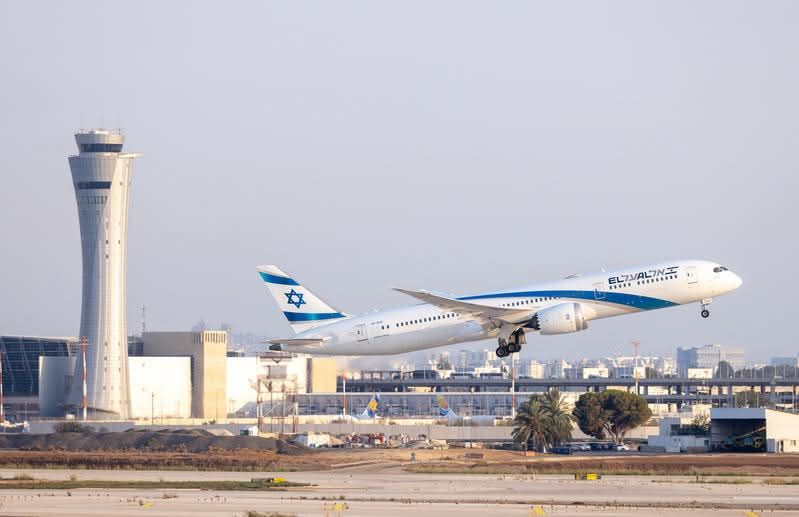
It is widely assumed that Israeli airlines such as El Al, Arkia, and Israir would eventually operate from the new airport, particularly as part of a broader strategy to diversify operations beyond Ben Gurion Airport. This expectation is speculative and has not been confirmed by the airlines themselves.
Low-cost and charter airlines are also considered likely candidates. If the new airport offers lower operating costs, greater slot availability, or operational flexibility, it could attract European leisure carriers seeking alternatives to Israel’s congested main airport. Similar strategies have been attempted at Israel’s Ramon Airport near Eilat, with mixed long-term results.
No commitments from Gulf carriers or long-haul international airlines have been announced, and any such involvement remains speculative.
Possible Destinations
No destinations have been announced, but the airport’s intended scale provides insight into how it may be used.
Short- and Medium-Haul Routes
The most likely initial routes would be short- and medium-haul international flights, particularly to Europe. These could include both major hubs and leisure destinations that already account for a significant share of Israeli outbound and inbound travel.
Regional routes to nearby destinations such as the United Arab Emirates, Cyprus, Greece, Italy, and Turkey are also considered plausible, especially for leisure and seasonal travel.
Longer-Term Possibilities
Long-haul routes to North America or East Asia are less certain. While the airport is expected to handle wide-body aircraft, most long-haul traffic is likely to remain concentrated at Ben Gurion Airport. Over time, the Negev airport could absorb overflow traffic or host select long-haul routes if demand supports it.
The airport may also handle domestic flights, charter services, and possibly cargo operations, further reducing congestion at Israel’s primary airport.
Implications for Ben Gurion Airport and International Travel
Capacity Relief
The primary goal of the project is to relieve long-term pressure on Ben Gurion Airport, which is approaching its effective capacity limits. Passenger demand is projected to grow substantially over the coming decades, and without additional infrastructure, congestion and scheduling constraints would become increasingly difficult to manage.
A second major international airport would allow Israel to distribute traffic across multiple hubs, improving operational flexibility and reliability for both airlines and passengers.
Economic Impact on the Negev
The airport is expected to serve as a major economic engine for southern Israel. Government projections point to thousands of direct and indirect jobs tied to construction, airport operations, logistics, tourism, and related industries. Improved international access could also encourage investment and tourism in the Negev, provided ground transportation links are developed alongside the airport.
Strategic and Resilience Considerations
From a strategic standpoint, relying on a single international gateway creates vulnerabilities during emergencies or periods of regional instability. A geographically separate airport adds redundancy to Israel’s aviation system and could help ensure continuity of international travel under a wider range of scenarios.
Challenges and Open Questions
Despite its potential, the project faces uncertainties. Building a large international airport from scratch requires substantial investment, careful airspace coordination, and strong airline participation. Some industry observers question whether travelers will prefer an airport located farther from Israel’s main population centers unless pricing, convenience, or availability offer clear advantages.
The success of the airport will depend heavily on airline adoption, competitive pricing, and seamless ground transportation connections to central and northern Israel.
What Comes Next
The project has cleared a major political hurdle with the formal selection of its site, but key steps remain. Detailed planning, funding approvals, and infrastructure coordination must be completed before construction begins. Airline interest and route planning are expected to emerge only once timelines and specifications become clearer.
If executed effectively, the new international airport near Be’er Sheva could play a central role in the next phase of Israel’s aviation growth, easing pressure on Ben Gurion Airport while reshaping how travelers enter and exit the country.