
Sought-after ashwagandha supplements could soon be easier than ever to make. Scientists have engineered yeast to produce the active ingredients of this traditional herbal medicine, potentially reducing the need to grow and cultivate the whole shrub.
Powdered extracts of ashwagandha (Withania somnifera) have been part of traditional Indian medicine for millennia. It’s surged in popularity in recent years as a sleep aid and stress and anxiety reliever, thanks to certain corners of social media and celebrity influencers.
Any medicinal benefits are usually chalked up to compounds called withanolides in the roots, but it’s a lot of effort to grow the whole plant just for that. In a new study, scientists have found a more efficient way – get yeast to make them.
After splicing in genes responsible for withanolide production, the team found that the yeast started producing the compounds within a few days. Since yeast is easily cultivated and grows quickly, the researchers say their system could be scaled up to make withanolides in bulk for medicinal and research purposes.
“We not only discovered the pathway through this yeast engineering approach, but by the end of this paper we have a prototype yeast strain that can be industrialized to produce withanolides,” says Jing-Ke Weng, bioengineer at Northeastern University and corresponding author of the study.
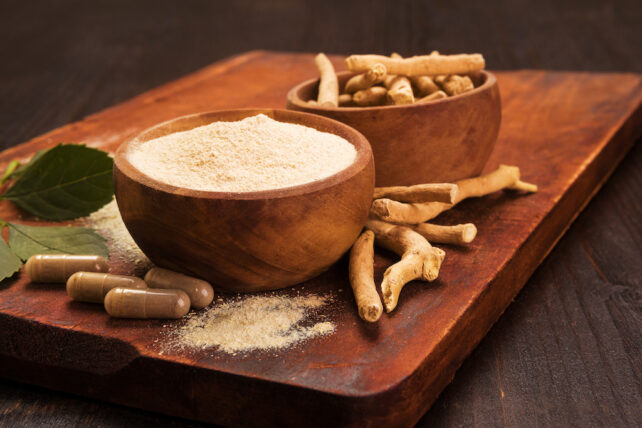 Withanolide compounds are found in the roots of ashwagandha. (eskymaks/Getty Images)
The team started by sequencing the genome of ashwagandha, and searching for gene clusters that were likely to be responsible for synthesizing useful molecules. They identified six genes that encode enzymes that together, function like a withanolide assembly line.
“Yeast and plants diverged a billion years ago, but when we put these six genes in the yeast genome, the yeast basically starts to make withanolides,” says Weng.
“We were actually very surprised it worked.”

For now, the yeast produces intermediate molecules at a concentration of just milligrams per liter, but the researchers say it represents “an important starting point for the scale-up of withanolide production and the development of withanolide-derived pharmaceuticals”.
This would be good news for the growing ashwagandha industry, which includes everything from supplements to anti-anxiety “chill-out drinks“.
Among the long list of ailments it can apparently treat, the evidence is strongest for its role in relieving stress and anxiety – but even this comes with increased risk of nausea, diarrhea, and at higher doses, liver toxicity.
Related: Scientists Engineer Cow That Makes Human Insulin Proteins in Its Milk
Other supposed benefits, such as boosted physical performance, fertility, and cognitive function, haven’t been backed up as readily in other studies and trials. But producing the active compounds at a larger scale could also speed up research into the validity of these wild health claims.
“In the future, we can foresee that we don’t have to grow the plants to get withanolides,” says Weng.
“We can simply engineer and optimize this yeast strain to produce the very precise analog we want. Then it really opens the doors for all kinds of drug discovery research in the future.”
The research was published in the journal Nature Plants.