
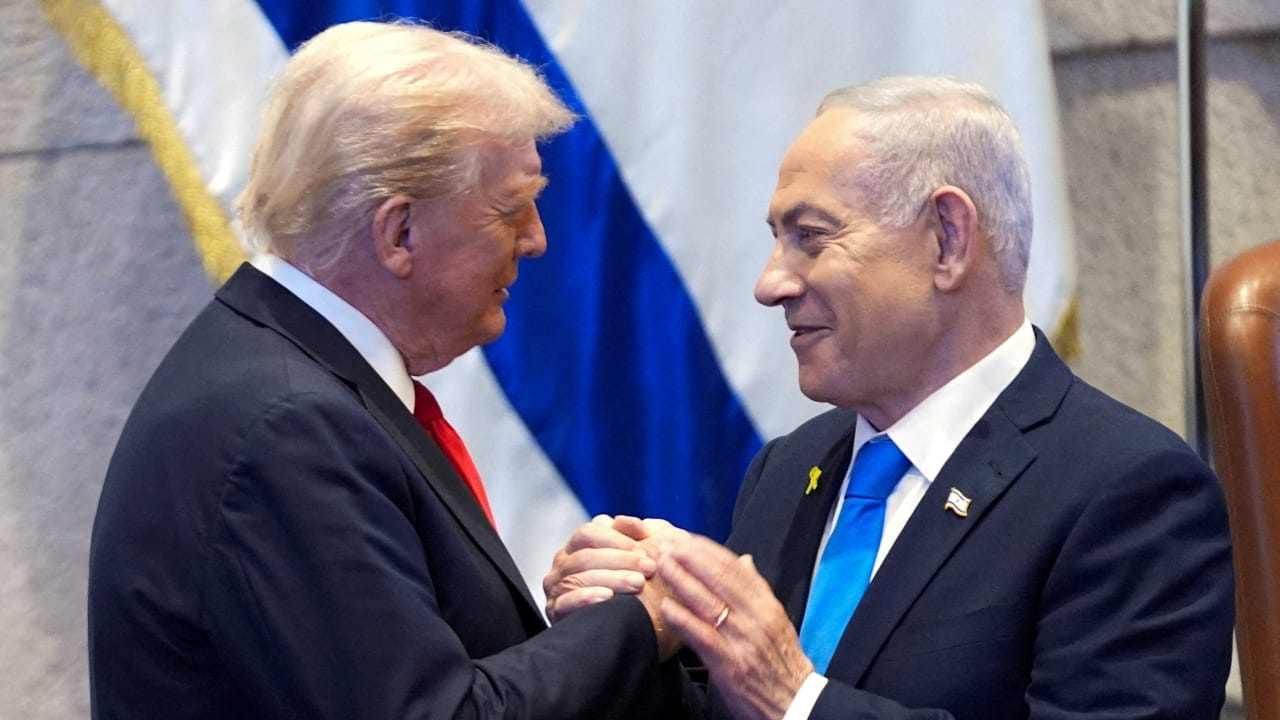
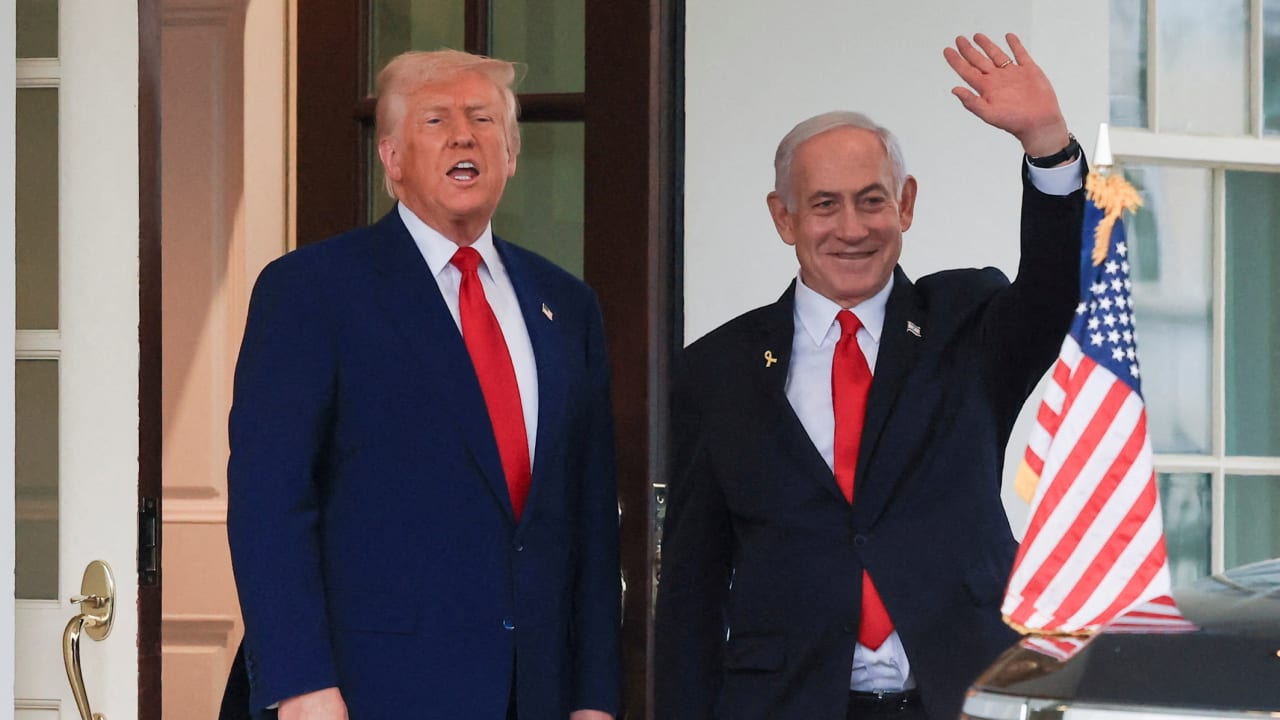
The United States’ intentions toward Iran are still unclear to the Israeli security establishment, even as Prime Minister Benjamin Netanyahu prepares to meet with US President Donald Trump in Washington this week.
Israeli interlocutors said recent discussions with US officials, including envoys Steve Witkoff and Jared Kushner, showed broad alignment on the problem posed by the Iranian regime, operational targets, and desired outcomes.
While US interests extend beyond Israel’s, they noted that Israel holds significant intelligence and has recent operational experience from 12 days of fighting directly with Iran and additional strikes inside Iranian territory over the past two years.
A limited US move that begins but does not finish would be nearly as damaging as no action at all.
In such a scenario, Iran could claim endurance against US and Israeli forces, emerge emboldened, and push a regional agenda of cross-border terror and threats to neighbors’ oil infrastructure. This could broaden Tehran’s geopolitical reach through its network of proxies.
Recent signals from regional states underscored the point. Saudi Arabia, Bahrain, the United Arab Emirates, and even Qatar pressed Washington to prioritize negotiations over strikes, according to the Israeli readout.
However, these appeals likely reflect deep fear of Iranian retaliation and long-running dependence on Tehran-sensitive security calculations, not sympathy for Iran.
Iranian leaders assess damage in possible war
In Iran, leaders are attempting to size up potential US damage in a war while testing the limits of flexibility in talks. The regime does not want to capitulate to the United States, but it also seeks to avoid losing power, prompting a bazaar-style negotiation aimed at preserving core assets.
Some of those assets may already be shifting underground to ensure a rapid post-strike recovery, mirroring methods used by Tehran’s proxies.
Israel sees Iran’s proxy doctrine at work, pointing to Hezbollah during the 2006 Lebanon War and Hamas during Operation Protective Edge, where surviving underground infrastructure was cast as “victory.” A similar approach could allow Tehran to claim success after any limited confrontation.
Israel has conveyed that it is prepared for multiple scenarios and has set a red line on Iran’s ballistic missile force. “We are not there yet,” defense officials said, but estimated Iran currently holds roughly 1,800 missiles and 60–80 launchers. A significant increase would compel decisions in Jerusalem, a message Netanyahu intends to underscore in Washington.
Israel has acted at least twice inside Iran in the past two years and retains that capability, officials noted. The final call, however, lies with the White House and Trump. For now, Israelis say, no one can confidently predict his decision.